
Your exterior doors may look secure, but an aging deadbolt, loose strike plate, worn door frame, or set of unaccounted-for keys can leave important gaps in your home’s security. Upgrading the right hardware can make unauthorized entry more difficult without requiring a complete door replacement.
The key is to evaluate the entire locking system instead of choosing a lock based on price or appearance alone. A suitable deadbolt, a properly secured strike plate, a sturdy door, and well-managed keys all play a part. You also need to consider windows, sliding doors, and any smart-lock features you plan to use.
Here’s how to improve home security with better locks, where to focus your budget, and which mistakes to avoid.
Key Takeaways
- Prioritize exterior doors with old, loose, damaged, or unreliable locks.
- Look for an appropriate, independently tested residential deadbolt rather than relying on appearance or marketing claims.
- Reinforce the strike-plate area and inspect the door frame, not just the lock itself.
- Rekey working locks when you need to control who has keys; replace hardware when it is damaged, incompatible, or unsuitable.
- Secure vulnerable windows and sliding doors, and choose smart-lock features carefully.
- Never make a security upgrade that prevents people from escaping quickly during an emergency.
1. Inspect Your Existing Locks Before Buying Anything
Start by walking around your home and checking every exterior entrance. Include the front door, back door, side entrance, garage-to-house door, basement entrance, and any accessible patio or sliding door.
Look for practical problems. Does the key turn smoothly? Does the deadbolt extend fully into its strike plate? Does the door sit squarely in its frame? Is the hardware loose? Are there cracks, signs of rot, or gaps around the frame?
A lock that sticks, fails to extend completely, or requires you to lift or push the door unusually hard deserves attention. The problem might be the lock itself, but it could also be a misaligned door, a loose strike plate, or a frame that has shifted.
Which entrances need attention first?
Begin with exterior doors that have damaged hardware or frames, rely on a basic latch without a suitable deadbolt, or are difficult to secure consistently. Pay attention to side doors and garage entrances as well as the front door.
Check accessible windows and patio doors, too. Improving the front entrance while leaving a damaged lock elsewhere creates an incomplete security plan.
Practical tip: Make a simple list with three columns: entry point, problem found, and recommended action. This helps you separate necessary repairs from optional upgrades before spending money.
2. Choose a Suitable Deadbolt for Exterior Doors
A deadbolt is an important part of many residential exterior-door security systems. Unlike a spring latch, a typical deadbolt extends a solid bolt into the door frame when locked.
When shopping, look beyond finish, price, and brand recognition. Evaluate the hardware’s performance, compatibility with your door, and quality of installation.
Check for these features:
- Appropriate bolt extension: Seattle Police recommends exterior-door deadbolts with at least a one-inch bolt throw. Confirm that the product meets the requirements for your door and installation.
- A suitable residential security rating: Look for a clearly identified ANSI/BHMA grade applicable to the specific deadbolt, and verify claims where possible.
- Solid, secure mounting: The lock should fit the door’s thickness and existing preparation without loose or improvised fittings.
- Reliable operation: The bolt should extend and retract fully without excessive force, binding, or lifting the door.
- Practical key control: Consider who needs access, whether the lock can be rekeyed, and how spare keys will be managed.
Seattle Police also advises using strong exterior doors and securely anchoring strike plates and frames to the home’s main construction. A new deadbolt cannot make up for a severely weak door or damaged frame. Seattle Police home security guidance.
Choose the lock type that suits your door
A conventional single-cylinder deadbolt is keyed from the outside and generally operated with a thumb turn from the inside. It is a common option for solid exterior doors when the arrangement is appropriate for the home’s layout and local requirements.
Smart deadbolts add electronic access features, while some doors use multipoint locking systems or other specialized hardware. These products are not necessarily interchangeable. Check the door manufacturer’s specifications or consult a locksmith if you have an unusual door, an existing multipoint system, or a lock that does not fit standard preparations.
Avoid choosing a double-cylinder deadbolt simply because it requires a key on both sides. Such locks can complicate emergency escape and may be restricted by local building or fire codes. Check the rules that apply to your property before considering one.
3. Understand ANSI/BHMA Lock Grades

A lock’s appearance does not tell you how it performs under standardized testing. In the United States, the American National Standards Institute (ANSI) and the Builders Hardware Manufacturers Association (BHMA) publish standards used to evaluate residential hardware.
BHMA describes Grades 1, 2, and 3 as progressive performance levels, with Grade 1 being the highest where that grading system applies. Testing can evaluate factors such as operation, strength, durability, and security. Residential deadbolts are covered by the ANSI/BHMA A156.40 standard; the current edition listed by ANSI is A156.40-2025.
Sources: BHMA product grade levels and ANSI/BHMA A156.40-2025.
Here’s how to use the information when shopping:
- Identify whether the product is a deadbolt, lockset, or another type of hardware.
- Confirm which standard applies to that product.
- Look for a clearly stated grade and, where applicable, certification that can be verified.
- Compare products within the same hardware category rather than assuming all grade labels mean the same thing.
For an important exterior entrance, a properly certified higher-grade residential deadbolt is worth considering when it fits your budget and door. A lower price should not be the only deciding factor.
Keep one important limitation in mind: a grade is not a guarantee that a lock will prevent every break-in. ANSI/BHMA testing takes place under laboratory conditions, and real-world performance also depends on installation, the door, the frame, maintenance, and the surrounding construction.
4. Strengthen the Strike Plate and Door Frame
The strike plate is the metal fitting mounted to the door frame where the latch or deadbolt enters. It helps secure the bolt in place, but its performance depends on how the plate and the surrounding frame are attached.
A strong lock installed with loose hardware or a damaged door jamb may not deliver the protection you expect.
Inspect the strike plate for movement, stripped screw holes, cracking, rust, or signs that the bolt does not enter cleanly. If the frame is damaged, fix the underlying problem rather than simply covering it with a larger plate.
When longer screws or reinforcement may help
For suitable wood-framed exterior doors, longer screws or a compatible reinforced strike plate may help anchor the hardware more securely to the framing. Seattle Police specifically recommends three-inch screws and heavy-duty strike plates for appropriate exterior-door installations.
However, screw length alone is not a complete solution. The correct fasteners depend on the door assembly, existing hardware, frame material, and manufacturer instructions. Avoid blindly replacing every screw with a longer one, particularly on doors with specialized construction or fire-rating requirements.
If you see splitting wood, significant frame movement, rot, or damage extending beyond the strike-plate opening, consult a qualified carpenter or locksmith. The frame may need repair or reinforcement before new hardware can be installed properly.
5. Check the Door, Jamb, and Hinges
When improving home security, inspect the complete door assembly rather than treating the lock as an independent component.
An exterior door should be structurally sound, close properly, and sit securely in its frame. Cracks, rot, warped materials, loose hinges, and excessive movement deserve attention.
Check the following areas:
- Door condition: Look for deterioration, damaged panels, or loose components around the lock.
- Door alignment: Confirm that the door closes without being forced into place and that the deadbolt aligns with its opening.
- Hinges: Check for looseness, damaged screws, and signs of wear. Follow the door manufacturer’s guidance when repairing hinge attachments.
- Frame condition: Look for splitting, moisture damage, and movement around the lock and hinge areas.
- Door compatibility: Confirm that a proposed new lock suits the material, thickness, and design of the door.
If the door itself is hollow, badly damaged, or unsuitable for the intended hardware, replacing the lock alone may offer limited improvement. A professional can help assess whether the door, frame, or both need attention.
Do not improvise structural modifications to a fire-rated door or another specialized assembly. Use compatible, approved hardware and qualified installation where required.
6. Decide Whether to Rekey or Replace Your Locks
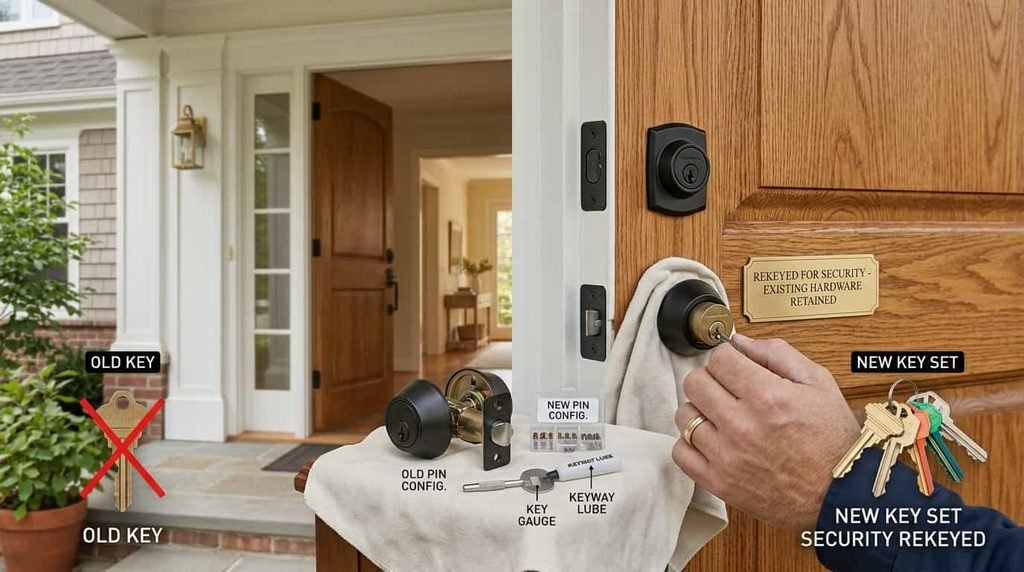
Replacing every lock is not always necessary. Rekeying can be a practical alternative when the existing hardware works properly, but you need to change which keys operate it.
Rekeying changes the lock’s internal configuration so previous keys no longer operate it, while typically allowing the existing lock hardware to remain in place. The exact options depend on the lock’s design and the locksmith’s assessment.
When rekeying may make sense
Consider rekeying when:
- You’ve recently moved into a home and do not know who holds copies of the keys.
- A key has been lost or you are concerned that someone else may have a copy.
- A tenant, housemate, or other person who previously had access has moved out.
- You want to manage access across compatible locks without replacing all the hardware.
When replacement may be better
Replacing the lock may be more appropriate if the existing hardware is damaged, badly worn, unsuitable for the door, or lacks features you need. A replacement can also make sense when you want a different locking system and rekeying is not practical.
Before changing locks in a rental property, contact the landlord or property manager. Lease terms and local laws may govern who can authorize the work, whether master-key systems must remain functional, and how replacement keys are handled.
Keep new keys controlled and give copies only to people who need access. Avoid hiding a spare outside under a doormat, planter, or another easily guessed location.
7. Improve Security on Windows and Sliding Doors
Better exterior-door locks are useful, but windows and patio doors also deserve attention.
Window locks
Inspect the latches on ground-floor, basement, and otherwise accessible windows. Make sure each window closes fully and the locking mechanism engages properly.
If a latch is broken or unreliable, replace it with hardware compatible with the window. Different designs, including double-hung, casement, and sliding windows, need different locking solutions.
Also consider emergency escape. Do not permanently block a window that is intended to serve as an emergency exit, and check any applicable bedroom egress requirements before installing bars or additional locking devices.
Sliding glass doors
Sliding patio doors should close fully and have functional, compatible locking hardware. If the door can lift out of its track or the latch is damaged, consult the manufacturer’s guidance or a qualified installer about suitable anti-lift features and supplementary security options.
A properly fitted track bar or other secondary device may help limit movement in suitable installations, but it must not make the door impossible to open from inside when required for escape. Do not assume that an improvised piece of wood is appropriate for every door.
Don’t ignore the garage-to-house door
If your garage connects directly to your living space, inspect that entrance as part of the same lock audit. Ensure the door closes and locks correctly and that any upgraded hardware is compatible with the door’s construction and applicable fire or building requirements.
The aim is consistent security across the home, not just a stronger front-door lock.
8. Consider Smart Locks and Secure Their Settings
Smart locks can offer convenient features such as keypads, temporary access codes, app-based control, and automatic locking. Whether they suit your home depends on the door, the people using it, and the product’s security and backup options.
A smart lock is not automatically stronger than a conventional deadbolt. Electronic features do not compensate for a damaged door frame or poor installation.
Smart-lock features worth evaluating
Access management: Look for a straightforward way to add, change, and remove user codes or digital access. Delete codes that are no longer needed.
Backup access: Understand what happens if the batteries die, your phone is unavailable, or the network goes offline. Choose a backup arrangement you can use safely.
Auto-lock behavior: If the lock offers automatic locking, confirm its timing and test it with the door fully closed. Make sure it will not repeatedly try to lock when the door is misaligned.
Alerts and access records: If these features matter to you, check what the product actually provides and whether records require an app, internet connection, or subscription.
Maintenance: Know how the lock reports low battery levels and how its batteries are replaced.
Software and account security: Change default credentials, use unique passwords, enable multifactor authentication when available, and install manufacturer updates.
The Federal Trade Commission recommends changing default device credentials, keeping connected devices updated, and using available security features. It also stresses the importance of securing the router that connects smart-home devices to the internet. Follow that advice for smart locks and other connected home equipment.
Source: FTC guide to securing internet-connected devices.
If you prefer minimal maintenance or do not need remote access, a conventional, properly installed deadbolt may be the simpler choice. Select smart features because they solve a real access or convenience problem, not because electronic hardware automatically promises greater security.
Common Lock-Upgrade Mistakes to Avoid
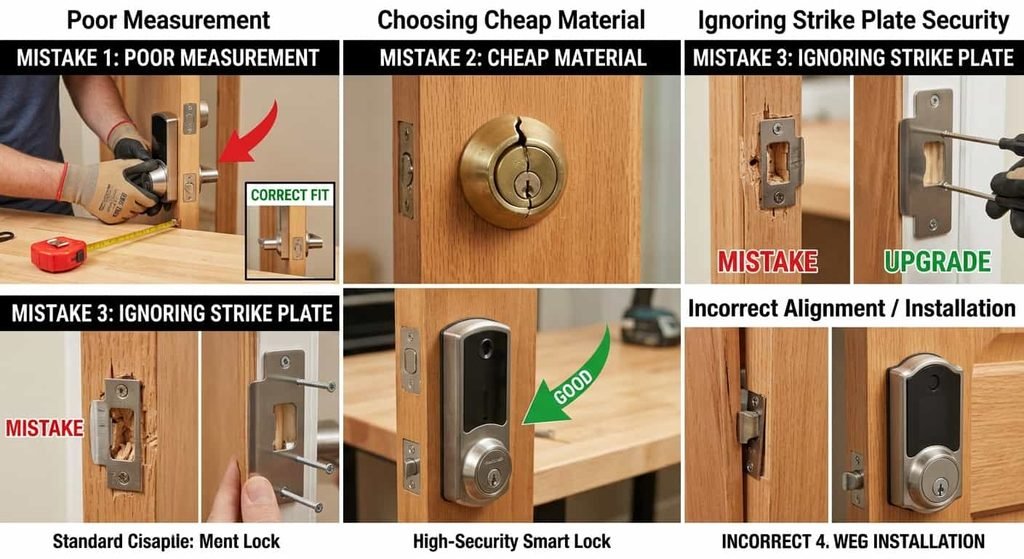
Even a good lock can disappoint when the rest of the installation is overlooked.
Buying by appearance alone. A decorative finish does not establish the hardware’s tested performance. Check the relevant specifications and grade instead.
Replacing the lock but ignoring the frame. Loose strike plates, damaged jambs, and poor door alignment can limit the value of a new deadbolt.
Assuming every deadbolt fits every door. Door thickness, material, existing holes, multipoint mechanisms, and manufacturer requirements affect compatibility.
Leaving old keys unaccounted for. After moving or changing who has access, assess whether rekeying is appropriate.
Forgetting windows and secondary entrances. Include accessible windows, patio doors, side entrances, and garage-to-house doors in your inspection.
Installing hardware that compromises emergency escape. Check local requirements and keep designated exits usable.
Ignoring smart-lock maintenance. Old batteries, abandoned access codes, outdated software, and insecure accounts can undermine the system’s reliability.
A Practical Home Lock-Security Checklist
Use this checklist to prioritize your work.
- Inspect every exterior door and accessible window.
- Identify locks that are damaged, loose, unreliable, or unsuitable.
- Check whether exterior doors have appropriate deadbolts.
- Verify the bolt throw and applicable residential lock grade.
- Inspect the strike plates, screw attachments, frames, and hinges.
- Repair damaged or misaligned door assemblies.
- Decide whether existing locks should be rekeyed or replaced.
- Verify the locking hardware on sliding doors and accessible windows.
- Check rental permissions and any relevant building or fire-safety requirements.
- Review smart-lock codes, passwords, battery alerts, and updates.
- Test the locks and confirm that doors and designated exits work as intended.
Start with faults that affect reliable locking or the physical integrity of the door assembly. Cosmetic upgrades and optional smart features can wait until the fundamentals are working properly.
Frequently Asked Questions
What type of lock is best for an exterior door?
A suitable, well-installed residential deadbolt is a strong starting point for many exterior doors. Look for appropriate ANSI/BHMA performance ratings, a compatible door installation, and a bolt throw suited to the security requirements. The door and frame must also be in sound condition.
Is a smart lock more secure than a traditional deadbolt?
Not automatically. Smart locks can improve convenience and access management, but their overall security depends on the physical hardware, installation, account security, software maintenance, and backup arrangements. A conventional deadbolt may be preferable when simplicity is the priority.
Should I rekey or replace my locks after moving?
Rekeying may be sufficient if the existing locks are in good condition and a qualified locksmith can rekey them appropriately. Replacement may be more suitable when the hardware is damaged, incompatible, or no longer meets your needs.
Do strike plates make a difference?
They can. A compatible, securely installed strike plate helps anchor the bolt at the door frame. Its effectiveness depends on the frame, fasteners, surrounding construction, and quality of installation, so replacing the plate alone may not address deeper structural problems.
Can I install better locks in a rental property?
That depends on your lease, the landlord’s requirements, and applicable local law. Discuss changes before drilling, replacing hardware, rekeying shared systems, or installing electronic locks. Preserve required fire-safety features and the landlord’s authorized access arrangements.
Final Thoughts
Improving home security with better locks begins with a careful inspection, not an expensive shopping list. A suitable deadbolt, a secure strike plate, a sound door frame, and well-managed keys provide a practical foundation for many homes.
Work through the entry points one at a time. Repair existing problems, upgrade hardware where it makes a meaningful difference, and choose smart features only when they match your needs. If a lock, door, or frame requires specialized work, get advice from a qualified locksmith or installer.
Most importantly, test the finished installation. Every door should lock reliably, authorized users should understand how to operate the hardware, and designated emergency exits must remain usable.
A thoughtful lock upgrade can improve your home’s security without unnecessary expense or complexity—and give you a clearer understanding of which weaknesses still need attention.
Related resources: how-to-upgrade-home-security/
Related resources: Outdoor Covered Patio Lighting Ideas: 10 Genius Tips · What Are the Top Smart Home Upgrades? 10 Worth the Money
Related resource: How to Fix a Sagging Door: 7 Simple, Proven Solutions