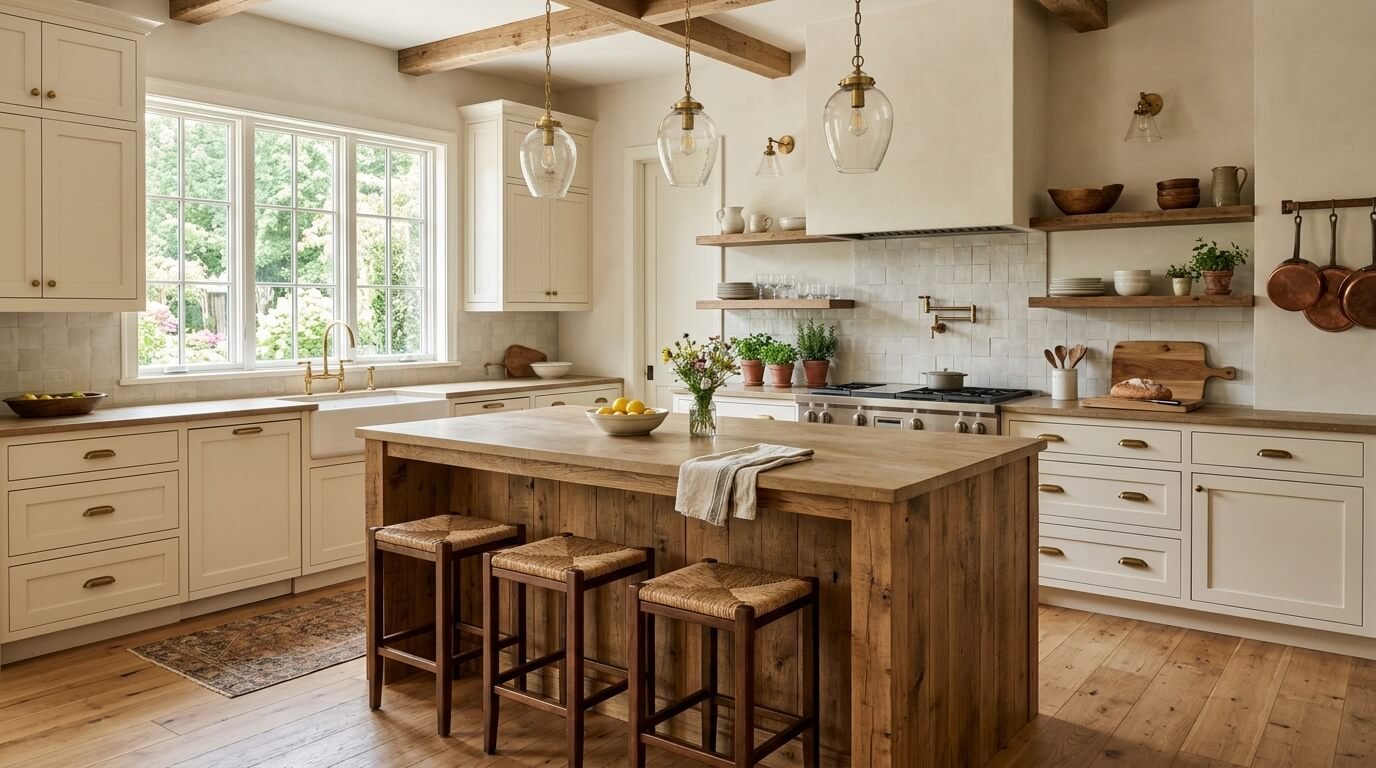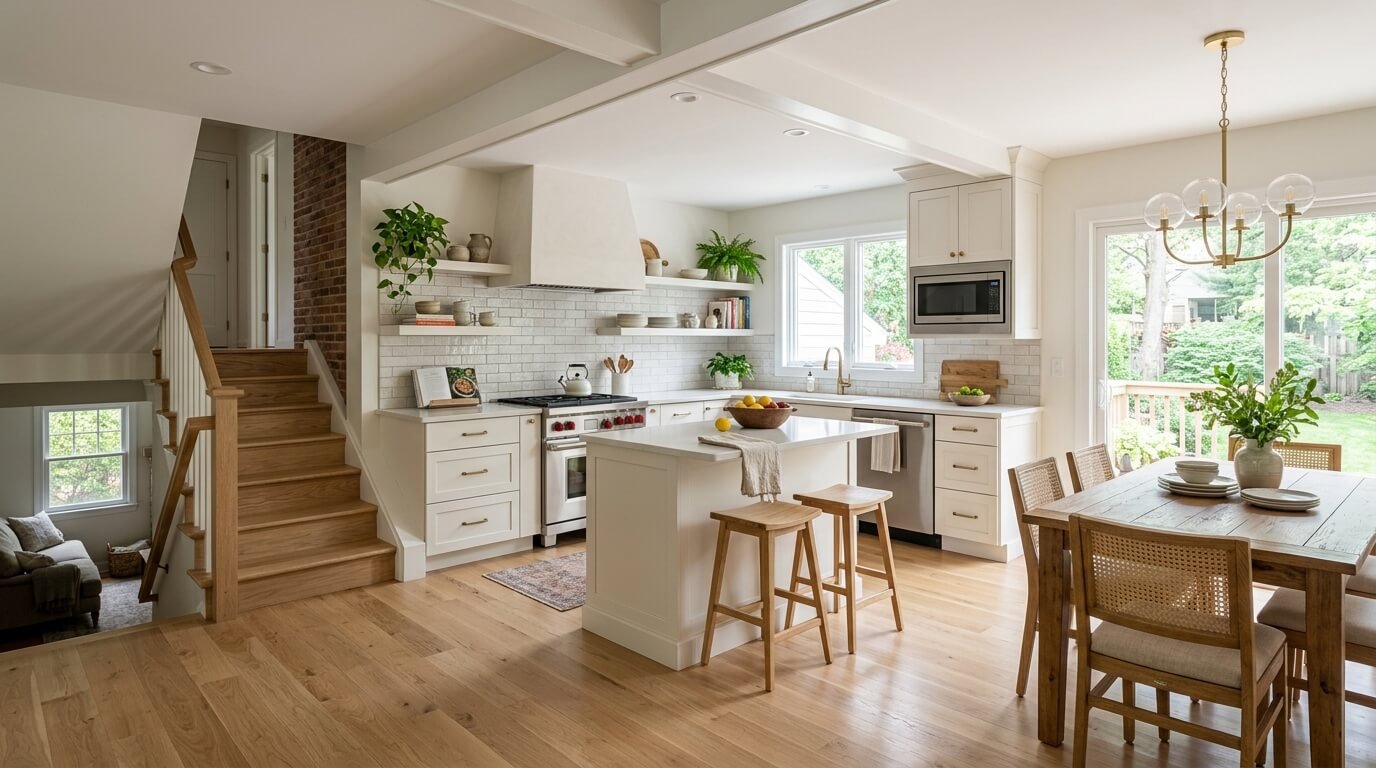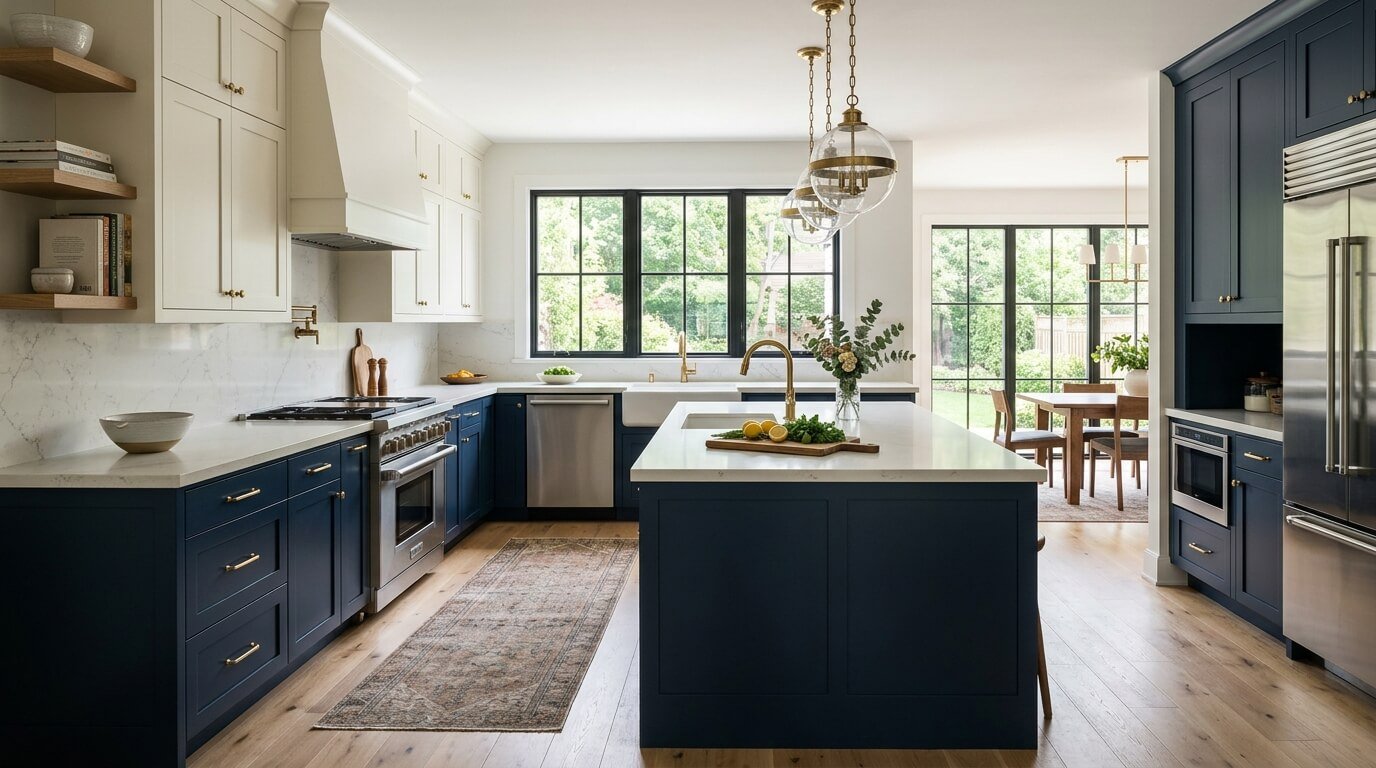
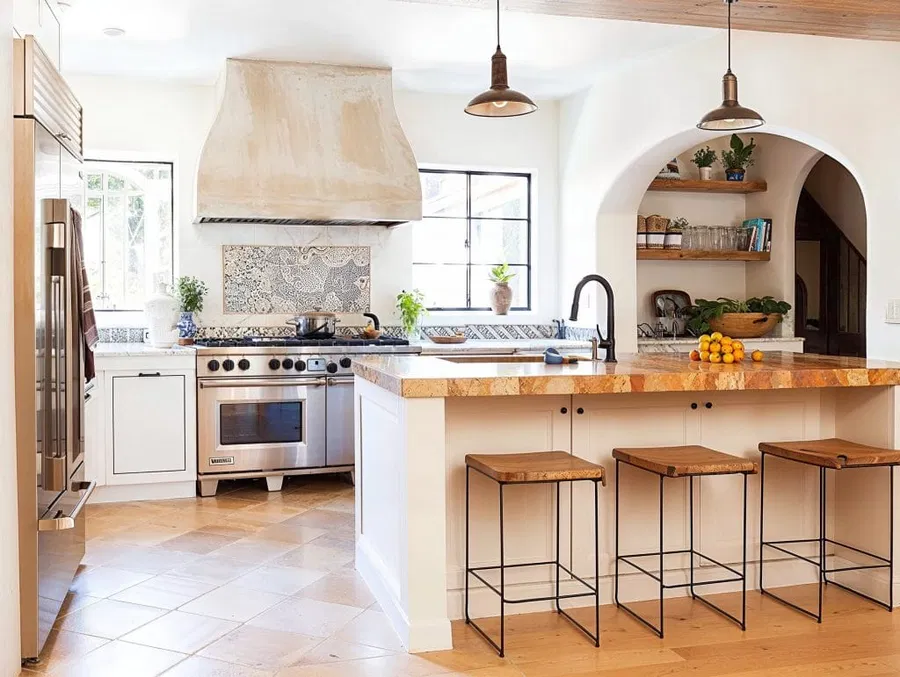
A small kitchen doesn’t need more decorationit needs better-chosen decoration. The strongest small kitchen decor ideas improve what you see without taking away the counter, cabinet, and walking space you already don’t have.
If your kitchen feels cramped, start with the surfaces you notice first: the counters, cabinet fronts, walls, and lighting. Then add only the pieces that earn their space.
The quickest answer
Small Kitchen Decor Ideas, focus on changes that add style without consuming valuable floor or counter space. Start by clearing visual clutter, improving lighting, using one consistent color palette, upgrading cabinet hardware, and making vertical space useful. Then add a small amount of wall art, greenery, or display-worthy kitchenware.
That approach works better than filling every empty corner with accessories.
1. Clear the counters before buying anything
This is the least exciting idea on the list, and probably the one I’d do first.
A small kitchen has very little visual breathing room. If the counter is covered with appliances, containers, mail, utensils, and decorative objects, adding more decor won’t make the room feel finished. It will make it feel busier.
Take everything off the counter that doesn’t need to stay there. Put the remaining everyday items into deliberate groups rather than scattering them around.
For example, a coffee maker, mugs, and coffee supplies can form one functional zone. A cutting board and knife block might belong near the main prep area.
Then look at what’s left.
If an item is used once a week but occupies permanent counter space, it probably doesn’t deserve that spot.
This is where small kitchen organization ideas overlap with decorating. Organization isn’t separate from appearance in a compact kitchen. The way you store everyday objects becomes part of what the room looks like.
2. Take your decor upward
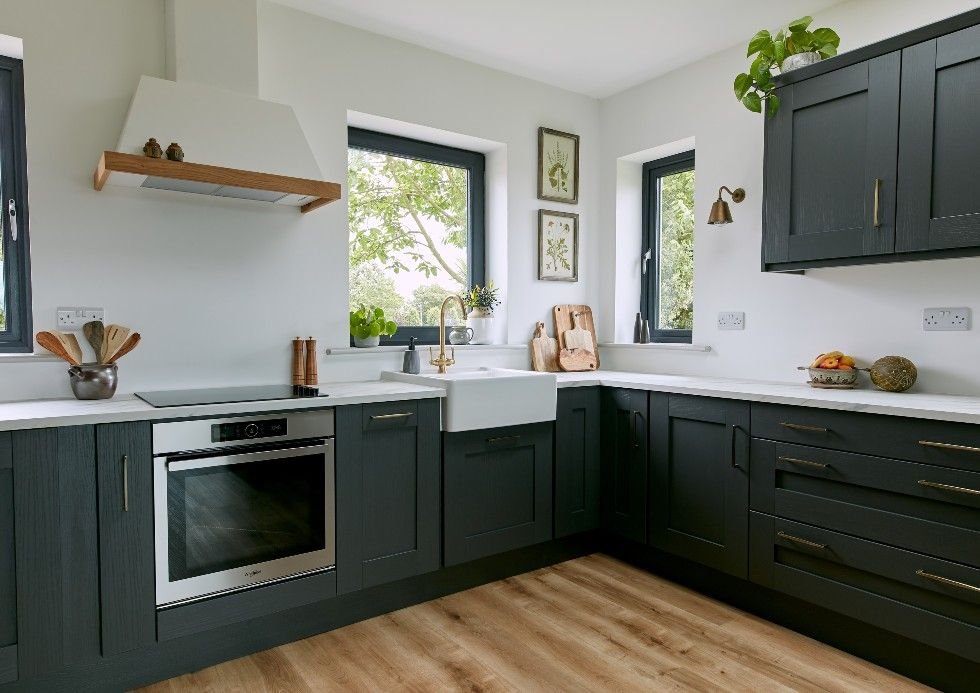
If you don’t have much floor or counter space, stop decorating horizontally.
Look at the walls.
Floating shelves, narrow wall-mounted shelves, rails, hooks, and other vertical storage can give you places to display or store useful items without taking another piece of floor space. Open shelving is a recurring recommendation across small-kitchen design guides for exactly this reason.
But don’t cover every wall with shelves.
One well-planned display is usually easier to keep attractive than several crowded ones.
Use a shelf for things you genuinely use: a few everyday bowls, mugs, a small collection of cookbooks, or attractive jars. Mix useful objects with one or two decorative pieces rather than creating a shelf that exists only to hold decorations.
Before drilling into the wall, make sure to review your lease if you rent. A removable solution may make more sense.
3. Choose one light base color and one stronger accent for Small Kitchen Decor Ideas
Small kitchens don’t need to be completely white.
That’s an important distinction.
Light walls, cabinets, or large surfaces can help a compact room feel brighter, but color itself isn’t the enemy. The problem is usually visual competition: too many unrelated colors, finishes, and patterns fighting for attention.
Try this instead:
Choose a simple base such as white, warm off-white, pale gray, light wood, or another restrained neutral and then repeat one accent color through a few details.
Your accent might appear in:
- A runner
- Cabinet hardware
- A small piece of artwork
- Dish towels
- A few pieces of cookware
- A plant pot
HGTV similarly recommends being strategic with color and pattern in small kitchens, while other design guides show how stronger cabinet or wall colors can work when they’re used deliberately.
The goal isn’t to make every surface match.
It’s to make the room look like the pieces belong together.
4. Change cabinet hardware before replacing the cabinets
Want a makeover without turning the kitchen into a construction project?
Look at the handles.
New cabinet knobs or pulls can change a surprisingly visible part of the room because they repeat across multiple cabinet doors and drawers. This is one of the easiest ways to give older cabinetry a more intentional look without replacing the boxes themselves.
Black hardware creates a sharper contrast. Brass or warm metallic finishes can introduce warmth. Simple brushed finishes work well when you want the hardware to stay in the background.
The key is consistency.
Don’t choose hardware simply because one individual handle looks beautiful online. Think about how the finish will interact with your faucet, lighting fixtures, appliances, and other visible metal.
Livspace and other current kitchen-decor guides also identify hardware as a straightforward decorative update.
Before ordering anything, measure your existing cabinet hardware and check the hole spacing.
That small step prevents a very annoying mistake.
5. Treat lighting as part of the decor
A Small Kitchen Decor Ideas can still look disappointing under one harsh ceiling fixture.
Lighting deserves more attention than it usually gets in decor lists.
Start with the light you already have. Notice the dark corners, the work areas that aren’t well illuminated, and the surfaces that look dull at night.
Then consider where another light source would actually help.
Under-cabinet lighting is particularly useful when upper cabinets create shadows over the countertop. Plug-in or rechargeable options can also make sense for renters who don’t want electrical work. Current small-kitchen guides repeatedly recommend layering lighting rather than relying entirely on one overhead source.
Decorative lighting can work, too.
A small pendant or visually interesting fixture can become a focal point when the layout allows it. Just don’t sacrifice useful clearance for a fixture that looks good in a photograph.
In a small kitchen, the best decor usually has a job.
6. Put one attractive piece where you normally have empty wall space
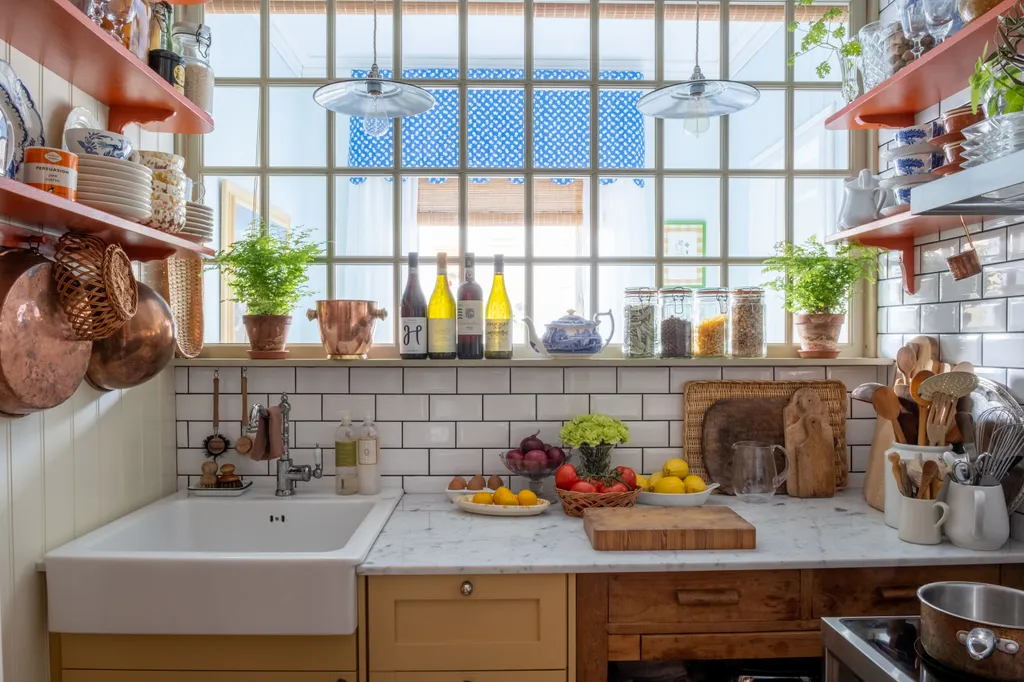
Blank walls don’t always need cabinets.
Sometimes they need one good piece.
A framed print, small artwork, vintage-style kitchen sign, simple photograph, or decorative plate can give a kitchen personality without filling the room with accessories. Forbes Home recommends using small overlooked areas for decorative details, including artwork and useful objects that can double as decor.
The mistake is turning every available wall into a gallery.
If your kitchen is already visually busy, one larger, deliberate piece may work better than five tiny decorations.
And keep the subject matter connected to the room. A piece of art doesn’t have to literally show food or cooking, but it should make sense with the colors and mood you’ve already established.
7. Make useful objects part of the decoration
Here’s a trick I prefer over buying more “kitchen decor.”
Decorate with things you actually use.
A wooden cutting board can lean against a backsplash. Attractive mugs can sit on an open shelf. A ceramic utensil holder can stay beside the stove. A small collection of matching containers can make everyday ingredients look intentional.
Forbes specifically highlights the possibility of turning functional kitchen tools and objects into decorative details, while Livspace recommends kitchenware that works as both utility and visual styling.
This approach solves two problems at once.
You get personality without adding completely unnecessary objects.
Just be selective. If the item is ugly, difficult to clean, or constantly in the way, calling it “decor” doesn’t fix the problem.
8. Add softness with a small runner or textile
Hard cabinets, countertops, appliances, and flooring can make a compact kitchen feel cold.
A runner introduces texture and can help visually define the cooking area. Rugs Direct’s small-kitchen guidance specifically discusses using flooring, color, and scale as part of the design of compact kitchens.
But size matters.
A giant rug squeezed between cabinets isn’t going to make the room look larger. It can make an already tight walkway feel tighter.
Choose something that fits the actual traffic path and can handle kitchen messes. A washable or easy-care option makes more sense than a delicate decorative rug that you’ll constantly worry about.
You can also use textiles in smaller ways: coordinated dish towels, a simple window treatment where appropriate, or a seat cushion on a compact dining area.
The trick is repetition. One textile accent looks intentional; five unrelated patterns look accidental.
9. Finish with one living or natural element
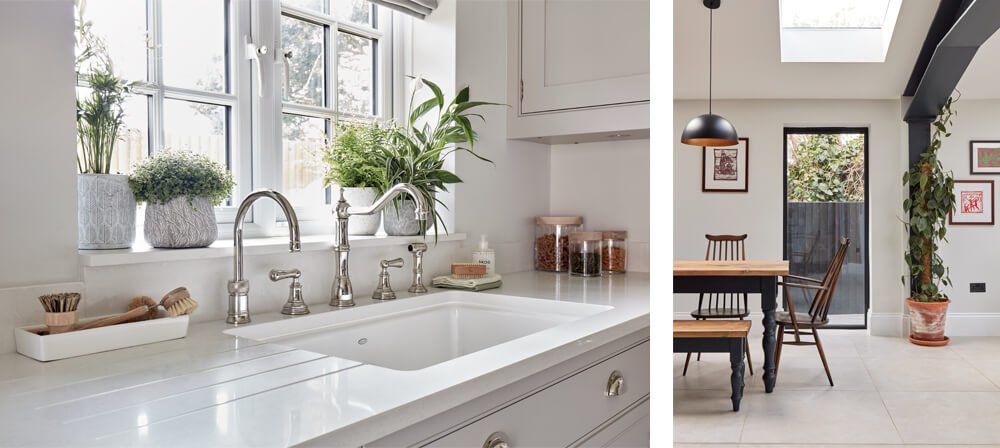
Plants appear in almost every collection of Small Kitchen Decor Ideas, and there’s a reason they work visually. They introduce an organic shape into a room full of straight cabinet lines and hard surfaces.
But you don’t need a miniature jungle above the refrigerator.
Choose a plant or natural element that actually suits the available space. A small pot on a shelf, a few herbs near a suitable window, or even a simple branch arrangement can provide the effect without claiming half the counter.
If your kitchen doesn’t get suitable light, don’t buy a plant just because a photograph of one looked good.
A plant that struggles in the wrong location isn’t successful decor.
How should you combine these small kitchen decor ideas?
Don’t do all nine at once.
That is exactly how a small kitchen ends up looking more crowded after a makeover.
Instead, work in this order:
First, remove clutter.
Then fix the most obvious functional problem.
Next, work on the big visual surfaces: cabinet hardware, paint or color, and lighting.
After that, use vertical space where you genuinely need it.
Only then add Small Kitchen Decor Ideas such as artwork, textiles, plants, or display pieces.
This order matters because decoration cannot compensate for a kitchen that has nowhere to put everyday things.
For budget small kitchen decor, I’d also resist the temptation to buy a matching set of decorative containers, signs, baskets, and accessories all at once. Use what you already own first. Spend money on the problem you can actually see.
A $20 decorative object won’t fix a counter that has no usable prep space.
What should you avoid in a Small Kitchen Decor Ideas?
Some Small Kitchen Decor Ideas look fantastic in photos and make less sense in real life.
Don’t fill every empty surface
An empty corner isn’t necessarily a decorating problem.
Leaving some surfaces clear gives the eye somewhere to rest and preserves usable workspace.
Don’t choose storage just because it adds storage
A new rack is only useful if it makes something easier to access or removes clutter from somewhere else.
Otherwise, you’ve bought another object to organize.
Don’t ignore scale
Oversized art, bulky countertop appliances, deep shelves, and large decorative accessories can consume the very space you’re trying to make feel more open.
Don’t copy a kitchen with a completely different layout
A beautiful galley kitchen and a compact L-shaped kitchen have different constraints.
Borrow the principle, not the entire room.
That’s especially important with kitchen ideas for small spaces. A solution designed around a large window, generous wall clearance, or an island might simply not translate to your kitchen.
Don’t make every update permanent
If you’re renting, prioritize changes you can reverse. Removable lighting, temporary wall treatments, freestanding organization, textiles, and hardware that can be swapped back are more practical than permanent renovations.
A simple Small Kitchen Decor Ideas plan you can actually follow
If your kitchen feels dated but your budget is limited, don’t start shopping.
Take a photo of the room first.
Look at the photo rather than the kitchen itself. What catches your eye immediately? Is it clutter? Dark cabinets? An ugly light fixture? Mismatched hardware? An empty wall?
Pick one major problem and two smaller ones.
For example:
- Main problem: dark, visually heavy cabinetry
- Smaller problem: cluttered counter
- Smaller problem: empty wall
Your makeover might then become a lighter cabinet color, a serious counter declutter, and one piece of wall art.
Another kitchen might need better lighting, new hardware, and a narrow shelf instead.
There is no prize for using all nine ideas.
The strongest small kitchen decor ideas are the ones that solve the particular problem your kitchen actually has.
The takeaway: decorate the space you have, not the kitchen you wish you had
A small kitchen doesn’t need to imitate a huge showroom kitchen.
It needs clear counters, useful storage, good lighting, a controlled color palette, and a few details that make the room feel like yours.
Start with the change that improves the room’s biggest weakness. Then stop before the space becomes crowded again.
That’s the difference between decorating a small kitchen and simply putting more things in it.