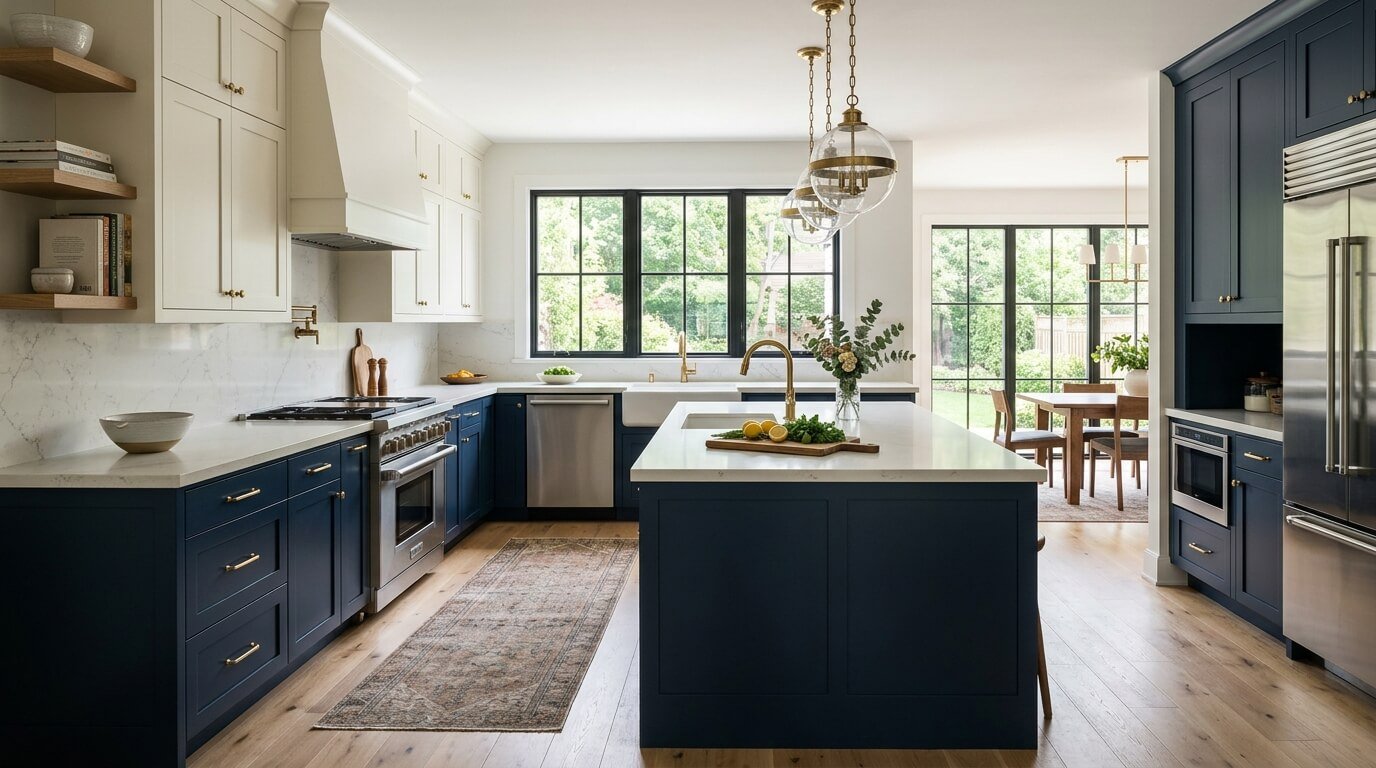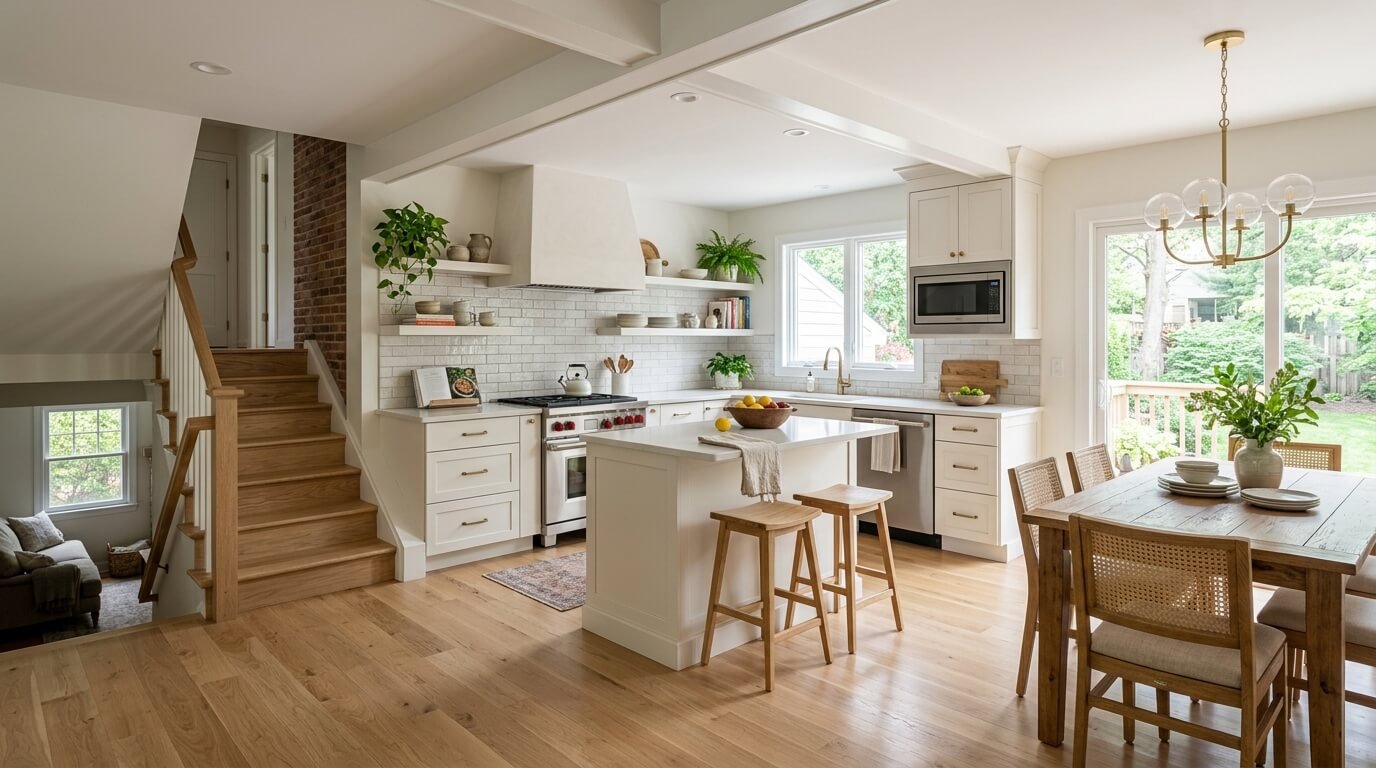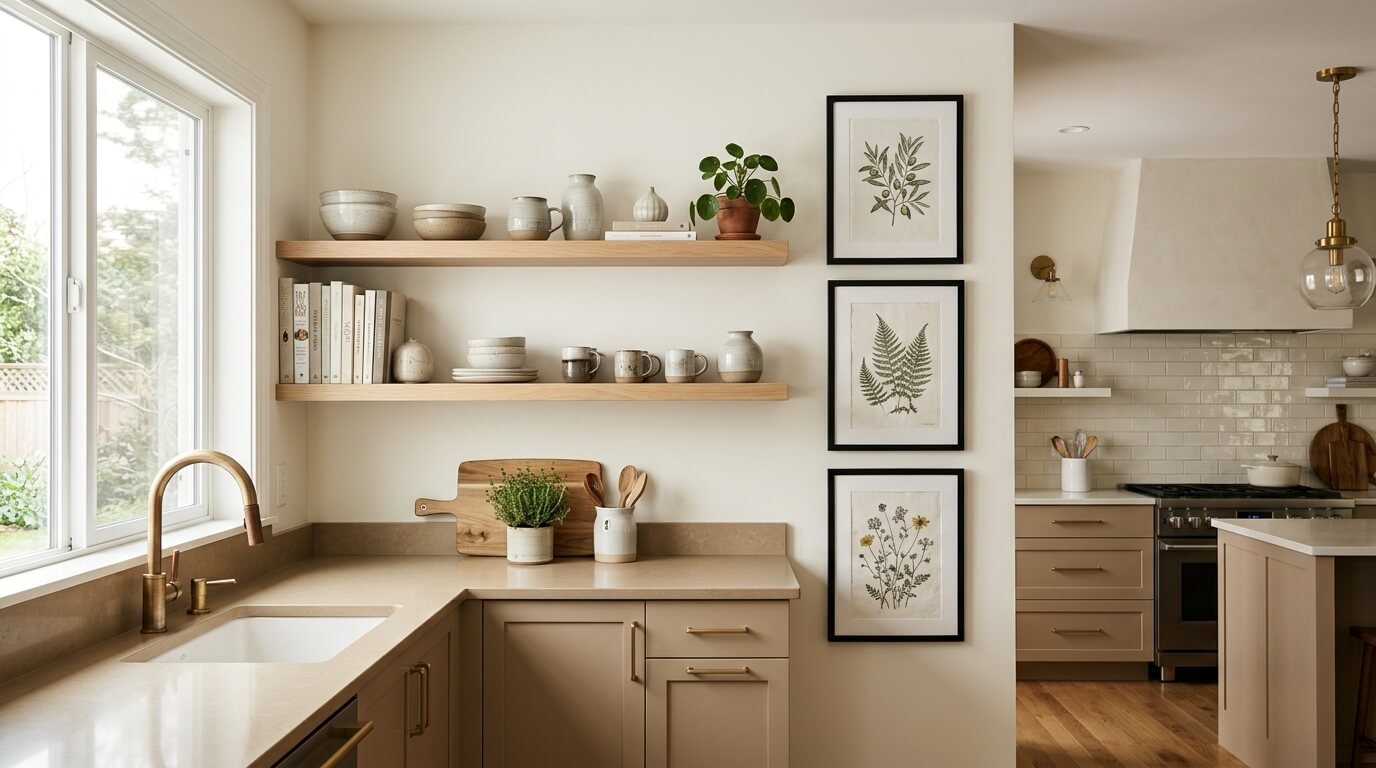
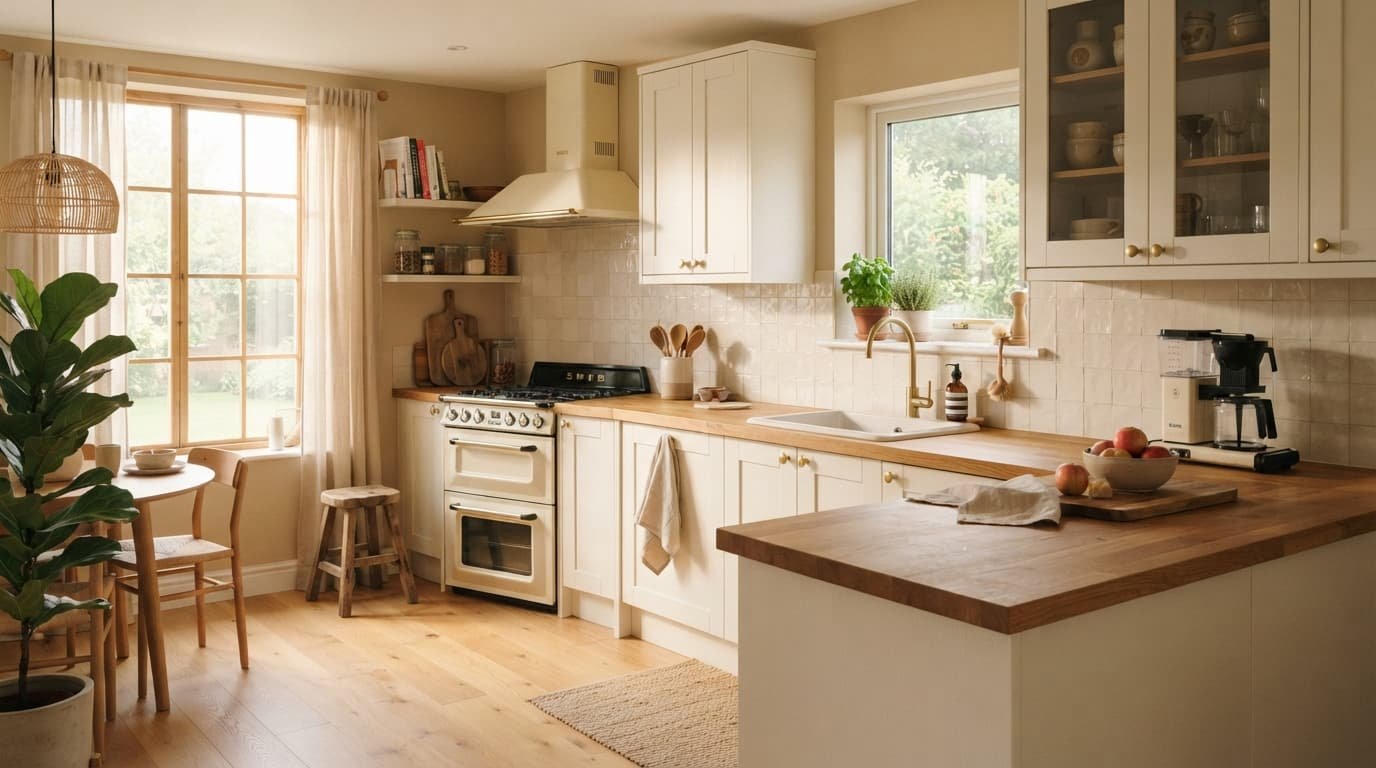
A kitchen upgrade does not always require a complete remodel. Sometimes the biggest improvement comes from fixing poor lighting, replacing worn hardware, improving storage, or updating one outdated surface.
These kitchen upgrading tips Mintpaldecor focus on practical improvements that can make a kitchen more functional, comfortable, and visually cohesive without treating every project like a full renovation.
If you’re unsure where to begin, start with the problems you notice every day. A cramped prep area, difficult-to-reach storage, poor lighting, an aging faucet, or damaged cabinets may deserve attention before purely decorative changes.
Key Takeaways
- Start by identifying the kitchen’s biggest functional problems.
- Improve lighting, storage, and frequently used fixtures before adding decorative details.
- Measure carefully before buying cabinets, appliances, shelving, or fixtures.
- Keep plumbing, electrical, ventilation, and safety requirements in mind.
- Not every kitchen needs expensive remodeling; targeted upgrades can make a noticeable difference.
What Kitchen Upgrades Should You Make First?
The best starting point depends on the condition of your kitchen, but function should generally come before decoration.
Look at these areas first:
- Problems that affect safety — damaged electrical components, poor ventilation, unstable fixtures, or other hazards.
- Problems that affect daily use — inadequate lighting, awkward storage, damaged countertops, or a difficult layout.
- Worn or outdated fixtures — cabinet hardware, faucets, sinks, lighting fixtures, and similar elements.
- Cosmetic details — paint, backsplash styling, accessories, and decorative finishes.
This approach helps prevent spending money on attractive additions while ignoring problems that make the kitchen frustrating to use.
21 Kitchen Upgrading Tips Mintpaldecor
1. Start With a Kitchen Audit
Before buying anything, walk through the kitchen and make a simple list of what is working and what is not.
Check:
- Cabinet condition
- Countertop damage
- Lighting
- Storage
- Sink and faucet
- Appliances
- Flooring
- Ventilation
- Electrical outlets
- Kitchen layout
- Wall and ceiling condition
Separate the list into must-fix, useful improvements, and purely cosmetic changes. This gives you a much clearer starting point.
2. Set a Realistic Upgrade Budget
A kitchen budget can disappear quickly when several small purchases add up.
Decide how much you are comfortable spending before choosing materials or fixtures. Then divide the budget between essential repairs, functional improvements, and finishing touches.
It is also sensible to leave some room for unexpected costs, particularly when opening walls, changing plumbing, modifying electrical systems, or working with older cabinetry.
If the existing cabinets are structurally sound, for example, refinishing or replacing hardware may be more practical than replacing the entire cabinet system.
3. Replace Outdated Cabinet Hardware
New knobs and pulls are among the simplest ways to change the appearance of a kitchen.
Choose hardware based on:
- Cabinet style
- Finish
- Size
- Comfort
- Hole spacing for existing handles
- Overall kitchen design
Measure existing hardware before ordering replacements. A beautiful handle is not useful if its mounting holes do not match your cabinet doors.
4. Refresh Cabinets Before Replacing Them
If cabinet boxes are solid and functional, consider whether they actually need replacement.
Depending on their condition, you may be able to improve them with:
- New paint or finish
- New doors
- New hinges
- New drawer hardware
- Interior organizers
- Better lighting
However, damaged cabinets, serious water damage, poor construction, or a fundamentally unsuitable layout may justify a larger renovation.
5. Improve the Main Kitchen Lighting
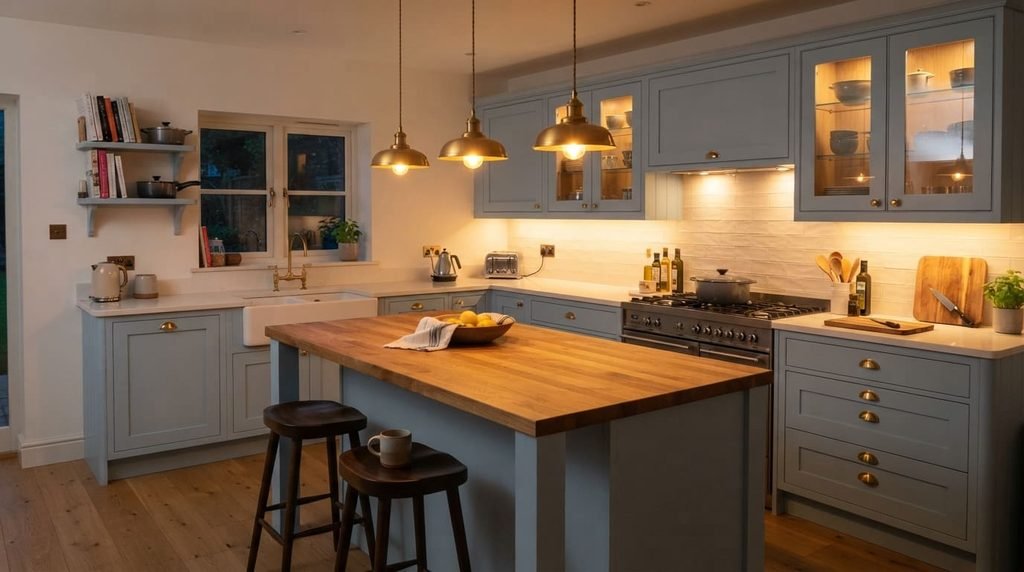
A kitchen needs more than one bright ceiling fixture.
Think about lighting in layers:
- Ambient lighting for general illumination
- Task lighting for counters and preparation areas
- Accent lighting for visual interest
Pendant lights, recessed fixtures, ceiling fixtures, and under-cabinet lights can all play different roles.
When choosing fixtures, consider the height of the ceiling, the size of the room, and whether the light actually reaches the areas where you prepare and cook food.
6. Add Under-Cabinet Lighting
Dark countertops make food preparation harder, particularly when upper cabinets block overhead light.
Under-cabinet lighting can put illumination directly over the work surface. LED fixtures are a practical option because they are available in different sizes, brightness levels, and color temperatures.
Plan the placement before installation so the light falls where you actually work rather than directly into your eyes.
7. Repair or Upgrade the Countertops
Countertops receive constant use, so condition matters more than appearance alone.
If the surface has minor damage, determine whether it can be repaired or refinished. If replacement is necessary, compare materials according to durability, maintenance, appearance, and budget.
Also think about how much usable preparation space you have. A beautiful countertop is less helpful if appliances and accessories leave very little room for food preparation.
8. Update the Backsplash
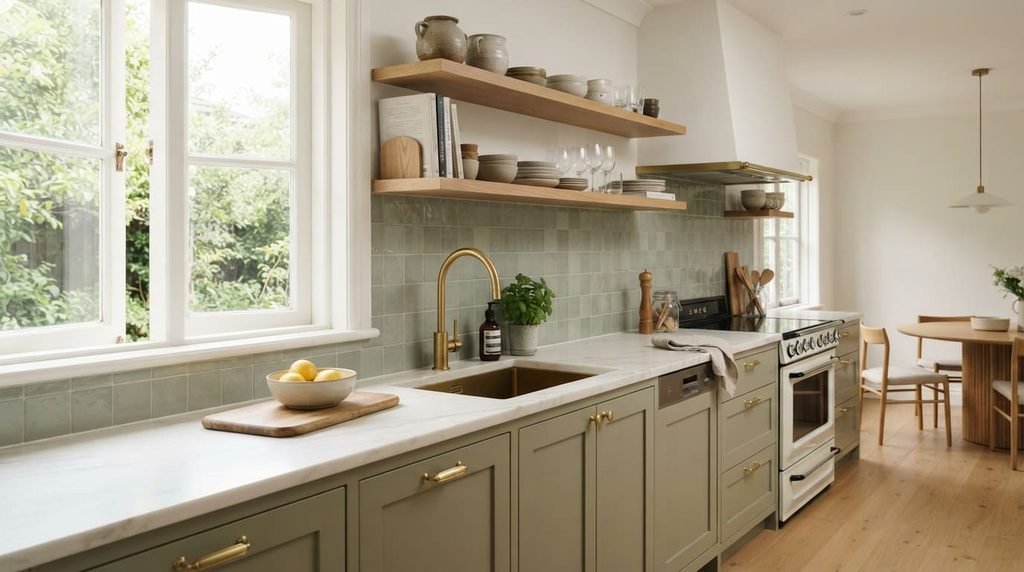
A backsplash can change the visual character of a kitchen without requiring a complete remodel.
Consider:
- Tile
- Stone
- Slab-style surfaces
- Easy-clean panels
- Simple painted areas where appropriate
Choose a backsplash that works with your cabinets and countertops rather than treating it as a completely separate design element.
If the kitchen already contains several strong patterns, a simpler backsplash may create better balance.
9. Improve Kitchen Storage
Storage problems often make a kitchen feel smaller than it really is.
Look for unused or poorly organized areas such as:
- Deep cabinets
- Corner cabinets
- Narrow gaps
- Cabinet doors
- Open wall space
- Pantry shelves
Pull-out organizers, drawer dividers, shelf risers, and vertical storage can make existing cabinets easier to use.
For more detailed organization ideas, connect this section naturally to your existing kitchen organization products article.
10. Make the Pantry Easier to Use
A pantry upgrade does not necessarily mean installing a new pantry.
Start by removing expired or unused items and grouping similar foods together. Adjustable shelves, labeled containers, baskets, and pull-out storage can make frequently used ingredients easier to find.
Keep everyday items at accessible heights and avoid filling shelves so tightly that items disappear behind one another.
11. Upgrade the Sink and Faucet
The sink and faucet are among the most frequently used kitchen fixtures, so small improvements here can have a noticeable effect.
When choosing a new faucet, consider:
- Sink size
- Faucet height
- Spout reach
- Handle style
- Spray functionality
- Installation requirements
Check compatibility before purchasing. Some sinks have specific mounting configurations, and changing the fixture may involve plumbing work.
12. Choose Appliances Based on How You Cook
Do not replace appliances simply because newer models look better.
Think about how you actually use the kitchen.
For example, consider:
- Cooking frequency
- Family size
- Available counter space
- Storage capacity
- Appliance dimensions
- Cleaning requirements
- Energy use
Measure the available opening before ordering a replacement. Even a small dimensional difference can create installation problems.
13. Consider Energy-Efficient Appliances
If an appliance needs replacement anyway, energy efficiency can be part of the decision.
Look for recognized efficiency information, including ENERGY STAR certification where applicable, and compare the operating requirements of different models.
The cheapest appliance to purchase is not necessarily the least expensive one to own over time. Consider both the purchase price and expected energy use.
14. Improve Kitchen Ventilation
Cooking creates heat, moisture, smoke, odors, and airborne particles.
A properly selected range hood or ventilation system can help remove cooking byproducts from the kitchen.
When upgrading ventilation, consider the cooking surface, hood placement, ducting requirements, and manufacturer specifications. If the work involves new ducting or electrical changes, professional installation may be appropriate.
15. Design Around Kitchen Work Zones
Instead of thinking only about the traditional “work triangle,” consider the actual activities that happen in your kitchen.
Useful zones may include:
- Food storage
- Food preparation
- Cooking
- Cleanup
- Serving
- Small-appliance use
Keep frequently used tools and ingredients close to the area where they are needed.
For example, cutting boards and knives make sense near a preparation area, while pans and cooking utensils should be convenient to the cooking zone.
16. Reconsider the Kitchen Island
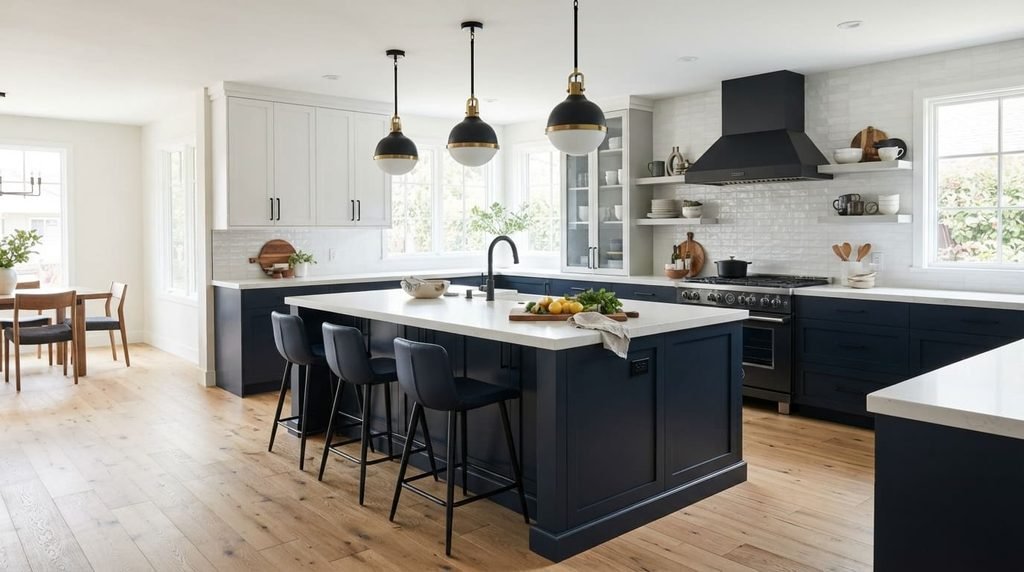
A kitchen island should improve the room rather than simply fill empty floor space.
Before adding or replacing an island, measure the walking and working areas around it.
Ask:
- Can cabinet doors open properly?
- Can appliances be used comfortably?
- Is there enough room for people to pass?
- Does the island improve preparation or storage?
- Will seating interfere with movement?
If the room is small, a narrow island, peninsula, or movable cart may be more practical than a large fixed island.
17. Refresh the Kitchen Color Scheme
Color can make an older kitchen feel noticeably different without changing every component.
You can update the palette through:
- Cabinet paint
- Wall color
- Backsplash
- Window treatments
- Rugs
- Small accessories
- Hardware finishes
Try to coordinate the major elements first. Cabinets, countertops, flooring, and backsplash usually establish the visual foundation, while accessories can provide smaller accents.
18. Upgrade Flooring Only When It Needs Attention
Flooring can be a major project, so do not replace it simply because another part of the kitchen has changed.
If the existing floor is damaged, difficult to maintain, or no longer suitable for the space, compare replacement options according to durability, moisture resistance, cleaning, comfort, and installation requirements.
If the floor is still performing well, your budget may create more value elsewhere.
19. Add Useful Smart Kitchen Features
Smart technology can be helpful when it solves a real problem.
Depending on your needs, consider features such as:
- Smart lighting controls
- Timers
- Smart plugs for compatible appliances
- Leak detection
- Energy monitoring
- Connected appliances
Avoid adding technology simply because it is available. A smart feature should make the kitchen easier, safer, or more efficient to use.
20. Make a Small Kitchen Feel More Open
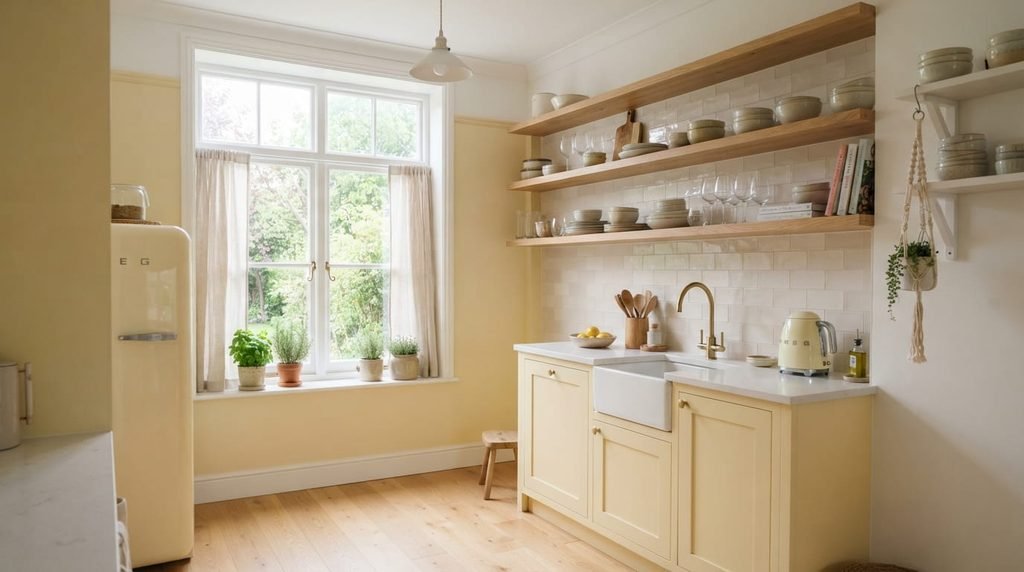
Small kitchens benefit from careful visual and functional planning.
Useful strategies include:
- Keeping counters clear
- Using vertical storage
- Choosing appropriately scaled furniture
- Improving lighting
- Using reflective or light finishes where suitable
- Reducing unnecessary visual clutter
- Making storage easier to access
You can also connect this topic with your existing small kitchen decor ideas article for readers who want more design-focused suggestions.
21. Finish With Details That Improve Daily Use
Once the major work is complete, focus on the small details that make the kitchen feel finished.
These might include:
- Drawer organizers
- A better kitchen mat
- Coordinated hardware
- Open shelving used selectively
- A practical wall storage system
- Window treatments
- Decorative accessories
- Improved task lighting
Keep function in mind. A kitchen should not become harder to clean or work in simply because more decorative items have been added.
Kitchen Upgrades to Avoid
Not every popular upgrade is a good investment for every kitchen.
Be cautious about:
Replacing Good Cabinets for Appearance Alone
If the existing cabinets are structurally sound, a cosmetic refresh may achieve the look you want without a complete replacement.
Adding an Oversized Island
A large island can reduce walking space and make a small kitchen feel cramped.
Choosing Materials Without Considering Maintenance
A material may look excellent in a showroom but require more maintenance than you want to provide.
Buying Appliances Before Measuring
Always confirm width, depth, height, door clearance, ventilation requirements, and connection requirements before ordering.
Adding Too Many Decorative Features
Multiple competing finishes, colors, patterns, and accessories can make a kitchen feel visually busy.
Doing Electrical or Plumbing Work Without the Right Expertise
Some upgrades are suitable for DIY work, while others involve electrical, gas, plumbing, structural, or code-related considerations. When a project goes beyond your experience, use a qualified professional and follow applicable local requirements.
A Practical Kitchen Upgrade Order
If you are upgrading gradually, this sequence can help:
1. Safety and repairs
Fix urgent problems first.
2. Layout and function
Address storage, work zones, movement, and counter space.
3. Major fixtures
Upgrade appliances, sink, faucet, ventilation, or other worn components when needed.
4. Cabinets and surfaces
Refresh cabinetry, countertops, backsplash, or flooring based on condition and budget.
5. Lighting
Improve ambient and task lighting.
6. Finishing touches
Add hardware, color, organization accessories, and carefully chosen decor.
This order is flexible. If your kitchen has excellent lighting but badly damaged countertops, for example, the countertop should take priority.
What Are the Most Cost-Effective Kitchen Upgrades?
The most cost-effective improvement depends on the condition of the kitchen, but smaller changes can often make a noticeable difference.
Common examples include:
- Cabinet hardware
- Better lighting
- Under-cabinet lighting
- Cabinet organization
- A new faucet
- Fresh paint
- Small storage improvements
- Selective backsplash updates
The important question is not simply, “What is cheapest?” Instead ask, “Which problem will this upgrade solve?”
An inexpensive upgrade that fixes a daily frustration may provide more practical value than an expensive decorative change.
What Kitchen Upgrades Are Renter-Friendly?
Renters can focus on improvements that do not permanently alter the property.
Options may include:
- Removable lighting
- Cabinet organizers
- Drawer dividers
- Removable backsplash products
- Temporary shelving
- New cabinet hardware when permitted
- Countertop organization
- Rugs and textiles
- Decorative accessories
Always check the lease before drilling, replacing fixtures, painting, or making other changes that could affect the property.
FAQs About Kitchen Upgrading Tips Mintpaldecor
What should I upgrade first in my kitchen?
Start with safety and functional problems. Then consider storage, lighting, worn fixtures, cabinets, surfaces, and finally decorative details.
How can I upgrade a kitchen without remodeling everything?
Focus on targeted changes such as cabinet hardware, lighting, storage, paint, faucets, backsplashes, and organization. Keeping structurally sound cabinets can also reduce the scope of the project.
What kitchen upgrade makes the biggest visual difference?
There is no single answer for every kitchen. Cabinet finishes, lighting, hardware, paint, and backsplash can all create significant visual changes, depending on what currently looks dated or worn.
Should I upgrade cabinets or countertops first?
Look at condition and function. If cabinets are damaged or the layout is poor, address them first. If the cabinets work well but the countertop is worn or damaged, the countertop may deserve priority.
Are kitchen upgrades worth doing before selling a home?
That depends on the condition of the property, local buyer expectations, and your budget. Focus on repairs and improvements that address obvious problems rather than assuming every expensive renovation will provide the same return.
Can I upgrade a small kitchen without making it feel crowded?
Yes. Prioritize clear work surfaces, appropriate-scale furniture, good lighting, vertical storage, and easy-to-access organization. Avoid adding large fixtures that restrict movement.
Conclusion
The best kitchen upgrades are not necessarily the biggest or most expensive ones. A well-planned improvement should solve a real problem while fitting the room, your budget, and the way you use the space.
Start with safety and function, then move toward cabinets, lighting, storage, fixtures, surfaces, and finishing details. Measure before purchasing, avoid unnecessary replacements, and bring in qualified professionals when a project involves work beyond your experience.
With the right priorities, even a modest kitchen upgrade can make the room easier to use and more enjoyable every day.