
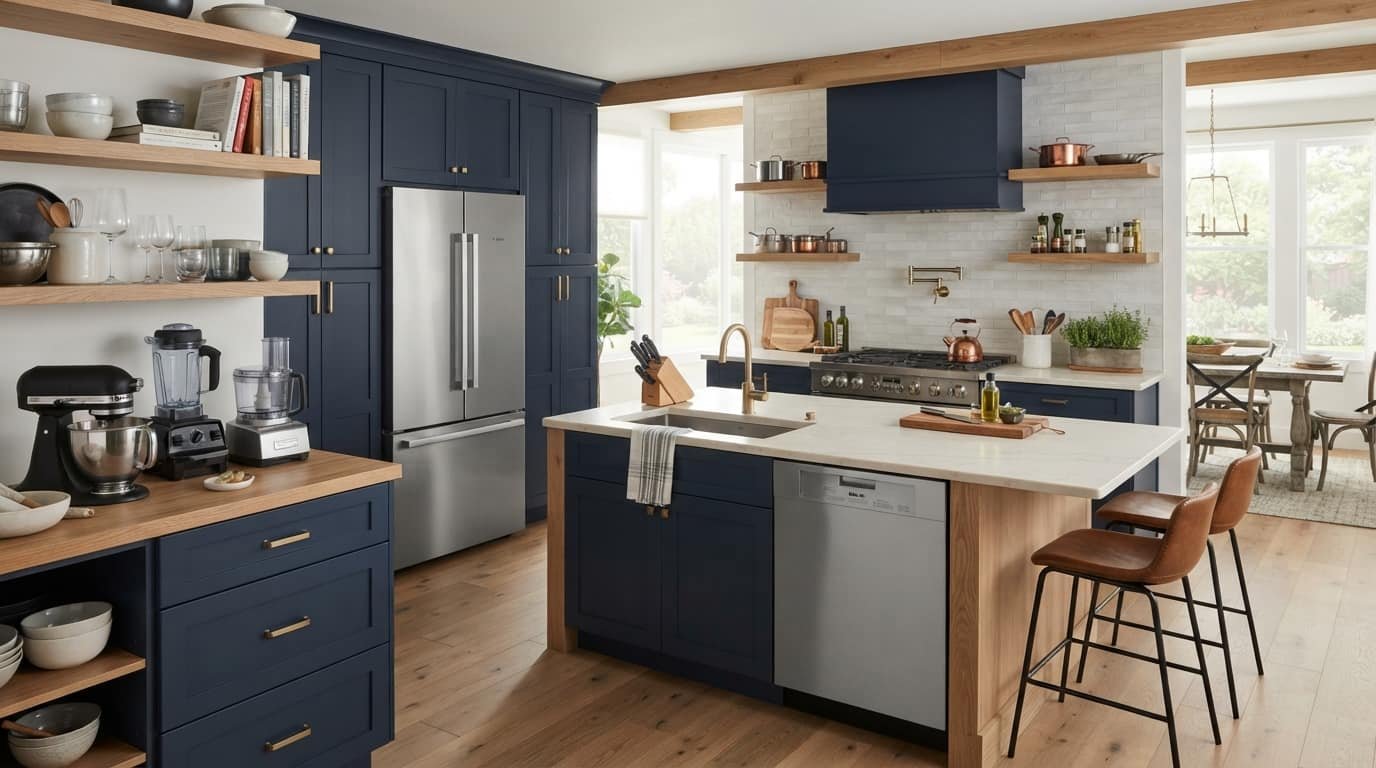
If you’re comparing KitchenAid appliances for a kitchen upgrade, the biggest challenge isn’t finding options. It’s deciding which ones actually fit your cooking habits, available space, and budget.
KitchenAid’s current lineup covers both major kitchen appliances and countertop appliances, including refrigerators, dishwashers, ranges, stand mixers, blenders, food processors, coffee equipment, and more.
The right choice depends less on having the most appliances and more on choosing the ones you’ll use regularly. Here’s what to consider.
What to Look for in KitchenAid Appliances
Before choosing a model, start with four basic questions:
- How often will you use it? A frequently used appliance can justify more useful features.
- How much space do you have? Measure openings, counter space, door clearance, and surrounding cabinetry before ordering.
- Which features solve a real problem? A third dishwasher rack or flexible refrigerator storage can be useful if your household needs them.
- Will the finish work with your kitchen? KitchenAid offers finishes such as stainless steel and PrintShield stainless steel on select appliances. PrintShield is designed to resist fingerprints and smudges and can be wiped with water and a soft cloth.
Don’t choose features simply because they appear on a premium model. Match them to the way your household actually cooks and cleans.
10 Best KitchenAid Appliances for Different Needs
1. KitchenAid French Door Refrigerator
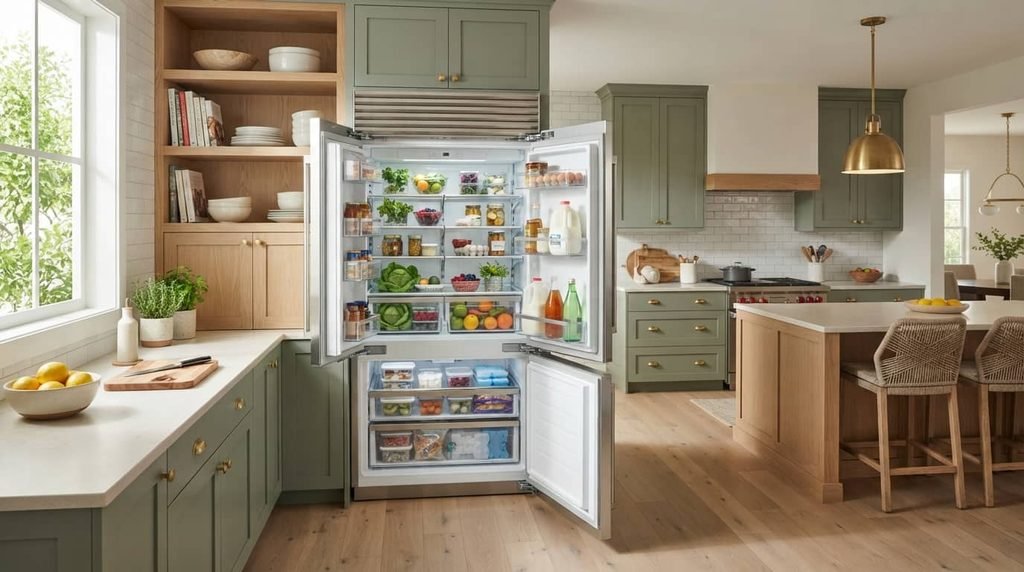
A French door refrigerator can be a practical option when you want wide refrigerator storage with the freezer positioned below.
KitchenAid currently offers several French-door configurations, including counter-depth and standard-depth models. Some models also include features such as interior or exterior water dispensing, flexible storage, and PrintShield finishes.
Before buying, check:
- Refrigerator width and depth
- Door and drawer clearance
- Counter-depth versus standard-depth design
- Interior storage arrangement
- Water and ice requirements
- Finish and cabinet coordination
For smaller kitchens, KitchenAid also offers 30-inch French-door configurations, making dimensions especially important when replacing an existing refrigerator.
2. KitchenAid Built-In Dishwasher
A built-in dishwasher is worth considering if you want a permanent cleaning station that integrates with your cabinets.
KitchenAid offers built-in models with different configurations, including top-control and panel-ready designs. Some models also use a third rack for utensils and smaller items.
Noise can also matter in an open kitchen. KitchenAid’s current dishwasher lineup includes models rated as low as 39 dBA.
Before purchasing, measure the existing opening rather than assuming every dishwasher will fit the same way.
3. KitchenAid Commercial-Style Range

A KitchenAid commercial style range is aimed at home cooks who want more cooking space and restaurant-inspired features.
Current KitchenAid commercial-style ranges are available in gas, dual-fuel, and induction configurations, with sizes including 30, 36, and 48 inches. Depending on the model, features can include high-output burners, convection cooking, griddles, wok grates, and air-fry functions.
However, bigger isn’t automatically better.
A large range needs adequate room, suitable ventilation, and an installation plan that matches the kitchen. KitchenAid specifically advises considering ventilation requirements when selecting a commercial-style range.
4. KitchenAid Stand Mixer
The stand mixer remains one of the most recognizable KitchenAid countertop appliances.
It’s particularly useful for households that regularly make bread, cookies, cakes, pizza dough, frosting, or other recipes requiring extended mixing.
The key question isn’t whether a stand mixer is popular. Ask whether you actually bake or prepare dough often enough to justify keeping one on your counter or storing it nearby.
5. KitchenAid Stand Mixer Attachments

One advantage of the stand mixer platform is that compatible attachments can expand what the mixer can do.
KitchenAid currently lists more than 10 stand mixer attachment options covering categories such as fresh preparation, grinding, pasta and grains, and desserts. The company recommends checking mixer compatibility before choosing an attachment.
This makes attachments worth considering when you want to get more functionality from a mixer you already own.
6. KitchenAid Countertop Blender
A countertop blender can handle tasks such as smoothies, sauces, soups, dips, and other blended recipes.
KitchenAid’s current blender range includes different models and speed configurations, while its product guidance distinguishes countertop blenders from immersion blenders based on how they are used.
When comparing models, consider:
- What ingredients you normally blend
- Jar size
- Speed controls
- Preset programs
- Counter space
- Ease of cleaning
For occasional smoothies, you may not need the same type of blender as someone who regularly makes soups, sauces, or nut-based recipes.
7. KitchenAid Food Processor
A food processor is useful for jobs that would take longer with a knife, including chopping, slicing, shredding, mixing, and certain dough-preparation tasks.
KitchenAid currently offers food processors in several capacities, including 7-, 9-, and 13-cup options, as well as smaller food choppers.
Choose capacity based on how much food you normally prepare. A smaller household may have little reason to occupy counter or cabinet space with the largest model.
8. KitchenAid Countertop Oven
A countertop oven can be useful when you want another compact cooking option without installing another full-size appliance.
KitchenAid currently categorizes countertop ovens alongside its other countertop appliances. They can be used for tasks such as baking, roasting, and toasting, depending on the model.
Check the oven’s exterior dimensions and the amount of ventilation or clearance required before placing it in a tight kitchen area.
9. KitchenAid Coffee and Espresso Appliances
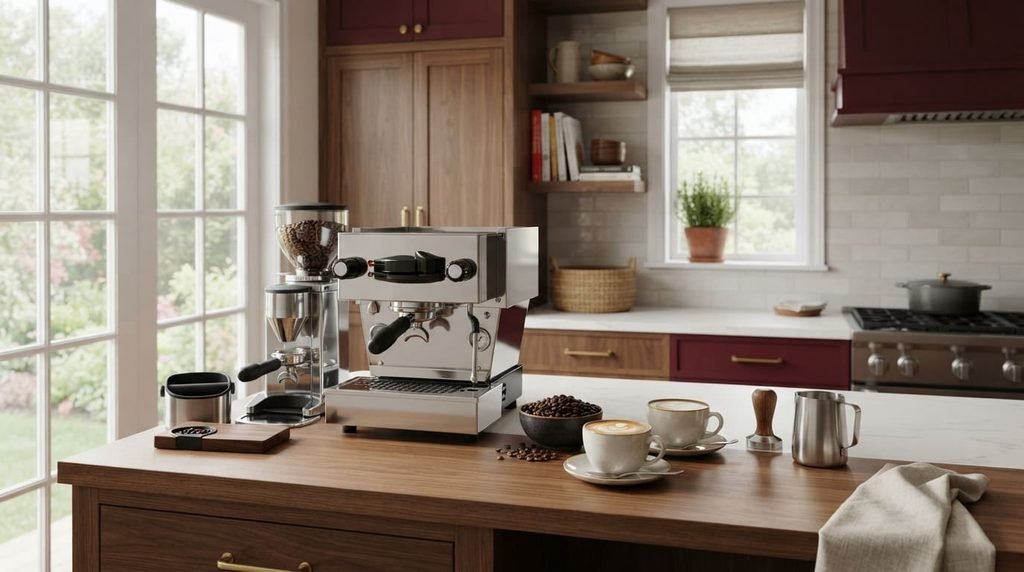
For households that make coffee every day, a coffee or espresso appliance can be one of the most frequently used countertop purchases.
KitchenAid’s current countertop range includes coffee equipment such as espresso machines and burr grinders.
Think about your normal routine before choosing one. Someone who wants simple morning coffee has different needs from someone who regularly prepares espresso-based drinks.
10. KitchenAid Hand Mixer
A hand mixer can make sense when you want mixing capability without committing counter space to a full stand mixer.
KitchenAid currently offers hand mixers as part of its countertop appliance lineup.
It’s particularly convenient for smaller mixing jobs or kitchens where storage space is limited.
How to Choose the Right KitchenAid Appliances
Instead of buying a matching set automatically, build your appliance list around your kitchen.
For a full kitchen renovation: Start with the major appliances that determine cabinet layout and utility connections, such as the refrigerator, dishwasher, and range.
For a smaller kitchen: Prioritize appliances that solve frequent problems without consuming valuable counter space.
For frequent bakers: A stand mixer and suitable attachments may provide more value than several smaller appliances.
For food-prep-heavy households: A food processor or blender may get more regular use.
For entertainers: Refrigerator capacity, dishwasher loading flexibility, and cooking space may matter more than countertop color.
The best combination is the one that matches your actual routine.
Are KitchenAid Appliance Package Deals Worth Considering?
KitchenAid offers appliance packages and allows shoppers to add multiple major appliances to a package.
A coordinated package can make sense when you’re replacing several major appliances during the same kitchen renovation. Matching finishes can also create a more consistent appearance.
But don’t buy an appliance simply because it completes a package.
Compare each appliance independently first. Check its dimensions, required installation conditions, features, warranty information, and whether those features matter to your household.
A package is most useful when the individual appliances are already suitable for your kitchen.
KitchenAid Appliances: What to Check Before Buying
Measure Before Ordering
Write down the available width, height, and depth for every major appliance. Also consider doors, drawers, cabinet trim, nearby walls, and pathways used to bring the appliance into the home.
Check the Installation Requirements
Ranges, dishwashers, refrigerators, and built-in appliances can have different electrical, plumbing, ventilation, or cabinet requirements.
Use the manufacturer’s installation documentation for the specific model rather than relying on measurements from a similar-looking appliance.
Compare Features, Not Just Appearance
Two appliances can look similar while offering different storage layouts, controls, racks, cooking modes, or installation configurations.
Make a short list of the features you will actually use.
Consider the Finish
PrintShield stainless steel is available on select KitchenAid appliances and is designed to resist fingerprints and smudges.
If you’re buying several appliances separately, compare their exact finishes rather than assuming all stainless steel surfaces will look identical.
Think About Long-Term Ownership
KitchenAid appliance lifespan and reliability should not be judged from brand reputation alone.
Actual longevity can vary by appliance type, model, usage, maintenance, installation, and repair history. Before purchasing, check the manufacturer’s warranty and support information for the exact model.
KitchenAid also maintains an owner-support area with manuals, documents, troubleshooting resources, and service information.
Frequently Asked Questions
Are KitchenAid appliances good for a modern kitchen?
KitchenAid offers both major and countertop appliances in a range of configurations and finishes, so the suitability of a particular appliance depends on the kitchen layout, cooking habits, and features needed.
What is the benefit of a KitchenAid French door refrigerator?
French-door designs place the refrigerator compartment above a lower freezer and can provide convenient access to fresh-food storage. KitchenAid offers French-door models in different sizes and configurations, including counter-depth options.
Are KitchenAid built-in dishwashers worth considering?
They can be useful when you want a permanent dishwasher integrated into the kitchen cabinetry. Available features vary by model, including third racks, panel-ready designs, and different noise levels.
What are KitchenAid stand mixer attachments used for?
Compatible attachments can expand the functions of a KitchenAid stand mixer into areas such as fresh preparation, grinding, pasta and grains, and desserts. Compatibility should be checked for the specific mixer.
Should I buy a complete KitchenAid appliance package?
A package can be convenient when replacing several major appliances at once, but compare each appliance individually before purchasing. A coordinated appearance shouldn’t outweigh poor fit, unnecessary features, or unsuitable installation requirements.
Final Takeaway
The smartest way to shop for KitchenAid appliances is to start with your kitchen rather than the product catalog.
Measure your space, identify the appliances you use most, and prioritize features that solve everyday problems. A French-door refrigerator, built-in dishwasher, commercial-style range, stand mixer, blender, or food processor can each make sense—but only when it matches the way your household actually cooks and uses the kitchen.
Choose the appliances individually first. Then consider coordinated finishes or an appliance package if they make practical and financial sense.
Related resources: Kitchen Upgrading Tips Mintpaldecor: 21 Smart Ideas · Kitchen Organization Products That Actually Work
Related resource: Kitchen Under Cabinet Lighting: 9 Essential Rules for a Flawless Setup

One thought on “10 Best KitchenAid Appliances: Smarter Choice”