A modern home exterior is about more than white walls, black windows, and a few large panes of glass. The best designs combine clean architectural lines with thoughtful materials, balanced colors, practical lighting, and landscaping that fits the home.
You also don’t need to build a completely new house to get the look. A new front door, updated siding, modern exterior colors, better lighting, or a carefully planned landscape can dramatically change an older facade.
Whether you’re building a home, updating a dated exterior, or looking for inspiration, the goal is to create a facade that looks current without relying on a trend that may feel dated a few years from now.
What Is a Modern Home Exterior?
Modern exterior design typically emphasizes simplicity, function, clean geometry, and carefully controlled materials.
Common characteristics include:
- Clean horizontal or vertical lines
- Simple geometric forms
- Minimal decorative details
- Neutral, earthy, or monochromatic colors
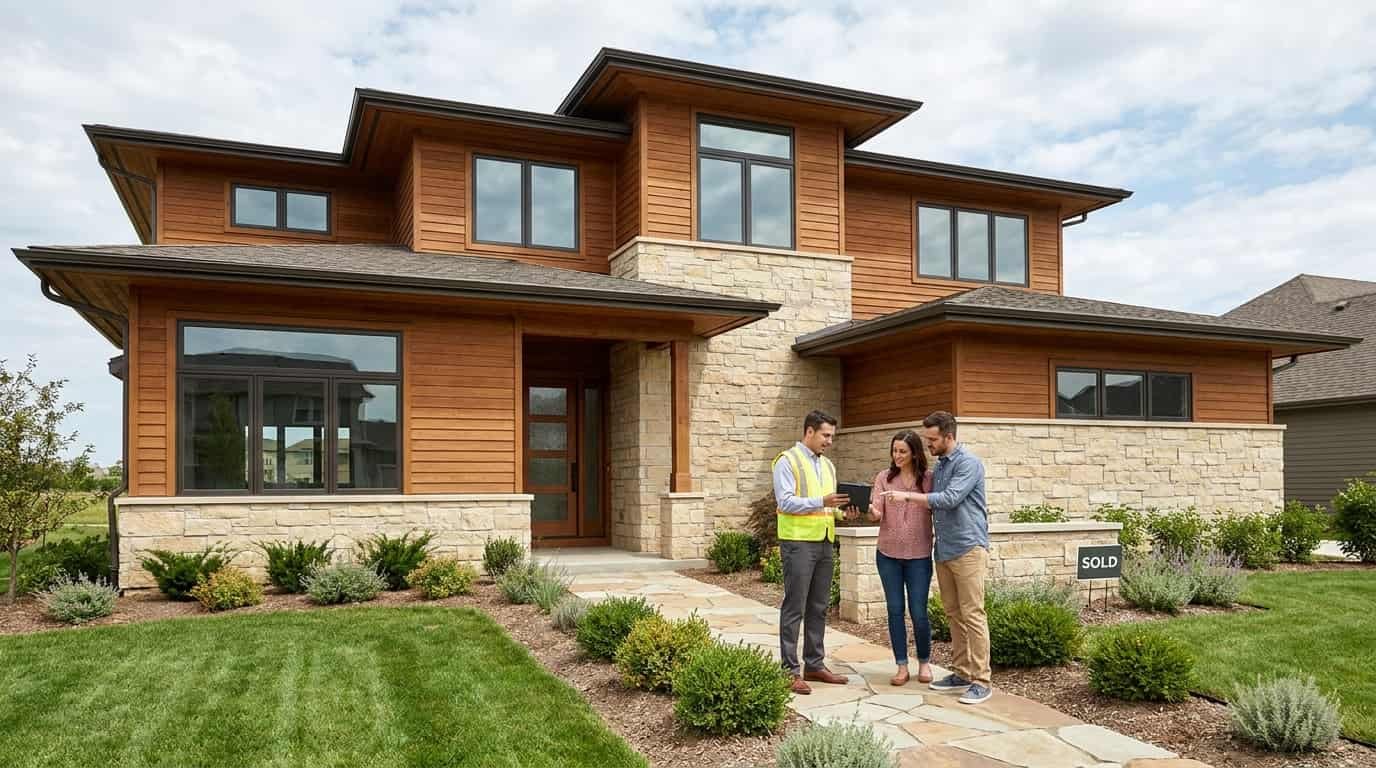
- Natural wood and stone
- Large or strategically positioned windows
- Simple rooflines
- Mixed exterior textures
- Minimalist landscaping
- Well-integrated outdoor lighting
Modern does not necessarily mean cold or stark. Warm wood, natural stone, muted colors, greenery, and softer lighting can make a modern facade feel comfortable and welcoming.
The most successful designs usually have a clear visual hierarchy: one dominant material or color, one or two supporting elements, and a few carefully chosen accents.
25 Modern Home Exterior Ideas
You don’t need to use all of these ideas. Choose the ones that complement your home’s architecture, proportions, climate, and budget.
1. Combine White With Natural Wood
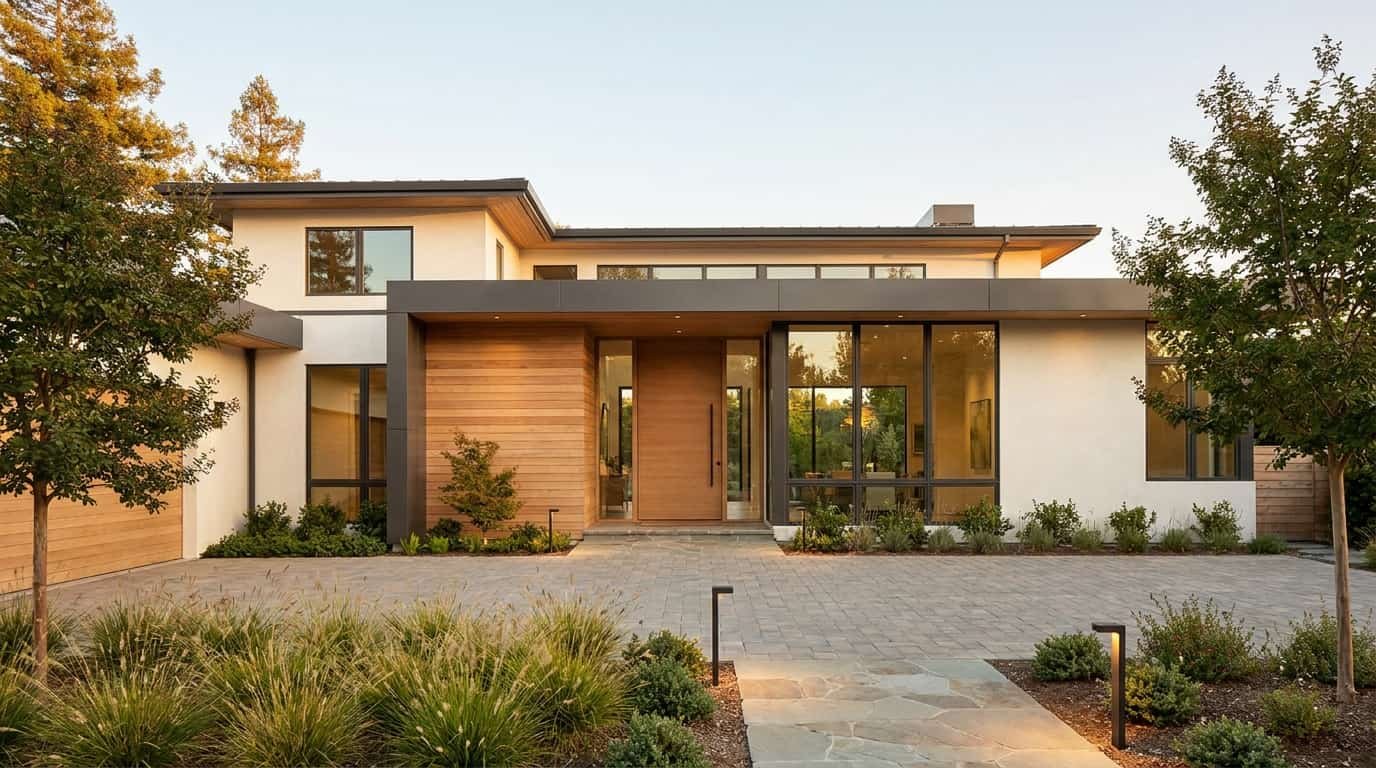
White siding or stucco creates a clean backdrop, while natural wood adds warmth.
Use wood around the front door, garage, porch ceiling, or a small portion of the facade instead of covering the entire house. Black or bronze window frames can complete the look.
2. Try a Black-and-White Exterior
Black and white create strong architectural contrast without requiring a complicated material palette.
For a balanced facade, let white or another light neutral dominate, and use black for window frames, doors, trim, lighting, or other smaller details.
3. Choose Warm Neutral Colors
Modern homes don’t have to be gray.
Warm white, beige, taupe, sand, and greige can create a contemporary appearance while giving the exterior a softer, more welcoming character.
These colors pair particularly well with natural wood, stone, and dark metal accents.
4. Add a Stone Accent
Stone can introduce texture and visual weight to a simple facade.
Rather than covering the whole house, use it around an entry, chimney, lower wall, or another architectural feature.
Choose a stone whose undertones work with your siding, roof, and other exterior materials.
5. Mix Stucco and Wood
Smooth stucco and warm wood make a useful combination for contemporary and modern architecture.
A light stucco facade with wood around the entrance can create contrast without making the house look overly busy.
6. Use Large Windows Strategically
Large windows are common in modern architecture because they can strengthen the connection between indoor and outdoor spaces.
But bigger isn’t always better.
Consider the home’s orientation, privacy, energy performance, shading, and existing proportions before enlarging windows simply for appearance.
7. Make the Front Door a Focal Point
A modern front door can completely change the character of an exterior.
Popular approaches include:
- Natural wood
- Matte black
- Dark bronze
- Simple glass panels
- Minimal hardware
- Wide, clean-lined designs
If replacing the door isn’t practical, new hardware and lighting can still make the entrance look more current.
8. Upgrade the Garage Door
The garage can occupy a large portion of the front facade, so an outdated garage door can undermine an otherwise modern design.
Consider a simple horizontal-panel door, a contemporary window arrangement, or a wood-look finish that coordinates with the front entrance.
9. Use Vertical Siding
Vertical siding can emphasize height and add a clean architectural rhythm.
It’s particularly useful on smaller or narrow homes where vertical lines can help draw the eye upward.
You can also use it only around the entrance or another architectural section rather than across the entire house.
10. Emphasize Horizontal Lines
Horizontal siding, long windows, extended rooflines, and low planting beds can make a home feel wider.
This approach works particularly well with single-story homes and mid-century-inspired architecture.
11. Keep the Material Palette Simple
One of the easiest ways to create a sophisticated modern exterior is to avoid using too many competing finishes.
A practical combination might be:
Primary: warm-white stucco
Secondary: natural wood
Accent: matte black metal
Another option could be:
Primary: fiber cement siding
Secondary: stone
Accent: dark bronze
The exact materials can change. The important part is establishing a clear visual hierarchy.
12. Add Modern Exterior Lighting
A well-designed facade shouldn’t disappear after sunset.
Use layers of lighting rather than one extremely bright fixture:
- Entry sconces
- Recessed soffit lighting
- Pathway lights
- Step lights
- Garage lighting
- Landscape uplighting
Lighting can also emphasize architectural details such as textured walls, trees, pathways, and the front entrance.
13. Simplify the Landscaping
Modern landscaping doesn’t mean removing all the plants.
Instead, use fewer plant varieties and clearer groupings.
Ornamental grasses, structured shrubs, native plants, trees, gravel, large planters, and simple pathways can complement a clean architectural facade without competing with it.
14. Extend the Roofline
A strong roofline can become one of the defining features of a modern house.
Simple overhangs and extended eaves can reinforce horizontal lines while also providing shade and weather protection.
Because roof changes affect drainage, structure, ventilation, and other building-performance considerations, this is an area where appearance should not be the only consideration.
15. Create a Strong Entryway
A clearly defined entrance makes the facade easier to read.
Frame the doorway with wood, stone, contrasting siding, lighting, planters, or a covered porch.
You don’t need all of these features. One or two strong elements are often enough.
16. Combine Concrete With Wood
Concrete provides a clean, architectural appearance, while wood adds warmth.
For example, concrete-colored walls or paving can be balanced with a wood front door, timber-look siding, or natural planting.
17. Use Dark Colors as Accents
Charcoal and other deep colors can look striking on a modern exterior.
Instead of automatically painting the entire house black, consider using a dark shade on the door, garage, window frames, a section of siding, or another architectural feature.
18. Frame the House With Greenery
Landscaping can soften hard architectural lines.
Use plants strategically around the entrance, corners, pathways, and windows rather than scattering them randomly across the property.
19. Create an Indoor-Outdoor Connection
Large windows, sliding doors, patios, decks, and consistent materials can visually connect interior and exterior spaces.
For example, warm wood tones used around a patio can echo flooring or furniture inside the home.
20. Use Modern House Numbers
Small details matter.
Clean-lined house numbers can replace decorative or difficult-to-read designs and provide an inexpensive way to update the entrance.
Install them where they’re clearly visible and properly illuminated at night.
21. Add a Contemporary Porch
A simple porch can make a modern house more welcoming while providing useful outdoor living space.
Use straightforward posts, a clean roofline, restrained lighting, and furniture that fits the scale of the house.
22. Try a Modern Farmhouse Exterior
Modern farmhouse design can combine contemporary simplicity with familiar materials such as siding, wood, and dark accents.
A restrained color palette and simple architecture help keep the look modern rather than overly decorative.
23. Use Natural Materials for Warmth
Wood and stone can keep a modern facade from feeling too industrial.
The key is to use them intentionally. Repeating the same wood tone or stone in more than one location can make the exterior feel more cohesive.
24. Make a Small Home Look Larger
For a smaller property, simplicity is especially important.
A limited color palette, appropriately scaled windows, a strong entry, vertical elements, and uncluttered landscaping can make a small house feel more spacious.
Avoid filling the facade with too many small decorative features.
25. Let the Architecture Do the Work
Sometimes the best modern exterior design is the simplest one.
If your home already has attractive proportions, you may not need multiple cladding materials, dramatic colors, or decorative additions.
Good proportions, quality materials, appropriate lighting, and well-maintained landscaping can create a stronger result than an exterior packed with trends.
Modern Home Exterior Design Styles to Know
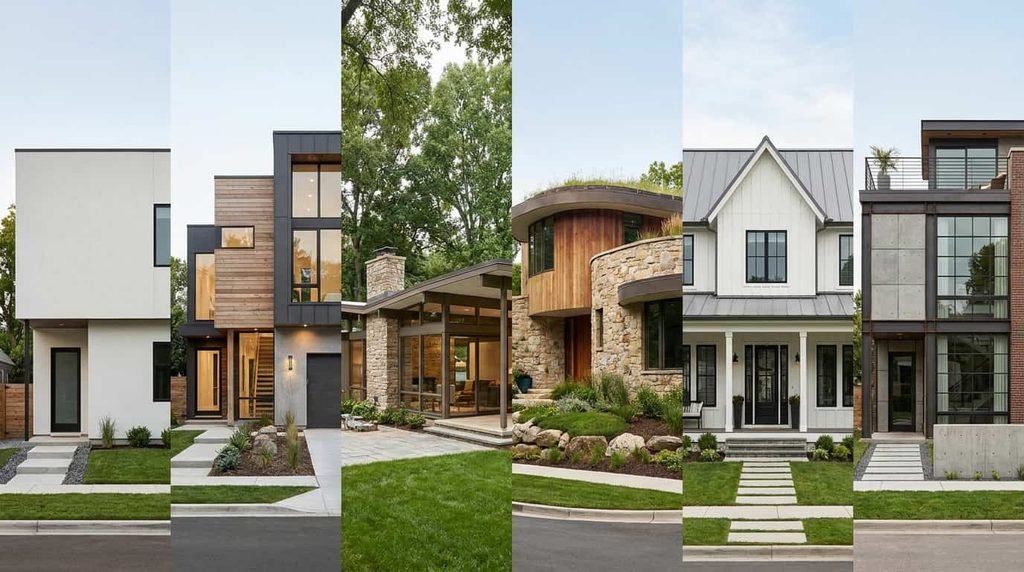
Not every modern-looking house follows the same design language. Identifying the style you prefer can make it easier to choose compatible materials and colors.
Minimalist Modern
Minimalist exteriors focus on clean geometry, simple surfaces, limited colors, and very little ornamentation.
Because there are fewer decorative elements, proportions and material quality become especially important.
Contemporary Modern
Contemporary design reflects current architectural preferences and can incorporate changing materials, shapes, colors, and technologies.
Unlike a fixed historical style, contemporary design evolves.
Mid-Century Modern Home Exterior
A mid-century modern home exterior typically emphasizes horizontal lines, simple roof forms, large windows, natural materials, and a strong relationship between indoor and outdoor spaces.
If you own an original mid-century house, preserving its basic proportions can be more effective than trying to make it look like a completely different style.
For example, updating worn siding, restoring wood details, replacing dated lighting, and improving landscaping can refresh the property while retaining its original character.
Organic Modern Home Exterior
An organic modern home exterior combines modern simplicity with natural materials and softer visual elements.
Think:
- Natural wood
- Stone
- Warm neutrals
- Textured surfaces
- Native or naturalistic landscaping
- Simple architectural forms
The result is modern without feeling overly rigid or industrial.
This style works particularly well for homeowners who like contemporary architecture but want a warmer connection with nature.
Modern Farmhouse
Modern farmhouse exteriors often use simple forms, siding, dark windows, wood accents, and restrained landscaping.
The modern version works best when decorative farmhouse details are kept under control.
Industrial Modern
Industrial modern design can feature metal, concrete, dark colors, exposed-looking materials, and large windows.
Because these elements can feel visually hard, wood and greenery can be useful for adding warmth.
Modern Home Exterior Colors: 7 Combinations to Consider
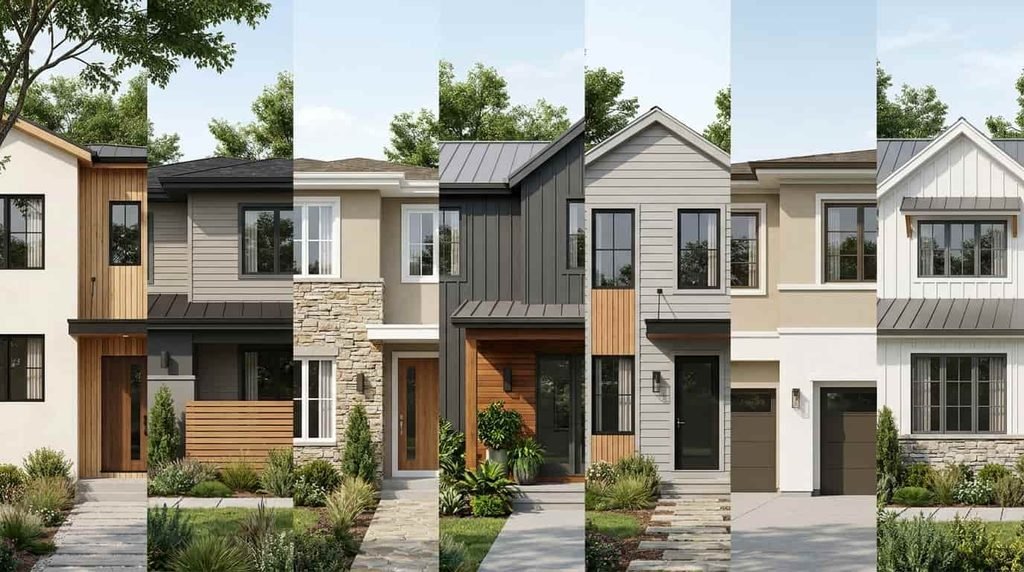
Choosing exterior colors becomes easier when you think about the entire facade instead of selecting a single paint color.
Warm White + Natural Wood + Black
Use warm white as the dominant color, natural wood around the entrance, and black for smaller architectural details.
This is a versatile combination because it provides contrast without making the facade feel overly cold.
Greige + Charcoal + Wood
Greige offers a softer alternative to cool gray.
Pair it with charcoal accents and warm wood for a balanced contemporary exterior.
Beige + White + Natural Stone
This combination is useful when you want a modern home to feel warm and grounded.
The stone can be concentrated around the entrance or lower part of the facade.
Charcoal + Warm Wood + Greenery
A dark exterior can become much more inviting when balanced with natural wood and substantial planting.
Soft Gray + Cedar + Matte Black
Soft gray provides a neutral base, cedar adds warmth, and matte black creates definition.
Sand + White + Dark Bronze
This palette can work particularly well when you want something softer than black-and-white but still distinctly modern.
White + Stone + Dark Gray
White keeps the facade bright, stone adds texture, and dark gray provides contrast without the intensity of pure black.
A Practical Color Tip
Always test exterior colors on the actual property before committing.
A paint color can look very different in direct sunlight, shade, morning light, and evening light. The roof, driveway, neighboring buildings, landscaping, and existing materials can also affect how the color appears.
Best Materials for a Modern Home Exterior
The right material depends on more than appearance. Maintenance requirements, climate, installation quality, durability, and budget all affect the decision.
| Material | Appearance | Maintenance | Common Modern Uses |
|---|---|---|---|
| Fiber cement | Clean and versatile | Low to moderate | Siding and accents |
| Wood | Warm and natural | Moderate to high | Siding and entry details |
| Brick | Textured and timeless | Generally low | Walls and feature areas |
| Stucco | Smooth and minimal | Moderate | Full facades |
| Stone | Natural and substantial | Generally low | Accent walls and lower sections |
| Metal | Sleek and industrial | Low to moderate | Siding, roofs, and accents |
| Vinyl siding | Versatile | Generally low | Full exterior or sections |
| Concrete | Minimal and architectural | Varies | Walls, paving, and accents |
Fiber Cement
Fiber cement can provide the clean appearance associated with modern siding while offering a range of textures and finishes. It can be used across an entire facade or combined with wood, stone, or metal accents.
Wood
Wood brings warmth and natural variation to modern architecture. The trade-off is maintenance. Depending on the species, finish, exposure, and local climate, wood may require more regular care than some manufactured alternatives.
Brick
Brick can give a modern home texture without making it look overly decorative. Modern brick designs often use simple colors and clean joints rather than highly ornamental patterns.
Stucco
Stucco creates a smooth, continuous surface that works well with minimalist architecture. Its suitability and maintenance requirements vary by climate and construction system, so local conditions should be considered before choosing it.
Stone
Stone is particularly useful when you want to introduce texture without adding a bright color. Using it strategically around an entrance, chimney, or lower facade can provide visual weight without overwhelming the house.
Metal
Metal can produce a distinctly contemporary or industrial appearance. It can be used for siding, roofing, window frames, railings, or small architectural accents.
How to Mix Materials in a Modern Exterior
Mixed materials can make a facade more interesting, but adding too many finishes can create visual clutter.
A simple approach is to establish:
One primary material + one secondary material + a few accents
For example:
- Fiber cement siding + natural wood + black metal
- Stucco + stone + wood
- Brick + wood + dark metal
- Concrete + wood + greenery
You can think of this as a visual hierarchy rather than a strict percentage rule.
The primary material should cover most of the facade. The secondary material should reinforce an architectural feature, such as the entrance or garage. Accents should remain relatively limited.
Repeating materials also helps. If you use wood around the front door, repeating a similar tone on the porch ceiling or another small section can make the design feel intentional.
Modern Home Exterior Renovation: Where Should You Start?
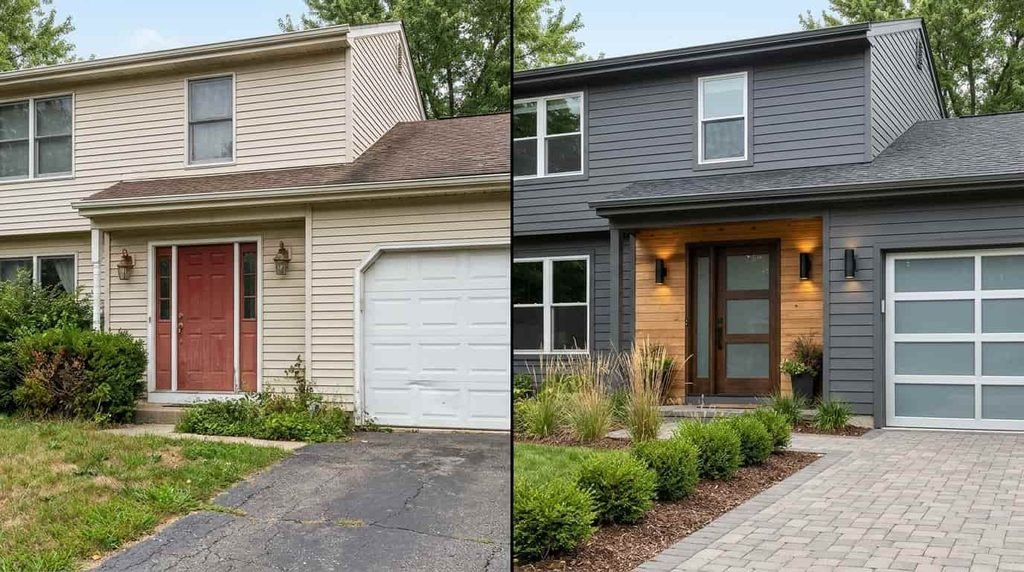
A modern home exterior renovation doesn’t always require replacing everything.
Start by identifying the elements that make the biggest visual difference.
Step 1: Assess the Existing Architecture
Look at the roofline, windows, siding, entry, garage, porch, and overall proportions.
Ask what already works and what actually looks dated.
Step 2: Fix Maintenance Issues First
Before investing in cosmetic improvements, address problems such as damaged siding, water intrusion, deteriorated trim, or drainage issues.
A modern paint color won’t solve an underlying exterior problem.
Step 3: Choose a Design Direction
Decide whether you prefer minimalist modern, mid-century modern, organic modern, modern farmhouse, or another variation.
This prevents you from buying unrelated materials simply because you like them individually.
Step 4: Choose the Main Material and Color
Select the dominant exterior finish first.
Then choose supporting materials and accents that complement it.
Step 5: Upgrade High-Visibility Features
If your budget is limited, prioritize features people notice first:
- Front entrance
- Garage door
- Exterior color
- Lighting
- Landscaping
- House numbers
Step 6: Consider the Roof and Windows
If these elements are visibly outdated, they can undermine the rest of the renovation.
You don’t necessarily need to replace them, but they should be considered when choosing new colors and materials.
Step 7: Finish With Landscaping and Lighting
These details help tie the entire renovation together.
How to Modernize a House on Different Budgets
You don’t have to complete every improvement at once.
Lower-Cost Updates
Start with:
- Exterior paint
- House numbers
- New light fixtures
- Door hardware
- Planters
- Landscape cleanup
- Mulch or gravel
- Updated mailbox
Medium-Investment Updates
Consider:
- Front door replacement
- Garage door replacement
- New railings
- Partial siding replacement
- New porch elements
- Entryway improvements
- More substantial landscaping
Larger Renovations
These can include:
- Complete siding replacement
- Window replacement
- New exterior cladding
- Major porch construction
- Entryway redesign
- Roof changes
- Significant facade alterations
For structural changes, major window modifications, roof work, or other substantial renovations, check local requirements and use qualified professionals where appropriate.
Modern Exterior Ideas for Different House Types
Small Houses
Keep the material palette simple and use the entrance as a focal point.
Vertical siding, well-proportioned windows, a contrasting door, and uncluttered landscaping can create a modern appearance without making the house feel busy.
Ranch and Single-Story Homes
Emphasize horizontal lines with long rooflines, horizontal siding, extended overhangs, and low landscaping.
Mid-century modern influences can also work particularly well with many ranch-style homes.
Two-Story Houses
Balance the upper and lower levels through repeated colors or materials.
For example, a light siding system can be combined with stone around the lower facade and wood at the entrance.
Narrow Houses
Vertical details and tall windows can emphasize height.
Keep the facade relatively simple so it doesn’t become visually fragmented.
Large Homes
Large facades need structure.
Instead of adding more materials, divide the exterior into logical areas and repeat colors or finishes to maintain cohesion.
Modern Exterior Design and Climate
A beautiful facade still needs to perform well in its environment.
Hot Climates
Consider:
- Exterior shading
- Roof overhangs
- Window orientation
- Appropriate glazing
- Reflective or suitable roofing materials
- Landscaping for shade
Large windows should be evaluated for solar exposure and energy performance rather than appearance alone.
Cold Climates
Pay attention to:
- Insulation
- Air sealing
- Energy-efficient windows
- Weather-resistant materials
- Snow and water management
Humid and Rainy Climates
Moisture management becomes especially important.
Proper drainage, flashing, cladding installation, ventilation where appropriate, and material selection can have a major effect on long-term performance.
Coastal Locations
Salt, moisture, wind, and corrosion can affect exterior materials and hardware.
Products should be selected for the actual exposure conditions rather than appearance alone.
Energy-Efficient Features for a Modern Exterior
Modern appearance and energy performance can work together.
Potential improvements include:
- Energy-efficient windows
- Exterior shading
- Well-insulated walls and roofs
- Weather-resistant exterior doors
- Proper air sealing
- Efficient outdoor lighting
- Strategic landscaping
- Solar panels where appropriate
The important point is that an energy-efficient exterior is not defined by appearance alone. Installation quality, climate, orientation, insulation, windows, and the home’s overall construction all influence performance.
Modern Exterior Lighting Ideas
Think of outdoor lighting in layers.
Entry Lighting
Use sconces or another appropriately scaled fixture around the front door.
Architectural Lighting
Recessed or concealed lighting can highlight rooflines, soffits, walls, and other architectural features.
Path Lighting
Low-level path lights can improve visibility while helping define the route to the entrance.
Landscape Lighting
Subtle uplighting can highlight trees, textured walls, and planting areas.
Avoid making every feature equally bright. A modern exterior usually benefits from contrast between illuminated and quieter areas.
Landscaping for a Modern Home Exterior
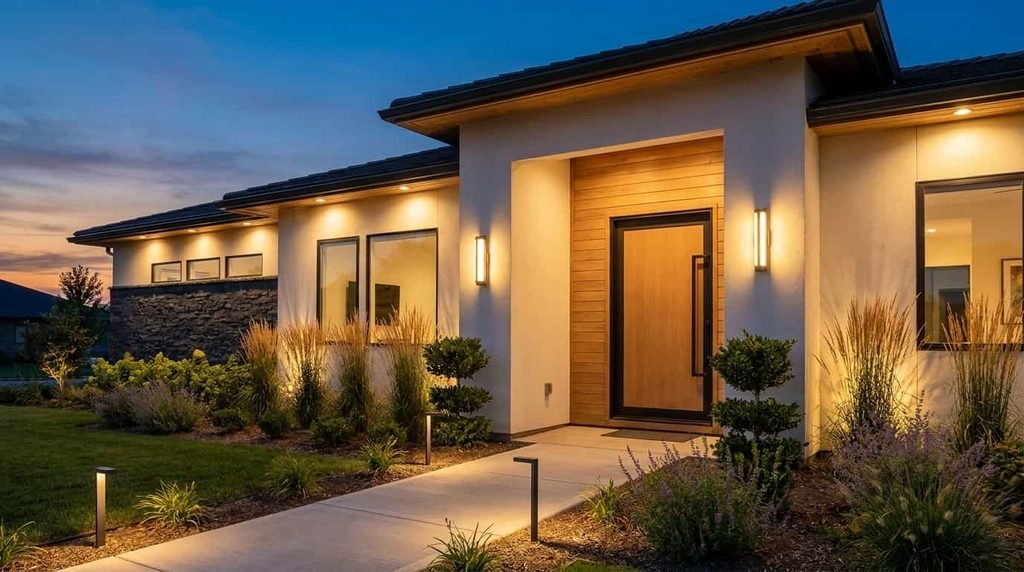
Modern landscaping should complement the architecture rather than compete with it.
Good options can include:
- Native plants
- Ornamental grasses
- Structured shrubs
- Simple tree groupings
- Large planters
- Gravel
- Stone or concrete pathways
- Clean lawn areas
Choose plants according to your local growing conditions, available sunlight, water requirements, and desired maintenance level.
An organic modern home exterior, for example, may benefit from more naturalistic planting, while a minimalist modern facade may work better with clearly defined plant groupings.
Common Modern Exterior Design Mistakes
Using Too Many Materials
If every section of the house has a different finish, the facade can become difficult to read.
Choosing Colors Only From Photos
Online images don’t show how a color will interact with your home’s actual light, roof, driveway, and surroundings.
Ignoring the Roof
The roof is a major visual component and should be considered when changing the rest of the facade.
Overusing Black
Black is a useful accent, but using it everywhere can make the design feel repetitive.
Choosing Looks Over Maintenance
Consider how often a material needs cleaning, staining, painting, sealing, or other maintenance.
Copying Another Home
A design that works on a large two-story home may not translate well to a small ranch house.
Take individual ideas from inspiration photos rather than copying the entire facade.
Forgetting the Landscape
Even a beautiful facade can look unfinished if the surrounding yard is neglected.
Treating Lighting as an Afterthought
Exterior lighting should be considered alongside the facade, not after everything else is finished.
How to Choose the Right Modern Exterior for Your Home
Before committing to a design, work through this checklist:
- What architectural style does my house already have?
- Which parts of the exterior look dated?
- What is my realistic renovation budget?
- What climate does my home need to handle?
- Which material should dominate the facade?
- Which exterior colors work with my roof?
- How much maintenance am I willing to handle?
- Do I want a minimalist, mid-century, organic, farmhouse, or industrial look?
- What should be the focal point?
- How will the exterior look at night?
- Which elements can be changed later if my preferences change?
This last question is particularly useful.
Major architectural components are expensive to replace, while lighting, planters, hardware, and paint can be changed more easily. Use trends selectively on features that are easier to update.
Frequently Asked Questions
What makes a home exterior look modern?
Clean lines, simple forms, restrained colors, carefully selected materials, modern windows and doors, minimal decoration, coordinated landscaping, and purposeful lighting are common characteristics of modern exterior design.
What are the best modern home exterior colors?
Popular combinations include warm white with natural wood, greige with charcoal, soft gray with cedar, beige with natural stone, and charcoal with warm wood. The right choice depends on the home’s architecture, roof, surroundings, and natural light.
What is a mid-century modern home exterior?
A mid-century modern home exterior typically emphasizes horizontal lines, simple roof forms, large windows, natural materials, and a strong connection between indoor and outdoor spaces.
What is an organic modern home exterior?
An organic modern exterior combines clean modern architecture with natural materials, warm neutral colors, wood, stone, textured surfaces, and landscaping that creates a stronger connection with nature.
How can I modernize my house exterior without remodeling everything?
Start with high-impact updates such as exterior paint, the front door, garage door, lighting, house numbers, and landscaping. If the basic architecture is sound, these changes can significantly improve the appearance without a complete renovation.
What is the best material for a modern home exterior?
There isn’t one best material for every home. Fiber cement, wood, brick, stucco, stone, metal, and vinyl can all work in modern designs. Climate, maintenance, budget, durability, and installation quality should guide the decision.
How do you make a small house look modern?
Use a limited color and material palette, emphasize the entrance, choose appropriately scaled windows, use clean lines, and keep landscaping simple. Vertical elements can also help emphasize height.
Final Thoughts
The best modern home exterior design is not necessarily the one with the most expensive materials or the most dramatic architecture. It is the one where the home’s structure, colors, materials, lighting, and landscaping work together.
If you’re planning a renovation, start with the elements that have the greatest visual impact. Updating the front door, garage door, exterior colors, lighting, and landscaping may be enough to transform a dated facade.
If you’re building from scratch, look beyond appearance. Consider climate, maintenance, energy performance, material durability, and how the design will age.
And if you love the warmth of natural materials, don’t assume modern design has to feel stark. A mid century modern home exterior can preserve its original character, while an organic modern home exterior can combine clean architecture with wood, stone, and natural landscaping.
The goal isn’t to make your house look like every other modern home. It’s to create an exterior that feels clean, intentional, functional, and appropriate for your home.
Related resource: Renovation Tips Decoradhouse: The Realistic Guide to Planning and Sequencing Your Home Update
Related resource: Home Improvement Mintpaldecor Ideas That Transform Your Home