A home upgrade does not have to mean tearing out a kitchen, replacing every piece of furniture, or starting a major renovation. Sometimes the most useful improvement is much smaller: better lighting in a dark room, storage where clutter keeps building up, new hardware on dated cabinets, or a furniture layout that finally makes sense.
That is the practical idea behind these upgrading tips Decoradhouse: identify what is not working, decide which improvement matters most, and spend your time and money accordingly.
For example, if your living room feels cramped, buying another chair probably will not solve the problem. Removing an unused piece and rearranging the furniture might. If your kitchen looks dated but the cabinets are still in good condition, new hardware and improved lighting could give you the refresh you want without replacing the entire kitchen.
The goal is not to make your home look new at any cost. It is to make it work better, feel better, and look more intentional.
What Does “Upgrading Tips Decoradhouse” Mean?
The phrase upgrading tips Decoradhouse is associated with practical ideas for improving a home’s appearance and functionality.
For this guide, think of a home upgrade as any change that makes a space meaningfully better. That could mean improving:
- Function
- Comfort
- Organization
- Appearance
- Convenience
- Energy efficiency
This is slightly different from decorating.
Decorating might involve adding artwork, pillows, plants, or accessories. An upgrade could involve replacing inadequate lighting, improving storage, updating worn hardware, or changing a furniture layout that makes the room difficult to use.
Sometimes you need both. The important part is knowing which one should come first.
If you are primarily looking for decorating guidance, our how to decorate your house guide covers the broader room-by-room decorating process.
Start With a Home Upgrade Audit
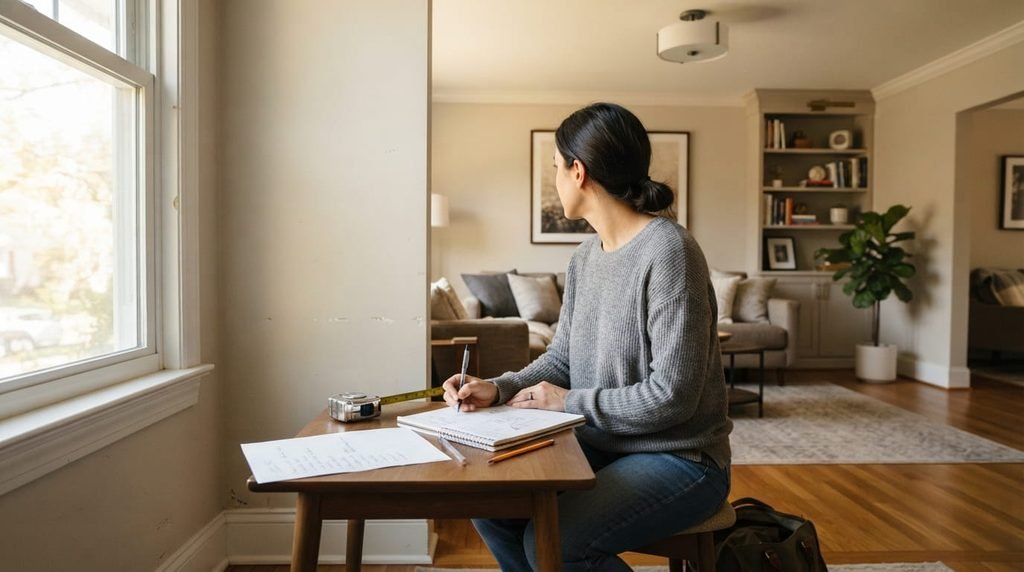
Before opening a shopping app or visiting a home-improvement store, walk through your home and look for problems.
For each room, ask:
- What is broken or worn?
- What is difficult to use?
- Where does clutter keep collecting?
- Is the lighting appropriate for the room?
- Does the furniture arrangement make sense?
- Is there enough storage?
- What feels uncomfortable?
- What single change would make the biggest difference?
Write your answers down and separate them into four groups.
| Priority area | Examples |
|---|---|
| Repairs | Leaks, damaged flooring, loose fixtures, deteriorated caulk |
| Function | Poor lighting, awkward layout, inadequate storage |
| Comfort | Uncomfortable seating, poor privacy, inadequate bedding |
| Appearance | Dated paint, hardware, textiles, accessories |
This prevents a common home-improvement mistake: spending money on things that look nice while ignoring the problem that actually bothers you every day.
For example, if your entryway is constantly covered with shoes and bags, decorative baskets alone may not solve the problem. You may need hooks, a bench, or a better storage system.
The Best Order for Home Upgrades
When several projects compete for your budget, use this sequence as a starting point:
1. Repairs and safety
Deal with damage, leaks, faulty fixtures, and other problems that could become more serious.
2. Function
Improve storage, lighting, layout, and the way you use the space.
3. Comfort
Address seating, bedding, privacy, temperature, and other everyday concerns.
4. Appearance
Move on to paint, hardware, textiles, furniture, and other cosmetic improvements.
5. Technology
Add smart devices only where they solve a genuine problem.
6. Styling
Finish with artwork, plants, accessories, and personal details.
This is not a universal construction rule. A home’s priorities will vary. It is simply a useful way to avoid putting decorative spending ahead of more important improvements.
17 Upgrading Tips Decoradhouse Homeowners and Renters Can Use
1. Fix Problems Before Adding Decor
Start with the things that are damaged, worn, or no longer functioning properly.
Look for:
- Water leaks
- Damaged flooring
- Peeling or damaged surfaces
- Broken doors or drawers
- Loose hardware
- Faulty lighting
- Failed caulk or seals
- Other obvious maintenance issues
Imagine a bathroom with a new mirror, expensive towels, and attractive accessories—but deteriorating caulk around the tub. The room may look better temporarily, but the underlying maintenance issue still needs attention.
A useful rule is simple: repair first, decorate second.
2. Improve the Lighting
Lighting is one of the most effective ways to improve both the appearance and usability of a room.
Instead of relying on a single ceiling fixture, consider three basic types:
- Ambient lighting: general illumination
- Task lighting: light for reading, cooking, working, or grooming
- Accent lighting: light used to highlight artwork, shelving, or architectural features
For example, a living room could combine an overhead fixture with a floor lamp beside a reading chair and a table lamp on a console.
In a kitchen, under-cabinet lighting can make countertop work easier while also giving the space a more finished appearance.
When selecting lighting, think about what people actually do in the room rather than choosing fixtures based only on appearance.
3. Refresh the Walls With a Purpose
A fresh coat of paint can make a room feel dramatically different, but choosing the color should come after considering the rest of the space.
Look at:
- Natural light
- Flooring
- Furniture
- Ceiling height
- Nearby rooms
- Existing finishes
For example, a dark hallway may benefit from a lighter color, while a bright bedroom may be able to handle a deeper accent wall.
You also do not need to repaint the whole house. If your budget is limited, choose the room where the change will have the greatest effect.
4. Update Cabinet and Door Hardware
Small details can have a surprisingly large visual effect.
Consider replacing:
- Cabinet knobs
- Cabinet pulls
- Drawer handles
- Door handles
- Bathroom hardware
Measure your existing hardware before ordering replacements. For cabinet pulls, check the distance between mounting holes rather than relying only on the overall length.
For example, changing dated cabinet pulls to a simpler contemporary style can refresh a kitchen without changing the cabinets themselves.
If the cabinets need more than new hardware, see our guide on how to make old kitchen cabinets look modern.
5. Make Storage Work Harder
Persistent clutter often points to a storage problem.
Look for unused space:
- Under beds
- Behind doors
- Inside cabinets
- Along empty walls
- Under stairs
- Near the entry
- Above existing furniture
For example, a narrow entrance may not have enough floor space for a large cabinet. Wall hooks, a slim shoe organizer, and a small tray for keys may work much better.
Good storage should make everyday routines easier. If putting something away is difficult, people are less likely to do it consistently.
6. Rearrange Furniture Before Buying More
Before buying new furniture, test the layout you already have.
Try to improve:
- Walking paths
- Conversation areas
- Access to doors
- Access to windows
- Television viewing
- Natural light
- Available floor space
Suppose your living room requires everyone to walk through the main seating area to reach another room. The furniture may be the problem—not the size of the room.
Try moving the pieces before spending money.
This is one of the rare home improvements that can cost nothing.
7. Choose Furniture That Solves More Than One Problem
When you do need something new, look for useful versatility.
Examples include:
- Storage ottomans
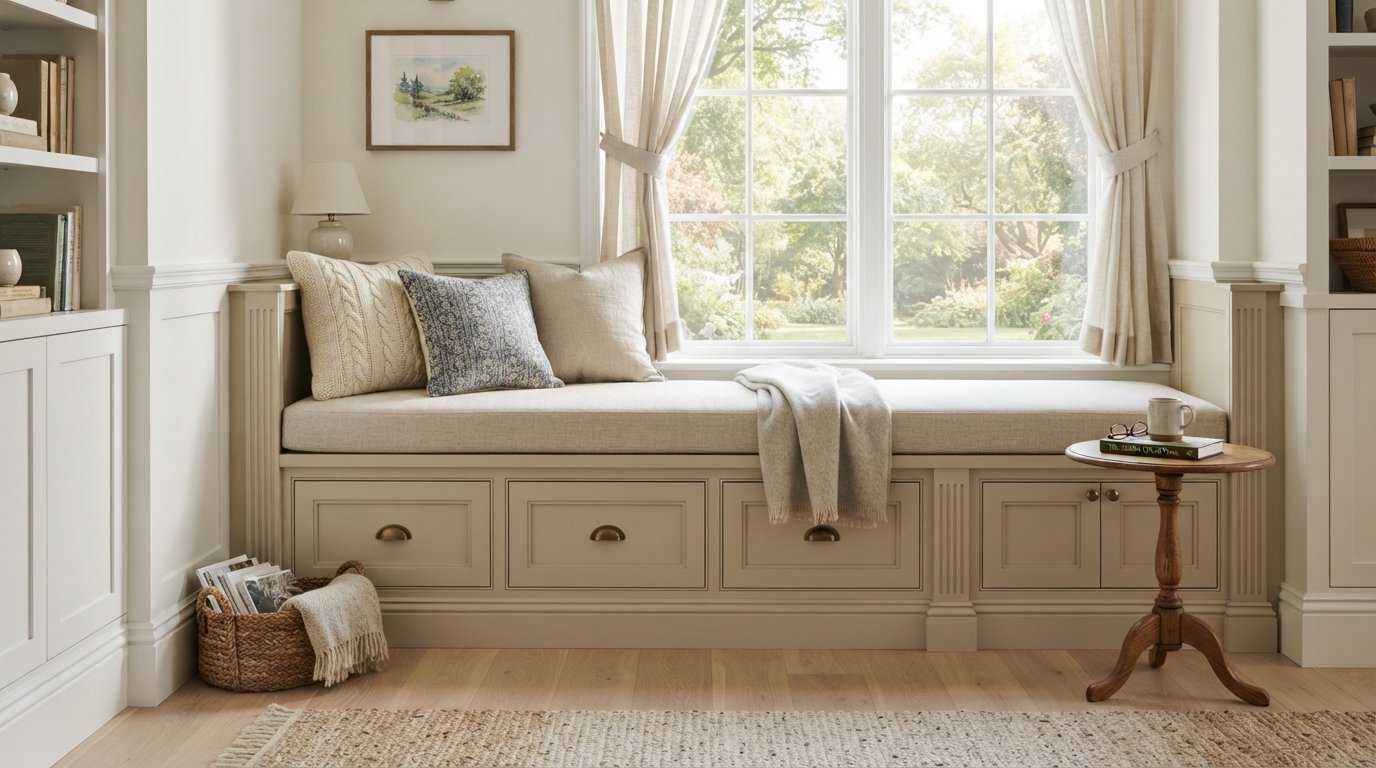
- Benches with hidden storage
- Storage beds
- Extendable dining tables
- Bedside tables with drawers
- Foldable desks
Consider a small home office that also needs to function as a guest room. A desk that can be folded away may be more useful than a large permanent workstation.
Before buying, ask:
What problem will this piece solve?
If the answer is only “it looks nice,” make sure that appearance alone justifies the purchase.
8. Improve Window Treatments
Window treatments affect more than style. They can influence privacy, glare, light control, and the overall feel of a room.
Options include:
- Curtains
- Roller shades
- Roman shades
- Blinds
- Layered window treatments
For a bedroom, light control and privacy may be priorities. For a home office, reducing glare could matter more.
Measure carefully before ordering, and check how the window opens and how the treatment will interact with nearby furniture.
9. Refresh a Room With Textiles
Textiles can change a room without requiring major construction.
Consider updating:
- Area rugs
- Bedding
- Curtains
- Throw pillows
- Blankets
- Bath towels
- Dining linens
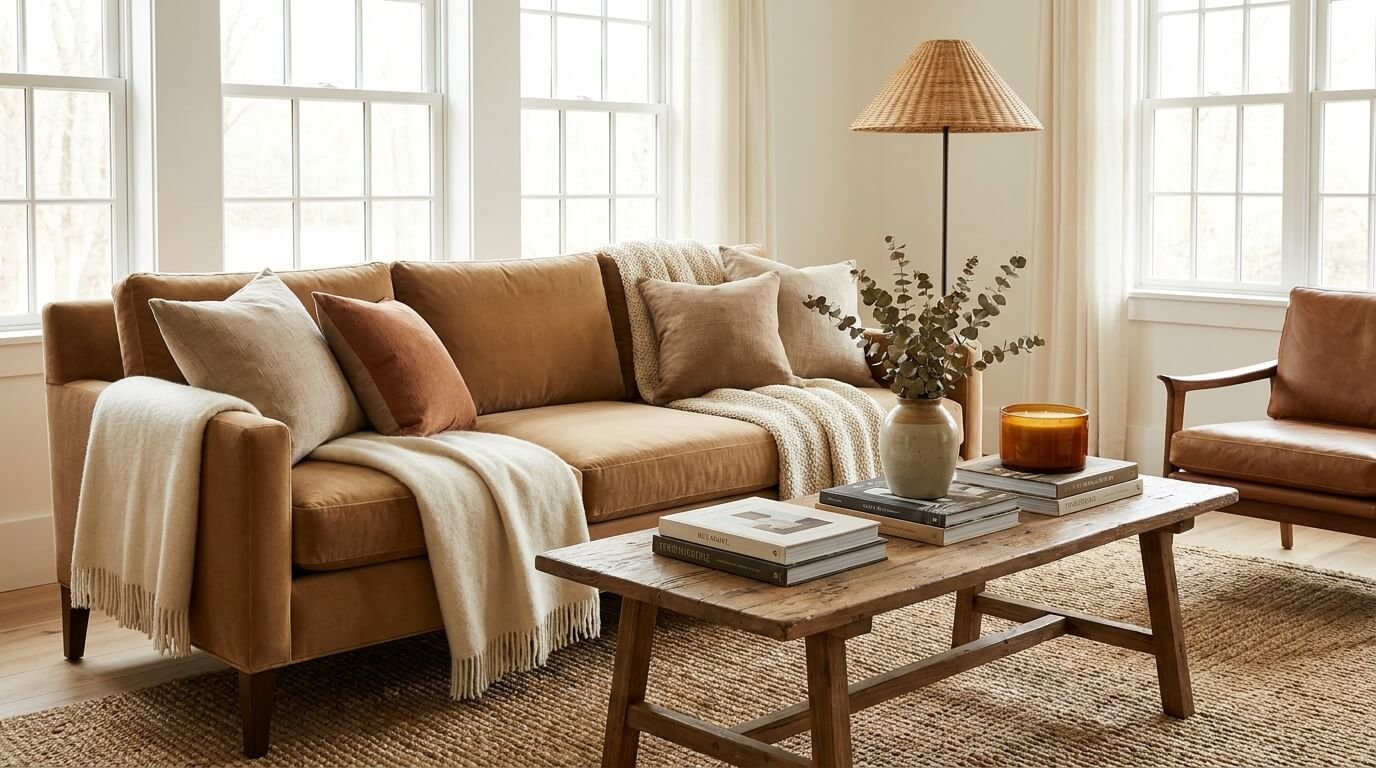
For example, if your sofa is still comfortable but the living room feels tired, a new rug, a few coordinated pillows, and better lighting may be enough to refresh the space.
Rather than choosing every item independently, repeat a small number of colors and textures throughout the room.
10. Make the Entryway More Functional
The entryway should be designed around what actually happens there.
If family members regularly drop:
- Shoes
- Coats
- Bags
- Keys
then create dedicated places for those items.
A practical entryway might include:
- Wall hooks
- Shoe storage
- A small bench
- Key tray
- Mirror
- Basket
- Mail organizer
Even a small entrance can become much easier to manage when every frequently used item has a designated place.
11. Modernize the Kitchen Without Rebuilding It
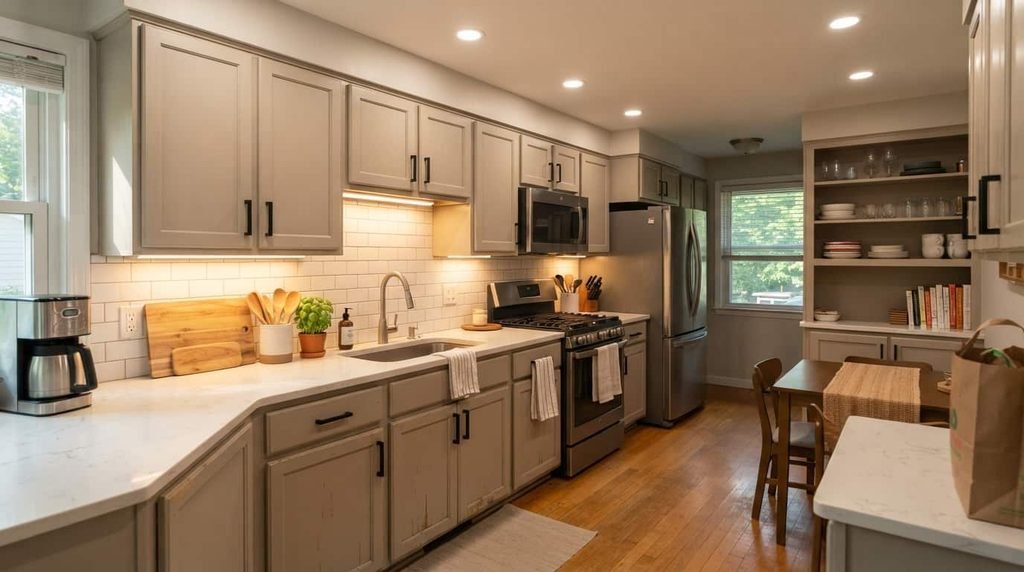
A dated kitchen does not automatically need a complete remodel.
First identify the problem.
If the cabinets are structurally sound, possible improvements include:
- New hardware
- Cabinet paint or refinishing where appropriate
- Better lighting
- Improved cabinet organization
- Countertop organization
- Selected fixture updates
- A carefully chosen backsplash
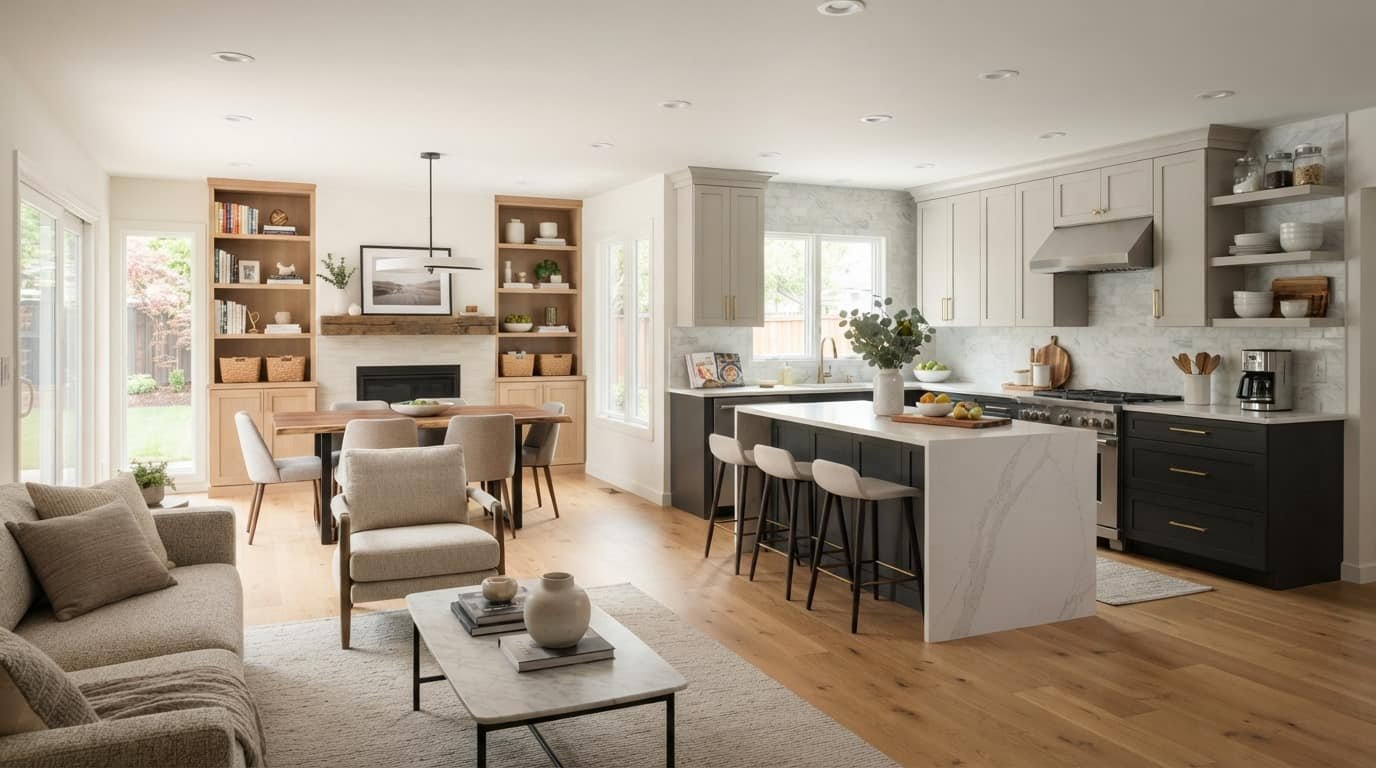
For example, an older kitchen with good cabinets but poor lighting may benefit more from improved illumination and hardware than from replacing the cabinets.
A larger renovation becomes more reasonable when the layout, major systems, or condition of the kitchen genuinely require substantial work.
12. Give the Bathroom a Focused Refresh
A bathroom can often feel significantly better after several targeted improvements.
Consider:
- Better lighting
- A new mirror
- Updated hardware
- Fresh paint
- Better storage
- New textiles
- Fixture improvements
- Replacing worn caulk
Imagine a bathroom with a functional vanity but dated lighting and poor storage. Replacing the entire vanity may not be necessary. Better lighting, a more useful mirror, and organized storage could address the actual problems.
For a more specific project, see our guide to bathroom hanging pendant lighting.
13. Improve Bedroom Comfort Before Decoration
A bedroom should be comfortable before it becomes a styling project.
Evaluate:
- Mattress and pillow comfort
- Bedding
- Lighting
- Window coverings
- Storage
- Temperature
- Nightstand organization
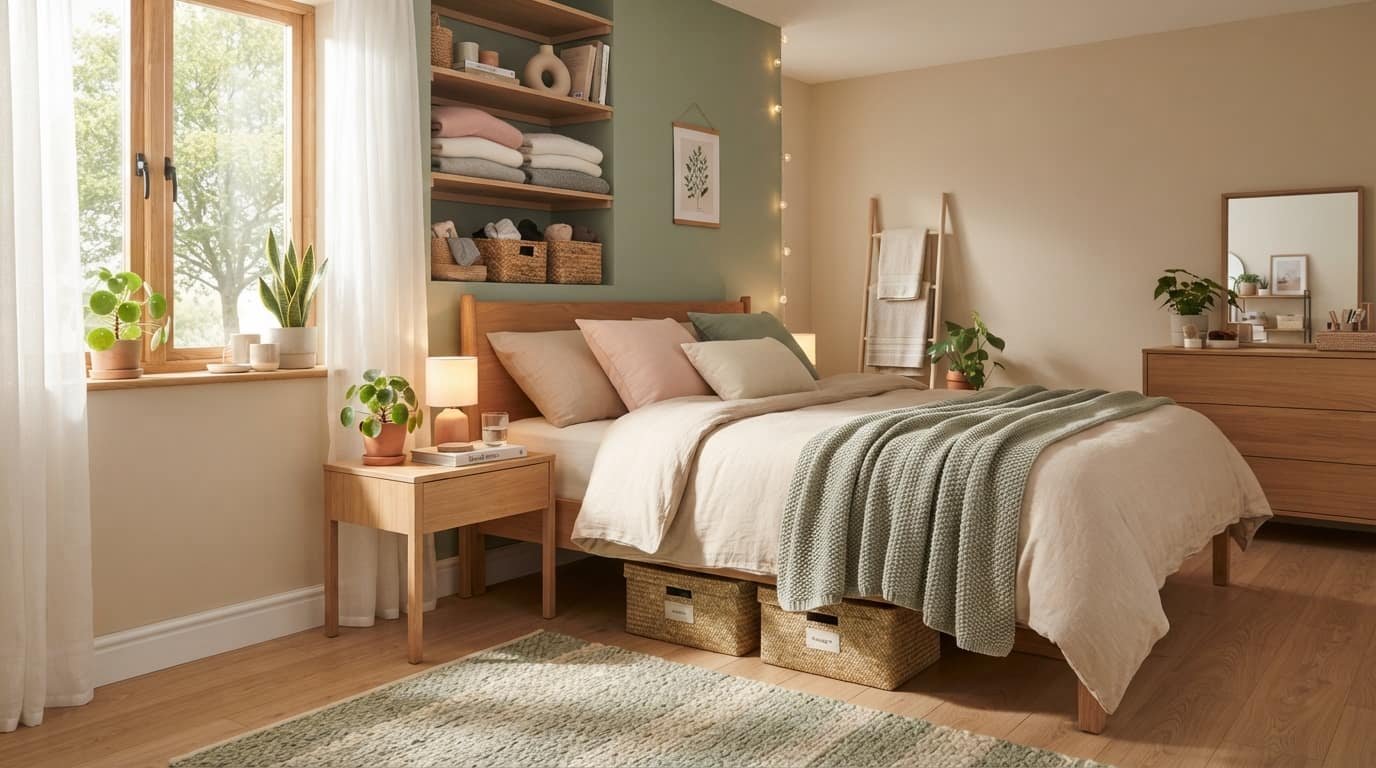
For example, if sunlight wakes you too early, better window coverings may improve your daily experience more than new wall art.
Once comfort is handled, you can add color, rugs, artwork, and decorative accessories.
14. Give Outdoor Areas a Clear Purpose
Outdoor improvements work better when you decide how you will use the space first.
Is the area mainly for:
- Dining?
- Relaxing?
- Entertaining?
- Gardening?
- Family activities?
A small patio used for morning coffee may need comfortable seating and shade. A larger backyard used for entertaining might benefit from dining space, lighting, and clearly defined areas.
Avoid filling an outdoor space with furniture that makes movement and maintenance difficult.
For more specialized outdoor and garden guidance, connect this article to your existing garden content rather than trying to turn this page into another garden-focused guide.
15. Improve Curb Appeal With Maintenance First
Curb appeal does not always require expensive landscaping.
Start with:
- Cleaning the entrance
- Maintaining plants
- Cleaning pathways
- Improving exterior lighting
- Refreshing the front door
- Updating house numbers
- Removing unnecessary porch clutter
For example, a clean pathway and well-maintained entrance can make a stronger first impression than adding several decorative objects.
The principle is the same as inside the house: maintenance creates the foundation for decoration.
16. Add Smart Technology Only When It Helps
Smart-home technology can be useful, but it should solve a problem rather than create another gadget to manage.
Potential uses include:
- Smart lighting
- Smart plugs
- Motion sensors
- Programmable climate controls
- Security devices
- Automated routines
Suppose you regularly forget to switch off a lamp in a difficult-to-reach location. A smart plug could make sense.
But if a smart device does not make anything easier, safer, or more convenient, you may be better off spending that money elsewhere.
For more technology-focused ideas, explore our guide to smart home upgrades.
17. Finish With a Decluttering and Maintenance Pass
Do not assume that every room needs another purchase after an upgrade.
Instead, step back and reassess.
Remove items that:
- Are damaged
- Are rarely used
- Create visual clutter
- No longer fit the room
- Were purchased without a clear purpose
Then complete small finishing tasks such as tightening hardware, cleaning fixtures, touching up paint, and organizing visible cables.
Sometimes the final improvement is not adding anything.
It is removing what no longer belongs.
Which Home Upgrades Should You Do First?
If your budget is limited, rank projects according to their effect on everyday life.
| Priority | Focus | Examples |
|---|---|---|
| 1 | Repairs | Leaks, damage, faulty fixtures |
| 2 | Function | Storage, lighting, layout |
| 3 | Comfort | Seating, bedding, privacy |
| 4 | Appearance | Paint, hardware, textiles |
| 5 | Technology | Smart lighting, controls |
| 6 | Styling | Artwork, plants, accessories |
This is a starting framework, not a rigid formula.
For example, someone working from home may prioritize task lighting and workspace organization. A family with young children may place greater emphasis on storage and durable surfaces. A renter may prioritize reversible improvements.
The best first upgrade is the one that solves your biggest current problem.
High-Impact vs. Low-Impact Home Upgrades
Cost alone does not determine whether an upgrade is worthwhile.
A simple way to compare projects is to consider:
- Cost
- Difficulty
- Visual impact
- Functional impact
- Expected longevity
| Upgrade | Relative cost | Difficulty | Potential impact |
|---|---|---|---|
| Rearrange furniture | Very low | Easy | Medium–High |
| Declutter | Very low | Easy | Medium |
| Update hardware | Low | Easy | High |
| Improve lighting | Low–Medium | Easy–Moderate | High |
| Repaint a room | Low–Medium | Moderate | High |
| Add storage | Low–Medium | Easy–Moderate | High |
| Replace flooring | Medium–High | Moderate | High |
| Full remodel | High | Difficult | Very high |
These categories are intentionally relative. Actual project costs vary based on location, materials, labor, project size, and the condition of the home.
A useful example is lighting. A modest lighting improvement may have a large functional effect if the existing room is poorly illuminated. A much more expensive decorative item may have little effect on how the room is used.
Upgrade or Renovate? Know the Difference
Not every dated room needs to be renovated.
An Upgrade May Be Enough When:
- The structure is sound.
- The layout generally works.
- Finishes look dated.
- Storage is inadequate.
- Lighting needs improvement.
- Hardware or fixtures are worn.
- The room can meet your needs with smaller changes.
A Renovation May Make More Sense When:
- The layout fundamentally prevents the room from working.
- Major plumbing changes are needed.
- Significant electrical work is required.
- Structural problems exist.
- Important materials are beyond practical repair.
- The space cannot meet your needs without substantial changes.
For larger projects, understand the scope before work begins. Depending on the project and location, permits or qualified professionals may be required.
If you hire a contractor, the FTC’s consumer guidance on hiring a home improvement contractor provides useful advice about checking qualifications, estimates, contracts, and other considerations.
Budget-Friendly Home Upgrades
A realistic home-improvement budget should begin with priorities, not a shopping cart.
Low-Cost Improvements
Start with:
- Decluttering
- Rearranging furniture
- Updating hardware
- Improving organization
- Refreshing textiles
- Small lighting changes
Moderate Improvements
Consider:
- Storage furniture
- Rugs
- Window treatments
- Larger lighting fixtures
- Cabinet refreshes
- Selected painting projects
Larger Investments
These can include:
- Flooring
- Significant kitchen work
- Bathroom remodeling
- Major lighting projects
- Layout changes
- Structural improvements
For larger projects, compare the cost with the actual problem you are trying to solve.
If the issue is poor storage, a storage solution may make more sense than a complete room renovation. If the issue is a fundamentally unsuitable layout, however, a larger project may be justified.
Renter-Friendly Upgrading Tips
Renters can make substantial improvements without permanently changing the property.
Useful options include:
- Freestanding storage
- Area rugs
- Curtains
- Plug-in lighting
- Removable wall treatments
- Portable kitchen organizers
- Decorative mirrors
- Furniture rearrangement
- Removable hooks where permitted
Before modifying walls, cabinets, fixtures, or other permanent features, check your lease and obtain any required permission.
A good renter-friendly upgrade should ideally be easy to remove when it is time to move.
Energy-Efficient Upgrades to Consider
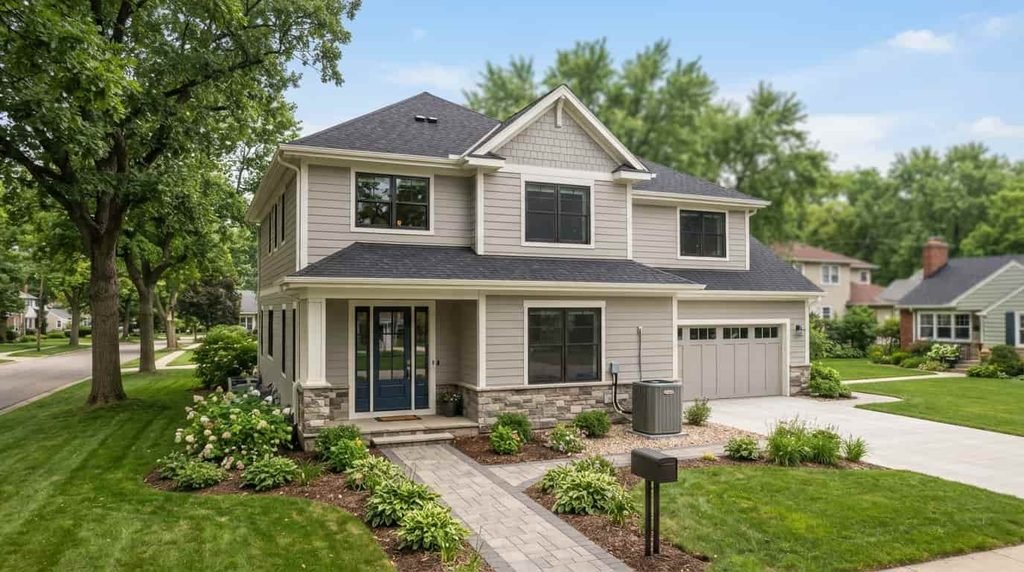
Some home upgrades can improve comfort and efficiency at the same time.
Depending on the property, consider:
- LED lighting
- Lighting controls
- Efficient appliances
- Draft reduction
- Appropriate window treatments
- Smart thermostats
- Water-saving fixtures
- Insulation and air-sealing improvements
The right improvement depends on the home. A drafty older property may have very different priorities from a newer, well-sealed home.
For larger energy projects, consult reliable local and federal resources before making decisions about equipment, rebates, or expected savings.
Home Upgrades That May Not Be Worth the Money
One of the most useful skills in home improvement is knowing when not to spend.
Replacing Functional Cabinets Just Because They Look Dated
If the cabinets are structurally sound, a cosmetic update may be enough.
Buying Smart Devices Without a Clear Purpose
Technology should solve an actual inconvenience.
Buying Furniture That Is Too Large
A beautiful sectional is not a good upgrade if it blocks the room’s main walkway.
Adding Storage Instead of Reducing Clutter
More containers cannot always solve a problem caused by having too many things.
Following Every Design Trend
A trend can inspire, but your home needs to work for your lifestyle.
Decorating Before Addressing Maintenance
New accessories will not solve water damage, broken fixtures, or other underlying problems.
DIY or Professional Help?
Some upgrades are straightforward DIY projects. Others are better left to qualified professionals.
Often suitable for simple DIY work
Depending on your skills and the project:
- Decluttering
- Furniture rearrangement
- Some painting
- Basic organization
- Replacing compatible decorative hardware
- Styling and textile changes
Consider professional help when work involves:
- Structural changes
- Significant electrical work
- Major plumbing
- Gas systems
- Roofing
- Complex HVAC work
- Other work requiring specialized skills or permits
If you are unsure whether a project is within your ability, do not let a home-improvement article substitute for professional advice.
What to Ask Before Buying Any Home Upgrade
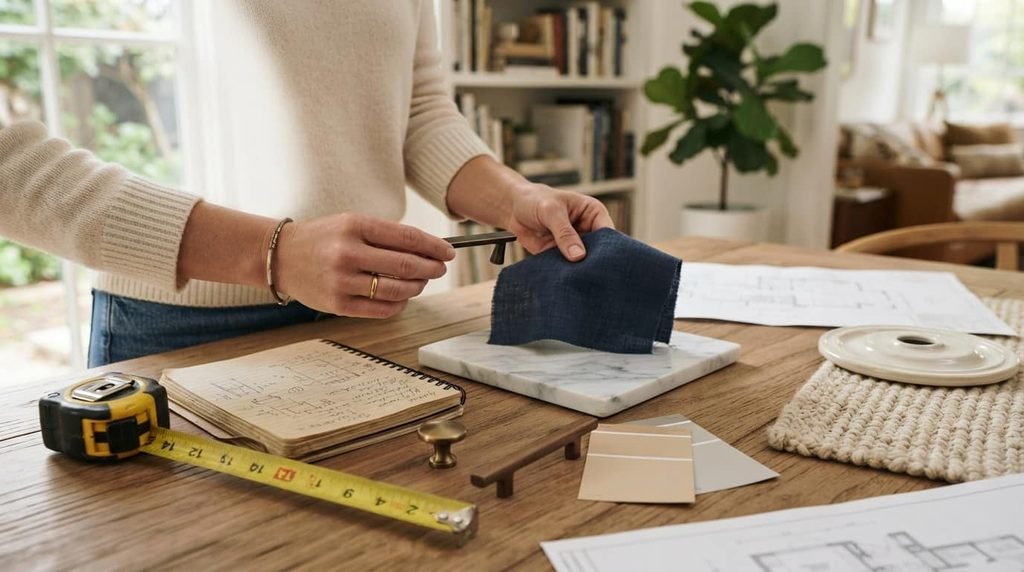
Before spending money, ask:
- What problem does this solve?
- Do I already own something that could solve it?
- Have I measured the space?
- Will it work with what I already have?
- How often will I use it?
- How difficult is installation?
- Do I need professional help?
- Will it require ongoing maintenance?
- Is there a simpler alternative?
- Does it fit my budget?
- Will I still find it useful several years from now?
If you cannot explain what the purchase improves, wait before buying it.
Common Home-Upgrading Mistakes
Buying Before Measuring
Measure furniture spaces, windows, cabinets, and available floor area before ordering.
Following Every Trend
A home does not need to follow every current design trend to feel attractive.
Ignoring Lighting
Poor lighting can make an otherwise well-designed room feel uncomfortable.
Adding Too Much Decor
A room needs visual breathing space.
Starting Too Many Projects
One completed project is generally more useful than several unfinished ones.
Choosing Appearance Over Function
A beautiful item is not a successful upgrade if it makes the space harder to use.
Forgetting Maintenance
New finishes, fixtures, and furnishings still need care.
A Simple Home Upgrade Decision Framework
When you are unsure what to do next, score each potential project from 1 to 5 for:
- Problem severity
- Daily usefulness
- Visual impact
- Longevity
- Cost
- Difficulty
Then prioritize projects with a serious problem, strong everyday usefulness, and reasonable cost and difficulty.
This is not a professional construction formula. It is simply a way to compare competing projects.
For example:
Project A: Replace decorative wall art
Project B: Improve poor kitchen lighting
If the kitchen is used every day and the existing lighting makes food preparation difficult, Project B is probably the stronger priority—even if Project A would be more visually obvious.
Frequently Asked Questions
What are the best upgrading tips Decoradhouse homeowners can start with?
Start with the problems that affect everyday life. Repairs, lighting, storage, furniture layout, comfort, and outdated hardware are often better starting points than buying decorative accessories.
How can I upgrade my home without spending a lot?
Start with changes that require little investment, such as decluttering, rearranging furniture, improving organization, updating hardware, refreshing textiles, and making targeted lighting or paint changes.
What home upgrades should I do first?
Address repairs and safety concerns first. Then improve function, such as lighting, storage, and layout. After that, focus on comfort, appearance, technology, and styling.
How do I make an old home feel more modern?
Focus on high-visibility details such as lighting, paint, hardware, storage, furniture arrangement, and textiles. You often do not need to replace everything.
Should I upgrade or renovate my kitchen?
If the kitchen is structurally sound and the main issue is appearance or organization, smaller upgrades may be enough. If the layout or major systems prevent the kitchen from meeting your needs, a larger renovation may make more sense.
What are the best renter-friendly home upgrades?
Rugs, curtains, freestanding storage, plug-in lighting, removable wall treatments, and furniture rearrangement are useful starting points. Always check your lease before modifying permanent features.
Are smart-home upgrades worth it?
They can be worthwhile when they solve a specific problem, such as inconvenient lighting, repetitive routines, or climate-control management. Avoid buying technology simply because it is trendy.
Final Thoughts
The most useful upgrading tips Decoradhouse are not necessarily the most expensive ones.
Start by asking what is actually wrong with your space. Fix maintenance problems first, improve function next, address comfort, and then work on appearance and styling.
A better furniture arrangement may outperform a new sofa. Better lighting may matter more than decorative accessories. A few cabinet-hardware changes may be enough to refresh a kitchen that does not need a full remodel.
Think of your home upgrades in this order:
Repair → Function → Comfort → Appearance → Technology → Styling
Then choose one room, identify its biggest problem, and make the highest-impact improvement you can reasonably afford.
The goal is not to create a home that simply looks upgraded.
It is to create a home that works better for the people who live in it.
Related resource: Dining Rooms Design: 15 Ideas for a Beautiful, Functional Space