“Vegetable garden ideas” and “what to plant” are really the same question asked two ways. The layout you choose determines which vegetables make sense, and the vegetables you want to grow should shape the layout so it’s worth deciding both together instead of picking a Pinterest-style garden first and figuring out the plant list later.
This guide walks through the most workable garden ideas for a home setup, then narrows down to a specific, beginner-friendly plant list for each plus the timing details that trip up most first-time gardeners.
Key Takeaways
- Match your garden idea to your actual space and sun exposure before choosing plants — a shaded patio and a sunny backyard plot call for different vegetables.
- Most vegetables need 6–8 hours of direct sun daily; less than that limits you mainly to leafy greens and herbs.
- Easy starter vegetables include tomatoes, bush beans, zucchini, leaf lettuce, radishes, and herbs like basil.
- Cool-season crops (lettuce, spinach, peas) and warm-season crops (tomatoes, peppers, squash) go in at different times — mixing up the timing is one of the most common beginner mistakes.
- Start smaller than feels necessary. Four to six crops, planted with proper spacing, is easier to manage and more productive than a garden that’s too ambitious for the time you actually have.
Choose Your Garden Idea First Layout Shapes the Plant List
A direct answer: the four most common vegetable garden ideas for home growers are raised beds, containers, in-ground plots, and vertical/small-space setups — and each one supports a slightly different plant list based on root depth, sun access, and available square footage.
Raised Bed Garden
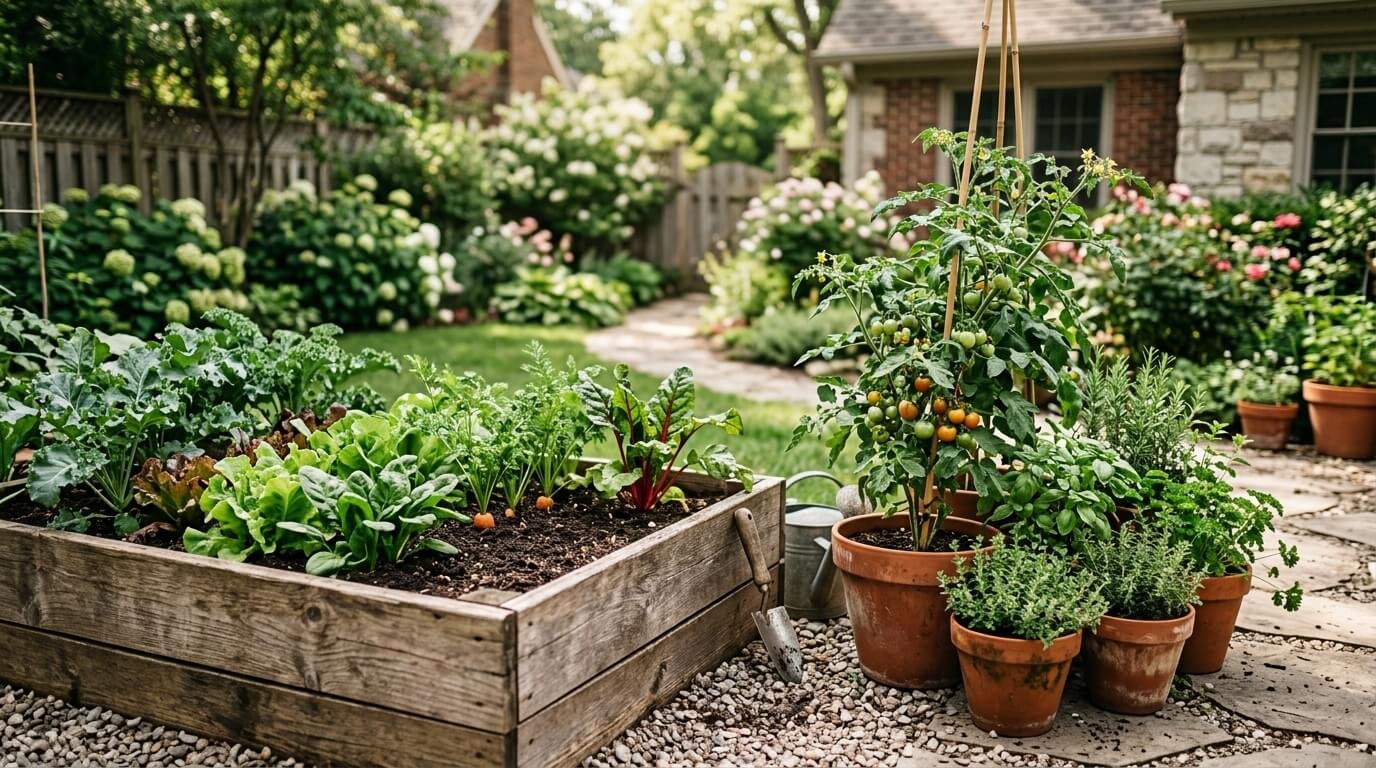
A raised bed is a good idea for anyone dealing with poor native soil, a small footprint, or a desire to keep gardening tidy and contained. A 4×4 or 4×8 bed is a manageable starting size. Because you control the soil completely, raised beds support a wide range of vegetables, from shallow-rooted lettuce to deeper-rooted tomatoes and carrots, as long as the bed is at least 10–12 inches deep for anything beyond leafy greens.
Container Garden
Containers are the right idea for patios, balconies, or renters who can’t dig into the ground. Look for pots at least 12–18 inches deep for tomatoes and peppers, and don’t be afraid to mix in smaller pots for herbs and lettuce. Compact or “patio” varieties of tomatoes and squash are bred specifically for container growing and tend to perform better than full-size varieties squeezed into a pot.
In-Ground Garden Plot
An in-ground plot is the most space-efficient idea if you have a sunny yard and are willing to prepare the soil (testing pH, working in compost, clearing weeds). It’s the best fit for vegetables that need more room to sprawl, like winter squash, pumpkins, corn, and melons, which are awkward fits for a raised bed or container.
Vertical / Small-Space Garden
If square footage is the limiting factor rather than sun, a vertical idea — trellises, tomato cages, or a simple A-frame structure — lets you grow vining crops like cucumbers, pole beans, and peas without giving up ground space to sprawl. This pairs especially well with a raised bed or container setup rather than replacing it.
What to Plant: Easiest Vegetables to Start With
A direct answer: for a first vegetable garden, the most reliable choices are tomatoes, bush beans, zucchini, leaf lettuce, radishes, cucumbers, and basil, because they’re forgiving of minor mistakes, mature relatively quickly, and give a clear, encouraging harvest.
- Tomatoes — a near-universal favorite; cherry or grape varieties are especially forgiving and productive for beginners
- Bush beans — no staking required, and they improve the soil by fixing nitrogen as they grow
- Zucchini or summer squash — extremely productive; one or two plants is usually plenty for a household
- Leaf lettuce — fast-growing, tolerant of partial shade, and easy to harvest a few leaves at a time
- Radishes — often ready in three to four weeks, which makes them a good confidence-building first crop
- Cucumbers — productive when trellised, and a strong pairing with a vertical garden idea
- Basil and other herbs — high value for very little space, and useful in nearly every meal you’ll cook with the rest of the harvest
A realistic starting garden is four to six crops from this list, not a dozen. Restraint at the planning stage is what keeps a garden manageable through the whole season instead of being overwhelmed by midsummer.
Cool-Season vs. Warm-Season: Planting at the Right Time
A direct answer: cool-season vegetables go in during early spring or fall and tolerate light frost, while warm-season vegetables need to go in after your last frost date and don’t tolerate cold soil — planting them at the wrong time is one of the most common reasons a “what to plant” list disappoints.
Cool-season crops (plant in early spring, and often again in early fall): lettuce, spinach, peas, radishes, broccoli, kale
Warm-season crops (plant after your last frost date, once soil has warmed): tomatoes, peppers, zucchini, cucumbers, beans, basil
If you’re not sure of your last frost date, your local extension office publishes it for your region, and it’s worth checking before buying warm-season seedlings — planting tomatoes too early is a common and avoidable setback.
Pairing Ideas: Simple Combinations That Work
- Tomatoes + basil — classic pairing in the kitchen and in the garden; basil’s scent is commonly used to help deter some pests near tomato plants
- Beans + squash — beans fix nitrogen in the soil, which benefits the heavier-feeding squash planted nearby
- Lettuce in the shade of taller plants — tucking lettuce where taller crops like tomatoes will eventually cast some afternoon shade can help it hold up better as the season warms
- Radishes as a “starter” between slower crops — since they mature so quickly, radishes can be planted in the same row as a slower crop like carrots to mark the row and be harvested before the slower crop needs the space
Common Planning Mistakes to Avoid
- Choosing plants before checking sun exposure. Most vegetables need 6–8 hours of direct sun; a shadier spot limits realistic options mostly to leafy greens and herbs.
- Overplanting. A handful of zucchini or bean plants can produce more than a household can use — restraint in the plan pays off later.
- Mixing up cool-season and warm-season timing. Warm-season crops planted too early often stall or fail in cold soil.
- Skipping soil preparation. Working compost into the soil before planting matters more than which specific vegetables you choose.
- Picking a layout that doesn’t match the space. A sprawling in-ground plan on a small patio, or cramped containers for space-hungry squash, sets the garden up to struggle before it starts.
FAQs
What is the easiest vegetable garden idea for a beginner? A small raised bed (around 4×4 or 4×8 feet) planted with four to six easy crops — tomatoes, bush beans, zucchini, leaf lettuce, radishes, and basil — is one of the most manageable starting points, since it keeps the soil controlled and the space contained.
What vegetables should I plant first in a new garden? Radishes and leaf lettuce are good first plantings because they mature quickly, giving new gardeners an early, confidence-building harvest while slower crops like tomatoes are still developing.
Can I grow a vegetable garden with only a few hours of sun? Yes, but your options are more limited. Leafy greens and herbs generally tolerate partial shade better than fruiting vegetables like tomatoes and peppers, which need 6–8 hours of direct sun to produce well.
How many vegetables should a beginner plant? Four to six different crops is a realistic starting point. It’s enough variety to make the garden interesting without more maintenance and harvest than a first-time gardener can reasonably keep up with.
Bringing It Together
The best vegetable garden idea is the one that matches your actual sun, space, and time — and the best plant list is the one that fits that idea, not a generic list copied from somewhere else. Pick a layout from the options above, start with four to six easy crops suited to that layout, and get the cool-season and warm-season timing right. That combination does more for a first garden’s success than any single “best vegetable” choice.
Related resources: Different Types of Sage Plants: 25 Beautiful Varieties for Your Garden
nnRelated resources: Decoradhouse Garden Tips for a Beautiful and Functional Home Garden