Sage is more than the gray-green herb you see in a kitchen garden. There are dozens of sage plant varieties, and they can differ dramatically in leaf color, flower shape, size, fragrance, and even their best use in the garden.
If you’re comparing different types of sage plants, the most important things to consider are how you’ll use them, how much space you have, and whether the variety suits your climate.
Some are excellent for cooking, while others are better suited to flower beds, containers, dry landscapes, or pollinator gardens. That makes choosing the right one a little confusing if you’re buying a plant based only on the word “sage” on its label.
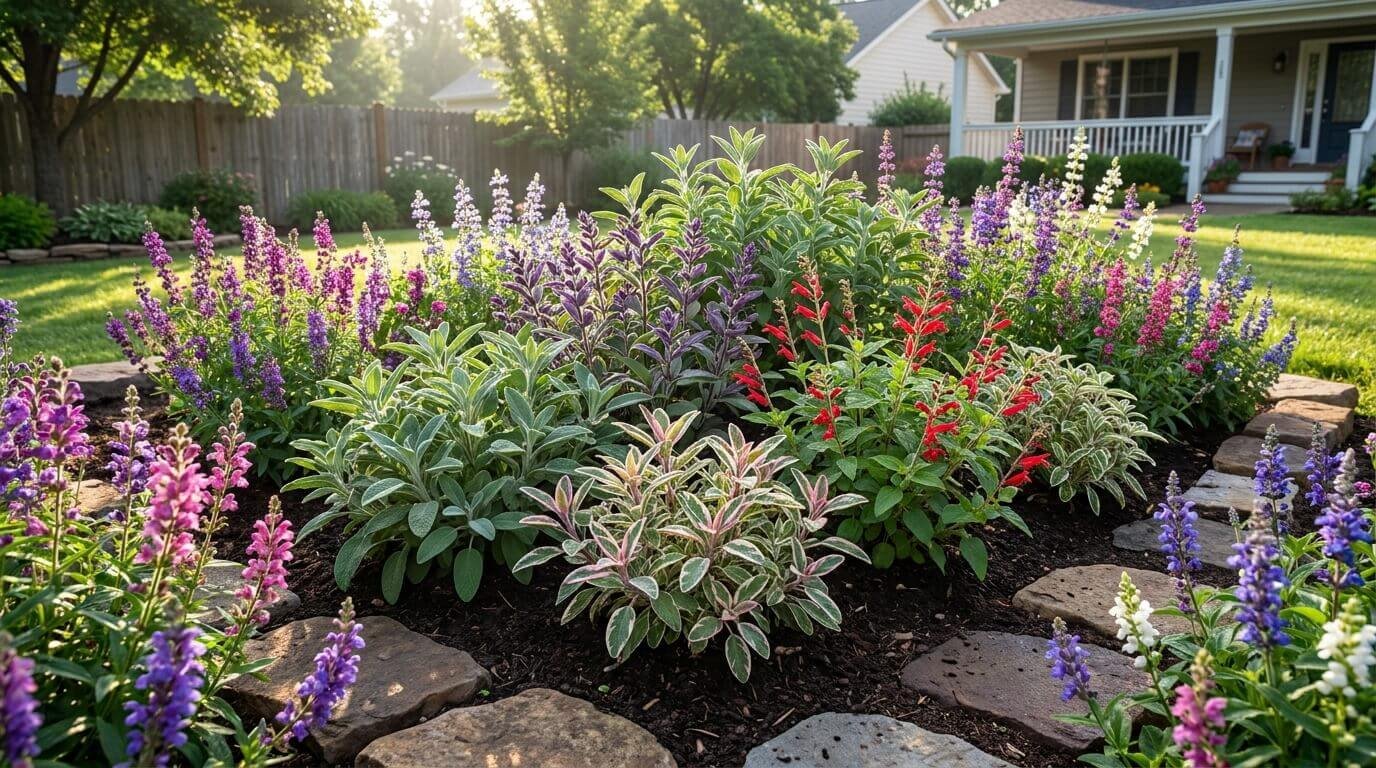
In this guide to different types of sage plants, you’ll find culinary herbs, colorful foliage varieties, flowering salvias, compact choices for containers, and options that can bring bees, butterflies, and hummingbirds into your garden.
Different Types of Sage Plants at a Glance
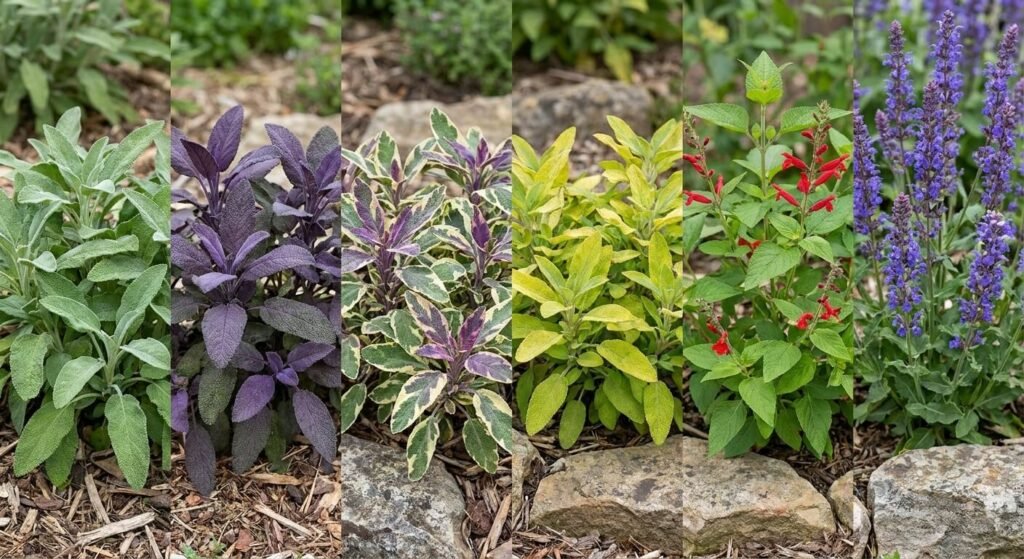
These sage plant types range from compact culinary herbs to large flowering salvias, so comparing their size, appearance, uses, and growing requirements can make it easier to choose the right one.
| Sage variety | Best for | Edible? | Flower color | Typical growth |
|---|---|---|---|---|
| Common Garden Sage | Cooking | Yes | Purple/blue | Compact |
| Purple Sage | Cooking + foliage | Yes | Purple | Compact |
| Tricolor Sage | Containers + foliage | Yes | Purple | Compact |
| Golden Sage | Cooking + ornamental use | Yes | Purple | Compact |
| Berggarten Sage | Cooking | Yes | Purple | Bushy |
| Broadleaf Sage | Cooking | Yes | Purple/blue | Bushy |
| Dwarf Sage | Small gardens | Yes | Purple | Compact |
| Greek Sage | Culinary gardens | Yes | Purple | Upright |
| Pineapple Sage | Tea + pollinators | Yes | Red | Upright |
| Clary Sage | Fragrance + flowers | Not usually culinary | Pink/white | Tall |
| Autumn Sage | Flowers + pollinators | Primarily ornamental | Red/pink/purple | Bushy |
| Woodland Sage | Borders + pollinators | Primarily ornamental | Blue/purple | Clumping |
| Meadow Sage | Flower beds | Primarily ornamental | Purple/blue | Upright |
| Scarlet Sage | Flower displays | Primarily ornamental | Red | Upright |
| Mexican Bush Sage | Landscaping + pollinators | Primarily ornamental | Purple/white | Large |
| Cleveland Sage | Dry gardens | Primarily ornamental | Blue/purple | Shrubby |
| White Sage | Dry landscapes | Traditionally used in specific contexts | White/purple | Shrubby |
| Blue Sage | Ornamental gardens | Depends on species | Blue | Upright |
Exact mature size, hardiness, and flower color can vary by species and cultivar. Check the plant label before purchasing.
What Is a Sage Plant?
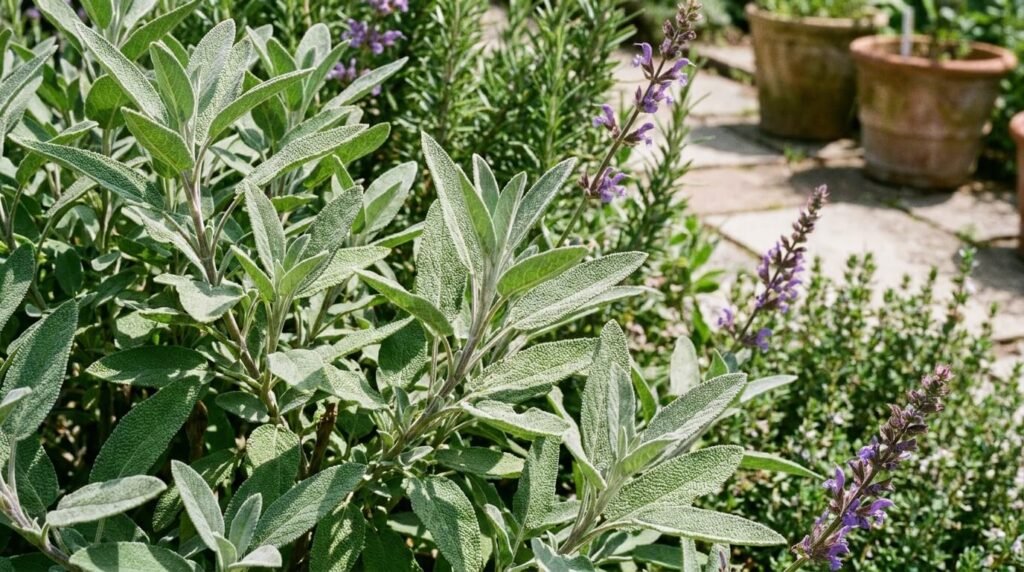
Most of the different types of sage plants discussed in gardening belong to the Salvia genus, a large group of flowering plants in the mint family.
The classic culinary herb is Salvia officinalis, commonly called garden sage or common sage. Its gray-green, textured leaves have the strong, earthy aroma most people associate with sage used in cooking.
Other salvias can look completely different. Some form low mounds, some develop into woody shrubs, and others send tall flower spikes above the foliage.
That’s why two plants sold as “sage” can have very different jobs in the garden. One might be perfect beside your kitchen door for harvesting leaves, while another is better planted several feet away as a flowering landscape plant.
Are All Sage Plants Actually Sage?
Not necessarily.
Most true sages belong to the Salvia genus, but common names can be misleading. Plants sometimes receive the word “sage” because of their fragrance, appearance, traditional uses, or resemblance to another plant.
Russian sage is a familiar example. Despite its common name, it isn’t a true Salvia.
This is useful to know when shopping for plants. If you’re looking for sage to use in cooking, don’t rely on the common name alone. Check the botanical name and make sure you’re buying a culinary species or cultivar.
10 Culinary Sage Varieties
If your main goal is cooking, focus on varieties of culinary sage rather than simply choosing any flowering plant with “sage” in its name.
1. Common Garden Sage
Botanical name: Salvia officinalis
Common garden sage is the classic kitchen-garden choice. Its gray-green leaves have a strong, savory aroma and slightly fuzzy texture.
It’s particularly good with rich foods. Try chopped fresh sage with browned butter and pasta, or use it with roasted chicken, pork, potatoes, pumpkin, or winter squash.
It’s also a practical container herb. A pot near the kitchen door makes harvesting a few leaves for dinner easy.
Best for: Everyday cooking
Light: Full sun
Soil: Well-drained soil
Growth: Compact and bushy
2. Purple Sage
Purple sage has foliage with attractive purple tones that make it stand out from the typical green herb garden.
It can be used in cooking much like common garden sage, but many gardeners grow it because it combines culinary usefulness with ornamental value.
Try planting it beside green-leaved herbs such as rosemary or thyme to create a simple foliage contrast.
Best for: Cooking and colorful herb gardens
3. Tricolor Sage
Tricolor sage is one of the easiest culinary sages to recognize. Its foliage combines green with cream or yellowish margins and purple-pink tones.
Because the leaves are decorative, it works particularly well in containers, raised herb beds, and gardens where you want edible plants to look attractive.
Give it enough sunlight to maintain good foliage color.
Best for: Containers and ornamental herb gardens
4. Golden Sage
Golden sage is valued for its bright, variegated foliage.
It can brighten a herb garden that otherwise contains mostly dark green plants. Its leaves can also be used similarly to other culinary sages, although the plant’s decorative appearance is often part of its appeal.
Best for: Culinary gardens with ornamental foliage
5. Berggarten Sage
Berggarten sage is known for its broad, rounded leaves.
The larger foliage makes harvesting convenient, and the plant can develop into a substantial, bushy herb when given good growing conditions.
Use the leaves fresh or dried in dishes where a savory sage flavor works well.
Best for: Regular culinary harvesting
6. Broadleaf Sage
Broadleaf sage produces relatively wide leaves and is another useful choice for a kitchen herb garden.
It’s a good option when you want plenty of foliage for harvesting rather than a sage plant grown mainly for flowers.
Keep it in full sun and avoid constantly wet soil.
Best for: Frequent harvesting
7. Dwarf Sage
Dwarf sage varieties are useful when you don’t have room for a large herb plant.
They’re especially convenient for containers, small raised beds, and narrow planting areas. However, “dwarf” doesn’t always mean the same mature size across cultivars, so check the label before planting.
Best for: Small gardens and containers
8. Greek Sage
Greek sage is another aromatic sage used in culinary and herbal applications.
It can also produce attractive flowers, giving it some ornamental value in addition to its usefulness as an herb.
It’s a good choice for gardeners who want something a little different from standard garden sage.
Best for: Culinary herb collections
9. Purple-Leaf Garden Sage
Purple-leaved forms of Salvia officinalis combine the familiar sage aroma with darker foliage.
They can make an herb bed look more intentional and layered, especially when planted alongside green and silver herbs.
Best for: Culinary gardens with colorful foliage
10. Compact Garden Sage
Compact forms of common sage can be helpful for patios, balconies, and smaller suburban gardens.
Before buying one, check the plant’s expected mature width. A young sage plant may look tiny at the garden center but become surprisingly broad after it settles into your garden.
Best for: Small spaces and containers
Ornamental Sage Varieties for Flowers and Pollinators
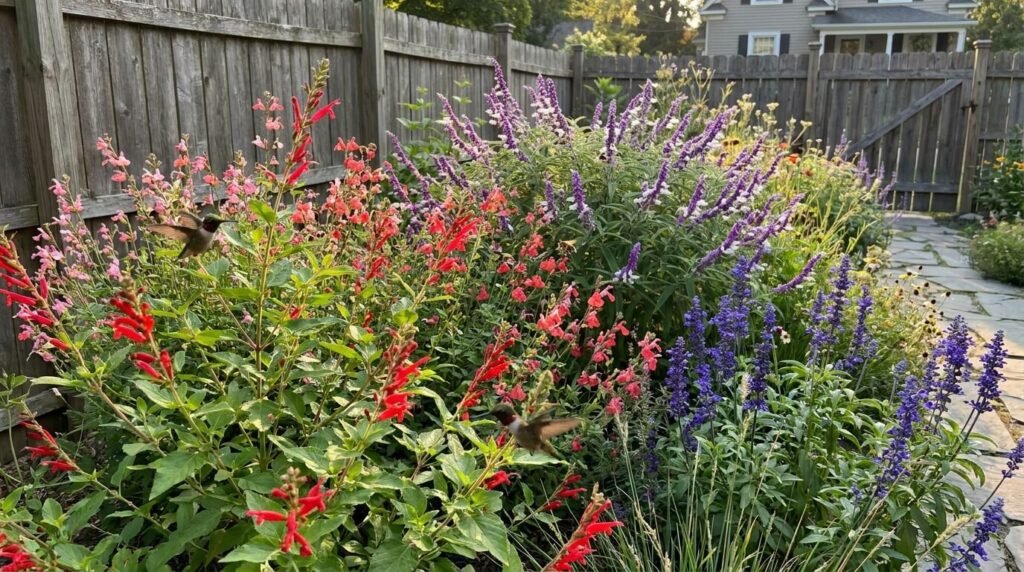
Many flowering salvias are grown primarily for their blooms rather than for use as kitchen herbs.
These plants can be excellent choices when you want color, vertical interest, fragrance, or more activity from pollinators.
11. Pineapple Sage
Botanical name: Salvia elegans
Pineapple sage is famous for its fruity fragrance. Crush or rub a leaf gently and you’ll notice a sweet scent that’s quite different from traditional culinary sage.
Its bright red flowers can attract hummingbirds and other pollinators.
The leaves are edible, but don’t expect the same savory flavor as common garden sage. Pineapple sage is better suited to teas, fruit dishes, drinks, salads, and garnishes.
It can also become much larger than common garden sage, so give it adequate space.
Best for: Fragrance, pollinators, tea, and ornamental gardens
12. Clary Sage
Botanical name: Salvia sclarea
Clary sage is a tall, dramatic plant with large leaves and upright flowering stems.
It works well toward the back of a garden border where its height can provide structure behind shorter plants.
It is generally grown for ornamental and aromatic qualities rather than as the everyday cooking sage used in recipes.
Best for: Fragrance and ornamental borders
13. Autumn Sage
Botanical name: Salvia greggii
Autumn sage produces colorful flowers that can appear in red, pink, purple, or other shades depending on the cultivar.
It can be particularly useful in warm-climate gardens and pollinator-friendly landscapes.
Instead of thinking of autumn sage as a replacement for culinary sage, think of it as a flowering landscape plant with the word “sage” in its common name.
Best for: Flower beds and pollinators
14. Woodland Sage
Woodland sage varieties can produce spikes of blue, violet, or purple flowers.
They work nicely in borders and perennial plantings, especially when combined with lower-growing plants that soften the base of the flower spikes.
Best for: Flower borders and pollinator gardens
15. Meadow Sage
Meadow sage is appreciated for upright flower spikes and strong purple or blue color.
Plant it among contrasting foliage or flowers rather than placing it against another plant with an identical color and height.
Best for: Perennial borders and cottage-style gardens
16. Scarlet Sage
Botanical name: Salvia splendens
Scarlet sage is grown mainly for its vivid red flowers.
It’s useful for containers, flower beds, and seasonal displays when you want a strong splash of color.
Although it shares the sage name, it’s better treated as an ornamental salvia than as a kitchen herb.
Best for: Bright flower displays and containers
17. Mexican Bush Sage
Botanical name: Salvia leucantha
Mexican bush sage can develop into a large, rounded plant with attractive purple and white flower spikes.
Its size makes it a better choice for larger borders and landscape beds than small containers.
In a suitable climate, it can become a standout late-season flowering plant.
Best for: Large garden beds and pollinators
18. Cleveland Sage
Botanical name: Salvia clevelandii
Cleveland sage is a fragrant, shrubby plant associated with sunny and relatively dry landscapes.
It can be useful in water-conscious garden designs where plants need to handle periods of lower moisture once established.
Give it enough room to develop rather than treating it like a small kitchen herb.
Best for: Dry, sunny landscapes
19. White Sage
Botanical name: Salvia apiana
White sage is a distinctive plant with silvery foliage and a strong fragrance.
It is native to parts of the southwestern United States and has significant cultural importance to some Indigenous peoples. Its traditional uses should be discussed respectfully rather than reduced to a generic gardening trend.
For gardeners, its silvery appearance and adaptation to sunny, dry conditions can make it interesting for appropriate landscapes.
Best for: Suitable dry landscapes and native-plant gardens
20. Blue Sage
“Blue sage” can refer to more than one plant, so checking the botanical name is especially important.
Blue-flowering salvias can add cooler tones to ornamental beds and work well alongside yellow, orange, pink, or white flowers.
Best for: Ornamental flower gardens
Which Sage Plant Is Best for Your Garden?
Choosing among different sage plant types becomes much easier when you start with the job you want the plant to do.
Best Sage for Cooking
For everyday cooking, common garden sage is a reliable starting point.
Purple, tricolor, golden, and broadleaf cultivars can also work if you want edible foliage with a more decorative appearance.
If you’re building an herb garden beside your kitchen, choose a culinary variety rather than an ornamental salvia simply because its flowers look attractive.
Best Sage for Containers
Compact culinary sages are usually the easiest choices for containers.
A container can also solve a drainage problem if your garden soil stays wet. Use a pot with drainage holes and a growing medium that doesn’t remain saturated.
For example, a compact sage on a sunny patio can provide fresh leaves for cooking without requiring a dedicated garden bed.
Best Sage for Pollinators
Flowering varieties such as pineapple sage, autumn sage, scarlet sage, and Mexican bush sage can add nectar-rich flowers to a pollinator-friendly garden.
Choose varieties suited to your climate and allow enough space for their mature size.
Best Sage for Hot, Dry Gardens
For warm, dry conditions, consider sages adapted to those environments, such as Cleveland sage and other regionally appropriate drought-tolerant salvias.
Even drought-tolerant plants need regular moisture while establishing their root systems.
Best Sage for Colorful Foliage
If flowers aren’t your priority, look at:
- Purple sage
- Tricolor sage
- Golden sage
- Other variegated culinary cultivars
These plants can provide garden color even when they’re not blooming.
Best Sage for Beginners
Common garden sage is a sensible starting point for many gardeners.
Give it plenty of sun, well-drained soil, and avoid keeping the roots constantly wet. Those basic conditions solve many of the problems beginners encounter.
How to Grow Sage Plants Successfully
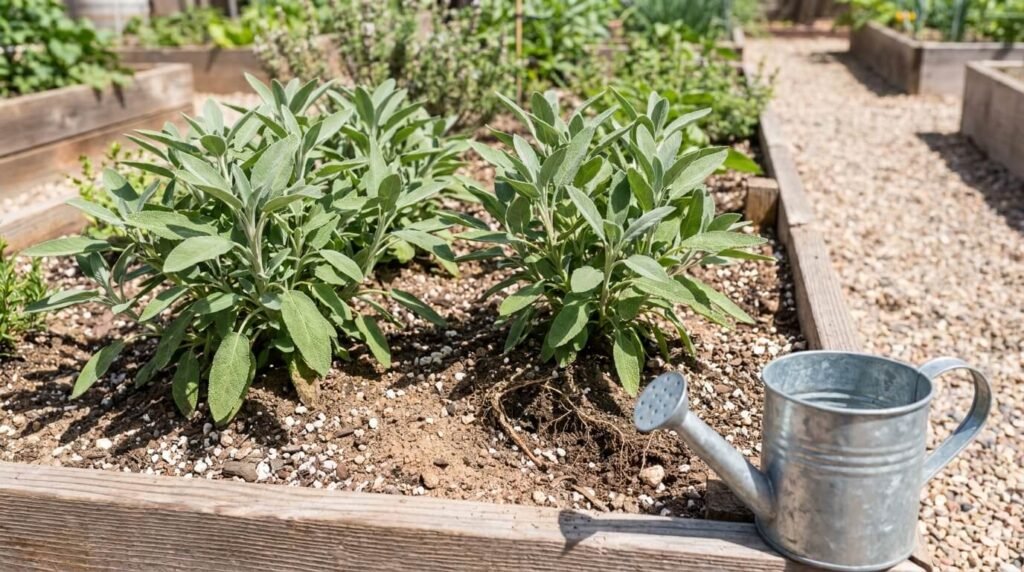
Give Sage Plenty of Sun
Many garden sages perform best in full sun.
A sunny location helps encourage compact growth, aromatic foliage, and flowering in varieties grown for blooms.
If a container-grown sage becomes thin and stretched, inadequate light may be one of the first things to investigate.
Use Well-Drained Soil
Good drainage is one of the most important requirements for many sages.
If your garden has heavy clay or stays wet after rain, consider a raised bed or container rather than planting sage directly into a persistently soggy area.
Adding more water to a struggling sage isn’t usually the solution.
Water According to Conditions
New plants need regular moisture while their roots become established.
Established sages are often more tolerant of dry periods, but watering needs still depend on temperature, rainfall, soil, container size, and the specific variety.
Instead of following a rigid schedule, check the soil and plant conditions.
Don’t Overfertilize
Sage generally doesn’t need heavy feeding.
Too much fertilizer can encourage soft, leafy growth and may not produce the compact form or aromatic foliage you’re looking for.
Start with healthy soil and follow the needs of the particular cultivar.
Prune Sage Carefully
Harvesting culinary sage regularly can help keep the plant productive and compact.
For older woody plants, avoid cutting deeply into bare, old wood unless the specific variety is known to tolerate it.
Light pruning is generally easier to manage than allowing a plant to become severely overgrown and then cutting it back aggressively.
Growing Sage in Containers
Sage is a practical herb for containers, particularly when you choose a compact variety.
Use a container with drainage holes and enough room for the plant’s expected mature size. A pot that is too small can restrict root growth, while a pot without drainage can leave the roots sitting in excess moisture.
Place the container in a sunny location.
Remember that containers can dry out faster than garden beds during hot weather. Check the soil regularly rather than watering automatically every day.
Common Problems When Growing Sage
Yellow Leaves
Yellow leaves can have several causes, but consistently wet soil is worth checking first.
Inspect drainage and soil moisture before reaching for fertilizer.
Leggy Growth
If a sage plant becomes tall and thin instead of compact, insufficient sunlight may be contributing to the problem.
Move container plants to a brighter location when possible.
Poor Flowering
Flowering salvias generally need suitable light and growing conditions to bloom well.
If a plant is healthy but produces few flowers, check its sunlight exposure and make sure you’re growing it in a climate where that variety performs well.
Winter Damage
Sage hardiness varies considerably between species.
Before planting a perennial sage, check the specific cultivar’s recommended USDA hardiness zone. A plant that survives winter outdoors in a warm region may need protection or indoor treatment in colder areas.
Root Problems
Repeatedly wet soil can cause serious problems for plants that prefer good drainage.
If your sage struggles despite receiving adequate sunlight, look at the soil before assuming it needs more fertilizer or water.
Common Mistakes to Avoid When Growing Sage
Overwatering: Sage generally doesn’t like constantly saturated soil.
Ignoring mature size: A small nursery plant can become much wider than expected.
Assuming every sage is edible: Always identify the species or cultivar before using a plant as a culinary herb.
Ignoring your climate: Hardiness varies widely among different sage plant types.
Planting in deep shade: Many sages need substantial sunlight for strong growth and flowering.
Using a container without drainage: Excess water around the roots can create problems quickly.
Pruning aggressively: Some woody salvias don’t respond well to severe cuts into old wood.
Choosing an ornamental salvia for cooking: Beautiful flowers don’t automatically make a plant a culinary sage.
Frequently Asked Questions About Sage Plants
What is the most common type of sage plant?
Common garden sage, u003cemu003eSalvia officinalisu003c/emu003e, is one of the best-known culinary sage plants. It’s widely grown for its aromatic leaves and traditional cooking uses.
What is the best sage plant for cooking?
Common garden sage is a dependable choice for everyday cooking. Purple, tricolor, golden, Berggarten, and other culinary cultivars can also be useful depending on the flavor and appearance you want.
How many different types of sage plants are there?
There are many u003cemu003eSalviau003c/emu003e species and cultivars, so there isn’t one simple number covering every plant called sage. The useful distinction is between culinary sages, ornamental salvias, and plants that merely have “sage” in their common name.
Which sage plants are best for containers?
Compact culinary varieties are generally easiest to manage in containers. Always check the mature size of the specific cultivar before choosing a pot.
Which sage plants attract hummingbirds?
Flowering salvias such as pineapple sage and some red-flowering varieties can attract hummingbirds. Results vary with the plant, climate, and other resources available in your garden.
Can you eat all types of sage plants?
No. Don’t assume that every plant with “sage” in its common name is a culinary herb. Identify the species or cultivar and use reliable information about that specific plant before consuming it.
Does sage grow well in full sun?
Many sages prefer full sun and well-drained soil. Individual species differ, so check the growing requirements of the variety you’re planting.
Can sage survive winter?
Some sages are hardy perennials, while others are much more sensitive to cold. Check the specific plant’s hardiness information and compare it with your USDA hardiness zone.
Is Russian sage a true sage?
No. Despite its common name, Russian sage is not a true u003cemu003eSalviau003c/emu003e. This is one reason botanical names are useful when selecting plants.
What is the easiest sage plant to grow?
Common garden sage is a good starting point for many gardeners. It generally performs well when given plenty of sun, good drainage, and appropriate watering.
Final Thoughts
The best sage plant depends on what you want it to do.
If you’re building a kitchen herb garden, start with common garden sage or another culinary Salvia officinalis cultivar. If you want colorful foliage, purple, golden, or tricolor forms can give an herb bed more visual interest. For flowers and pollinators, flowering salvias such as pineapple sage and autumn sage can be better choices.
Before buying a plant, look beyond the word “sage” on the label. Check the botanical name, mature size, hardiness, sunlight requirements, and intended use.
Once you match the variety to your garden conditions, sage can be much more than a cooking herb. It can provide fragrance, foliage color, flowers, and useful habitat for pollinators—all from plants that belong to a surprisingly diverse group.