The right pair of gardening gloves can make a noticeable difference when you’re planting, weeding, pruning, or digging. They help keep soil off your hands, improve your grip, and provide protection from minor scratches, rough materials, and, with the right design, thorns.
But choosing a pair isn’t as simple as picking the one that looks comfortable. A thin glove that works beautifully for planting seedlings may be a poor choice for pruning roses. On the other hand, a heavy-duty glove can feel unnecessarily bulky when you’re handling small plants.
So, what should you look for?
The best gardening gloves are the ones that match your garden tasks, materials, weather conditions, and need for protection. Here’s how to choose them without buying more gloves than you actually need.
What Are Gardening Gloves?
Gardening gloves are protective hand coverings made for tasks such as planting, weeding, digging, pruning, and handling soil or garden materials. They range from lightweight fabric gloves to coated, leather, and specialized pruning gloves.
Different designs offer different combinations of:
- Grip
- Flexibility
- Breathability
- Durability
- Water resistance
- Thorn protection
- Coverage around the wrist
For example, someone tending herbs in containers may only need lightweight garden gloves with flexible fingers. Someone pruning rose bushes will probably need much more protection.
That difference is important because there isn’t one pair that’s best for every type of gardening.
Why Wear Gloves While Gardening?
Gardening may look gentle, but your hands can take plenty of wear during a long session. Soil can dry out your skin, rough tools can create pressure points, and branches or thorns can cause scratches.
A suitable pair of gloves can help:
- Keep soil and debris away from your hands
- Improve your grip on garden tools
- Reduce minor scratches and abrasions
- Help prevent blisters during repetitive work
- Protect against some thorns and rough plant material
- Keep hands warmer or drier in certain weather conditions
Consider weeding a large flower bed. Pulling a few weeds by hand is easy, but doing it repeatedly for an hour puts much more strain on your palms and fingers. A well-fitting pair with a grippy palm can make the work more comfortable.
Gloves also help keep dirt from collecting under your fingernails, which is useful if you’re moving between gardening and other household tasks.
They aren’t, however, a substitute for appropriate protective equipment when you’re working with hazardous chemicals or other materials. For those jobs, follow the product label and use gloves specifically suited to the substance.
Types of Gardening Gloves
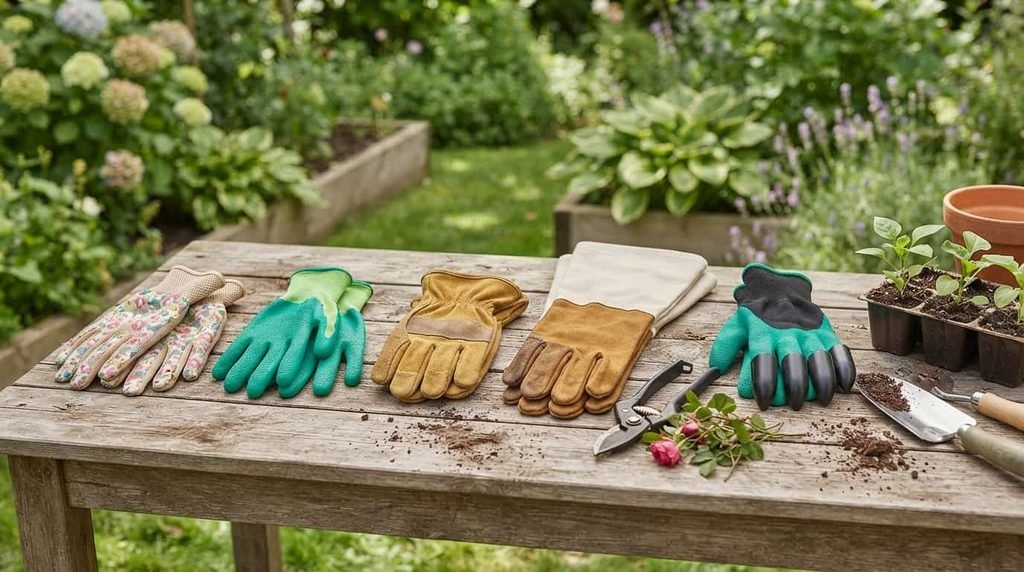
The right style depends largely on what you do in your garden. These are the main types worth knowing.
Lightweight Gardening Gloves
Lightweight gloves are designed for everyday, lower-risk jobs such as:
- Planting seedlings
- Handling potting soil
- Removing small weeds
- Transplanting flowers
- Working in raised beds
Their main advantage is dexterity. Your fingers can move easily, making it simpler to handle tiny plants, seeds, and delicate stems.
They’re a good choice for container gardeners and people who spend more time planting than doing heavy pruning.
The trade-off is protection. A thin fabric glove shouldn’t be expected to handle serious thorns, sharp branches, or demanding digging.
Coated Gardening Gloves
Coated garden gloves usually have a fabric backing with a coating over the palm and fingers. Nitrile and latex are common coating materials.
The coating can provide:
- Better grip
- Added abrasion resistance
- Some resistance to moisture
- A useful balance between flexibility and durability
These gloves are practical for general gardening, especially when you’re switching between soil, containers, and hand tools.
One important detail: a coated palm doesn’t automatically make a glove waterproof. Water protection depends on the entire glove, including its fabric, seams, and construction.
Leather Gardening Gloves
Leather gloves are a traditional option for tougher outdoor work. They’re generally more durable than lightweight fabric gloves and can handle more abrasion.
They’re useful for jobs such as:
- Pruning shrubs
- Handling rough branches
- Clearing garden debris
- Moving coarse materials
- General heavy-duty yard work
If you’re clearing an overgrown corner of your yard, a durable leather glove may be a better choice than a thin planting glove.
The downside is reduced dexterity. Leather gloves can feel heavier and less flexible, so they aren’t necessarily ideal for delicate planting.
Thorn-Resistant and Pruning Gloves
If you grow roses or work with other thorny plants, ordinary garden gloves may not offer enough protection.
Pruning gloves are designed for tougher plant work and may use more protective materials or longer cuffs that extend farther over the wrist.
For example, reaching into a dense rose bush to remove an old branch can expose your hands and wrists to thorns. A glove with additional coverage is much more suitable for that job than a short, lightweight glove.
Still, don’t interpret thorn-resistant as completely puncture-proof. Protection varies by product, so check the manufacturer’s specifications for the type of protection provided.
Clawed Gardening Gloves
Clawed gloves have small digging claws attached to the fingertips. They’re designed to make light planting and soil work more convenient.
They’re particularly handy when you’re working with loose soil and need to make several small holes for seeds or seedlings.
For example, if you’re planting annual flowers in a soft raised bed, the claws may save you from repeatedly reaching for a small hand tool.
They’re not a replacement for a trowel when soil is hard, compacted, or full of roots.
How to Choose Gardening Gloves for Different Tasks
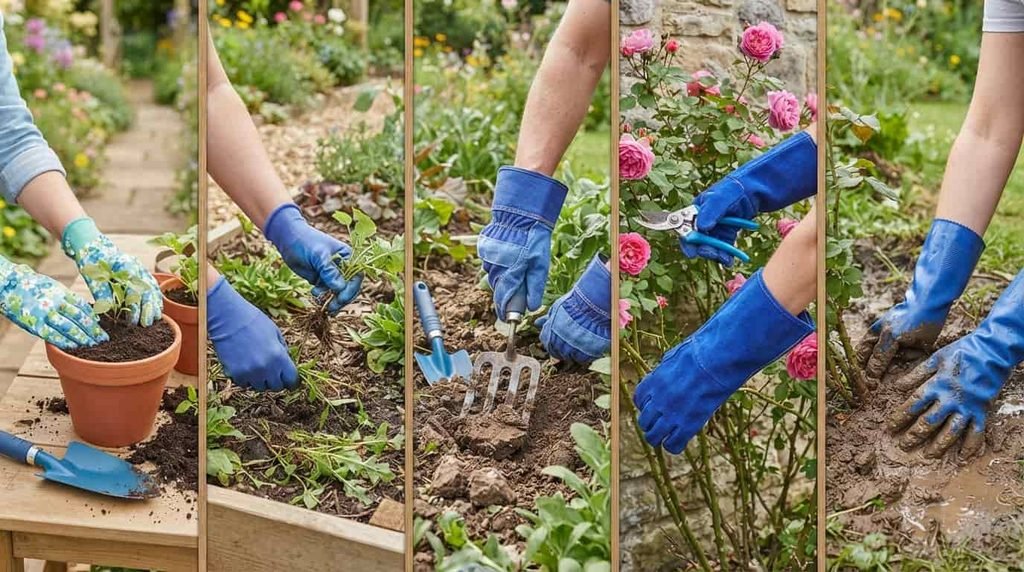
Instead of asking which gloves are the best overall, start with the jobs you do most often.
| Task for gardening | Qualities to search for |
|---|---|
| Planting seedlings | Lightweight material and flexible fingers |
| Potting plants | Comfortable fit and good dexterity |
| Weeding | Secure fit and good palm grip |
| Digging | Durable palms and reinforced areas |
| Pruning shrubs | Durable material and secure wrist coverage |
| Handling roses | Thorn-resistant construction and longer cuffs |
| Wet gardening | Water-resistant or waterproof construction |
| General yard work | Durable, breathable all-purpose gloves |
For Planting and Potting
Choose flexibility and comfort first. You need enough finger control to pick up seedlings and work around delicate roots.
A bulky glove can make precise work frustrating, especially when you’re filling small containers or transplanting young plants.
For Weeding
Grip matters more when you’re repeatedly pulling weeds.
Look for gloves with textured or coated palms that allow you to hold weeds and tools securely. A close fit is also helpful because loose fingers can make repetitive work awkward.
For Digging
Digging puts more pressure on your palms and fingertips. If you frequently use a hand trowel, cultivator, or shovel, choose gloves made with more durable materials.
Reinforced palms and fingertips can be especially useful if you’re doing this work regularly.
For Pruning and Roses
Pruning requires a different level of protection. If you’re working around thorns, prioritize protective construction and wrist coverage over a lightweight feel.
For occasional pruning of a thorn-free shrub, regular durable gloves may be enough. For frequent rose pruning, specialized pruning gloves make more sense.
For Wet Soil
If your gardening involves consistently wet soil, look for gloves specifically described as water-resistant or waterproof.
Don’t rely solely on a rubbery-looking palm. Check the product specifications to understand how much of the glove is designed to resist water.
What Materials Are Best for Gardening Gloves?
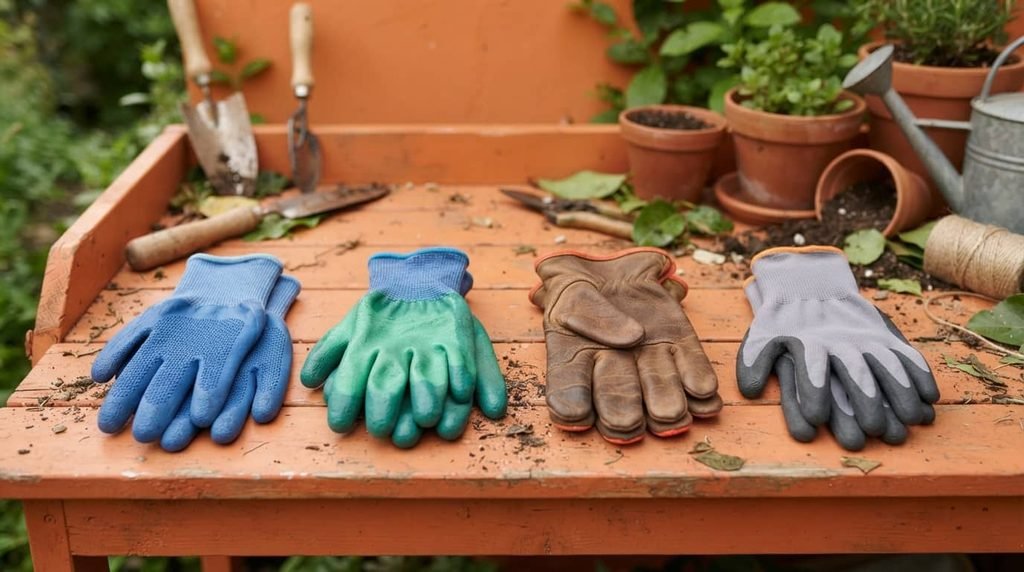
There isn’t a single best material. Each has strengths that make it useful for particular garden jobs.
Nitrile
Nitrile is commonly used as a coating because it can provide good grip while retaining flexibility.
Nitrile-coated gloves are often a practical choice for planting, weeding, potting, and general garden maintenance.
Latex
Latex is also commonly used as a glove coating and can offer flexibility and grip.
If you have a known latex sensitivity, choose a latex-free alternative rather than assuming every garden glove is suitable.
Leather
Leather is a good option when durability and protection are more important than maximum dexterity.
It’s particularly useful for pruning, handling rough branches, and heavier outdoor work.
Fabric and Synthetic Materials
Fabric and synthetic gloves can be lightweight, breathable, and comfortable for everyday gardening.
They’re often a good fit for planting and light maintenance, but protection varies widely between products. Check the construction rather than judging performance from the material name alone.
What Features Matter When Buying Gardening Gloves?
Material is only part of the decision. A few other features can make a big difference in everyday use.
Grip
A textured or coated palm can make it easier to hold pruning shears, hand trowels, pots, and other tools.
Dexterity
If you frequently plant seedlings or handle small objects, choose gloves that allow your fingers to move naturally.
Breathability
For warm weather, breathable fabric can be more comfortable than a thick glove that traps heat.
Cuff Length
Short cuffs are convenient for basic planting. Longer cuffs can provide additional coverage during pruning or work around thorny plants.
Reinforcement
Reinforced palms and fingertips can be worthwhile if you regularly dig, prune, or handle rough materials.
Water Protection
If wet conditions are common in your garden, check whether the glove is water-resistant or waterproof rather than assuming it is.
How Should Gardening Gloves Fit?
A good fit is just as important as the material.
Your fingers should reach comfortably toward the ends of the gloves without pressing against them. The palm should feel secure without being so tight that your hand feels restricted.
Avoid gloves that are too loose. Excess material around the fingertips can make it harder to control small tools or handle seedlings.
At the same time, gloves shouldn’t be so tight that your fingers can’t bend comfortably.
When shopping online, measure your hand according to the manufacturer’s instructions and use the brand’s size chart. A medium from one company may fit differently from a medium from another.
Before using a new pair for a long gardening session, try making a fist and gripping a garden tool. If the glove pulls uncomfortably across your fingers or shifts around your palm, the fit probably needs reconsideration.
Are Gardening Gloves Waterproof or Thorn-Proof?
Not automatically.
The term gardening gloves covers a wide range of designs, and their protection varies considerably.
Water Protection
Some gloves are designed to resist light moisture, while others are made for more demanding wet conditions.
If you’re gardening in damp soil, occasional water resistance may be enough. If your hands will be exposed to water for extended periods, look for gloves specifically marketed as waterproof and check their construction.
Thorn Protection
A standard gardening glove can help reduce minor scratches, but it isn’t necessarily designed to stop thorns.
If you regularly work with roses, blackberry canes, or similarly thorny plants, choose gloves specifically designed for pruning or thorn resistance.
And remember that even specialized protective gloves have limits. Always handle thorny plants carefully rather than relying entirely on the glove.
When Do You Need Specialized Gardening Gloves?
You don’t need a separate pair for every activity. For many homeowners, one comfortable all-purpose pair covers most routine gardening.
Specialized gloves become worthwhile when a particular task creates a clear need for additional protection or performance.
Pruning roses: Choose thorn-resistant gloves, preferably with longer cuffs.
Heavy digging: Look for durable construction and reinforced palms.
Wet gardening: Choose gloves with the level of water protection appropriate for your conditions.
Cold-weather gardening: Consider insulated gloves that still provide enough dexterity to handle tools.
Chemical handling: Don’t assume ordinary garden gloves are appropriate. Read the chemical’s label and use the protective equipment specified for that product.
The easiest approach is to start with your most common gardening tasks. If you spend most weekends planting vegetables, you probably don’t need heavy pruning gloves. If your yard contains several large rose bushes, specialized protection becomes much more useful.
How to Clean and Care for Gardening Gloves
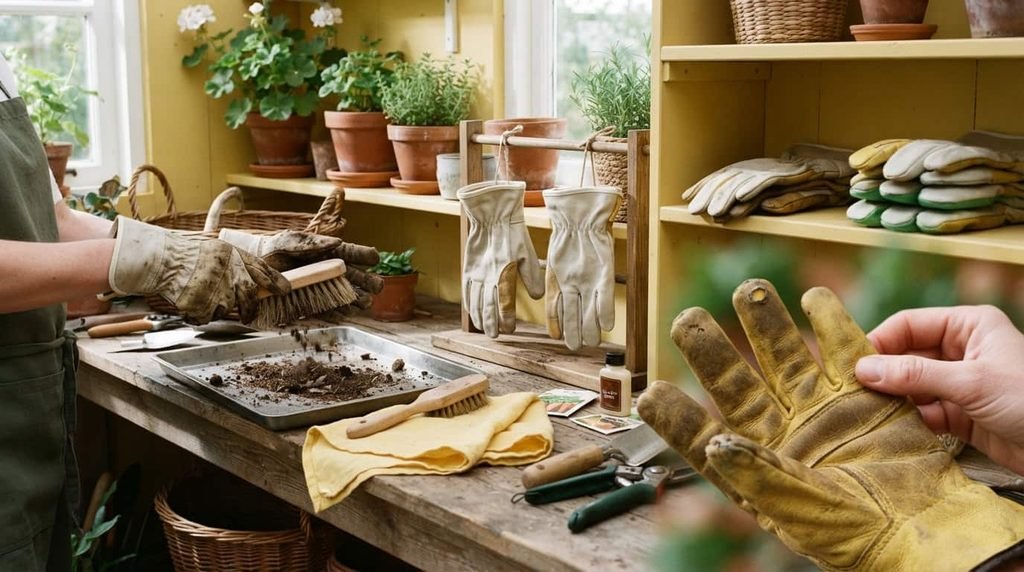
Taking care of your gloves can help them last longer and keep them more comfortable to use.
First, remove loose soil after gardening. Then follow the manufacturer’s cleaning instructions because leather, fabric, and coated gloves can have different care requirements.
If the gloves become wet, allow them to dry completely before storing them. Avoid leaving damp gloves crumpled inside a garden bag or closed shed.
Check the gloves regularly for signs of wear. Pay particular attention to:
- Thinning palms
- Worn fingertips
- Peeling coatings
- Damaged seams
- Loose cuffs
- Holes or tears
Once a glove has worn through in an area that needs protection, replacing it is usually better than continuing to rely on it.
Store your gloves somewhere dry and easy to reach. Keeping them near your frequently used garden tools makes it more convenient to put them on even for a quick job.
Common Mistakes When Buying Gardening Gloves
Choosing Based Only on Appearance
A colorful pattern may look great, but it doesn’t tell you anything about grip, durability, or protection.
Consider performance before appearance.
Buying the Thickest Gloves Available
More material doesn’t always mean a better glove.
Heavy gloves can be useful for rough work but may make planting and other precise tasks unnecessarily difficult.
Using One Pair for Every Job
An all-purpose pair can be useful, but it has limits.
If your regular gardening includes both delicate planting and serious rose pruning, having a lightweight pair and a more protective pair may be more practical than forcing one glove to do everything.
Ignoring the Fit
Even a well-made glove becomes frustrating if it slips, bunches, or restricts your fingers.
Assuming Coated Means Waterproof
A coated palm can improve grip and offer some moisture resistance, but it doesn’t necessarily mean the entire glove is waterproof.
Assuming All Garden Gloves Protect Against Thorns
Standard gloves aren’t automatically suitable for thorny plants. Check for specific pruning or thorn-resistant features when you need them.
Ignoring the Conditions You’ll Garden In
The ideal glove for a hot summer afternoon may not be the best choice for cold, wet spring work.
Think about your local weather and the conditions in which you’ll actually use the gloves.
Frequently Asked Questions
What are the best gardening gloves for general use?
For general gardening, look for a comfortable pair that balances grip, flexibility, durability, and breathability. Lightweight or coated gloves are often practical for planting, weeding, potting, and everyday garden maintenance.
What type of gloves are best for gardening?
The best type depends on the task. Lightweight gloves are useful for planting, coated gloves can provide grip for general maintenance, and leather or specialized pruning gloves are better suited to tougher work.
Are nitrile gloves good for gardening?
Nitrile-coated gloves can be a good choice for general gardening because they provide grip while allowing reasonable finger movement. They’re useful for tasks such as planting, weeding, and handling garden tools.
What gloves are best for handling roses?
Look for gloves designed specifically for pruning or thorn resistance. Longer cuffs can provide additional coverage around the wrists when you’re reaching into rose bushes.
Should gardening gloves be waterproof?
They can be useful if you regularly work in wet soil or rainy conditions. For dry-weather gardening, a breathable glove may be more comfortable. Choose according to how much water exposure you actually expect.
How often should gardening gloves be replaced?
There isn’t a fixed replacement schedule. Replace them when the material, seams, fingertips, or protective coating become worn enough that they no longer provide the grip, comfort, or protection you need.
Final Thoughts
The best gardening gloves aren’t necessarily the thickest, most expensive, or most heavily advertised pair. They’re the ones that fit your hands and suit the work you actually do.
For planting and potting, prioritize flexibility and dexterity. For weeding and general maintenance, look for a comfortable fit and reliable grip. If you regularly prune roses or other thorny plants, choose gloves with appropriate protective features and longer coverage.
You may eventually find that having two different pairs makes more sense than searching for one glove that does everything. A lightweight pair can handle everyday planting, while a tougher pair can stay ready for pruning and heavy yard work.
The key is simple: choose protection and features based on the task, not just the label on the package.
_______________________________________
Related resources: Gardening Tools: 7 Essentials for a Thriving Garden · 12 Brilliant Ideas: How To Renovate My Patio Decoradhouse