How to Measure for Curtains
Quick answer: To measure for curtains, measure your window width and add 20–30 cm on each side for the rod. Then decide on length—floor, sill, or apron. For fullness, multiply your window width by 2 to 2.5. Always measure each window separately, since sizes often vary.
Curtains can make a room or break it. Get the measurements right, and your windows look framed, finished, and intentional. Get them wrong, and you’re stuck with panels that puddle awkwardly, hover too high, or barely reach the glass.
Sound familiar? Most people order curtains by eyeballing the window or guessing from an old set. Then the box arrives, the curtains go up, and something feels off. Too short. Too skimpy. Too long.
Here’s the good news: measuring for curtains is easy once you know the steps. You don’t need a pro. You don’t need fancy tools. You just need a tape measure, a few minutes, and this guide.
Let’s save you the frustration—and the cost of reordering. By the end, you’ll know exactly how to measure any window in your home with confidence.
Why do accurate curtain measurements matter?
Curtains do two jobs. They look good, and they work hard.
The right measurements handle both. Panels that are wide enough block light and give you privacy. Panels that hang at the right height make your ceilings feel taller, and your windows feel grander. That’s the aesthetic payoff.
Then there’s the money. Curtains aren’t cheap, and custom panels cost even more. A single wrong measurement can mean reordering an entire set—or living with curtains you don’t love.
The most common mistakes are simple ones: measuring the glass instead of the space around it, forgetting the rod brackets, and assuming every window in a room is the same size. They rarely are.
This guide walks you through each step so you skip those mistakes entirely. Measure once, order once, done.
What tools do you need to measure for curtains?
You don’t need much. Grab these before you start:
- A metal measuring tape (at least 25 feet). Cloth tapes stretch and sag, which throws off your numbers. Metal stays accurate.
- A notepad or your phone to record every measurement. Don’t trust your memory—write it down.
- A step ladder for reaching the top of tall windows safely.
- A level tool (optional, but handy). It keeps your rod placement straight and your measurements honest.
That’s the whole kit. Nothing fancy. Now let’s measure.
How do you measure a window for curtains, step by step?
Take it one step at a time. Each measurement builds on the last.
Step 1: Measure the window width
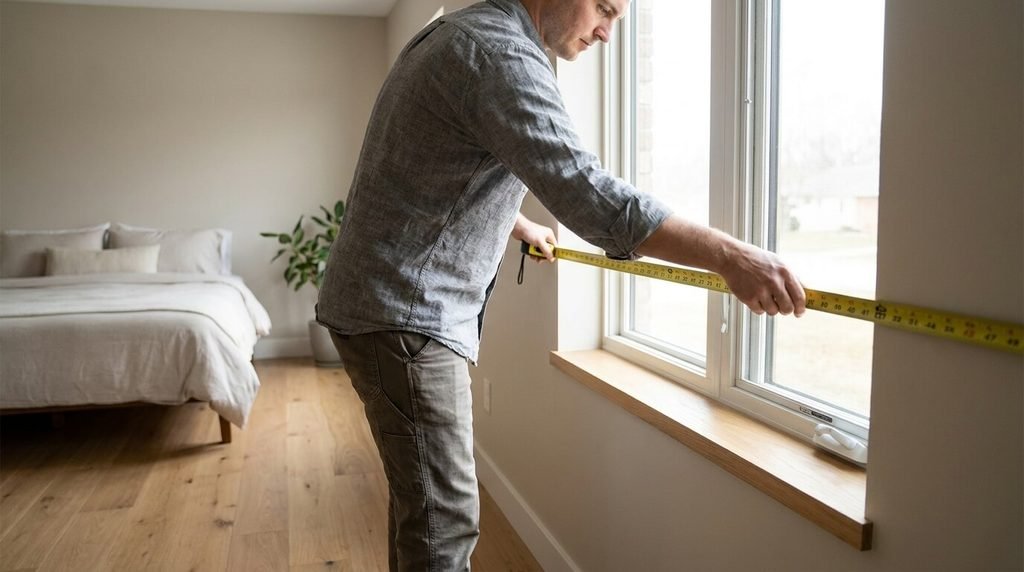
First, decide how you want your curtains to hang. Inside the frame, or outside it?
Inside-frame curtains sit flush within the window recess. They give a clean, tailored look and suit blinds or café-style panels. Measure the width from one inner edge of the frame to the other.
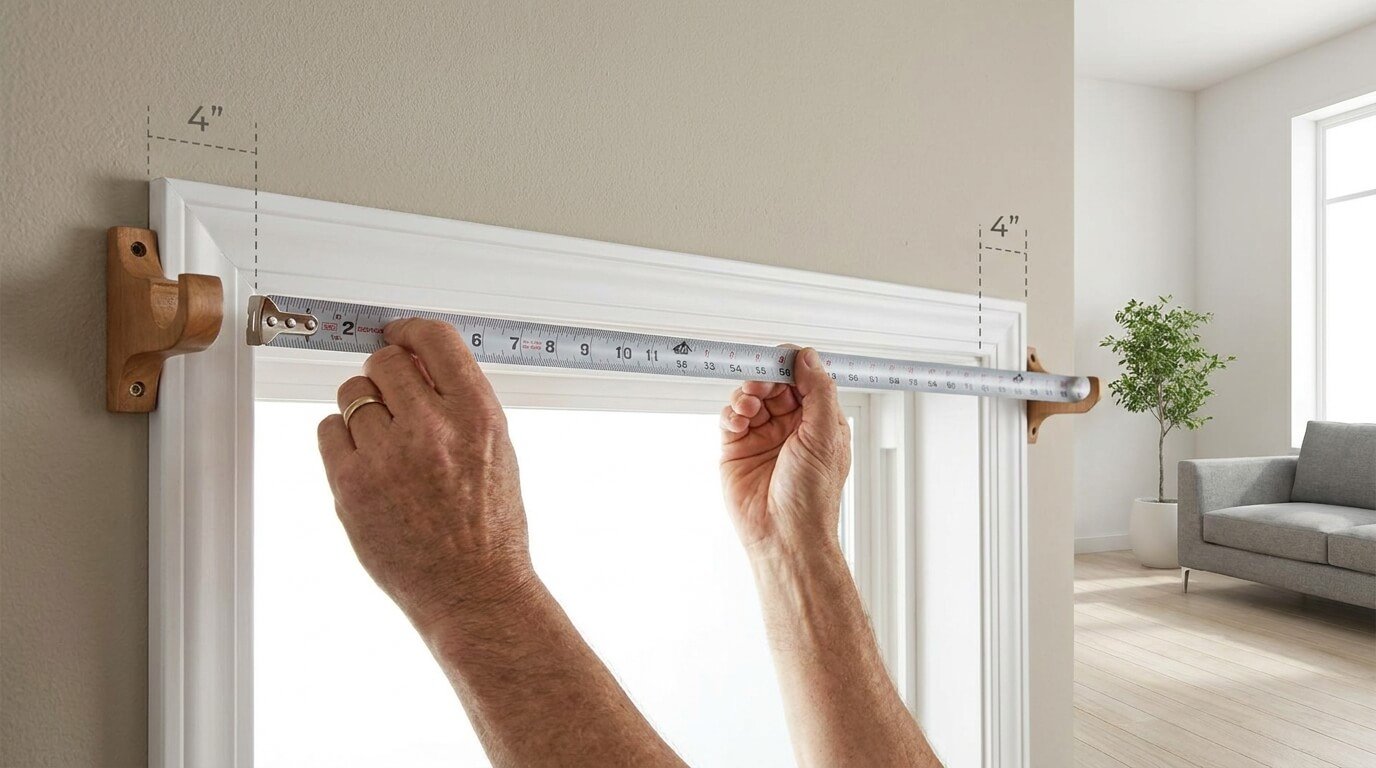
Outside-frame curtains hang beyond the window on a rod. This is the more common choice, and for good reason—it makes windows look bigger and blocks light better. For this, measure the width of the window, then add 15 to 30 cm on each side. That extra width lets your curtains stack neatly off the glass when open.
Write the number down.
Step 2: Decide on rod placement and height
Your rod placement changes everything about how curtains look.
Here’s the trick most people miss: don’t mount the rod right at the top of the window. Mount it higher. Placing the rod 10 to 15 cm above the window frame draws the eye up and makes your ceilings feel taller.
For the width, extend the rod 15 to 30 cm past each side of the window. This is where those brackets and finials go, so account for them now.
Measure from where the rod will sit down to your chosen curtain length. That measurement—from the rod, not the window—is what determines how long your curtains need to be.
Step 3: Calculate the curtain length
Length is where personal taste comes in. You’ve got three main options:
- Floor-length: Curtains that just kiss the floor or hover about 1 cm above it. This is the most popular, classic look. Measure from the rod to the floor.
- Sill-length: Curtains that end right at the windowsill. Great for kitchens and bathrooms where floor-length panels get in the way. Measure from the rod to the top of the sill.
- Apron-length: Curtains that fall a few centimeters below the sill. A tidy middle-ground look. Measure from the rod to about 10 cm below the sill.
Want a dramatic, luxe feel? Add 5 to 15 cm so the fabric pools slightly on the floor. Just know that pooled curtains gather dust and need more cleaning.
Step 4: Account for fullness and fabric shrinkage
Flat, skimpy curtains look cheap. Full, gathered curtains look rich. The difference is fullness.
To get proper fullness, multiply your window width by 2 to 2.5. So a window that’s 100 cm wide needs curtains totaling 200 to 250 cm across. That extra fabric creates the folds that make curtains look full and expensive.
Sheer fabrics can go even fuller—up to 3 times the width—since they’re light and airy.
Then there’s shrinkage. Natural fabrics like cotton and linen can shrink after washing. If your curtains aren’t pre-shrunk, add a few extra centimeters to the length as insurance. Better to trim later than to end up with high-waters.
Step 5: Handle tricky windows
Not every window is a neat rectangle. Here’s how to handle the awkward ones.
- Bay windows: Measure each section separately, then add them together. You’ll likely need a bendable or corner-connected rod. Treat each pane as its own small window.
- Sliding doors: Measure the full width of the door, including the frame, then add 15 to 30 cm on each side. Go floor-length, and leave clearance so the curtains don’t drag when the door opens.
- Angled or sloped ceilings: Mount the rod as high as the slope allows. Measure from that point to the floor. These windows may need special hardware, so check before you buy.
Tricky windows take an extra minute. Measure carefully, and they’ll look just as good as the rest.
What curtain measurement mistakes should you avoid?
Even careful people slip up. Watch out for these three.
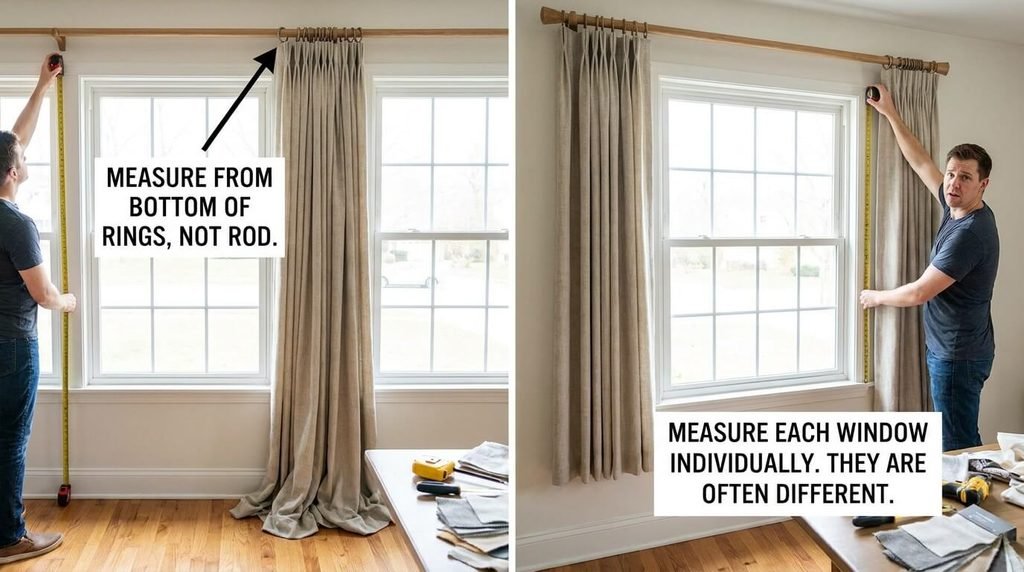
Forgetting the rod brackets and rings. Curtain rings hang below the rod, which means your curtains hang lower than the rod itself. Measure from the bottom of the rings, not the rod, or your curtains will drag or puddle more than you planned.
Assuming every window is the same size. Windows in the same room are often off by a centimeter or two. That small gap shows once the curtains are up. Measure each window on its own, every time.
Ignoring fabric weight. Heavy fabrics like velvet and blackout material hang differently than light sheers. Thick fabric needs a sturdy rod and a bit more clearance so it drapes without bunching. Factor the weight in before you order.
Skip these mistakes, and you’re most of the way to perfect curtains.
How do you measure for different curtain styles?
Different curtains, slightly different rules. Here’s a quick guide.
- Panels: Standard curtains. Use the 2 to 2.5 fullness rule and pick your length. Simple and versatile.
- Sheers: Light, airy, and see-through. Go fuller—2.5 to 3 times the width—for that soft, flowing look. Sheers often layer under heavier panels.
- Blackout curtains: Built to block light, so width matters most. Extend the rod well past the window—30 cm or more on each side—so no light sneaks around the edges. Overlap panels in the middle for the darkest room.
Match the measurement to the style, and each type does its job right.
How do you adjust measurements for different rooms?
Rooms have different needs. Adjust to fit them.
- Bedrooms: Prioritize blackout coverage and privacy. Go wide, go long, go full.
- Kitchens and bathrooms: Sill-length or apron-length keeps fabric away from sinks, stoves, and splashes.
- Living rooms: Floor-length panels look polished and pull the room together. This is where a little pooling can add drama.
Are there budget-friendly ways to measure accurately?
Yes. You don’t need to spend a cent on tools you already own.
- Use painter’s tape to mark rod height on the wall before you commit. Step back, look, adjust. It’s free and reversible.
- Photograph each window with its measurements written on a sticky note in the frame. No mix-ups at the store.
- Round up, never down. If you’re between sizes, pick the larger one. You can hem long curtains. You can’t add fabric to short ones.
Measure twice, order once
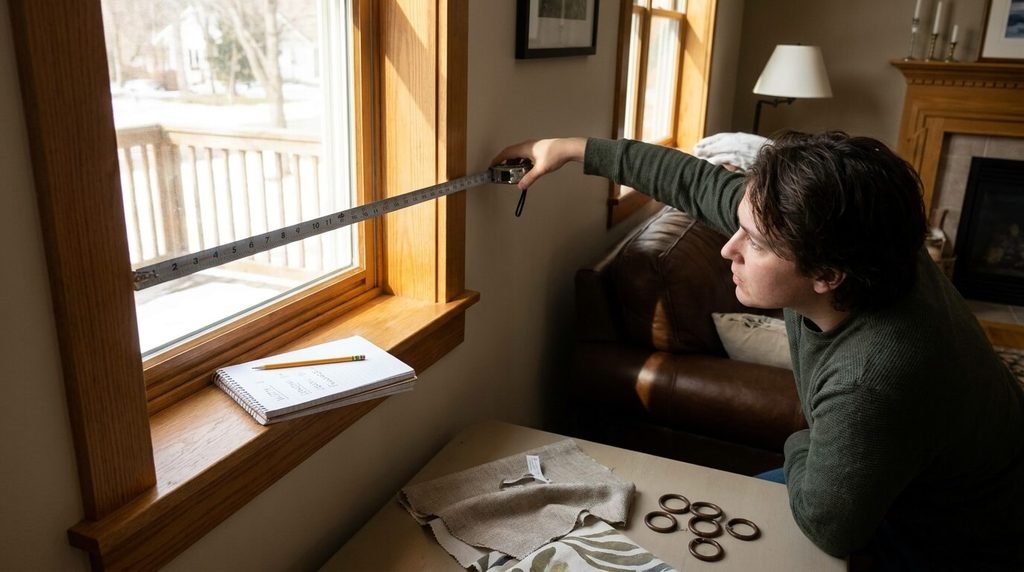
Here’s the whole thing in a nutshell. Measure your width, add for the rod. Pick your length from the rod down. Multiply for fullness. Measure each window on its own.
That’s it. Five steps, a metal tape, and a few minutes of care.
The biggest reason people end up with curtains they hate is rushing this part. So don’t rush it. Double-check every number before you order—especially width and length, the two that matter most.
Get the measurements right, and the rest is easy. Your windows will look framed, finished, and exactly the way you pictured them.
Ready to shop? Head to our curtain collection to find the perfect panels for every window in your home.
Frequently asked questions
How much wider than the window should curtains be?
Your curtains should total 2 to 2.5 times the width of your window for proper fullness. For a 100 cm wide window, that means panels totaling 200 to 250 cm. Sheer fabrics can go up to 3 times the width for a fuller look.
How high should I hang a curtain rod?
Mount the rod 10 to 15 cm above the top of the window frame. Hanging it higher than the window draws the eye up and makes your ceilings feel taller. Extend the rod 15 to 30 cm past each side so curtains stack off the glass when open.
Should curtains touch the floor?
It depends on the look you want. Floor-length curtains that just kiss the floor give a classic, polished look. For a dramatic feel, let them pool 5 to 15 cm on the floor. For kitchens and bathrooms, sill-length or apron-length keeps fabric out of the way.
How do I measure for curtains on a bay window?
Measure each section of the bay window separately, then add the measurements together. You’ll need a bendable rod or corner connectors to follow the angles. Treat each pane as its own small window for the most accurate fit.
Do I need to account for fabric shrinkage?
Yes, if your curtains are made from natural fibers like cotton or linen and aren’t pre-shrunk. Add a few extra centimeters to the length as insurance. It’s easier to hem curtains that are slightly long than to fix ones that shrink too short.
Related resources: What Is Smart Home Interior Design? Design Smarter · Dark Blue House With Deck: 7 Color Combinations That Work
Related resources: How to Get Rid of Mold in Bathroom Spaces (And Keep It From Coming Back) · How to Paint a Room Like a Pro: 7 Professional Steps