Choosing gardening tools can be surprisingly confusing when every store seems to sell a different kit. You may wonder what you need for planting, pruning, weeding, and watering without filling your shed with unused gear. The good news is that a productive home garden needs fewer tools than you might expect. This guide explains the essential gardening tools for common US gardens and shows what each one actually does. You’ll also learn how to choose durable equipment, match tools to your garden size, avoid common buying mistakes, and care for what you own. By the end, you can build a practical toolkit that saves time, effort, and money each season.
Gardening Tools Every Home Gardener Should Start With
You don’t need a garage full of equipment to maintain a healthy garden. A small collection of versatile tools can handle most everyday jobs. The right starting set depends on your garden, the plants you grow, and how much ground you need to maintain.
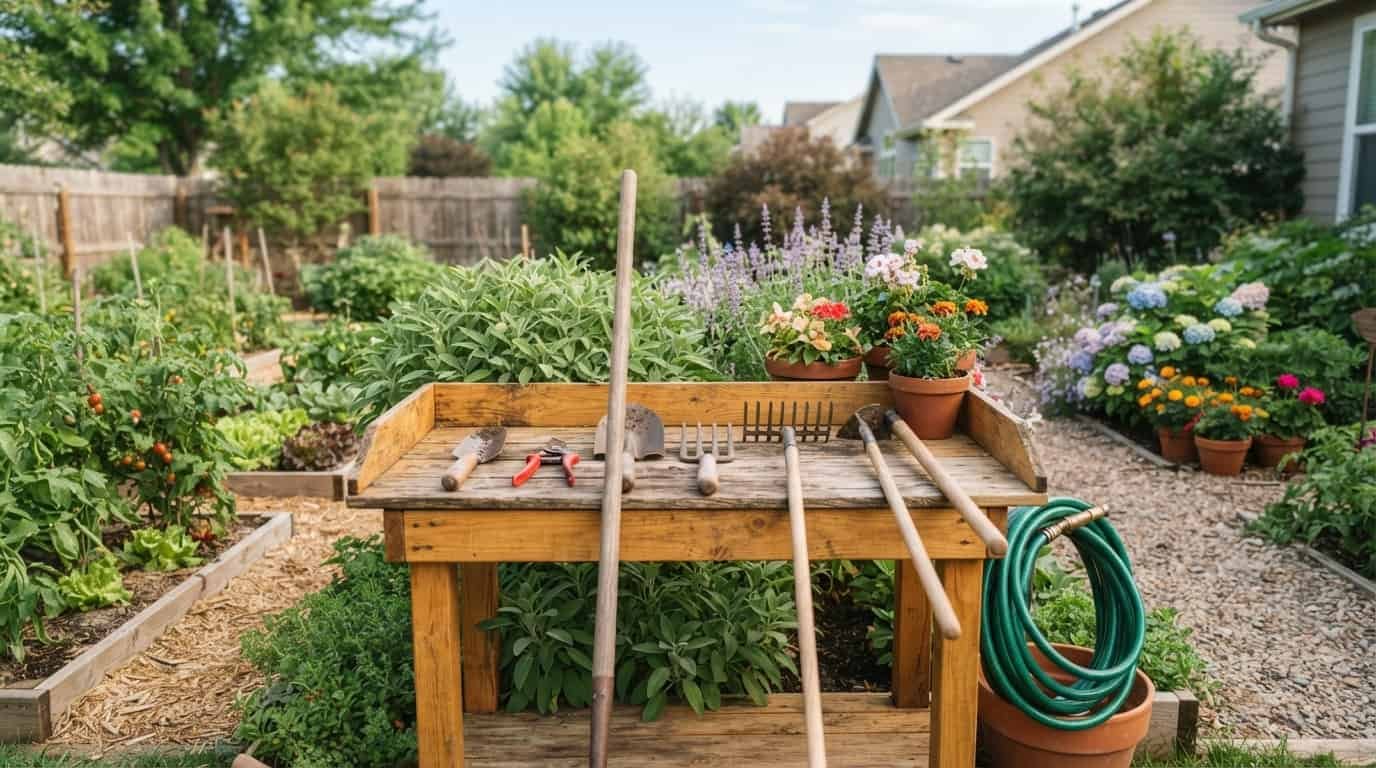
For most home gardeners, a hand trowel, pruning shears, digging tool, garden fork, rake, hoe, and watering tool provide a strong foundation. NC State Extension also recommends buying according to your actual needs rather than trying to own every tool available. Quality equipment can make work easier and last longer when you maintain it properly.
| Tool | Main purpose | Good for |
|---|---|---|
| Hand trowel | Small digging | Containers and seedlings |
| Pruning shears | Cutting stems | Flowers and shrubs |
| Spade or shovel | Digging and moving soil | Beds and larger jobs |
| Garden fork | Loosening soil | Raised beds and compost |
| Garden rake | Gathering and leveling | Leaves and soil |
| Garden hoe | Surface weeding | Vegetable beds |
| Hose or watering can | Delivering water | Containers and beds |
1. Hand Trowel for Planting and Small Jobs
A hand trowel may be the most frequently used tool in a small garden. Its narrow blade makes it easy to dig planting holes, transplant seedlings, loosen soil around containers, and remove small weeds.
Look for a sturdy metal blade and a handle that feels comfortable. A very thin blade can bend when you work in compacted soil. On the other hand, an oversized trowel can feel awkward in containers or crowded beds.
The best choice isn’t necessarily the most expensive one. Instead, choose a trowel that feels balanced and strong enough for the soil you normally work with.
2. Pruning Shears for Clean Plant Cuts
Pruning shears are designed for cutting smaller stems and branches. They are useful for shaping shrubs, removing dead growth, harvesting herbs, and keeping flowering plants tidy.
Bypass pruners work with two blades that pass each other like scissors. They are a common choice for cutting live stems. Anvil pruners use a blade that closes against a flat surface and can be useful for certain dry or dead material.
Don’t force hand pruners through branches that are too thick. That can damage the tool and produce a poor cut. When the branch exceeds your pruner’s capacity, move up to loppers or a pruning saw. Extension guidance commonly places hand pruners in the smaller-branch range, while loppers handle larger cuts.
How to Choose the Right Digging Tools
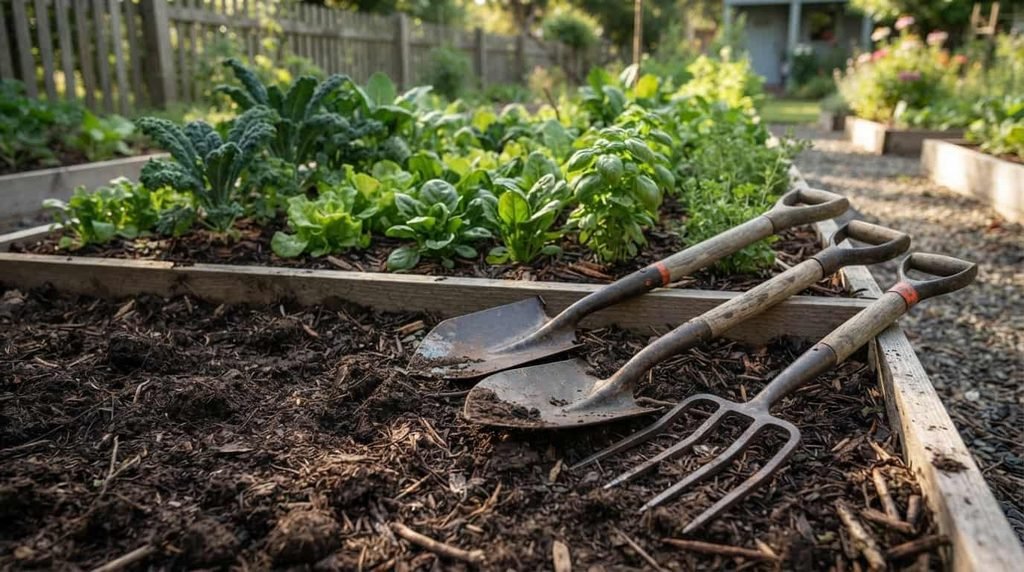
Digging equipment often causes confusion because a spade, shovel, and garden fork can look similar at first glance. They perform different jobs, though, and choosing correctly can save considerable effort.
A sharp-edged spade is useful for cutting into soil, digging, and edging beds. A round-point shovel is better suited to digging and moving loose material. A garden fork uses strong tines to loosen soil and mix or move compost. NC State Extension makes these same distinctions in its garden-tool guidance.
| Tool | What it does best | Choose it when |
|---|---|---|
| Spade | Digging and edging | You need a firm, sharp edge |
| Shovel | Scooping and moving material | You are handling soil or mulch |
| Garden fork | Loosening and lifting soil | Soil is compact or needs aeration |
| Hand trowel | Small planting holes | You work in containers or small beds |
Spade vs. Shovel: Which One Do You Need?
Think of a spade as a tool for cutting into soil and a shovel as a tool for scooping material. That isn’t an absolute rule because designs vary, but it provides a useful starting point.
For example, imagine creating a new flower-bed edge. A sharp spade can make a clean line through turf and soil. If you then need to move a pile of loose compost into the bed, a shovel will usually be more convenient.
When a Garden Fork Is the Better Choice
A garden fork becomes especially useful when soil is compacted or when you need to loosen a bed without relying entirely on a solid blade. It can also help turn compost and lift loose material.
This makes it particularly useful in raised beds. Oregon State University Extension recommends hand tools such as spading forks, spades, and shovels for raised-bed soil work and notes that equipment choices should reflect garden size, physical ability, available time, and budget.
Use Rakes and Hoes for Easier Garden Maintenance
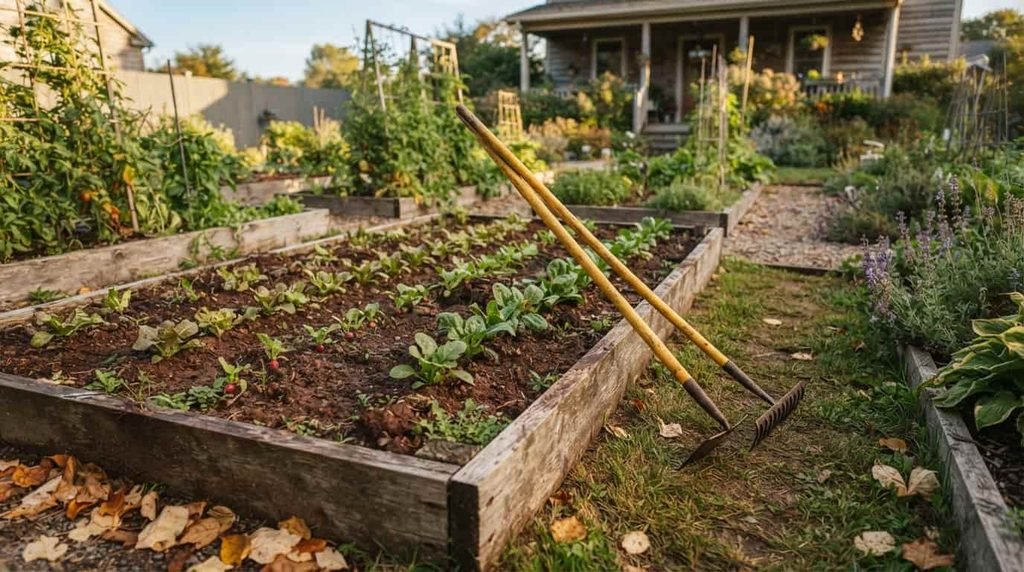
A rake is not just a leaf-collecting tool. Depending on its design, it can gather debris, level loose soil, remove small stones, or help prepare a planting surface.
A leaf rake has flexible tines that work well for lightweight debris. A bow rake has stronger tines that are better suited to soil, stones, and heavier garden material. Choosing the right style prevents you from bending or damaging a lightweight rake during heavier work.
Hoes also come in several forms. A common hoe works well for general cultivation and weeding. A pointed hoe can create planting furrows, while a scuffle hoe cuts shallow weeds as you push it across the soil.
Weed Early Instead of Fighting Large Weeds Later
One of the simplest ways to make weeding easier is to catch weeds while they’re young. Small weeds usually require less effort to remove, while established weeds may have deeper roots and compete more strongly with nearby plants.
NC State Extension recommends working soil when it is damp rather than wet because cultivating saturated soil can damage soil structure. It also notes that young weeds are generally easier to remove.
A useful habit is to inspect your beds while watering. A few minutes of early weeding can prevent a much bigger cleanup later.
Choose Watering Tools Based on Your Garden
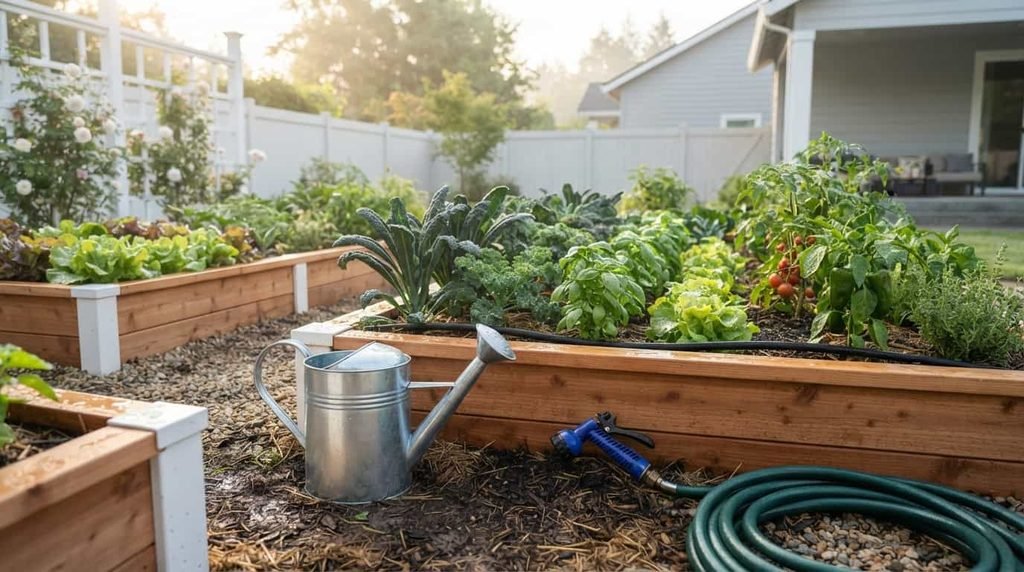
Watering equipment should match the plants and space you maintain. A watering can offers precise control around seedlings and containers. A hose with an adjustable nozzle works well for many home beds. A watering wand can make it easier to reach hanging baskets or plants tucked behind dense foliage.
For established planting beds, a soaker hose or drip system can provide more targeted watering. NC State Extension identifies watering cans as useful for gentle watering of transplants and garden or soaker hoses as general watering options.
| Garden situation | Useful watering option | Why |
|---|---|---|
| Small containers | Watering can | Precise and easy to control |
| Seedlings | Gentle nozzle or watering can | Reduces soil disturbance |
| Raised beds | Hose wand or soaker hose | Covers beds efficiently |
| Long planting beds | Soaker or drip system | Targets water near plants |
| Lawn | Sprinkler | Covers a wider area |
The mistake to avoid is assuming stronger water pressure is better. A harsh spray can disturb loose soil and damage tender plants. Start with a gentle flow and increase it only when the job requires more pressure.
Gardening Tools for Different Garden Sizes
The ideal toolkit changes as your growing space changes. Someone tending herbs on a balcony has very different needs from a homeowner managing several raised beds and a lawn.
For gardening tools for small gardens, compact equipment is usually enough. A trowel, hand pruners, small cultivator, watering can, and lightweight rake may cover most jobs. Larger gardens justify longer-handled equipment because repeated bending and carrying quickly become tiring.
| Garden type | Useful starting tools | Add later if needed |
|---|---|---|
| Balcony or patio | Trowel, pruners, watering can | Small cultivator |
| Raised beds | Trowel, fork, hoe, pruners, hose | Garden cart |
| Suburban backyard | Spade, shovel, rake, hose, pruners | Loppers and cart |
| Large landscape | Full digging and pruning tools | Power equipment |
This approach also prevents unnecessary spending. Oregon State Extension recommends considering garden size, physical ability, time, and budget when choosing soil-working equipment.
If you’re interested in more practical outdoor and home projects, you can also explore related ideas on HomeFocuse.
Gardening Tool Names and Their Uses
Many beginners search for gardening tools names with pictures because it is easier to recognize a tool visually than remember its name. Retailers can also use slightly different labels for similar products, which adds to the confusion.
Instead of memorizing dozens of names, learn the purpose behind each tool. Once you know whether you need to dig, cut, loosen, weed, rake, or water, choosing the correct tool becomes much simpler.
| Gardening tool name | Main use | Typical situation |
|---|---|---|
| Trowel | Small digging | Planting seedlings |
| Cultivator | Loosening surface soil | Containers and beds |
| Spade | Digging and edging | Garden beds |
| Shovel | Moving loose material | Soil, compost, mulch |
| Garden fork | Loosening soil | Compact beds |
| Pruners | Cutting small stems | Flowers and shrubs |
| Loppers | Cutting thicker branches | Shrubs and small trees |
| Rake | Gathering and leveling | Leaves and beds |
| Hoe | Shallow weeding | Vegetable rows |
A picture guide can help you identify unfamiliar equipment, but don’t buy a tool based on appearance alone. Check the blade, handle, weight, size, and intended use before making a decision.
Should You Buy a Complete Garden Tool Set?
A complete garden tool set can be convenient for a beginner, especially when it includes several genuinely useful basics. However, a larger number of pieces does not automatically mean better value.
Some kits contain several variations of the same small tool while leaving out the one item you eventually need most. A gardener with containers may never need a full-size digging fork. Someone with a large backyard may quickly outgrow a tiny hand-tool kit.
The better approach is to buy according to your actual workload. Start with versatile essentials, then watch which tasks repeatedly slow you down. If thick branches become a regular problem, buy loppers. If moving compost becomes difficult, consider a garden cart.
When Individual Tools Make More Sense
Individual purchases work well when you already own some equipment or have specific gardening needs. They also let you spend more money on tools you use frequently instead of spreading your budget across items that stay in storage.
For beginners, a small collection of quality essentials is usually easier to understand and maintain than a huge kit.
What Gardening Tools Can Beginners Skip?
Specialty equipment can be useful, but you don’t need it on day one. Bulb planters, soil augers, electric pruners, large tillers, and multiple types of hoes can wait until your garden gives you a reason to buy them.
A tiller is a good example. It can be helpful when preparing a new, large garden, but it may be unnecessary for a small raised bed. Oregon State Extension notes that mechanical tillers can be particularly useful for new, larger gardens, while hand tools can work well in raised beds and smaller spaces.
The same principle applies to power equipment. If you have a few containers and several flower beds, buying large machines may create more storage and maintenance work than it saves.
How to Choose Durable Garden Tools
Durability starts with choosing equipment suited to the job. Digging tools should have strong blades and secure connections. Cutting tools need blades that stay sharp and handles that feel stable in your hand.
Material matters, but there isn’t one material that makes every tool best. Consider the tool’s construction, weight, balance, and expected use. A sturdy trowel is more useful than an oversized model that feels uncomfortable. Likewise, lightweight pruners can be easier to control during repeated cuts.
Handle comfort deserves special attention. If you spend thirty minutes pruning or digging, a poor grip can become tiring quickly. Try to match tool length and weight to both your garden and your own comfort.
Clean and Store Your Garden Tools Correctly
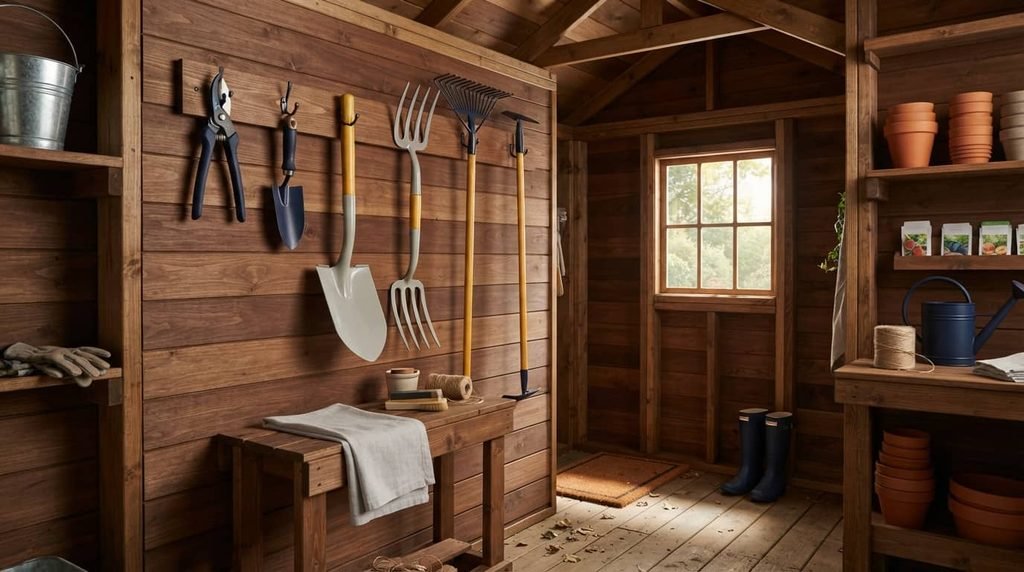
Good maintenance can extend the useful life of garden equipment. Remove soil after use and rinse tools when necessary. Dry metal surfaces before putting them away, especially if your storage area is humid.
Cutting tools need extra care because sap and plant residue can collect around the blades. Keep blades sharp and check screws or moving parts regularly. Wooden handles should also be inspected for rough areas or splinters.
NC State Extension recommends cleaning tools after use, keeping blades sharp, tightening loose hardware, smoothing rough handles, and storing tools in a dry, protected location.
A simple routine works well: clean the tool when you finish, dry it before storage, and deal with small problems before they become large ones. Five minutes of care is much easier than replacing damaged equipment.
Common Buying Mistakes to Avoid
The biggest mistake is buying based on quantity instead of usefulness. A large set can look impressive, but unused tools still cost money and take up storage space.
Another mistake is choosing a tool without considering the job. Using hand pruners on an oversized branch, for example, can damage both the plant and the pruner. Similarly, using a lightweight leaf rake to move heavy soil can bend the tines.
Comfort is another factor beginners sometimes overlook. If a tool feels awkward in your hand at the store, it probably won’t feel better after an hour in the garden.
Finally, don’t ignore maintenance. Even good-quality equipment performs poorly when the blades become dull or the metal stays dirty and wet.
Frequently Asked Questions About Gardening Tools
What are the most essential gardening tools for beginners?
A practical starting set includes a hand trowel, pruning shears, spade or shovel, garden fork, rake, hoe, and watering tool. Add specialty equipment as your garden grows.
What are the main gardening tools names and uses?
Common names include trowel, spade, shovel, fork, rake, hoe, pruners, loppers, and watering tools. Each serves a different job such as digging, cutting, weeding, leveling, or watering.
What is the difference between a spade and a shovel?
A spade generally has a flatter, sharper edge for digging and edging. A shovel is commonly better for scooping and moving loose soil, compost, or mulch.
Are expensive gardening tools worth it?
They can be worthwhile for tools you use frequently because better construction and comfort may improve the experience. For occasional jobs, a reasonably priced quality tool can be enough.
How should I maintain gardening tools?
Clean soil and plant residue after use, dry metal parts, keep cutting blades sharp, check loose hardware, and store tools in a dry place.
Final Thoughts: Build Your Toolkit Around Your Garden
The best toolkit isn’t the biggest one. It is the one that makes your regular garden work easier.
Start with versatile equipment that matches the space you actually maintain. A few containers may need only hand tools and a watering can. Raised beds require more digging and weeding equipment. A large suburban landscape may eventually justify loppers, carts, and power equipment.
Before your next purchase, look at the jobs you perform most often. Identify the task that takes the most effort, then choose the tool designed for that job. Build from there rather than buying everything at once.
That simple approach can save money, reduce clutter, and make gardening much more enjoyable.
Related resource: Gardening Gloves: How to Choose the Right Pair