A hanging fixture can completely change the feel of a room. It can become the focal point above a dining table, add character to a kitchen island, bring warmth to a bedroom, or fill an empty ceiling in a tall entryway.
But choosing the right fixture isn’t simply about finding a design you like. The size of the room, ceiling height, furniture, lighting needs, and overall decor all affect whether a hanging fixture will look balanced and work well in the space.
From simple pendant lights to dramatic chandeliers and modern sculptural designs, there are plenty of options to choose from. The key is knowing what works for your particular room.
What Is a Hanging Fixture?
A hanging fixture is a ceiling-mounted light that extends downward from the ceiling using a cord, chain, rod, stem, or similar suspension system.
Pendant lights and chandeliers are common examples, but the category also includes linear and multi-light fixtures.
Unlike flush-mount lighting, which stays close to the ceiling, a hanging fixture occupies some of the vertical space below it. That makes it both a lighting source and an important decorative element.
Because of this, choosing the right proportions is essential. A fixture that looks impressive in a showroom may feel oversized in a small room, while a small fixture can disappear in a large open space.
Types of Hanging Fixtures
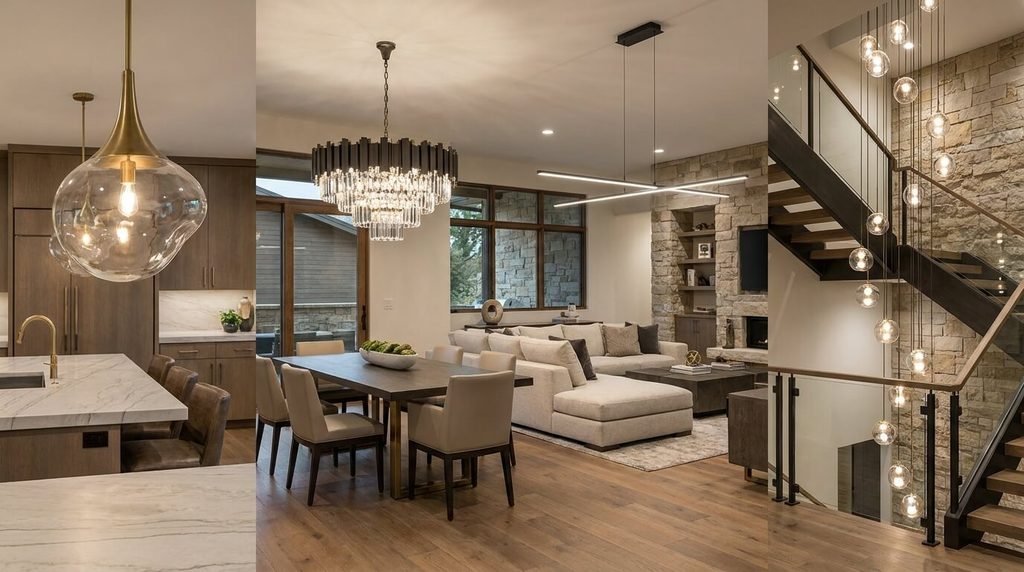
Different types of hanging fixtures create different visual effects and serve different purposes. Understanding the options can make the selection process much easier.
Pendant Lights
A pendant light typically hangs from the ceiling with a single cord, rod, or stem and usually has one main shade or light source.
Pendant fixtures come in a wide variety of shapes and materials, including glass, metal, fabric, and natural materials. Small pendants can work well in bedrooms or entryways, while multiple pendants are often used over kitchen islands and counters.
Chandeliers
Chandeliers are generally larger and more decorative than standard pendant lights. Many have multiple bulbs arranged around a central structure.
A chandelier can make a strong statement in a dining room, foyer, living room, or other space with enough ceiling height.
The important thing is to match its scale to the room. A dramatic chandelier should complement the surrounding furniture rather than overpower it.
Linear Hanging Fixtures
Linear fixtures have an elongated horizontal shape, making them particularly useful above rectangular dining tables and kitchen islands.
Their long profile can visually follow the furniture beneath them, creating a balanced look while spreading light across a wider area.
Multi-Light Fixtures
Multi-light hanging fixtures combine several bulbs or individual light sources into one ceiling fixture.
They can add visual interest while distributing light more evenly across a larger surface. This makes them useful for kitchen islands, dining tables, and other areas where one small pendant may not provide enough coverage.
Sculptural Hanging Fixtures
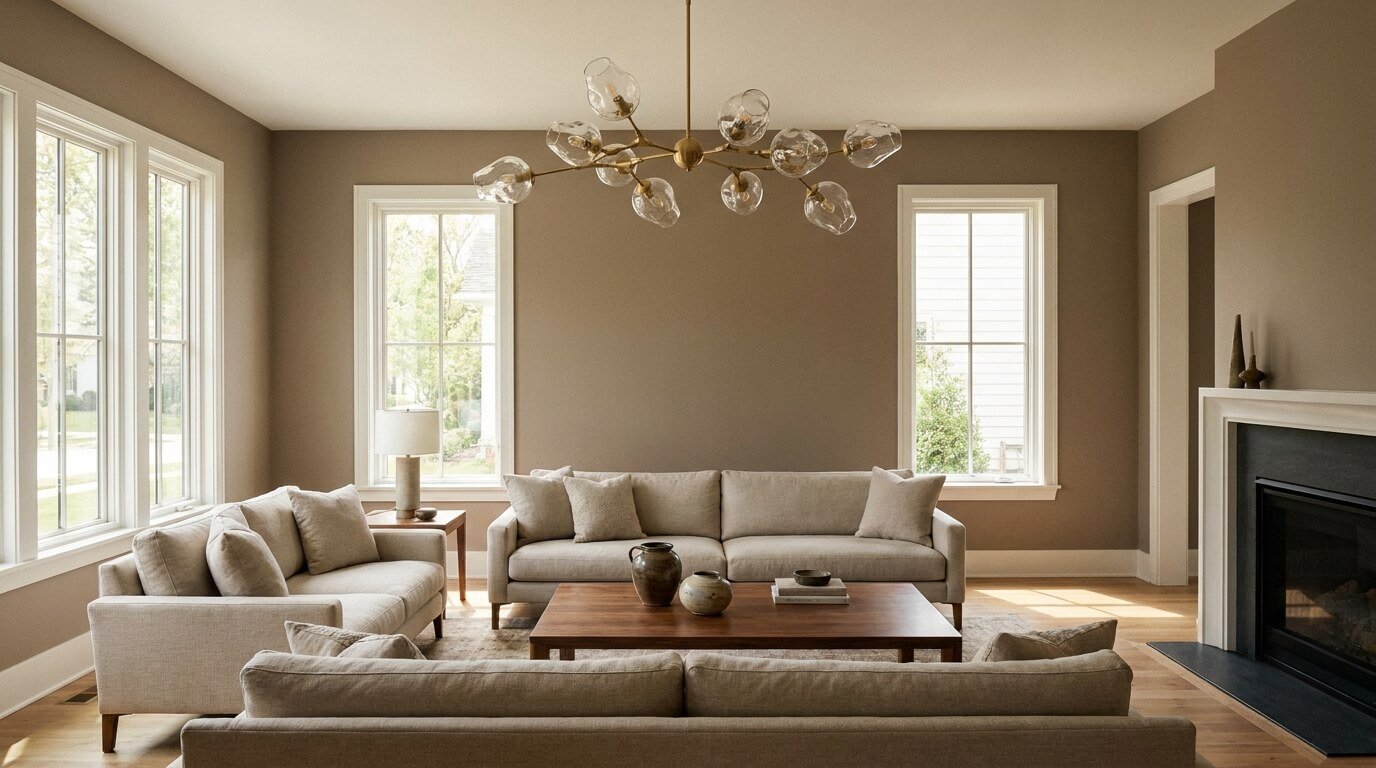
Some fixtures are designed to look almost like artwork. Sculptural shapes, curved structures, layered materials, and unusual silhouettes can turn a ceiling light into a major decorative feature.
These designs work especially well when the rest of the room is relatively simple. Letting one fixture serve as the main focal point can create a more polished look than filling the room with several competing statement pieces.
Where Can You Use a Hanging Fixture?
One of the biggest advantages of a hanging fixture is its versatility. The right design can work in almost any room, as long as its size, placement, and installation requirements suit the space.
Living Room
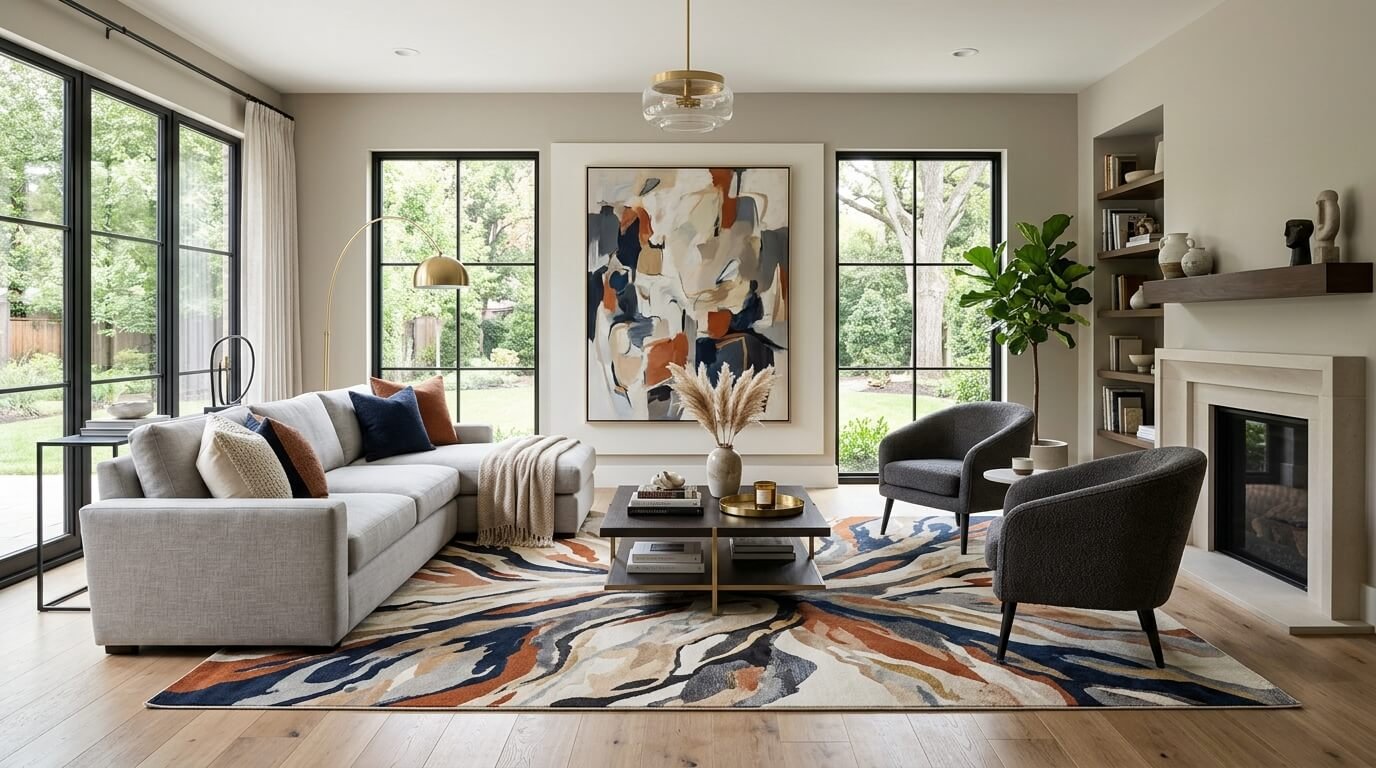
A hanging light fixture can help define a seating area and add visual interest to an otherwise open ceiling.
In a room with high ceilings, a larger fixture can help fill vertical space. For a lower ceiling, choose a design with a shorter drop so it doesn’t interfere with movement or make the room feel visually crowded.
Dining Room
A dining table is one of the easiest places to use a hanging fixture.
A chandelier or linear fixture can visually anchor the table and make the dining area feel more intentional. Consider the shape of the table when choosing the fixture. A long rectangular table can work well with a linear design, while a round table may suit a round pendant or chandelier.
Kitchen
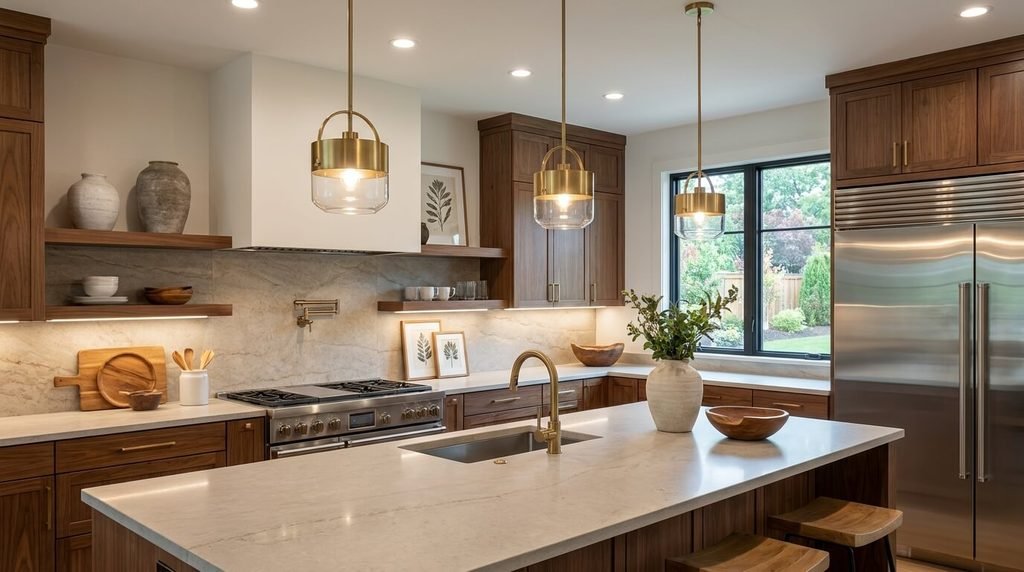
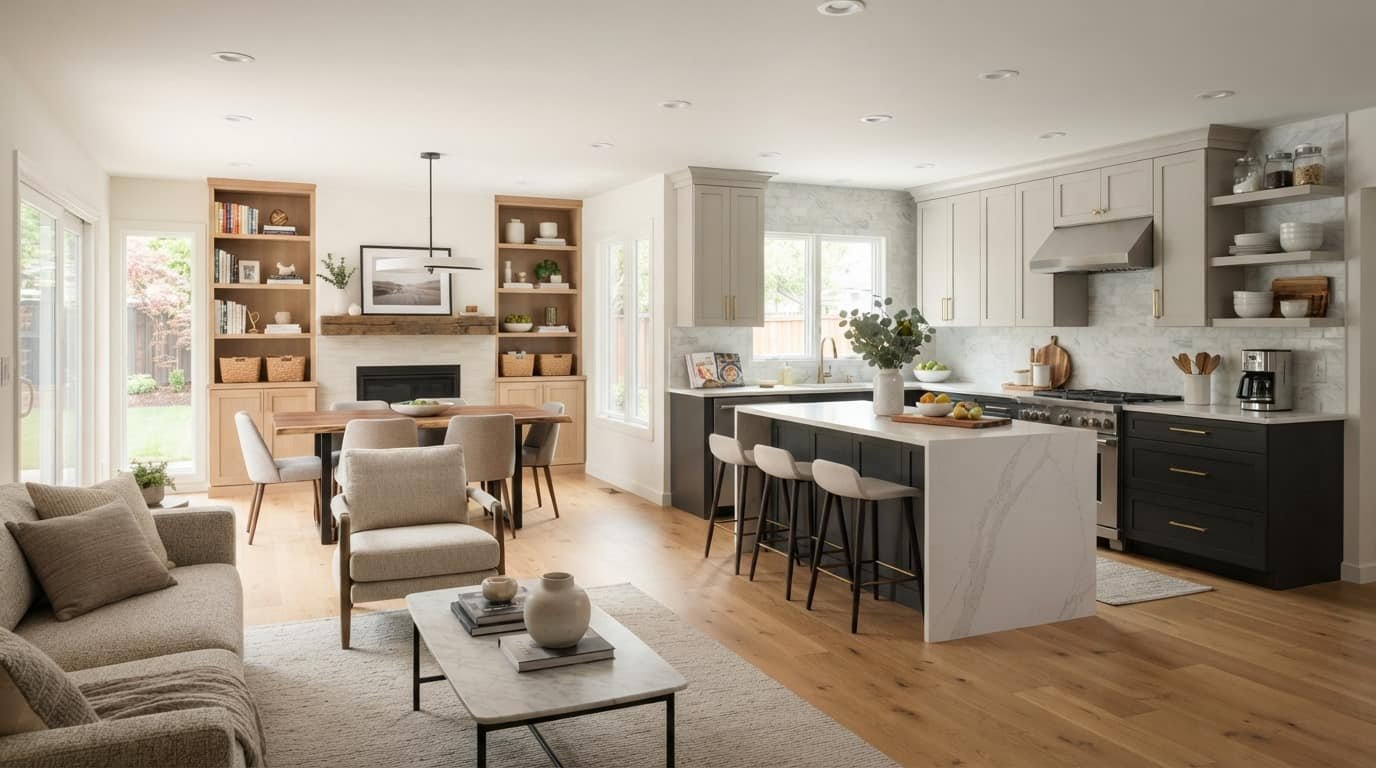
Hanging fixtures are especially popular above kitchen islands and counters.
Multiple pendant lights can create symmetry across a long island, while a linear fixture can provide a continuous visual element over the entire surface.
The fixture should provide useful illumination without creating uncomfortable glare while you’re preparing food or working at the counter.
Bedroom
A decorative hanging fixture can give a bedroom a more finished and personalized appearance.
A smaller pendant can work near a bedside area, while a central ceiling fixture can become a subtle focal point. Choose a design that supports the relaxed atmosphere of the room rather than one that feels overly dramatic.
Entryway
An entryway is one of the first areas guests see, so lighting can have a strong effect on the home’s overall first impression.
A larger foyer with a tall ceiling can accommodate a more dramatic hanging fixture. A smaller entryway usually benefits from a simpler design that provides enough visual interest without overwhelming the space.
Bathroom
Hanging fixtures can also work in bathrooms when the fixture is suitable for the installation location and applicable electrical requirements are followed.
A pendant can add character around a vanity or complement the overall design of a larger bathroom.
For bathroom-specific guidance, see our article on bathroom hanging pendant lighting, which focuses specifically on choosing and using pendant lighting in bathroom spaces.
How to Choose the Right Hanging Fixture
The best fixture isn’t necessarily the most expensive or eye-catching one. Start with the room and then choose a design that fits its needs.
Consider the Size of the Room
Scale is one of the easiest things to overlook.
A large fixture can dominate a small room, while a very small pendant may have little visual impact in a large space.
Look at the dimensions of the room as well as the furniture underneath the fixture. The goal is to create a sense of proportion between the lighting, furniture, and surrounding space.
Consider Ceiling Height
Ceiling height affects both the appearance and practicality of a hanging fixture.
High ceilings generally provide more flexibility for longer pendants and larger chandeliers. Lower ceilings require a fixture with a more compact hanging profile.
Before buying, check the fixture’s dimensions and adjustable hanging range rather than assuming it will fit your ceiling.
Match the Fixture to the Furniture
The furniture below the fixture should influence your choice.
For example, a linear hanging fixture can complement a long kitchen island or dining table. A round pendant can work naturally above a round dining table.
Thinking about the furniture first helps the lighting feel intentionally placed rather than simply attached to the nearest ceiling connection.
Choose the Right Finish
The finish of a hanging fixture can reinforce the room’s existing decor.
Black fixtures can add contrast and definition to light interiors. Brass and other warm metallic finishes can complement wood tones and warm color palettes. Glass fixtures can create a lighter, more open appearance.
You don’t need every metal finish in a room to match perfectly. Instead, look for connections between the fixture, cabinet hardware, furniture, faucets, and other decorative elements.
Think About the Light It Provides
A fixture needs to look good, but it also needs to provide useful light.
Consider what happens in the space. A kitchen island usually benefits from practical task lighting, while a dining room may need softer general illumination.
A hanging fixture can also be combined with recessed, wall, under-cabinet, or accent lighting to create a layered lighting plan.
How High Should a Hanging Fixture Be?
There isn’t one universal hanging height that works for every room.
The ideal position depends on the ceiling height, furniture, fixture design, and whether people will need to walk underneath it.
A fixture above a dining table or kitchen island is positioned in relation to the surface below it. A fixture hanging in an open walkway needs enough clearance for comfortable movement.
The most important goal is to make sure the fixture feels connected to the furniture or area it illuminates without obstructing the room or creating distracting glare.
Always check the manufacturer’s installation instructions for the specific fixture.
Hanging Fixtures for Low Ceilings
A low ceiling doesn’t automatically rule out decorative hanging lighting.
Look for fixtures with:
- A shorter drop
- Adjustable suspension
- A compact vertical design
- A relatively lightweight visual profile
If the ceiling is particularly low, a flush-mount or semi-flush fixture may be a better option.
The goal is to introduce decorative lighting without making the ceiling feel lower or creating an obstacle in the room.
Hanging Fixtures for High Ceilings
High ceilings give you more room to make a statement.
A large chandelier, long pendant, or sculptural hanging fixture can help fill vertical space and give the room a stronger focal point.
However, don’t choose a fixture simply because the ceiling is high. Consider the size of the room, furniture, and other decorative elements as well.
A large fixture needs enough surrounding space to feel intentional rather than crowded.
How to Match a Hanging Fixture With Your Home Decor
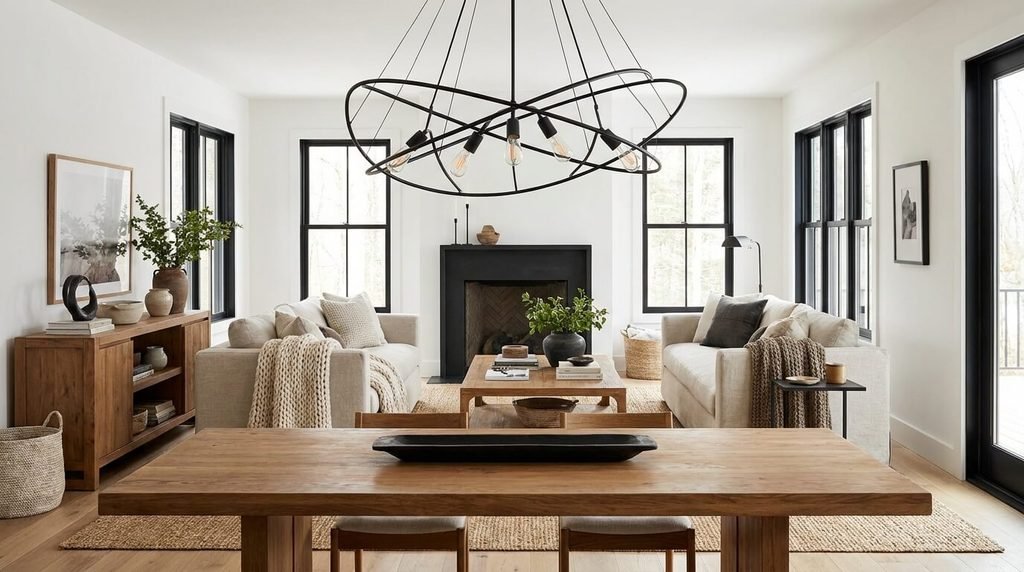
Your lighting should feel like part of the room’s design rather than an unrelated object hanging from the ceiling.
Modern Decor
Modern interiors often work well with clean silhouettes, simple geometric shapes, glass, metal, and minimal detailing.
Farmhouse Decor
Farmhouse rooms can pair well with simple metal fixtures, warm finishes, natural textures, and classic silhouettes.
Industrial Decor
Dark metal, exposed bulbs, structured forms, and utilitarian details can complement industrial interiors.
Traditional Decor
Traditional spaces can accommodate more detailed chandeliers, classic shapes, glass elements, and decorative metalwork.
Transitional Decor
Transitional interiors combine traditional and contemporary elements. A fixture with classic proportions and clean modern details can fit naturally into this style.
Using Multiple Hanging Fixtures
Multiple fixtures can be a practical and decorative solution when one light isn’t enough for a large surface.
For example, two or three pendant lights can be arranged over a kitchen island or long countertop. Consistent spacing and a deliberate arrangement help the installation look polished.
The fixtures don’t necessarily have to be identical, but they should share some visual connection through their shape, finish, size, or overall style.
Avoid using too many hanging lights simply because the ceiling has available space. Lighting should improve the room rather than make it feel cluttered.
Common Hanging Fixture Mistakes to Avoid
Choosing a Fixture That Is Too Large
An oversized fixture can overwhelm a small room and make nearby furniture appear out of proportion.
Ignoring Ceiling Height
A fixture with a long drop may not be practical in an area where people need to walk underneath it.
Choosing Appearance Over Function
A beautiful fixture isn’t useful if it doesn’t provide the right amount or type of light for the space.
Using Too Many Statement Pieces
Several dramatic fixtures competing for attention can make an interior feel busy. Usually, one main lighting feature is enough to establish a focal point.
Forgetting About Glare
Exposed bulbs can create uncomfortable glare depending on their position and viewing angle. Shades, diffusers, and thoughtful placement can make the lighting more comfortable.
Ignoring the Furniture Layout
A ceiling fixture should relate to the furniture and activity below it. Centering a fixture in the room isn’t always the same as positioning it correctly over a table, island, or seating area.
Frequently Asked Questions
What is a hanging fixture?
A hanging fixture is a ceiling-mounted light that extends downward using a cord, chain, rod, stem, or similar suspension system. Pendant lights, chandeliers, and many linear fixtures fall into this category.
Are hanging fixtures suitable for every room?
Many types can be used throughout the home, including living rooms, dining rooms, kitchens, bedrooms, entryways, and bathrooms. The appropriate fixture depends on the room’s size, ceiling height, purpose, and installation requirements.
Are hanging fixtures good for low ceilings?
They can be, but choose a fixture with a compact profile or adjustable drop. For very low ceilings, flush-mount or semi-flush lighting may be more practical.
How do I choose a hanging fixture for a dining table?
Consider the table’s shape, size, and position first. A linear fixture often complements a rectangular table, while a round pendant or chandelier can work well with a round table.
Can I use multiple hanging fixtures together?
Yes. Multiple pendants can work particularly well over kitchen islands, counters, and long tables. Keep the spacing and overall arrangement intentional.
Does a hanging fixture have to match other lighting fixtures?
No. Exact matching isn’t necessary. Coordinating finishes, materials, shapes, or design details is usually enough to create a cohesive look.
Can I use a hanging fixture in a bathroom?
Yes, provided the fixture is appropriate for its specific location and the installation follows applicable electrical and manufacturer requirements. Bathroom lighting requires more careful consideration than lighting in dry interior spaces.
Final Thoughts
A hanging fixture can be both a practical light source and a major part of your home’s decor. The right choice depends on more than the fixture’s appearance. Room size, ceiling height, furniture, lighting needs, and interior style all influence how well it will work.
Whether you’re choosing a pendant for a kitchen island, a chandelier for a dining room, or a decorative fixture for an entryway, focus on proportion and placement first. When the fixture works with the room instead of competing with it, it can add warmth, character, and a polished finishing touch to your home.
nnRelated resources: Home Prayer Room Ideas: 8 Peaceful Designs for Any Space