Why Interior Design Is Interesting Mintpaldecor
Why do some rooms immediately feel comfortable, organized, and inviting while others feel crowded or unfinished?
The answer is often more complicated than choosing attractive furniture or a popular paint color. Why Interior Design Is Interesting Mintpaldecor comes down to the fact that interior design combines creativity with practical problem-solving. You have to think about how a room looks, but also how people move through it, use it, and live in it every day.
A 10-by-12-foot living room, for example, may need to work as a place for relaxing, watching TV, entertaining guests, and occasionally working from home. The challenge is finding a layout that supports all four without making the space feel cramped.
That is what makes interior design so interesting: there is rarely just one right answer.
Here are seven reasons the subject is more fascinating than it may seem.
1. Interior Design Turns Everyday Rooms Into Creative Puzzles
Every room has constraints.
You may have a narrow floor plan, limited natural light, an awkward doorway, too little storage, or furniture you are not ready to replace. Renters often have additional limitations because permanent renovations may not be practical.
Instead of ignoring those limitations, good interior design works with them.
Imagine a small living room with a large sofa, a television on one wall, and a doorway close to the corner. The obvious solution might seem to be buying smaller furniture. But that is only one possibility.
You could first test the existing furniture in a different arrangement. A smaller coffee table might improve circulation. A slim storage cabinet could replace a bulky piece. A floor lamp could brighten a dark corner without requiring electrical changes.
The goal is not to make every room look the same. It is to find a solution that works for that particular room and the people using it.
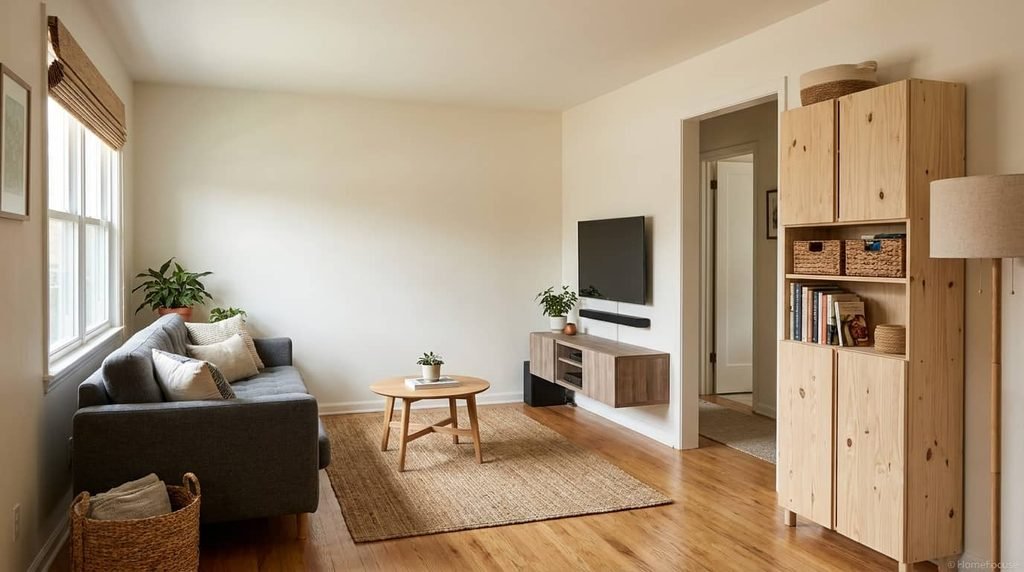
That is why space planning is such an important part of interior design. The designer is constantly balancing function, comfort, proportion, movement, and appearance.
It is less like shopping for decorations and more like solving a puzzle.
2. The Same Room Can Work for Completely Different Lifestyles
One of the most interesting things about interior design is that there is no universal layout that works for everyone.
Consider a spare bedroom.
For someone who works from home, the room may need a desk, task lighting, storage, and a comfortable backdrop for video calls.
For a teenager, the priority might be a study area, clothing storage, a place to relax, and room for hobbies.
For occasional guests, the focus could shift toward a comfortable bed, useful bedside lighting, and enough open floor space for luggage.
The room itself has not changed. The walls, windows, and square footage remain the same.
What changes is the purpose.
That is an important design principle: start with how the space will be used before deciding what should go into it.
A large sectional may be perfect for a household that regularly hosts movie nights but frustrating in a home where open floor space matters more. A beautiful desk may look impressive in a showroom but be a poor choice if there is nowhere nearby to store work supplies.
Good interior design begins with questions such as:
- Who uses this room?
- What do they do here?
- What needs to be easy to reach?
- Where do people naturally walk?
- What problem needs to be solved first?
Those questions lead to better furniture layouts and more practical rooms.
3. Small Design Decisions Can Change How a Room Feels
You do not always need a major renovation to make a room feel different.
Sometimes a few small decisions have a surprisingly large effect.
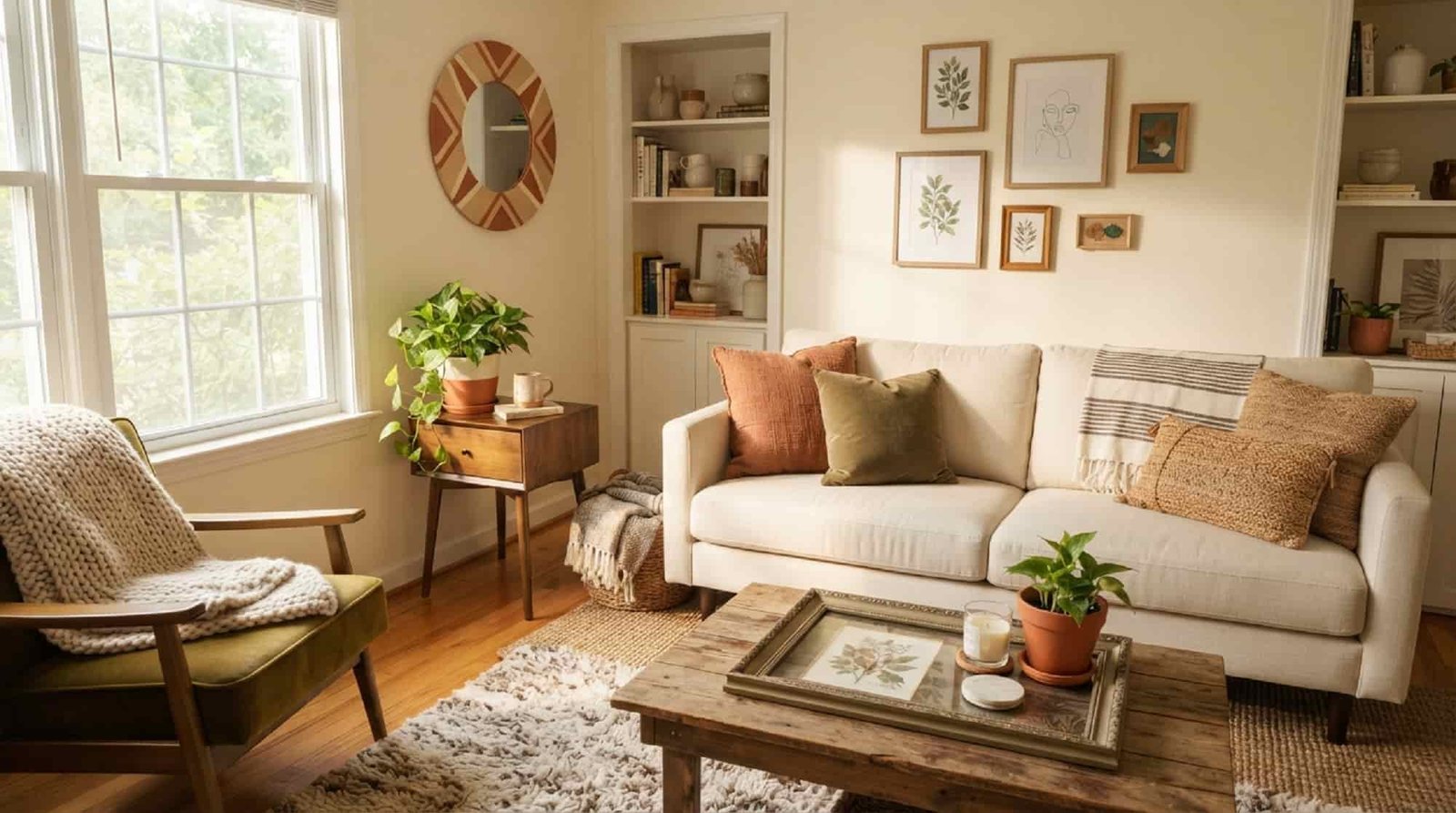
Imagine a living room with one bright ceiling fixture, a sofa pushed against the wall, a large empty corner, and several small decorative items scattered across the room.
Now make a few changes.
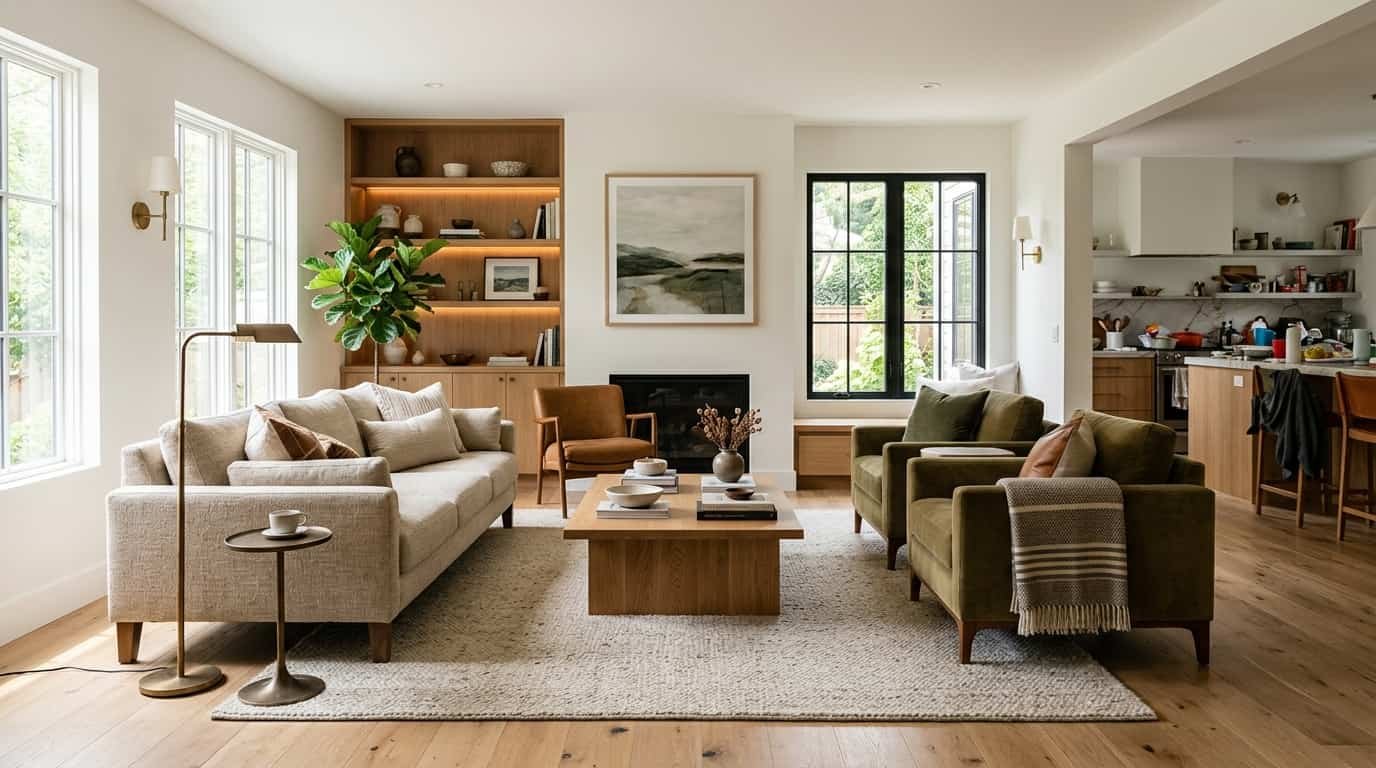
Pull the seating slightly inward. Add a floor lamp to the darker corner. Use a rug to visually connect the seating area. Remove a few accessories so the remaining pieces have more breathing room.
The architecture is the same.
Yet the room can feel more balanced and intentional.
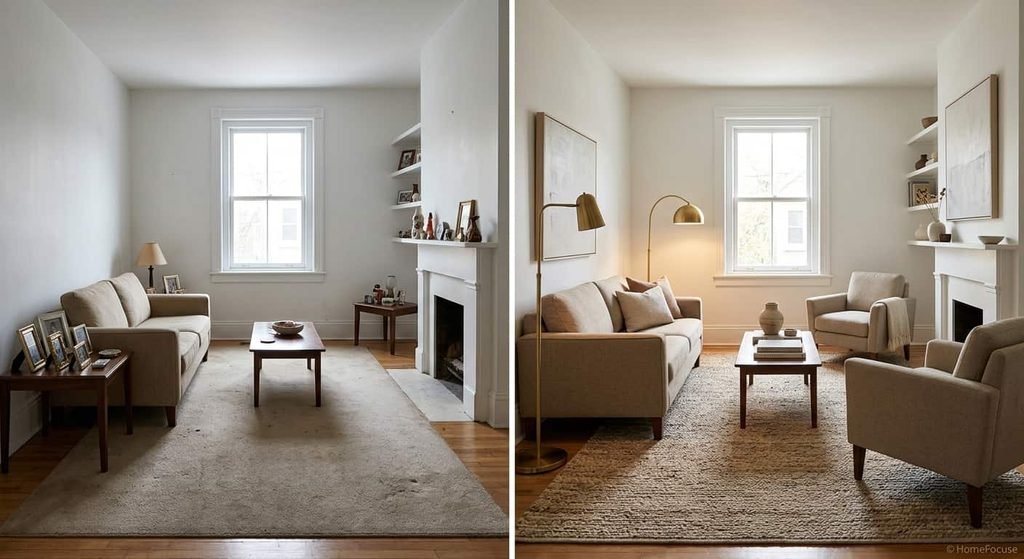
That happens because interior design uses basic principles such as scale, proportion, contrast, texture, rhythm, focal points, and negative space.
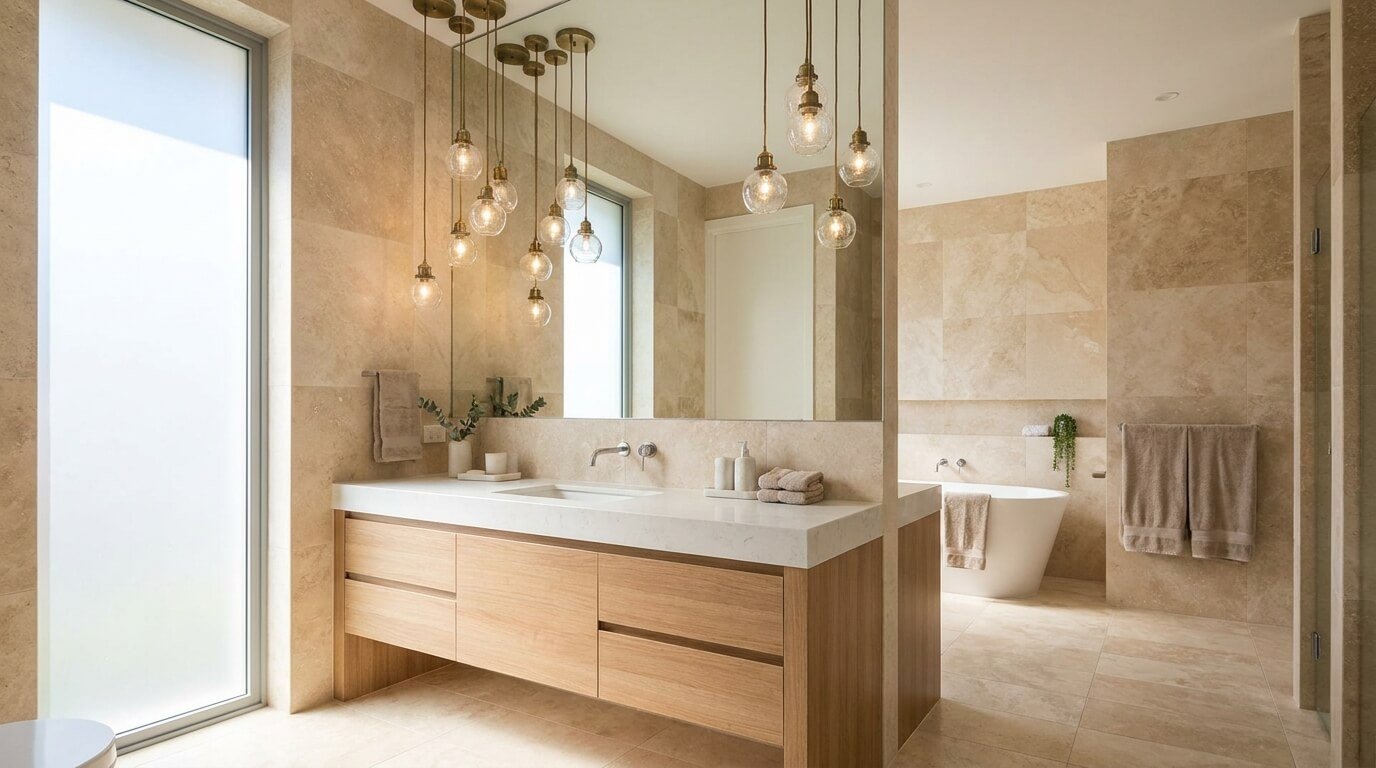
Lighting is a good example. A room lit only from overhead can feel very different from one that combines general lighting with task and accent lighting.
For more ideas on using lighting to improve a room, see this guide to bathroom pendant lighting.
The same thinking applies to furniture and accessories.
A sofa that is too large can overwhelm a small living room. A tiny rug can make a seating arrangement look disconnected. Too many competing colors can create visual noise. Repeating a material, shape, or color in a few places can make a room feel more cohesive.
These choices may be subtle, but they are a major reason some interiors feel “right” without you immediately knowing why.
4. Good Interior Design Is Full of Trade-Offs
Interior design photographs can make the process look easy. Real homes are different.
Most design decisions involve a trade-off.
Take open shelving in a kitchen. Open shelves can make the room feel lighter and give you a place to display dishes or decorative pieces. The downside is that everything stays visible, so organization becomes more important.
Closed cabinets offer concealed storage but can create a heavier visual effect.
Furniture creates the same kind of decision.
A large sectional can provide plenty of comfortable seating, but it also consumes valuable floor space. A smaller sofa creates more room to move but may not work as well for a large family.
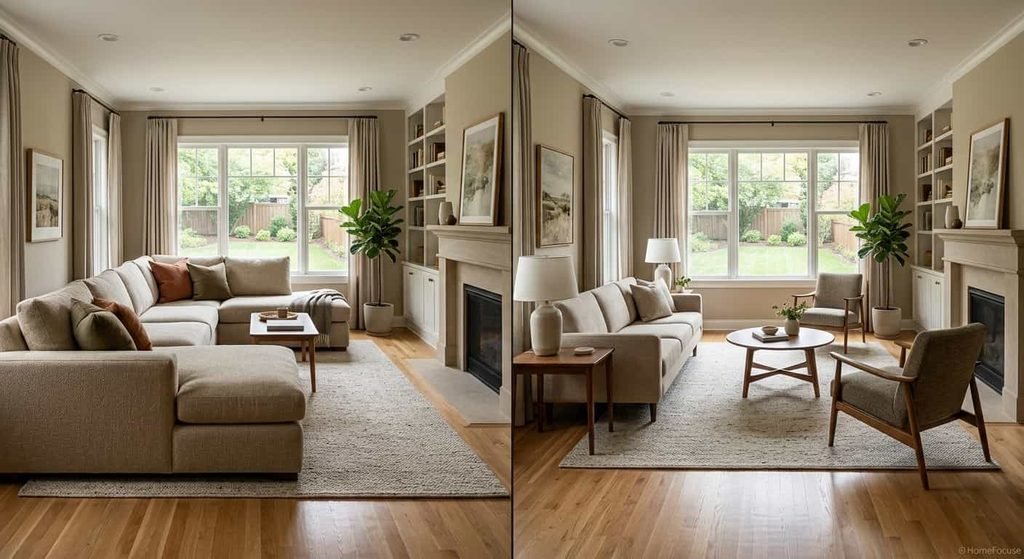
Storage presents another trade-off.
You might want to hide clutter completely, but some everyday items need to remain within easy reach.
Even color choices require context. A dark wall can add depth and drama, but the result depends on the amount of natural light, the size of the room, and the colors surrounding it.
This is one of the most useful things to understand about interior design:
A good choice is not necessarily the best choice in isolation. It is the choice that works best with everything around it.
Before buying something for your home, ask:
Does it solve a real problem?
Does it fit the room’s scale?
Will it make movement harder?
Does it work with what I already own?
Will I still find it useful after the trend passes?
Those questions can prevent expensive decorating mistakes.
5. Interior Design Combines Creativity With Human Experience
Interior design is creative, but creativity alone is not enough.
A room also has to support the people who live in it.
Take a bedroom that looks beautiful in a photograph. If the bedside lighting is too weak, storage is inconvenient, and the furniture makes movement difficult, the room may not function well despite its appearance.
The same is true in a home office.
A stylish desk setup will not help much if screen glare is uncomfortable, frequently used supplies are out of reach, or the chair makes long work sessions unpleasant.
This is where design connects with everyday experience.
Color can influence the visual character of a room. Lighting can change how bright, calm, dramatic, or practical a space feels. Furniture placement can make movement easier or more awkward. Organized storage can reduce visible clutter.
Personal belongings matter as well.
Family photographs, artwork, books, collections, handmade pieces, and travel souvenirs can give a room a sense of identity that a showroom-perfect space often lacks.
That is why good interior design is not about copying another person’s house exactly.
It is about creating a space that makes sense for your routines, preferences, and priorities.
6. Interesting Design Does Not Require an Unlimited Budget
Interior design is often associated with expensive furniture, custom finishes, and major renovations. But many worthwhile improvements cost little or nothing.
Start with what you already own.
Move furniture into a different arrangement. Remove pieces that are rarely used. Improve a dark corner with better lighting. Replace outdated cabinet hardware. Introduce texture through cushions, throws, or a rug. Reconsider how storage is organized.
Sometimes the most effective improvement is simply removing something that is not helping.
For example, if a living room feels crowded, adding another decorative object will probably not solve the problem. Removing an unnecessary side table or oversized chair might.
If a kitchen feels dated, replacing every cabinet may be unnecessary. Updating hardware, improving lighting, or refreshing suitable finishes can sometimes create a noticeable visual change.
See these practical ideas for making old kitchen cabinets look modern.
The same principle applies to larger projects: fix the biggest functional problem before spending money on purely cosmetic upgrades.
A useful rule is:
Identify the problem first. Buy the solution second.
That simple habit can make home improvement decisions more intentional and more budget-friendly.
For broader renovation planning, you can also use this guide for renovation tips and home upgrades.
7. Interior Design Teaches You to See Your Home Differently
Perhaps the most surprising benefit of learning about interior design is that it changes what you notice.
You may start seeing an awkward walkway where you previously saw only a sofa.
You may notice that one side of a room carries far more visual weight than the other.
You may realize that a room does not need another decoration; it needs less clutter.
You may notice that a dark corner affects the entire balance of the room.
This is often described as developing a design eye.
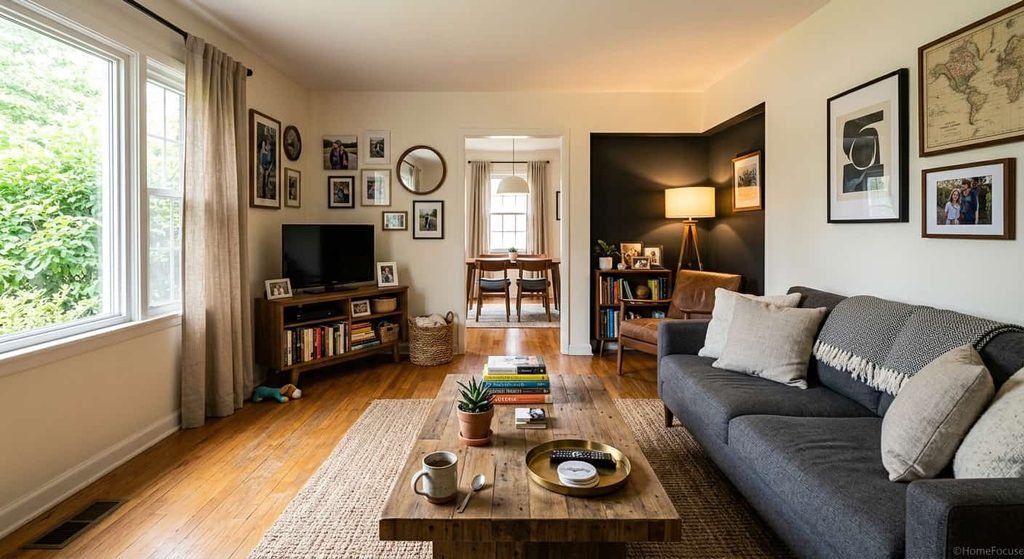
You do not need professional training to begin.
Take a photo of one room and study the photograph rather than the physical space. Then ask:
- Where does my eye go first?
- Which piece feels too large or too small?
- Is there enough open space?
- Can people move around easily?
- Does the lighting support the room’s purpose?
- Are too many colors or patterns competing?
- What could be removed instead of added?
Looking at the room this way helps you move from random decorating to intentional design.
And once you start noticing these details, you can make better decisions before spending money.
How to Start Thinking Like an Interior Designer
You can practice design thinking in one room today.
1. Define the room’s main purpose
Ask what happens in the room most often.
A living room used mainly for conversation may need a different arrangement from one centered around television viewing.
2. Identify the biggest problem
Do not try to change everything at once.
Maybe storage is inadequate. Maybe the room is difficult to walk through. Maybe the lighting is poor. Start with the problem that affects everyday use the most.
3. Work with what you already have
Before buying anything, move furniture, remove clutter, test different arrangements, and reconsider unused corners.
You may discover that the room needs editing rather than more products.
4. Check scale and visual balance
Look at the room as a whole.
Are the major furniture pieces appropriate for the size of the space? Does one side feel much heavier than the other? Is there enough negative space between larger objects?
5. Make changes one at a time
Change the layout first. Then evaluate lighting. Then consider color, textiles, artwork, or accessories.
This makes it easier to understand which decision actually improved the room.
For more general decorating guidance, you can also explore how to decorate your house.
Interior Design vs. Decorating: What’s the Difference?
The two terms are closely related, but they are not always interchangeable.
Decorating usually focuses more heavily on the appearance and styling of a space: colors, furniture, accessories, fabrics, artwork, and decorative details.
Interior design takes a broader view. It considers how the space functions, how people move through it, how furniture is arranged, how lighting supports activities, and how the different elements work together.
In practice, the two overlap.
A homeowner might decorate a room by choosing a new rug and artwork. But deciding where the sofa should go, how to improve circulation, where task lighting is needed, and how the space should function involves deeper design thinking.
Understanding that difference helps explain why interior design can be both creative and analytical.
Common Misunderstandings About Interior Design
“Interior design is only for expensive homes.”
It isn’t. Many improvements involve rearranging furniture, reducing clutter, improving lighting, or making better use of existing storage.
“Everything in a room has to match.”
A coordinated room does not need identical furniture or a perfectly matched set. Contrast and variation can make a space feel more personal.
“Following trends creates good design.”
Trends can inspire, but they do not replace the need to consider room size, lifestyle, function, budget, and long-term usefulness.
“More decoration makes a room look finished.”
Sometimes the opposite is true. A room can look better when unnecessary items are removed and the remaining pieces have enough space around them.
“Interior design is only about appearance.”
A beautiful room that is uncomfortable, impractical, or difficult to use has not solved the entire design problem.
Frequently Asked Questions
Why is interior design interesting?
Interior design is interesting because it combines creativity, problem-solving, space planning, functionality, visual balance, and personal expression. Different people can approach the same room and develop completely different solutions.
What makes interior design different from decorating?
Decorating generally emphasizes the look and styling of a space, while interior design considers broader issues such as layout, circulation, function, lighting, materials, comfort, and how the room will be used.
Is interior design only about making a room beautiful?
No. Appearance is only one part of good design. A successful space should also support daily activities, provide practical movement and storage, and suit the people using it.
Can good interior design be done on a small budget?
Yes. Rearranging furniture, decluttering, improving lighting, updating hardware, changing textiles, and making better use of existing pieces can all create noticeable improvements without a major renovation.
How can I develop a better eye for interior design?
Start by observing your own rooms. Take photos, study furniture proportions, notice how light affects the space, look for visual clutter, and ask whether the layout supports the way you actually live.
Why is interior design important in a small home?
Small spaces benefit from careful planning because each area has to work harder. Appropriate furniture scale, efficient storage, clear circulation, and good lighting can make a small home feel more comfortable and usable.
Final Thoughts
Interior design is interesting because it is not simply about choosing beautiful things.
It is about solving problems, making decisions, understanding people, and turning limitations into workable solutions.
A small room can become a layout puzzle. A lighting change can alter the character of a space. A furniture adjustment can improve everyday movement. A few inexpensive updates can sometimes accomplish more than a major purchase.
Most importantly, learning about interior design can change the way you see your own home.
Instead of immediately asking, “What should I buy?”, start with:
“What problem am I trying to solve?”
That shift can lead to a more functional home, more thoughtful decorating choices, and fewer purchases that do not actually improve the space.