You don’t need to redecorate an entire room to make your home feel different. Sometimes a freshly painted mirror, a better-looking picture frame, or a small furniture makeover is enough to change the space.
The harder part is choosing a DIY project that is actually worth your time and money. Some projects look simple until you realize you need specialty tools, several coats of paint, or an entire weekend to finish them.
These DIY home decor ideas focus on the practical side of decorating. You’ll find projects for different rooms and budgets, plus realistic guidance on time, difficulty, materials, and what to watch out for. There are also renter-friendly options if you can’t make permanent changes to your home.
How to Choose the Right DIY Home Decor Project
Before buying supplies, start with the room rather than the craft.
Look around and ask what the space actually needs. Is there a large empty wall? Does an old piece of furniture look tired? Do you need more storage in the entryway? Or does the room simply need more color and texture?
That answer should determine your project.
Match the Project to Your Skill Level
If you’re new to DIY, start with something that doesn’t require power tools or complicated construction. Painting frames, updating pots, making simple wall art, or repurposing something you already own are good starting points.
Once you’re comfortable with surface preparation, measuring, painting, and basic tools, you can move on to shelves and furniture makeovers.
Work Out the Real Cost
Don’t judge a project by the price of its main material.
A small furniture makeover might look like a $15 project until you add primer, paint, sandpaper, brushes, and new hardware. If you already have those supplies, it’s a different calculation.
Make a quick materials list before you start and include tools you would need to buy specifically for the project.
Think About How Permanent the Change Is
Homeowners have more freedom, but renters need to consider their lease before painting, drilling, or installing anything permanently.
If you’re renting, prioritize freestanding furniture, removable wall treatments, approved hanging systems, cushions, artwork, and other decor that can move with you.
15 DIY Home Decor Ideas Worth Trying
The best project for you depends on your budget, available time, and what your room needs. Each idea below includes a quick guide so you can decide before you start.
1. Give an Old Mirror a Fresh Finish
An old mirror can often be updated without replacing the glass. If the mirror itself is in good condition, concentrate on the frame.
Clean the frame thoroughly and lightly sand it if the existing surface is glossy or worn. Use an appropriate primer and paint for the frame’s material, then protect the glass with painter’s tape while you work.
A black frame can give a dated mirror a cleaner, more modern appearance. Warm white, muted colors, or a wood-look finish can work better in softer or traditional rooms.
Before painting, protect the mirror with painter’s tape or paper. A clean edge around the glass makes a surprisingly big difference to the finished result.
Estimated cost: $10–25 if you already own the mirror
Time: 1–2 hours, plus drying time
Difficulty: Beginner
Best for: Entryways, bedrooms, bathrooms, living rooms
Worth it? Yes, especially if the mirror is large and the glass is still in good condition.
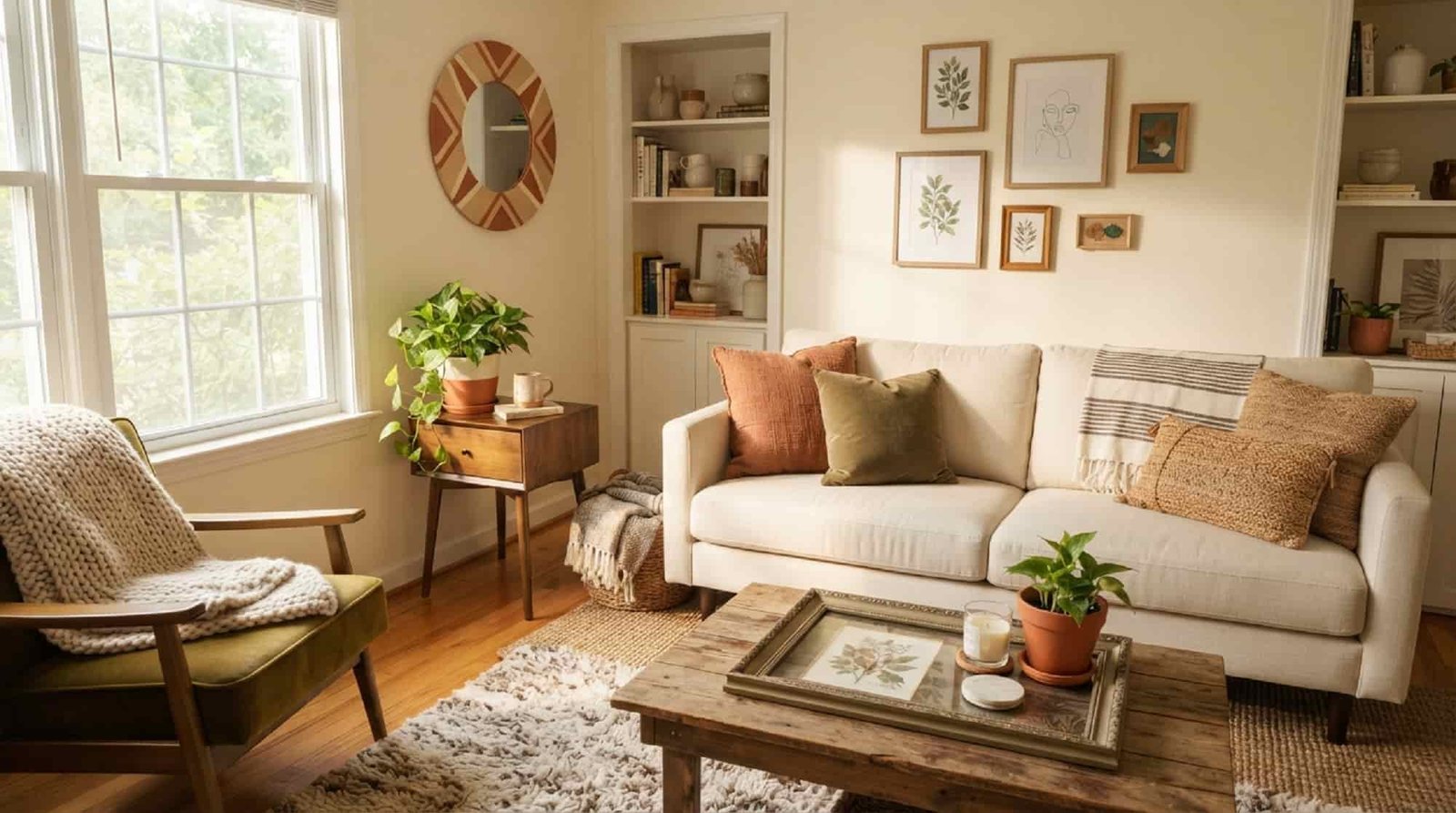
2. Create a Simple Gallery Wall
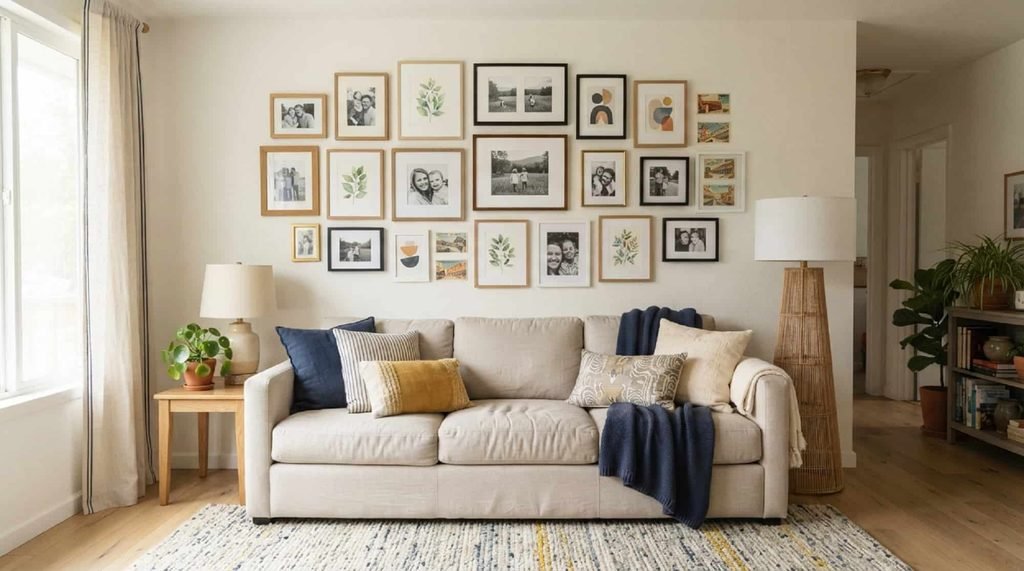
A gallery wall is an easy way to give an empty wall some personality without buying expensive artwork.
Mix family photographs, inexpensive prints, illustrations, postcards, or even pages from old calendars. You don’t need every frame to match. Keeping one element consistent, such as the frame finish or color palette, can make the collection feel intentional.
Before putting holes in the wall, arrange everything on the floor. You can also cut paper templates to the size of each frame and temporarily tape them to the wall.
Pay particular attention to scale. Several tiny pictures can disappear on a large wall, while fewer larger pieces may create a stronger focal point.
Estimated cost: $15–50
Time: 1–2 hours
Difficulty: Beginner
Best for: Living rooms, bedrooms, hallways
Rental-friendly: Often, depending on your lease and hanging method.
3. Paint a DIY Accent Wall
You don’t always need to paint an entire room to change its character.
Choose one wall behind a bed, sofa, dining table, or other natural focal point. A solid color is the simplest approach, but you can also create an arch, color block, or basic geometric design with painter’s tape.
For renters, peel-and-stick wallpaper can provide a similar visual change without permanent paint.
Don’t choose a complicated pattern just because you can. If the room already has patterned furniture or a busy rug, a simple accent wall may create a better balance.
Estimated cost: $20–60
Time: Several hours to a weekend
Difficulty: Beginner to intermediate
Best for: Bedrooms, living rooms, dining areas
4. Turn an Old Frame Into a Decorative Tray
An unused picture frame can become a useful tray with a little modification.
Choose a sturdy frame with a reasonably flat base. Depending on the design, you can add handles to the sides and replace the backing with a stronger material if necessary.
Use the finished tray on a coffee table for candles and books, on a dresser for perfumes, or in an entryway for keys and small items.
Because the frame already provides a finished border, this project can look more complicated than it actually is.
Estimated cost: $10–25
Time: 1–2 hours
Difficulty: Beginner
Best for: Coffee tables, dressers, entryways
Worth it? More than purely decorative crafts, in my opinion. You’re creating something that can actually help organize a surface.
5. Refresh Plain Terracotta Pots
If your plants are healthy but their containers look tired, give the pots a simple makeover.
Clean the outside thoroughly and let it dry before painting. You can use a solid color, simple stripes, or a minimal pattern that picks up colors already used in the room.
Instead of making every pot identical, try using related shades and different sizes. Grouping plants at different heights can make the display feel more natural.
Choose a coating appropriate for the material and intended use, particularly if the pot will regularly come into contact with water.
Estimated cost: $5–20
Time: 30 minutes–2 hours, plus drying time
Difficulty: Beginner
Best for: Windowsills, shelves, balconies, patios
6. Make Your Own Wall Art
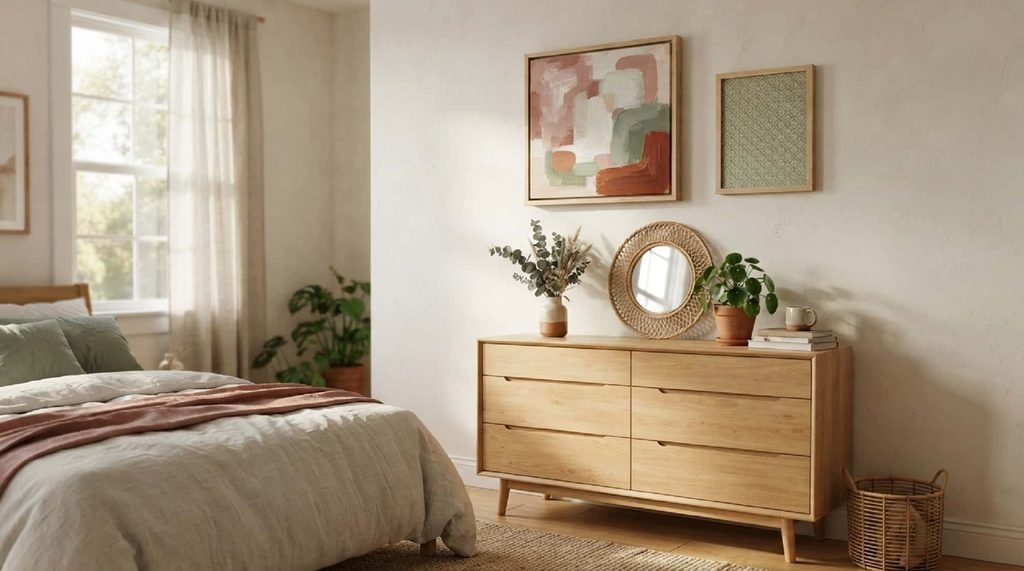
You don’t need advanced painting skills to create artwork that works in your home.
Try simple abstract shapes, color blocks, brushstrokes, or textured artwork. Another inexpensive option is framing attractive fabric or paper.
The important part is choosing the right size. Measure the wall and the furniture underneath it before starting. Artwork above a sofa, for example, should feel connected to the width of the furniture rather than floating like a tiny island.
If you’re unsure about color, borrow shades that already appear in the room. This makes homemade artwork easier to integrate with your existing decor.
Estimated cost: $10–30
Time: 1–3 hours
Difficulty: Beginner
Best for: Living rooms, bedrooms, hallways
7. Update an Old Lampshade
Sometimes the lamp base isn’t the problem—the lampshade is simply dated.
Depending on the shade and its construction, you can update its appearance with suitable fabric or trim. Choose materials that are appropriate for use around the lamp’s heat source, and don’t cover ventilation openings.
If you’re working with an electrical lamp, keep the project limited to the shade unless you’re qualified to work on electrical components. If the wiring, socket, or plug needs attention, use a qualified professional.
Estimated cost: $10–30
Time: 1–2 hours
Difficulty: Beginner to intermediate
Best for: Bedrooms, living rooms, reading corners
8. Create a DIY Entryway Organizer
An attractive entryway can become cluttered quickly because it has to handle the things you use every day.
A simple organizer can combine hooks with a narrow shelf for keys, mail, small bags, or other essentials. You could also adapt an existing wooden board or small shelf rather than building everything from scratch.
Measure the items you actually want to store. An organizer that’s too small to hold your everyday belongings won’t solve the problem.
If you’re attaching anything to a wall, choose mounting hardware based on the wall material and expected weight. Follow the hardware manufacturer’s instructions rather than relying on a one-size-fits-all solution.
Estimated cost: $15–40
Time: 1–3 hours
Difficulty: Beginner to intermediate
Best for: Entryways, mudrooms, apartments
9. Upgrade Plain Picture Frames
Basic frames can become much more interesting with a little paint, stain, trim, or another suitable finish.
Try grouping different frame sizes instead of buying a collection of identical ones. Similar finishes can keep the arrangement cohesive while the varying shapes and sizes add interest.
If you’re creating a group, lay the frames out before hanging them. This lets you adjust the spacing without making unnecessary holes in the wall.
Estimated cost: $5–25
Time: 30 minutes–2 hours
Difficulty: Beginner
Best for: Any room
10. Make a No-Sew Cushion Cover
Changing cushion covers is one of the quickest ways to introduce a new color or texture.
Measure your cushion insert first and buy enough fabric to wrap around it with your chosen closure method. If you’re using a no-sew adhesive, check that it is suitable for the fabric and follow its instructions.
For sofas and frequently used chairs, choose fabric that can handle regular use and cleaning. A decorative fabric that isn’t durable enough for everyday use may look good initially but won’t hold up.
Estimated cost: $10–25 per cushion
Time: 30–60 minutes
Difficulty: Beginner
Best for: Living rooms, bedrooms
11. Add a DIY Floating Shelf
A floating shelf can provide both storage and decoration, but installation deserves more attention than appearance.
Measure the wall carefully and decide what the shelf will hold before selecting the shelf and mounting system. Books and ceramic objects can become surprisingly heavy.
Whenever the shelf’s design allows it, fastening it into suitable wall studs provides a strong mounting point. Where studs aren’t available, use anchors specifically rated for the wall type and expected load, following the shelf and hardware manufacturer’s instructions.
Don’t rely on lightweight adhesive solutions for a shelf carrying heavy objects unless the product is specifically designed and rated for that application.
A shelf that looks beautiful but pulls away from the wall isn’t a successful DIY project.
Estimated cost: $20–50
Time: 1–3 hours
Difficulty: Intermediate
Best for: Living rooms, bedrooms, kitchens
12. Give a Thrifted Furniture Piece a New Life
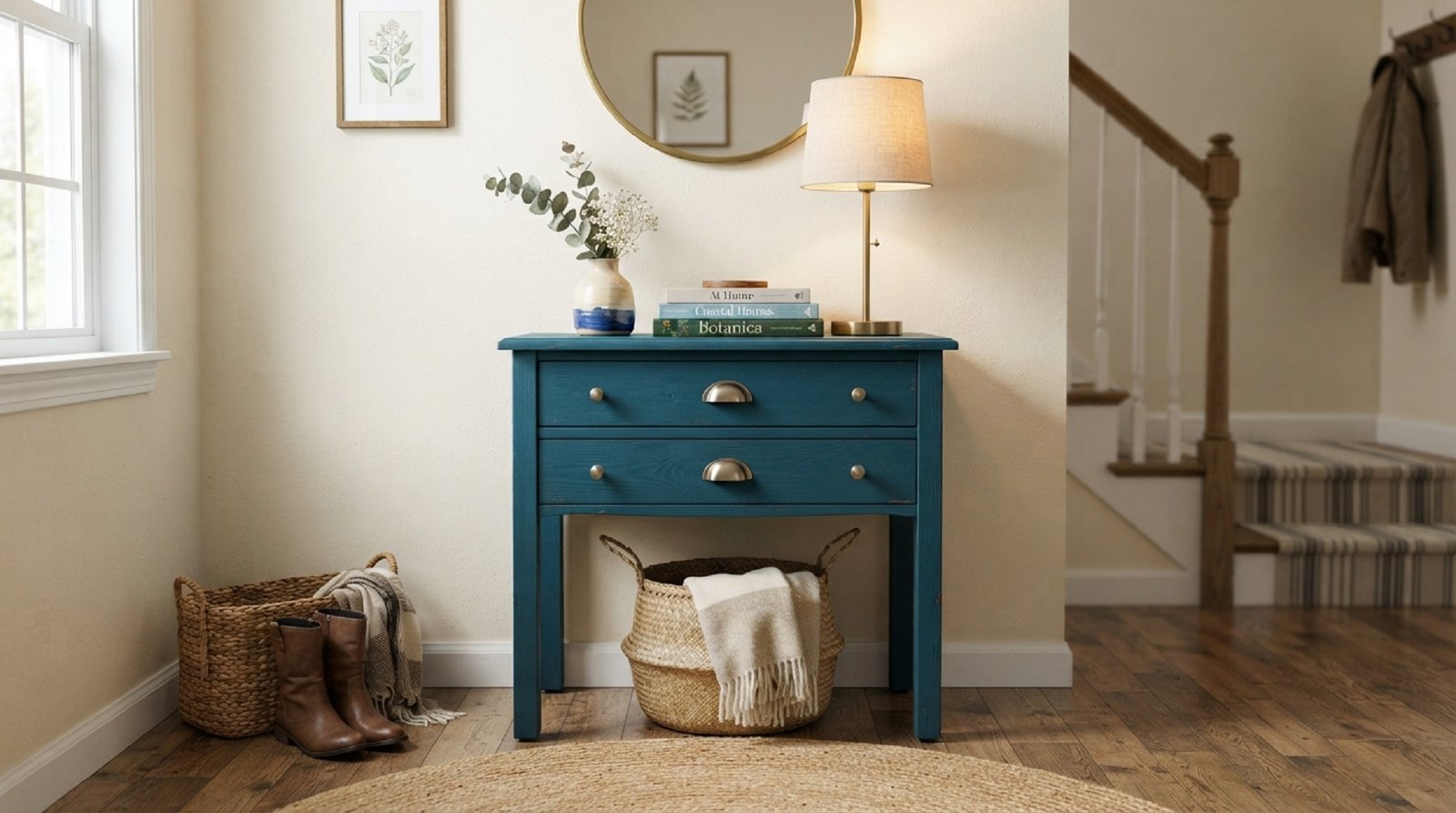
A second hand side table, nightstand, stool, or small cabinet can sometimes become the most noticeable update in a room.
Start with cleaning and inspection. Check for loose joints, damaged surfaces, or other structural problems before thinking about paint.
Prepare the surface properly, then use a primer and finish suitable for the furniture material and the amount of use it will receive. Replacing old knobs or handles can also completely change the appearance.
Don’t assume every thrifted item deserves a makeover. If it’s unstable, badly damaged, or likely to require expensive repairs, keep looking.
Estimated cost: $20–75
Time: A weekend is realistic
Difficulty: Intermediate
Best for: Bedrooms, living rooms, entryways
13. Make a Simple Table Center piece
A table centerpiece doesn’t need to be a complicated craft.
Start with a bowl, tray, vase, or container you already own. Add a few complementary elements such as books, candles, dried branches, or seasonal pieces.
The goal is to create a focal point without covering the entire surface. Leave enough open space for the table to remain practical.
This is particularly useful if you want a decorating change without permanently altering the room.
Estimated cost: $0–20 if you reuse things you already own
Time: 15–30 minutes
Difficulty: Beginner
Best for: Dining tables, coffee tables, consoles
14. Create a DIY Textile Wall Hanging
Textile decor can soften a room filled with hard surfaces such as wood, glass, and metal.
A simple wall hanging can be made from yarn, fabric strips, and a wooden dowel. You don’t need an elaborate weaving technique; combining a few textures and lengths can create enough interest.
Choose the size according to the wall rather than the amount of material you happen to have. A small piece can disappear above a large bed or sofa.
This works particularly well in bedrooms, reading corners, and other spaces where you want a warmer, softer feel.
Estimated cost: $10–30
Time: 1–3 hours
Difficulty: Beginner
Best for: Bedrooms, reading corners, cozy spaces
15. Repurpose Something You Already Own
Before buying supplies, look around your house for things you’re no longer using.
An old wooden box might become shelf storage. A basket could hold blankets. Attractive books can become part of a coffee-table arrangement. A spare frame could become wall art or a tray.
This is often the cheapest approach because you’re starting with materials you already own.
Don’t turn every unused object into a craft project, though. Sometimes the best decorating idea is simply moving an item to a better location or combining it with pieces you already own.
How to Make DIY Decor Look More Expensive
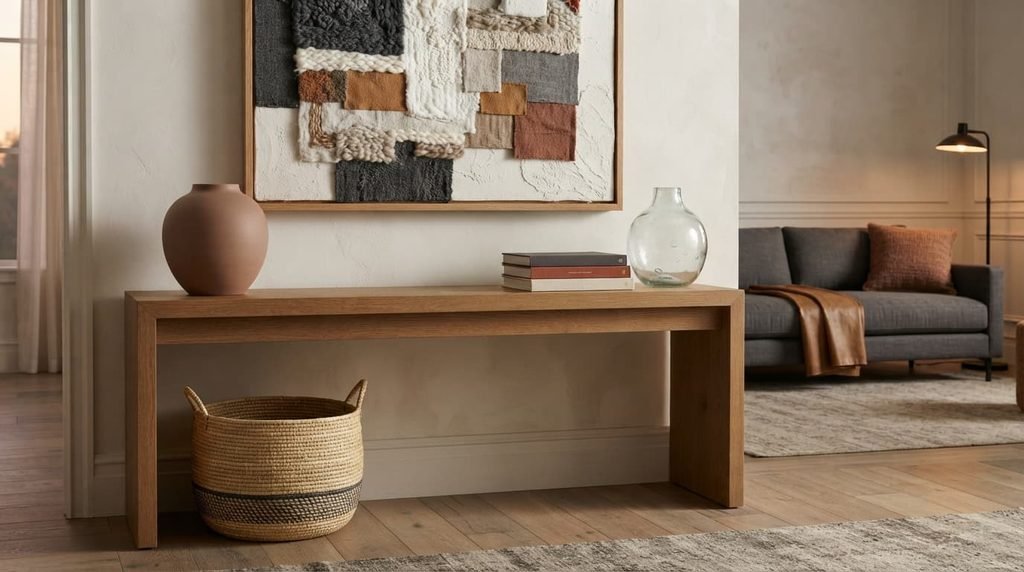
You can spend very little on a decorating project and still get a polished result. The difference often comes down to proportion, finishing, and styling.
Get the Scale Right
A small decorative object can disappear on a large wall. Likewise, oversized decor can overwhelm a narrow room.
Measure the space before making or buying anything. Think about the furniture surrounding the project as well as the empty wall or surface.
Keep the Color Palette Under Control
Your DIY project doesn’t need to match everything in the room, but it should have some connection to the existing colors.
Pulling one or two shades from your rug, curtains, furniture, or artwork can make a new piece feel intentional rather than randomly added.
Take Time With the Finish
Uneven paint, rough wood, visible glue, and unfinished edges are easy ways to make a project look rushed.
Sand where appropriate, clean your edges, remove excess adhesive, and allow finishes to dry fully before handling the piece.
Mix Textures Instead of Matching Everything
A room can feel more interesting when smooth, rough, soft, and reflective materials appear together.
Try combining wood with fabric, ceramics with glass, or metal with woven materials. You don’t need to buy all-new accessories to achieve this.
Leave Some Empty Space
An empty area isn’t necessarily a decorating problem.
If every shelf and tabletop is covered, individual pieces lose their impact. Give your DIY project enough breathing room to actually be noticed.
DIY Home Decor Mistakes to Avoid
Starting without measuring: Measure walls, furniture, frames, shelves, and fabric before buying materials.
Ignoring tool costs: Include tools in your project budget if you don’t already own them.
Choosing a project that’s too difficult: Your first DIY doesn’t need to involve several new techniques.
Skipping surface preparation: Paint and finishes generally perform better when the surface is clean and properly prepared.
Using the wrong adhesive or hardware: Different walls and materials require different products. Check the manufacturer’s instructions and the expected load before installing anything.
Making everything match: Coordinated doesn’t mean identical. A mix of finishes, sizes, and textures can feel more natural.
Ignoring durability: A decorative object that gets handled every day needs different materials and construction from something that sits untouched on a shelf.
Forgetting the time involved: Drying, sanding, multiple coats, and clean up can turn a one-hour project into an entire afternoon.
Assuming DIY is always cheaper: Sometimes the finished product is the better purchase. DIY makes the most sense when it saves money, gives you a custom result, lets you reuse something you already own, or is simply more enjoyable.
Best DIY Home Decor Ideas by Budget
Your budget doesn’t have to determine whether you can make a meaningful change.
| Budget | Good options |
|---|---|
| Under $10 | Repurposing existing items, refreshing frames, painting small pots |
| $10–25 | DIY wall art, decorative trays, cushion covers |
| $25–50 | Gallery walls, floating shelves, larger furniture updates |
| $50+ | More involved furniture makeovers and larger room projects |
These are rough ranges rather than fixed prices. Your actual cost will depend on what you already own, the materials you choose, and whether you need new tools.
Best DIY Decor Ideas for Renters
Renting doesn’t mean your home has to feel temporary.
Focus on changes you can take with you when you move. Freestanding furniture, cushions, artwork, textile wall hangings, decorative trays, updated lampshades, and removable wall treatments can all change the feel of a room without major construction.
For wall decor, use a hanging method that’s appropriate for the surface and allowed by your lease. Even products marketed as removable can damage some finishes, so don’t assume they’re risk-free.
Before painting, drilling, or making other permanent changes, check your rental agreement. If approval is required, get it before starting the project.
Which DIY Home Decor Projects Are Actually Worth Your Time?
If you don’t want to spend an entire weekend on a decorating project, start with the option that matches your goal.
Best quick update: Refreshing picture frames or plant pots.
Best for a very small budget: Repurposing something you already own.
Best for renters: Removable wall decor, textiles, and updated furniture.
Best functional project: An entryway organizer or properly installed shelf.
Best furniture transformation: A well-chosen thrifted side table or nightstand.
Best way to create a focal point: A correctly scaled gallery wall, mirror, or piece of wall art.
The most important question isn’t whether you can make something yourself. It’s whether making it yourself improves your home enough to justify the cost and effort.
FAQs About DIY Home Decor
What are some easy DIY home decor ideas for beginners?
Start with projects that don’t require power tools or complicated construction. Updating picture frames, painting terracotta pots, creating simple artwork, making a decorative tray, and repurposing items you already own are all good starting points.
How can I decorate my home cheaply?
Start with what you already have. Rearrange furniture and accessories, repurpose unused objects, update frames, add a small amount of paint, and use textiles to introduce color or texture. Secondhand furniture can also be a good starting point for an inexpensive makeover.
What DIY home decor projects are good for renters?
Renters can focus on freestanding and removable options such as artwork, cushions, textile wall hangings, updated furniture, decorative trays, and removable wall treatments. Always check your lease before making permanent changes.
How can I make DIY decor look expensive?
Focus on scale, clean finishes, a restrained color palette, and thoughtful styling. Proper preparation and neat finishing often matter more than using expensive materials.
Is DIY home decor actually cheaper?
Sometimes. Reusing things you already own or transforming inexpensive second hand pieces can save money. But tools, specialty materials, mistakes, and your time can make some projects more expensive than buying a finished item.
Final Thoughts
Good DIY home decor isn’t about making the most complicated thing you can.
A freshly painted mirror, a well-planned gallery wall, or a second hand table with a thoughtful makeover can have a bigger impact than a project that takes three days but doesn’t really suit your room.
Start with what the space needs, set a realistic budget, choose a project that matches your skill level, and don’t be afraid to skip a DIY when buying the finished version makes more sense.
And before you buy anything, look around your home. Your next decorating project may already be sitting in a closet, on a shelf, or in a corner waiting for a second use.