A cluttered closet can make getting dressed more difficult and leave a bedroom feeling disorganized. Fortunately, you don’t need a complete renovation or expensive custom cabinetry to create a space that looks better and works more efficiently.
These closet makeover ideas cover affordable storage upgrades, simple DIY improvements, small-closet solutions, and renter-friendly changes. From replacing bulky hangers to making better use of vertical space, each idea helps address a common closet problem without requiring you to start from scratch.
Whether you have a small reach-in closet, a walk-in wardrobe, or a rental apartment with limited storage, the best makeover starts with understanding what you need. Choose the improvements that suit your space, budget, and daily routine, then build on them as needed.
How to Plan a Closet Makeover on a Budget
Before buying new organizers or decorating your closet, take a few simple steps to avoid unnecessary spending.
- Declutter first. Remove items you no longer use and separate everyday clothing from seasonal belongings.
- Measure your closet. Check the width, depth, and height of shelves, hanging rods, and available floor space. Remember to account for the door opening.
- Identify the main problem. Decide whether you need more hanging room, better shoe storage, easier access to accessories, or a more attractive appearance.
- Reuse what you have. Existing baskets, boxes, hangers, and shelves may still be useful.
- Set a spending limit. Prioritize improvements that solve a real problem instead of buying every matching organizer you see.
The easiest projects to begin with are decluttering, rearranging clothing, and grouping accessories. More involved changes, such as installing shelves or adding a second hanging rod, can come later.
15 Closet Makeover Ideas for a Stylish, Organized Space
1. Declutter and Rearrange Your Closet
One of the most effective closet upgrades costs nothing. Before adding storage, make better use of the space you already have.
Take everything out and sort clothing, shoes, bags, and accessories into categories. Set aside items you no longer need, and move belongings that belong elsewhere. Keep the clothes you wear most often at an accessible height.
Arrange hanging garments by type, such as shirts, trousers, dresses, and jackets. Fold sweaters and other suitable garments on shelves rather than squeezing everything onto the hanging rod.
Best for: Any closet that feels crowded or difficult to use.
Budget level: Free.
Why it works: You can see how much storage you actually need before spending money on new products.
2. Switch to Slim, Matching Hangers
Bulky hangers can take up unnecessary room and make a clothing rail look uneven. Slim, matching hangers create a more consistent appearance and may free up additional rod space.
Velvet-coated hangers can help prevent some garments from slipping, while sturdy wooden hangers can be suitable for heavier clothing. Choose the style according to the garment rather than using one type for everything.
You don’t need to replace all your hangers at once. Start with everyday clothing and gradually expand the collection if it makes a noticeable difference.
Best for: Small closets and crowded hanging rails.
Budget level: Low.
Tip: Check that the hangers support the weight of your clothes and fit comfortably on the existing rod.
3. Add a Second Hanging Rod

If your closet has a single hanging rod and plenty of unused space below shorter clothes, a second rod may increase its capacity.
An additional rod can create separate areas for shirts, skirts, trousers, and other shorter garments. Keep dresses, long coats, and other full-length pieces in a section with enough clearance.
Measure the length of your garments and the distance between the proposed rods before installing anything. Make sure the existing closet structure and mounting hardware can support the load.
Renters may prefer a suitable adjustable rod extender that does not require permanent alterations, provided it fits securely and meets the manufacturer’s weight limits.
Best for: Closets with many short garments and limited hanging space.
Budget level: Low to moderate.
4. Add Matching Storage Bins and Basket
Storage bins and baskets make loose belongings easier to manage. Use them for seasonal clothing, hats, scarves, handbags, or accessories that don’t need to remain on display.
Matching containers can make open shelves look more coordinated. Clear bins are useful when you want to identify their contents quickly, while woven baskets add warmth and texture.
Measure the shelf depth and height before buying containers. Avoid bins that fit so tightly that you cannot remove them easily, especially on upper shelves.
Labels can help you find stored items without opening every container.
Best for: Open shelving, seasonal storage, and small accessories.
Budget level: Low to moderate.
Tip: Reuse suitable boxes or baskets you already own to keep costs down.
5. Install Shelf Dividers
Long shelves can quickly become messy when folded clothes lean against one another. Shelf dividers help keep separate piles upright and make items easier to retrieve.
Use dividers to separate sweaters, jeans, handbags, towels, or other folded belongings. Choose a design that fits your shelf dimensions and is suitable for the weight of the items.
Freestanding dividers can be useful when you don’t want to modify the closet permanently. For heavy belongings, check the product’s construction and load limitations.
Best for: Wide shelves and piles of folded clothing.
Budget level: Low.
6. Organize Drawers With Dividers
A well-organized closet should make small items easy to find, not just make the shelves look attractive.
Drawer dividers create separate sections for socks, undergarments, belts, scarves, and accessories. Adjustable options can accommodate different drawer sizes, while fabric organizers work well for many lightweight items.
Measure the drawer’s interior before purchasing an organizer. If you don’t have built-in drawers, small containers on a shelf can provide a similar solution.
Best for: Small accessories and drawers that become cluttered quickly.
Budget level: Low.
7. Make Better Use of Vertical Space
The space above hanging clothes and between existing shelves is often overlooked. Using it efficiently can improve storage without expanding the closet.
Consider shelf risers, stackable containers, or hanging fabric organizers. Store frequently used belongings at a comfortable height and reserve upper shelves for lighter seasonal items.
If you install new wall-mounted shelves, use appropriate mounting hardware and confirm that the wall can support the intended load. Follow installation instructions, and get professional help if you’re unsure about the structure or mounting requirements.
Avoid filling every gap simply because it exists. You should still be able to reach and remove items without rearranging half the closet.
Best for: Tall closets, narrow spaces, and homes with limited storage.
Budget level: Low to moderate.
8. Improve Closet Lighting
Poor lighting can make it difficult to find clothes and distinguish dark colors. Better illumination makes the closet easier to use and can give it a more finished appearance.
Depending on the layout, consider battery-powered closet lights, suitable plug-in options, or a properly installed lighting fixture. Motion-sensor lights can be convenient for frequently used closets.
Always follow the manufacturer’s instructions for placement and permitted use. Keep lights clear of clothing and other stored materials, and consult a qualified electrician for permanent wiring or electrical modifications.
Best for: Deep closets, dark corners, and walk-in wardrobes.
Budget level: Low to moderate, depending on the lighting type.
9. Refresh the Walls With Paint

A fresh coat of paint can make a plain or dated closet feel more intentional without replacing its shelving.
Soft white and warm cream create a light backdrop, while pale gray offers a subtle contrast. Muted sage can introduce color without overwhelming a small space.
Choose a shade that complements the bedroom and your existing storage. Prepare the surface according to the paint manufacturer’s instructions, protect clothing, and allow the finish to dry as directed.
If you’re renting, check your lease and obtain permission before painting. Removable wallpaper may be an alternative, but confirm that it suits the surface and test it discreetly first.
Best for: Closets with plain walls or tired finishes.
Budget level: Low, depending on preparation and materials.
10. Replace Outdated Knobs and Handles
Small details can change how a closet looks. If your wardrobe has cabinet doors or drawers, replacing outdated hardware can create a more coordinated finish.
Brushed brass works well with warm neutrals, matte black adds contrast to white cabinetry, and brushed nickel suits many contemporary interiors.
Measure the distance between the existing screw holes before ordering new handles. Choosing hardware with matching spacing can avoid unnecessary drilling and additional work.
Keep the original hardware if you’re renting and may need to restore the closet before moving out.
Best for: Built-in wardrobes and closets with drawers or cabinet doors.
Budget level: Low to moderate.
11. Add a Full-Length Mirror
A full-length mirror adds a practical dressing feature without requiring a complete closet redesign.
A door-mounted mirror can work in a small bedroom, while a freestanding version may suit a larger dressing area. Choose a size that lets you check an outfit comfortably without obstructing shelves or access to clothing.
Use mounting hardware designed for the mirror’s weight and the relevant surface. Ensure the door opens and closes freely, and secure freestanding mirrors against tipping where appropriate.
Best for: Bedroom closets and dressing corners.
Budget level: Low to moderate.
12. Create a Dedicated Shoe Storage Zone

Shoes scattered across the closet floor can make even a spacious wardrobe feel messy. A dedicated shoe area helps keep pairs together and makes daily routines easier.
Choose a low shoe rack, stackable shoe boxes, or suitable shelves based on your collection and available floor space. Keep everyday footwear accessible and move seasonal pairs to less prominent storage.
Measure the closet before buying a rack, and make sure the door can still open without hitting it. Allow shoes to dry before storing them in enclosed containers.
Best for: Closets with crowded floors and households with several pairs of everyday shoes.
Budget level: Low to moderate.
13. Use the Back of the Closet Door
The back of a closet door can provide additional storage for lightweight accessories without taking up shelf space.
Over-door organizers, suitable hooks, and pocket storage can hold belts, scarves, small bags, and selected accessories. Choose a product designed for the door and the intended load.
Check that the door closes fully and that the organizer doesn’t scrape the frame or interfere with shelves. For rental properties, removable options may be useful when their installation requirements and weight limits are appropriate.
Best for: Small closets, apartments, and accessory storage.
Budget level: Low.
14. Add a Freestanding Closet Organizer
When built-in shelving is limited, a freestanding organizer can provide additional drawers or shelves without requiring permanent cabinetry.
Choose a unit according to what you need to store. Drawers suit smaller folded items, open shelves work well for baskets and sweaters, and combination units provide flexibility.
Measure both the closet interior and the doorway. A unit may fit inside the closet but still be difficult to carry through the entrance during assembly.
Follow the manufacturer’s assembly and anchoring instructions, particularly for tall units. Freestanding furniture can be convenient for renters because it may be moved to another home.
Best for: Rental properties, closets with insufficient shelving, and flexible storage needs.
Budget level: Moderate, depending on the unit.
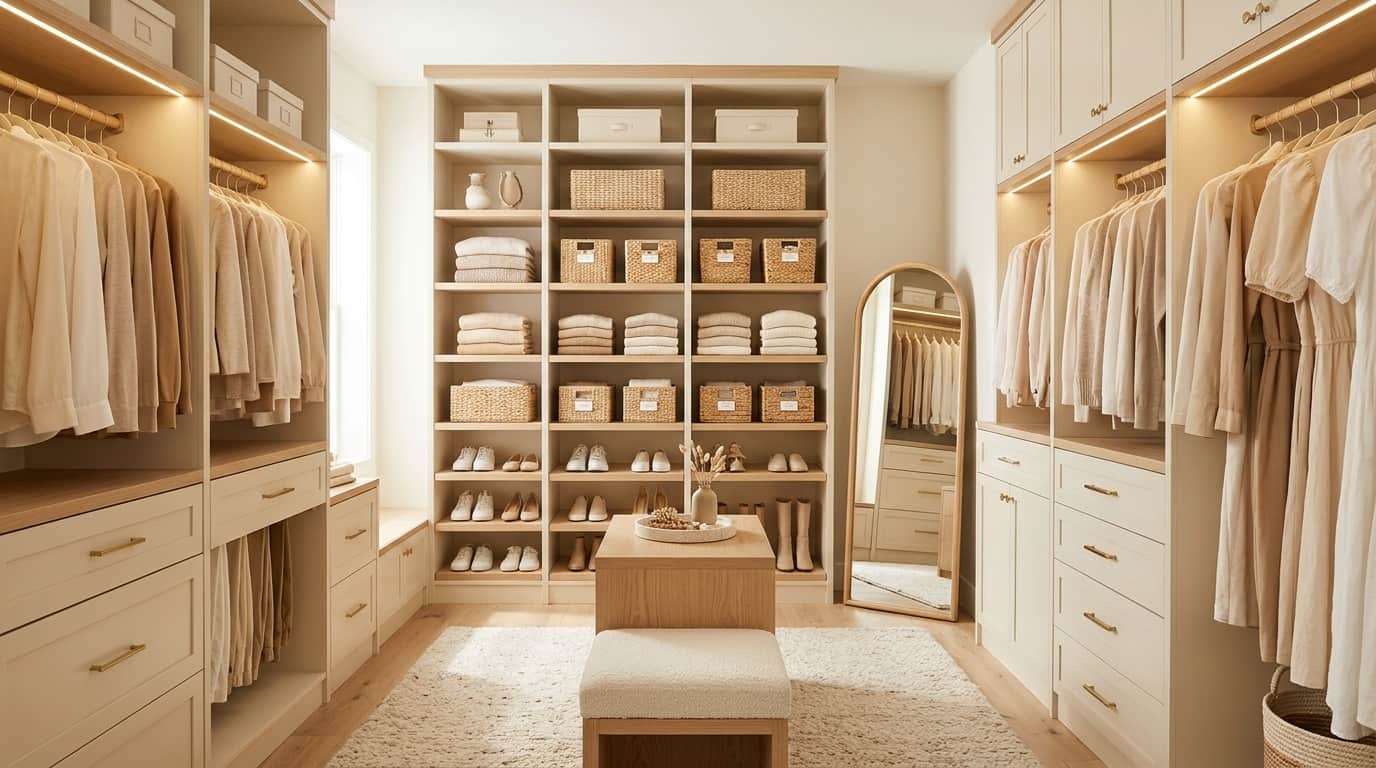
15. Create a Boutique-Inspired Closet Display

If you want your closet to look more polished, borrow a few ideas from boutique displays without buying expensive furniture.
Arrange your favorite bags on a shelf, keep frequently worn shoes neatly paired, and group similar accessories together. Matching hangers and consistent storage containers can make the space look more intentional.
Choose a simple color palette, such as cream with natural wood, white with black accents, or beige with muted green. A consistent palette can make open shelving look calmer even when the closet contains many belongings.
Keep decorative objects to a minimum so they don’t displace useful storage. The aim is to create a closet that’s attractive and practical, not one that is difficult to maintain.
Best for: Walk-in closets, dressing areas, and anyone who wants a polished appearance.
Budget level: Low if you reuse existing items; higher if you purchase decorative accessories.
Which Closet Makeover Should You Choose First?
Use this table to match the upgrade to your main concern instead of trying to complete all 15 projects at once.
| Your main problem | Best starting ideas |
|---|---|
| Clothes are crowded | Declutter, slim hangers, second hanging rod |
| Shelves look messy | Storage bins, shelf dividers |
| Small items are hard to find | Drawer dividers, door organizers |
| Shoes cover the floor | Dedicated shoe storage |
| The closet feels dark | Suitable closet lighting |
| The interior looks dated | Fresh paint, updated hardware |
| You’re renting | Freestanding organizers, removable storage |
| You want a more polished look | Matching hangers, coordinated baskets, boutique-style display |
Start with the solution that addresses your biggest everyday frustration. Once that works, add decorative upgrades if your budget allows.
Closet Makeover Mistakes to Avoid
A successful makeover depends as much on what you avoid as on what you add.
- Buying before measuring: Check shelf dimensions, available height, and door clearance first.
- Overloading storage: Follow weight limits and make sure shelves, rods, and mounting hardware are suitable for the load.
- Prioritizing appearance over function: Matching baskets are useful only if they help organize belongings you actually own.
- Ignoring rental restrictions: Review your lease before painting, drilling, or changing fixtures.
- Using every inch of space: Leave enough room to reach and remove items comfortably.
- Choosing unsuitable lighting: Follow installation instructions and keep fixtures clear of stored materials as required.
- Replacing everything at once: Reuse suitable items and upgrade only the areas that need improvement.
The best closet makeover is one that fits your belongings, space, and budget—not simply the one with the most accessories.
Frequently Asked Questions
How can I makeover my closet on a small budget?
Start by decluttering and rearranging the items you already own. Then consider affordable changes such as slim hangers, shelf dividers, reused storage baskets, or a small shoe rack. Choose upgrades that solve a specific problem before spending money on decorative accessories.
How can I make a small closet look bigger?
Keep the floor as clear as possible, use vertical space efficiently, and group clothing by category. Light-colored walls and suitable lighting can make the interior feel brighter. Avoid oversized containers that block access to other items.
What are the best closet makeover ideas for renters?
Freestanding organizers, storage bins, hanging fabric shelves, suitable over-door organizers, and removable rod extenders may work well in rental homes. Check product requirements and weight limits, and confirm your lease allows any changes that affect the property.
Is painting a closet worth it?
Painting can refresh plain or worn walls without replacing the storage system. Choose a color that complements the bedroom, prepare the surface properly, and follow the paint manufacturer’s instructions. For rentals, confirm that painting is permitted before starting.
How do I organize a closet without buying new furniture?
Sort your belongings, group similar items together, rearrange existing shelves, and reuse suitable containers.To make it easier to locate stuff, designate distinct spaces for hanging clothes, folded clothing, shoes, and accessories.
When doing a wardrobe makeover, what should I upgrade first?
Start with the issue that affects your daily routine most. If clothing is crowded, improve hanging space. If accessories are difficult to find, organize drawers and shelves. Before making any ornamental alterations, think about installing appropriate lighting if the wardrobe is too gloomy.
Final Thoughts
Replacing the complete storage system is not necessary for a wardrobe overhaul. Simple changes to your hangers, shelves, lighting, and organization can make the space more attractive and easier to use.
Start with the upgrades that solve your biggest problem, measure carefully before purchasing anything, and reuse what you already have whenever possible. You can add more improvements over time instead of paying for everything at once.
Ultimately, the best closet is one that keeps your belongings organized, fits your budget, and makes everyday routines easier.
Related resources: Front Door Paint Colors: 17 Stunning Proven Shades · Faux Ceiling Beams Ideas: 15 Amazing Proven Designs