
An outdoor balcony is often the most underused corner of a home, mostly because the furniture on it was picked in a hurry. A chair that looked perfectly reasonable in a showroom can end up blocking your door at home, and a gorgeous timber set can turn into a maintenance chore nobody signed up for. Getting this right isn’t about taste alone it’s about matching pieces to your actual floor space, your climate, and the way you genuinely plan to spend time outside.
This guide walks through everything worth thinking about before you swipe your card: measuring correctly, matching furniture to your balcony’s size, picking materials that survive your weather, arranging pieces so the space still feels open, and avoiding the mistakes that trip up almost everyone shopping for outdoor furniture for the first time.
Get Your Measurements Right First
Before opening a single shopping tab, grab a tape measure. Note the balcony’s total length and width, and then separately record anything that eats into that space the door swing, railings, support columns, vents, drainage outlets, and any built-in storage.
The door is the detail people forget most often. A table can technically fit inside the available square footage and still make the balcony miserable to use if you have to shuffle sideways past it every time you step outside.
Picture a balcony that’s roughly four feet wide. A large four-seat dining set would probably eat the entire walkway, but two slim chairs paired with a small round table could work comfortably. On a long, narrow balcony, a bench pushed against one wall often makes more sense than any freestanding chair-and-table combination, because it hugs the edge instead of sitting in the middle of your path.
Once you’ve got real numbers, compare them directly against the product’s listed dimensions not the photos. Online images are notorious for making furniture look more compact than it actually is, especially with wide-angle shots that shrink everything in the frame.
A quick pre-shopping checklist
- Total usable length and width of the balcony
- How far the door swings open
- Any fixed obstacles: railings, posts, vents, drains, outlets
- The width of your main walking path
- The real dimensions of the furniture you’re considering
- Somewhere to store cushions or fold away pieces when not in use
The goal isn’t to squeeze in as much furniture as physically possible. A balcony that still has breathing room after the furniture goes in is one you’ll actually want to use.
Choose Balcony Furniture Based on Your Available Space
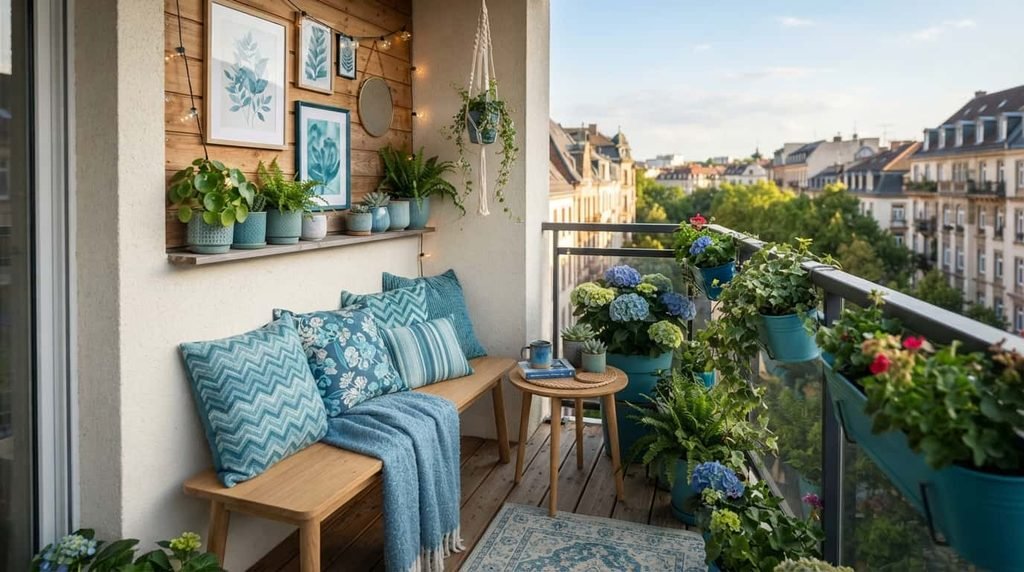
Not every balcony calls for the same shopping list. A cramped apartment ledge needs a completely different approach than a sprawling rooftop terrace.
Very small balconies do best with one or two purposeful pieces rather than a full matching set. A compact bistro table with two chairs, a pair of folding chairs, or a single well-cushioned chair next to a slim side table can all deliver a genuinely usable spot without swallowing the whole floor. Folding furniture earns its keep here you can clear the space entirely when you need room to sweep, garden, or hang laundry.
Narrow balconies benefit from furniture that hugs a single wall instead of sitting in the center. A slim bench running along the longest side, paired with a small table at one end, gives you seating without cutting the walkway in half. Narrow chairs paired with a compact side table are another good option instead of committing to a deep sofa that eats the whole width.
Medium-sized balconies open up more choices a two-to-four-seat dining set, a compact outdoor sofa with a low table, or a pair of lounge chairs can all work. The smarter move is picking furniture based on what you’ll actually do out there most often, rather than filling the space just because you technically can.
Large balconies can support more than one purpose at once. You might set up a small dining area at one end and a relaxed lounge zone sofa plus coffee table at the other. Keeping these zones visually distinct, even with something as simple as a rug or a change in furniture style, helps a big balcony feel deliberately designed instead of randomly furnished.
Let Your Actual Habits Decide the Furniture, Not the Showroom
Before you fall for a particular style, ask yourself one honest question: what do you actually want to do out here?
- Morning coffee: A small bistro table and two comfortable chairs is usually enough. There’s rarely a good reason to sacrifice floor space for a full dining set if this is your main use case.
- Reading: Prioritize a genuinely supportive chair over a decorative one, and pair it with a small side table for your book or mug. If the afternoon sun hits that corner hard, think about whether you’ll actually want to sit there at that hour.
- Outdoor dining: Give people enough room to pull chairs back without hitting the railing or another piece of furniture. Round tables can be a smart pick in tight spaces since they don’t have corners to navigate around.
- Relaxing for longer stretches: An outdoor sofa, a wide lounge chair, or even a cushioned bench can work well here. Comfort should outrank appearance if you plan to spend real time out there.
- Entertaining guests occasionally: Lean toward lightweight, movable pieces folding chairs or a small table that’s easy to reposition so you can rearrange the layout on the fly without committing to one fixed setup year-round.
- Gardening: Leave enough clear floor space for watering cans, pots, and general movement. A storage bench can double as both a seat and a place to stash gardening tools.
Choose a Material That Fits Your Climate, Not Just Your Eye
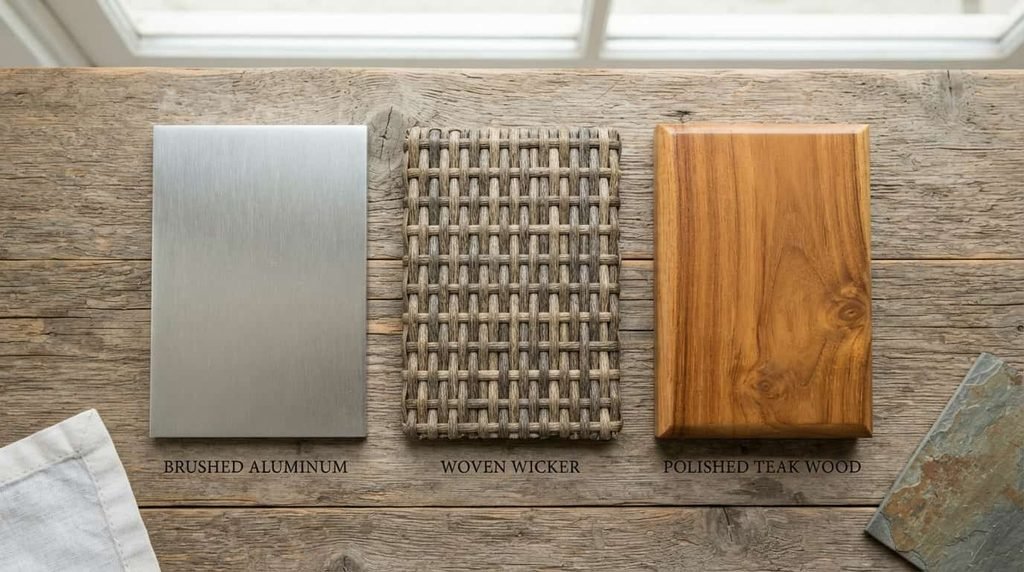
There’s no universally “best” material the right one depends on how much sun, rain, humidity, and wind your balcony sees, plus how much upkeep you’re actually willing to do.
Aluminum is light and easy to shift around, which is handy if you rearrange often or need to bring pieces indoors before a storm. The tradeoff is that on very windy balconies, that same lightness can become a liability, and metal surfaces can get uncomfortably hot under strong direct sun.
Steel gives furniture a heavier, more substantial feel, which some people prefer for stability. The catch is rust exposed steel needs a proper protective finish, especially in humid or rainy climates, and that finish is worth inspecting periodically.
Wood brings warmth and a natural look that fits almost any outdoor style. It generally demands more upkeep than synthetic alternatives, though exactly how much depends on the wood species and the finish applied. If you’re not up for periodic sealing or oiling, this might not be the lowest-effort choice.
Synthetic wicker or rattan offers a relaxed, woven aesthetic while staying relatively light. Quality varies enormously between brands, so don’t judge purely by looks check the frame underneath the weave and confirm the piece is actually rated for outdoor exposure, not just styled to look like it is.
Plastic or UPVC furniture tends to be the easiest to clean and the lightest to move, making it a practical pick when convenience matters more than a substantial, high-end appearance.
Instead of asking “which material is objectively best,” it helps to ask a more specific set of questions: How much direct sun does this spot get? Does rain actually reach the furniture, or is it sheltered? Is humidity a constant factor here? How strong does the wind get? And honestly, how much maintenance am I willing to keep up with over a full year? Your answers will narrow the field far more effectively than any generic ranking.
Plan Around Your Balcony’s Weather Exposure

A balcony’s exposure can matter just as much as its footprint.
If your space gets several hours of direct sun, look for fabrics and finishes rated for UV exposure untreated cushions and fabrics will fade noticeably over a season or two, and some surfaces can become too hot to touch comfortably. Adding shade, whether through an umbrella or another appropriate covering, can make a sunny balcony far more usable during peak hours.
If rain is frequent, prioritize moisture-resistant materials and quick-drying cushion fabrics, and consider a breathable furniture cover for anything left outside long-term. Just avoid stacking wet cushions together or sealing them under a cover while still damp trapped moisture is a fast track to mildew.
On windy balconies, stability matters more than convenience. Lightweight chairs and small tables that are easy to carry can also be the first things to tip over or shift in a gust. Choose sturdier pieces where possible, and get in the habit of securing or storing loose items cushions especially before bad weather rolls in.
Covered balconies offer more protection but aren’t fully immune to the elements. Humidity, indirect rain, and wind-driven moisture can still reach furniture under an overhang, so it’s worth checking your specific exposure rather than assuming “covered” means “maintenance-free.”
Don’t Underrate Comfort, Cushions, and Storage
It’s easy to focus entirely on style and forget that furniture needs to actually be pleasant to sit in. Before buying seating, think through seat depth, back support, cushion thickness, armrest height, how the fabric feels against skin, and how easy the piece is to get in and out of.
Cushions also need somewhere to live when they’re not in use. If your balcony is tight on space, a storage bench solves two problems simultaneously you get a seat and a place to tuck away cushions or small tools in one piece of furniture. On very small balconies, removable cushions are often more practical than bulky built-in upholstery, since you can pull them inside whenever the space needs to be cleared.
Arrange the Layout So the Balcony Still Feels Open
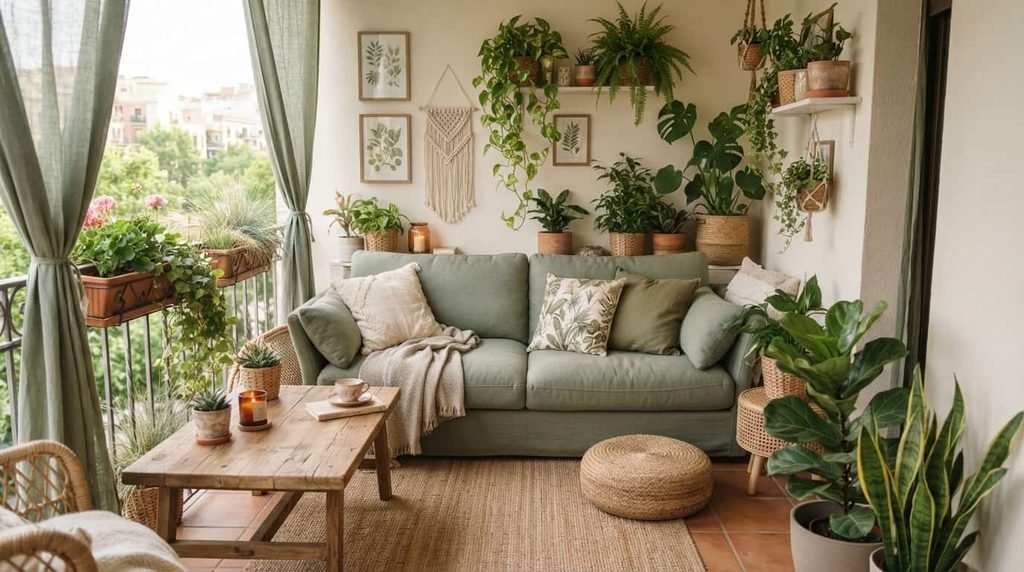
Even great furniture can feel wrong if it’s positioned poorly. A few layouts that tend to work well:
- Small coffee corner: Two compact chairs around a small table, pushed to one side so the doorway stays completely clear.
- Narrow balcony setup: A slim bench along the longest wall with a small side table at one end this uses the length of the space without cutting into the walking path.
- Compact dining arrangement: Position the table so chairs can be pulled out fully without knocking into the railing, a wall, or the door.
- Relaxation zone: A compact sofa against a wall with a low coffee table in front; if there’s a bit of extra room, add one movable chair rather than another large fixed piece.
- Flexible setup: Folding chairs and a table that can be repositioned or folded away entirely whenever you want more open floor space.
The underlying goal in every layout is the same keep the space easy to move through, not visually “full.”
Common Mistakes Worth Avoiding
A handful of recurring mistakes turn what could be a great balcony into a cramped one:
- Buying before measuring. Dimensions are consistently underestimated when you’re just eyeballing a photo.
- Going oversized. A deep sofa or large lounge chair might look inviting online but can dominate a small floor plan in person.
- Blocking the door. Keep the main entrance and exit path clear this matters even more on narrow balconies where every inch counts.
- Ignoring the weather. Furniture built for indoor use isn’t automatically suited to sun, rain, humidity, or wind.
- Forgetting where cushions go. Think ahead about storage before cushions pile up wet, dirty, or in the way.
- Filling every inch. Leaving some open floor space actually makes a balcony feel bigger and more usable, not less furnished.
- Prioritizing looks over comfort. A striking chair that’s uncomfortable after ten minutes isn’t a good long-term purchase.
- Skipping building or rental rules. If you’re renting or living in a shared building, check the rules before attaching anything to railings or exterior walls. Freestanding furniture is usually the safer, simpler route when permanent changes aren’t allowed.
Keeping Furniture in Good Shape Over Time
Outdoor furniture holds up much better with a little regular attention. Clear away dust, leaves, and spills before they build up, and clean each material according to its own care instructions rather than using one product across everything.
Let cushions dry out completely before storing them, and if severe weather is on the way, move or secure lightweight pieces and cover anything that’s staying put. For metal furniture, check the finish periodically for early signs of rust or wear. For wood, follow whatever maintenance schedule fits its specific species and finish some need yearly sealing, others far less.
Catching small issues a loose fastener, a fading finish, a bit of surface rust early on is almost always easier than dealing with them after they’ve spread.
Setting a Realistic Budget
You don’t need a large budget to make a balcony genuinely comfortable. For a small space, two chairs, one compact table, a few cushions, and maybe a small storage option can cover everything you actually need. If you’ve got more room to work with, it’s usually smarter to add pieces gradually rather than buying an entire matching set upfront.
When comparing options, weigh the frame quality, weather suitability, comfort, and overall construction before paying extra for purely decorative details. A simple, well-built chair you use every day will outlast and outperform an attractive piece that never quite fits how you actually live.
Final Buying Checklist
- Balcony length and width
- Door clearance and swing
- Available walking space once furniture is placed
- Real furniture dimensions (not just photos)
- Number of people who’ll typically use the space
- Main purpose of the balcony
- Sun, rain, humidity, and wind exposure
- Material suited to that exposure
- Cushion and storage needs
- Maintenance you’re realistically willing to do
- Whether furniture needs to be portable or foldable
- Building or rental restrictions
- Overall budget
Frequently Asked Questions
What’s the best furniture for a small balcony? Compact bistro sets, folding chairs, slim benches, and small side tables tend to work best. The right pick ultimately depends on your balcony’s dimensions and how you plan to use it.
What material holds up best outdoors? It depends on your conditions. Aluminum suits balconies where portability matters, wood offers a natural look but needs more upkeep, and steel provides sturdiness but requires protection against rust.
Can I just use regular indoor furniture outside? Not reliably. Indoor pieces aren’t built to handle sun, rain, humidity, or wind, and will wear out or warp far faster than furniture designed for outdoor use.
How do I protect furniture from rain damage? Choose weather-rated pieces, use breathable covers where appropriate, and store removable cushions somewhere dry when you can. Always let wet cushions dry fully before covering or storing them.
How do I stop lightweight furniture from blowing over? Pick sturdier pieces for exposed balconies, and get in the habit of securing or bringing in lightweight chairs, cushions, and accessories before strong winds are expected.
What works best on a narrow balcony specifically? Slim benches, folding chairs, compact bistro sets, and narrow side tables placed along the longest wall tend to preserve the most usable walking space.
Is synthetic rattan actually durable outdoors? It can be, provided it’s genuinely built for outdoor use. Check the frame and weave quality, and factor in how much sun and moisture the spot receives before committing.
How much furniture is “too much” for a balcony? If you’re constantly navigating around pieces or can’t comfortably open the door, you likely have too much. Start with the essentials and only add more if it doesn’t compromise how easily you can move through the space.
Related resources: Dining Rooms Design: 15 Ideas for a Beautiful, Functional Space · Upgrading Tips Decoradhouse: 17 Practical Ways to Improve Your Home
Related resource: Curtains for Living Room: 15 Stylish Ideas That Work