Home Prayer Room Ideas: You don’t need a full extra room to create a peaceful place for prayer or quiet reflection at home. A well-planned nook, closet, or wall-mounted altar can offer the same sense of calm as a dedicated room. What that space looks like will naturally differ from household to household a Christian prayer corner, a Muslim prayer room, a Hindu pooja space, and a secular meditation nook don’t share the same decor, but they share the same goal: a consistent, quiet spot set apart from the rest of the house. Below are eight practical design approaches for building that space, along with guidance on location, materials, and upkeep.
1. The Minimalist Modern Prayer Corner
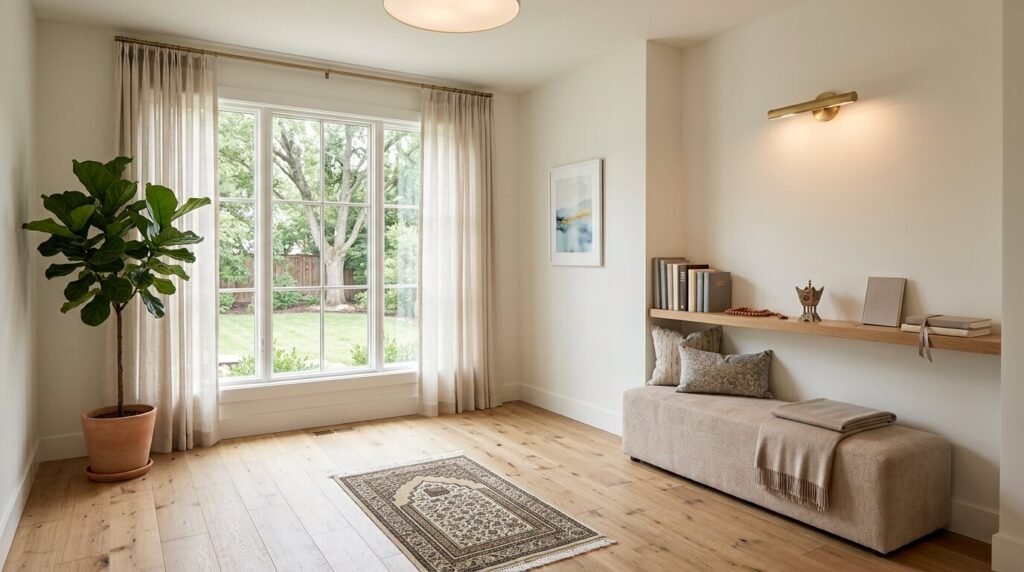
For homes with a contemporary aesthetic, a minimalist prayer corner works best. Use a single low, clean-lined table or shelf as a focal point, one seating cushion or a simple chair, and a single dimmable light source. Keep the color palette to two or three neutral tones — off-white, warm grey, or soft sand — so the corner feels calm rather than cluttered. This style suits a bedroom wall, a hallway alcove, or an underused corner of a living room, and it’s the easiest option to set up on a tight budget since it requires no structural changes.
2. The Traditional Wooden Altar Room
If you have a full spare room, a traditional design centers around a carved or solid wooden altar teak, rosewood, or other durable hardwoods can add warmth and character. Pair it with a woven prayer rug, brass or stone accessories for lamps and offerings, and warm, low lighting rather than overhead fixtures. For households that follow Hindu traditions, Vastu Shastra may influence where the room is placed and how it’s oriented, often favoring the northeast corner of the home. DesignCafe’s guide to mandir placement covers these direction and layout principles in more detail if that’s part of your practice.
3. The Closet Conversion Prayer Nook
An unused closet is one of the most space-efficient options for apartments or smaller homes. Remove the closet doors (or replace them with sliding panels), add a slim shelf or small table at a comfortable height, and install a battery-powered or plug-in LED light strip along the top edge, since closets rarely have great natural light. A small stool or floor cushion completes the space. This works well as part of a broader home improvement project if you’re already reworking storage or layout elsewhere in the house.
4. The Vertical Wall-Mounted Altar
In studio apartments or very small homes, floor space is often the limiting factor — not wall space. A slim, wall-mounted shelf or cabinet with a slender pendant light above it can create a proper altar without occupying any floor area. A narrow drawer underneath keeps candles, incense, or prayer items out of sight when not in use. This approach to small prayer nook design is a favorite among small-space designers for exactly that reason — it borrows height instead of footprint.
5. The Nature-Connected Sunroom or Balcony Space
If your home has a sunroom, enclosed balcony, or a window bay that gets good natural light, it’s worth using that light instead of fighting it elsewhere. Position seating so morning or evening sun falls across the space without glare on any images or icons, and add a snake plant or another low-maintenance houseplant suited to the light the space actually gets. Natural wood or rattan furniture keeps the mood grounded rather than sterile. Because this design leans on the room’s existing light and view, it tends to need the least added lighting of any option on this list.
6. The Multi-Faith Family Prayer Room
Larger households, especially blended or multi-generational families, sometimes need a space that isn’t tied to one specific tradition. A flexible layout — a low bench along one wall, a small shelf system that can hold different people’s or traditions’ prayer items separately, and a neutral rug rather than one tied to a single faith — lets the room serve everyone without anyone’s practice feeling secondary. Movable screens or curtains can subdivide the space temporarily if two people want to use it for different purposes at the same time.
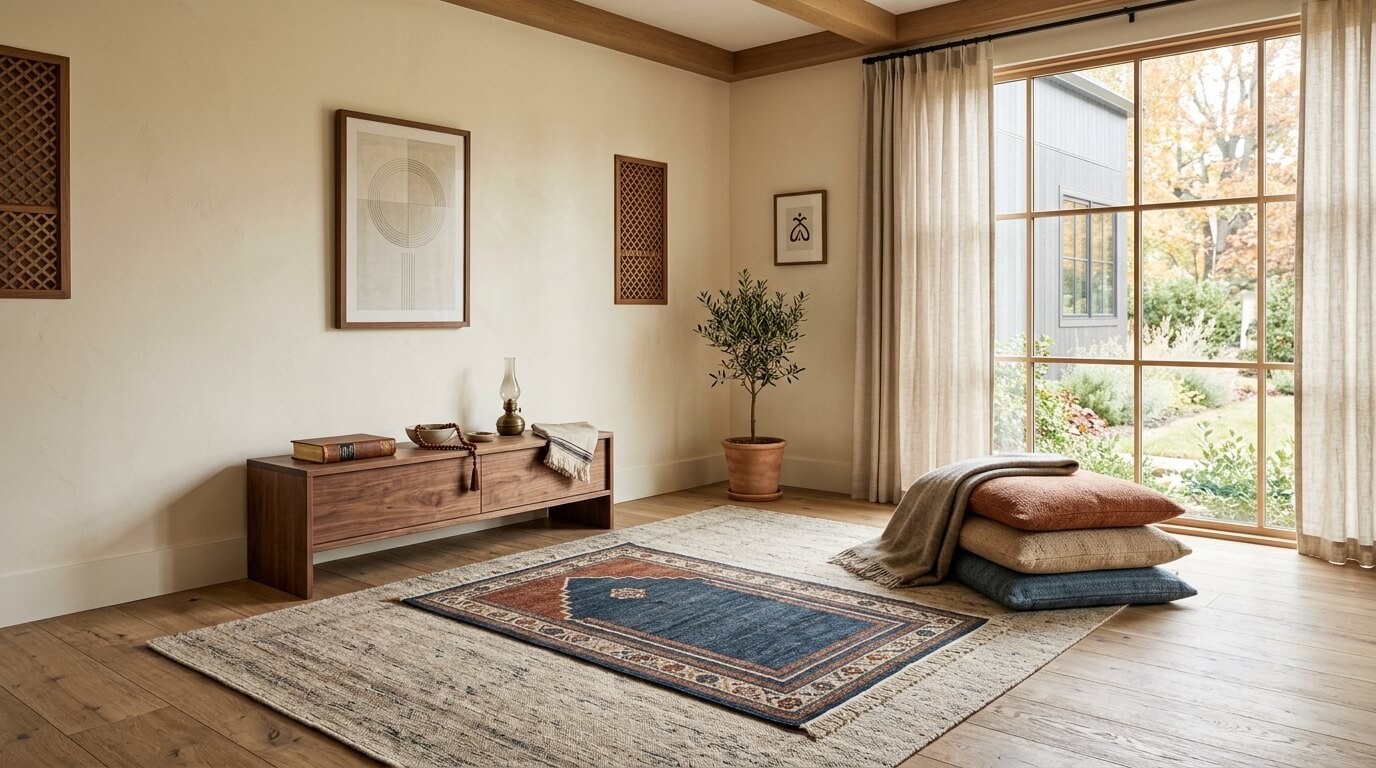
7. The Floor-Seating Meditation Corner
This design borrows more from meditation and yoga spaces than from a traditional altar room. Think a floor cushion or low seating mat, a small side table for a candle or a book, a small table lamp or another soft, warm-toned light, and one or two grounding objects like a stone bowl or a strand of prayer beads. The best meditation corners tend to follow the same principle regardless of who designs them: keep the object count low, and choose only items that genuinely help you feel calm rather than decorating for its own sake.
8. The Convertible Guest Room or Home Office Nook
If you don’t have a room to spare permanently, a corner of a guest room or home office can double as a prayer space without feeling like an afterthought. A folding screen, a tall bookshelf, or even a floor-to-ceiling curtain can visually separate the prayer area from the desk or bed when it’s in use, and fold away completely when it isn’t. A slim rolling cart can hold prayer items and be tucked into a closet the rest of the time — useful if the room needs to earn its keep for guests or work as well as reflection.
Choosing the Right Location
Beyond the eight layouts above, a few placement principles apply regardless of style:
- Away from noise. A spare bedroom corner, a quiet hallway nook, or an unused closet all work better than a spot near an entryway or a high-traffic room.
- Natural light, where possible. If natural light matters to you, an east-facing spot can offer gentle morning sun. Households that follow Vastu Shastra may also favor northeast placement as part of that tradition, but this is a cultural preference rather than a universal design rule.
- Easy daily access. A beautiful space you rarely visit is less useful than a modest one on your daily path. If a full room isn’t realistic, a clearly defined corner of a bedroom, living room, or home office — set apart with a shelf, screen, or rug — is a practical alternative.
Design Elements for a Peaceful Prayer Space
- Colors: soft blues, warm neutrals, and gentle greens tend to read as calming rather than stimulating; save bold or saturated colors for a single accent, like a cushion or a piece of art, rather than the walls.
- Materials: wood, stone, and natural fiber textiles (cotton, linen, jute) age well and feel warmer underfoot and to the touch than glass, metal, or synthetic finishes.
- Lighting: layer your light sources — a dimmable lamp or LED strip for daily use, plus candles for occasional moments — rather than relying on a single bright overhead fixture, which tends to flatten the mood of the room.
- Scent and sound: essential oils, such as lavender or sandalwood, or a small speaker for soft background sound can help signal to your mind that you’ve entered a different kind of space. If you use essential oils or incense, keep the room ventilated and be mindful of any household members or pets with sensitivities.
Keeping the Space Peaceful Over Time
A prayer room stays calming only if it stays tidy. A short weekly reset — dusting surfaces, refreshing wilted flowers, and putting stray items back in their place — keeps the space from slowly filling up with clutter. It’s also worth reviewing what’s in the room every few months and removing anything that no longer feels meaningful; a space that’s edited over time tends to stay more focused than one that just accumulates.
Final Thoughts
None of these eight designs require an architect-built room to work a closet, a wall shelf, or a corner of an existing room can all become a genuine prayer or reflection space with the right light, materials, and a bit of intention. Pick the layout that fits your home’s actual footprint first, then build the details — color, lighting, texture — around it, and let the space reflect your own tradition or practice rather than a generic template. For more room-by-room design inspiration, browse the full Home Decor and Home Improvement sections on Home Focuse.