Choosing kitchen cabinet colors can be one of the harder decisions in a remodel, especially when you’re weighing two colors instead of one. Two-tone kitchen cabinets have become a popular way to add contrast and personality to a kitchen without committing to a single, all-over color. This guide walks through the most common two-tone combinations, how to choose between them, and the practical details like placement, cost, and hardware that affect how the final result looks.
Below, you’ll find color pairings that work well together, guidance on where to use each color, and a few mistakes worth avoiding before you pick up a paintbrush or place a cabinet order.
What Are Two-Tone Kitchen Cabinets?
Two-tone kitchen cabinets use two different colors or finishes across the cabinetry instead of one uniform color. Typically, one color goes on the upper cabinets and a second color goes on the lower cabinets, though some homeowners prefer to set the kitchen island color apart from the surrounding perimeter cabinets instead. The goal is a look that feels balanced and intentional rather than mismatched.
This approach has grown in popularity because it offers a middle ground between an all-white kitchen and a fully colorful one. Contrasting cabinet finishes let homeowners add depth and personality to a space while keeping the overall look controlled. It works across a range of styles, from a modern kitchen design to a farmhouse kitchen style, which is part of why it remains one of the more flexible kitchen cabinet trends available right now.
Two-Tone vs. Single-Color Cabinets
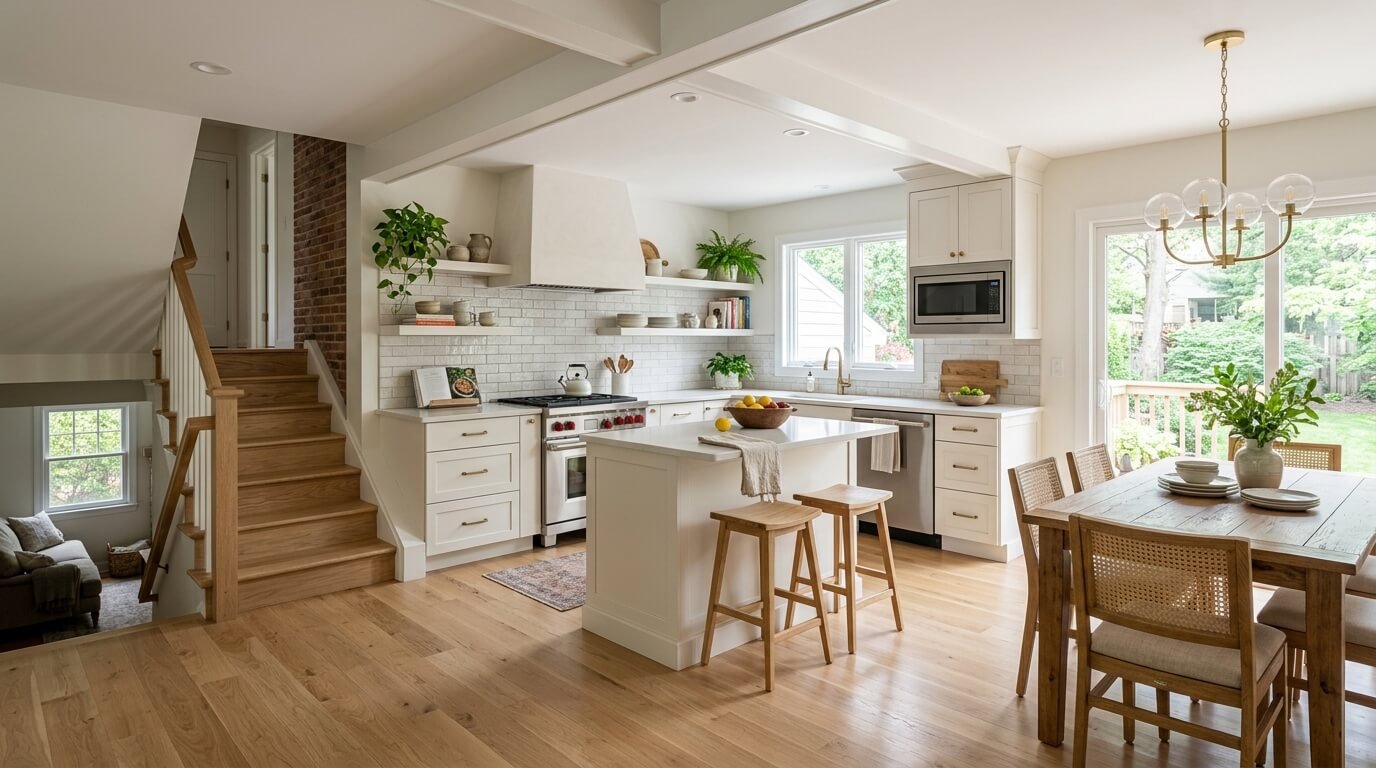
A single cabinet color tends to work well in smaller kitchens or in homes being prepared for sale, since a uniform, neutral look generally appeals to a broad range of buyers. Two-tone cabinets tend to suit larger or open-concept kitchens, kitchens with a prominent island, or homeowners who want a more distinctive look. If you’re unsure which direction to take, consider whether you want the kitchen to feel calm and cohesive, or whether you want it to stand out.
Best Two-Tone Kitchen Cabinet Color Combinations
Some color pairings have stayed popular for years, while others are showing up more often in current kitchen design coverage. Below are combinations worth considering for a two-tone remodel, along with practical notes on where each one tends to work best. For more visual examples, HGTV’s gallery of two-toned kitchen cabinet ideas shows several of these pairings in real homes.
| Color Combination | Best For | Style Vibe |
|---|---|---|
| Navy and white cabinets | Coastal and classic kitchens | Timeless |
| Sage green and cream cabinets | Bright, relaxed kitchens | Soft and natural |
| Charcoal and natural wood cabinets | Modern kitchens | Grounded and contemporary |
| Black and white cabinets | Most home styles | Bold and classic |
| Gray and black cabinets | Industrial-leaning spaces | Sleek and moody |
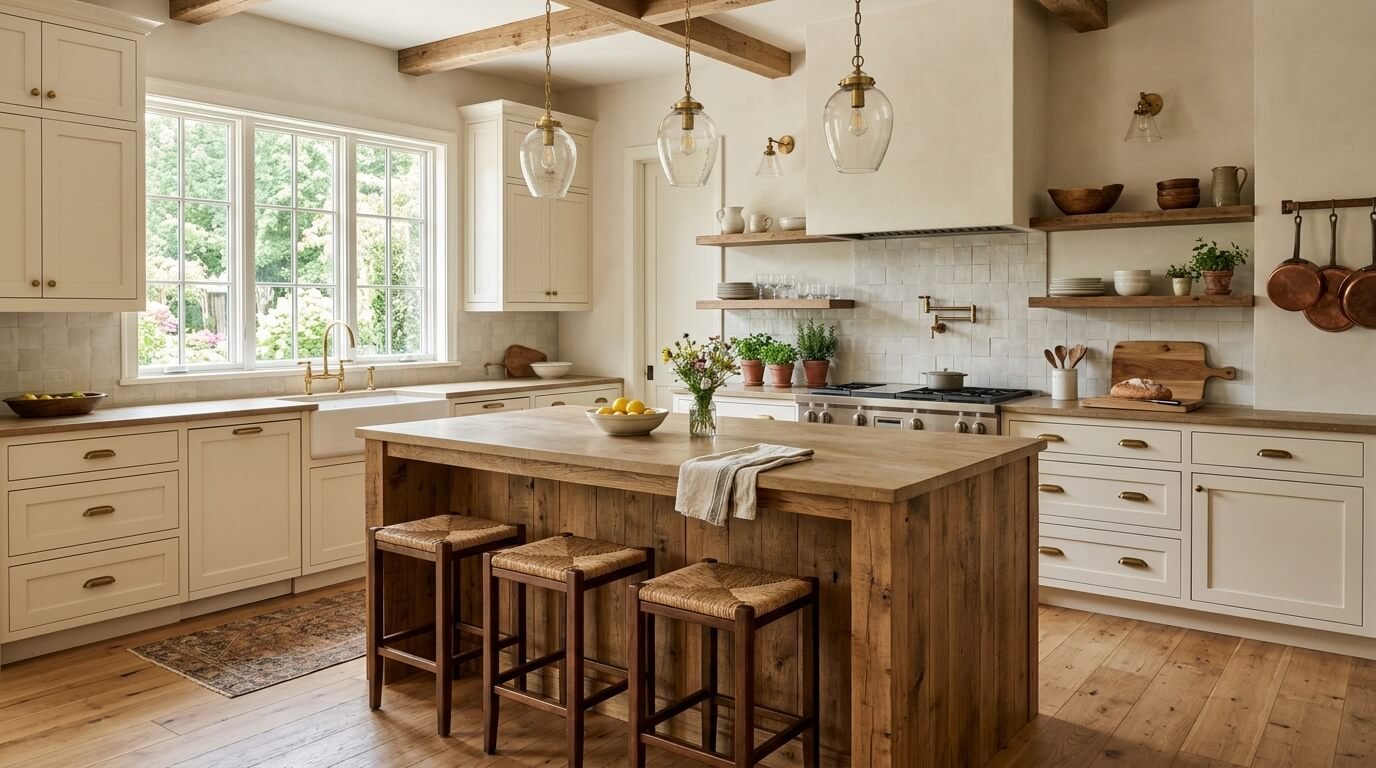
| White and wood-tone cabinets | Farmhouse and rustic homes | Warm and natural |
| Deep green and natural wood cabinets | Traditional to transitional kitchens | Rich and grounded |
Navy and White
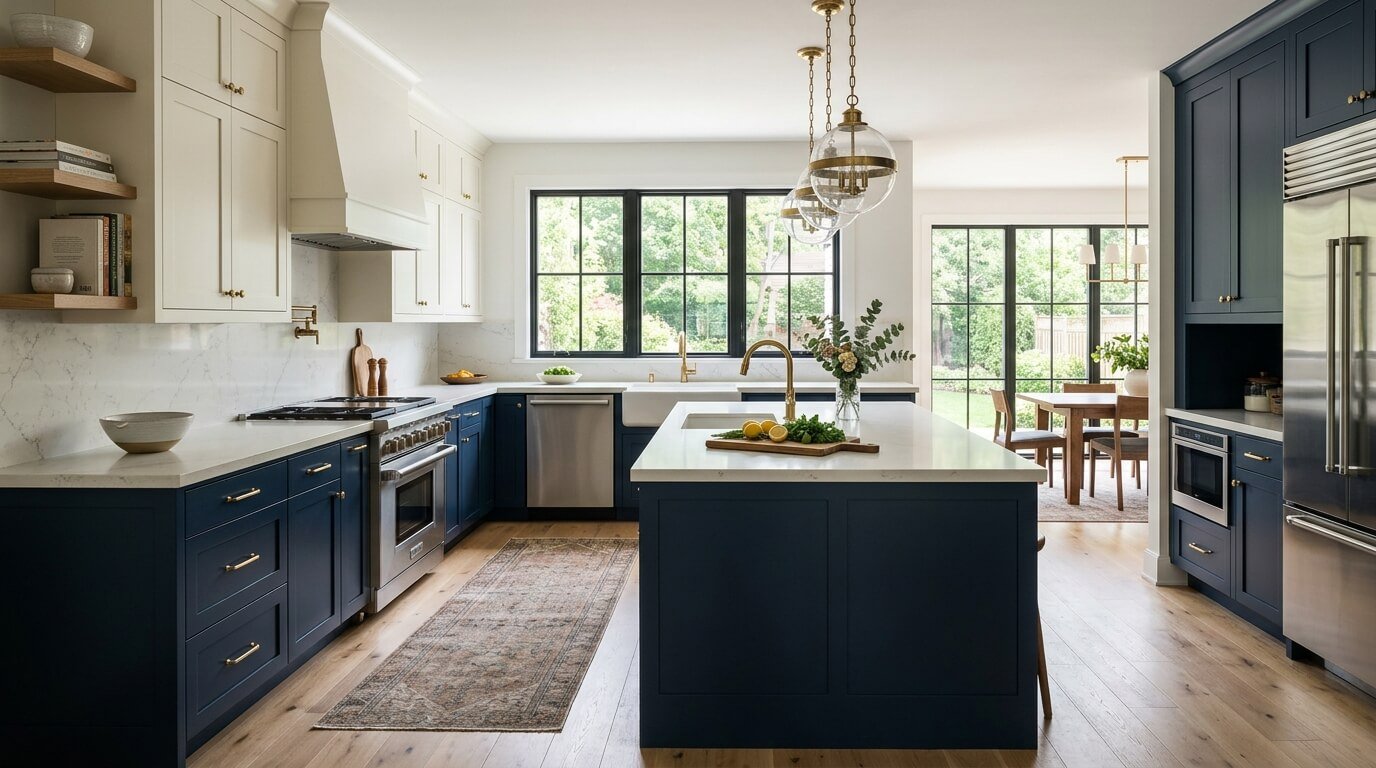
Navy and white cabinets are one of the more enduring choices in kitchen design. White keeps the space feeling bright, while navy adds contrast without making the room feel dark. This pairing tends to suit coastal homes, farmhouse kitchens, and transitional kitchen designs. Two well-known navy paint options are Hale Navy by Benjamin Moore and Naval by Sherwin-Williams, both of which are frequently used on cabinetry.
Sage Green and Warm White
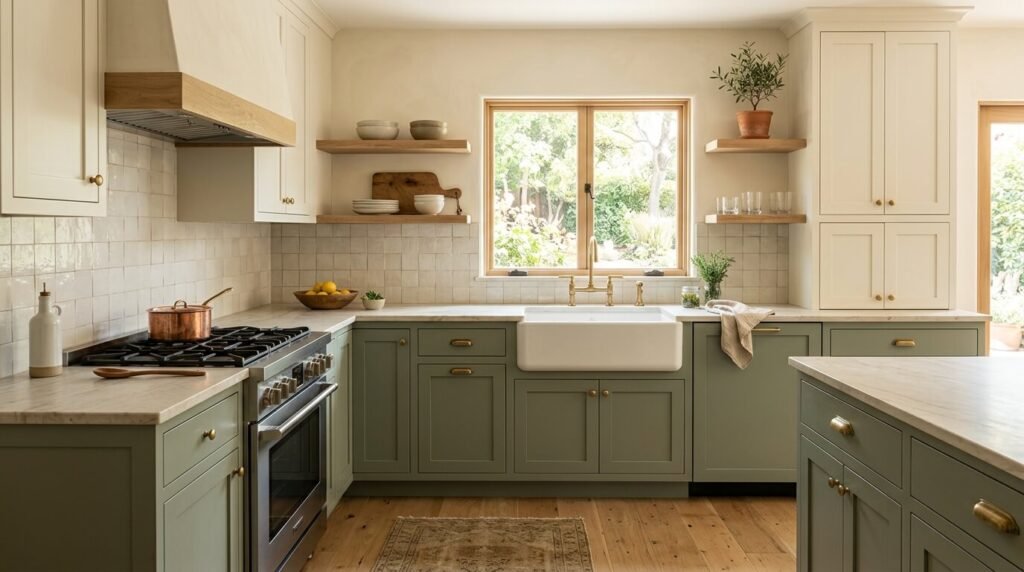
Sage green and cream cabinets offer a softer, more muted look than a bold color statement. This pairing tends to feel calm and a little nostalgic, which is likely why it shows up often in current kitchen remodel inspiration. It also pairs well with brass or unlacquered hardware, since the warmer metal tone complements the green without competing with it.
Charcoal and Natural Wood
Charcoal paired with natural wood tones creates a look that feels grounded rather than stark, and it fits comfortably into modern kitchen design. One detail worth knowing: gray-based paints can shift in appearance depending on the room’s lighting. A gray that reads neutral in a showroom can pick up blue or green undertones under different bulbs, so it’s worth testing a physical sample door in your own kitchen before committing.
Black and White
Black and white cabinets remain one of the most recognizable two-tone combinations, and the pairing works across a wide range of home styles, from farmhouse kitchens to contemporary kitchen cabinets. A common misstep is splitting the kitchen exactly 50/50 between black and white, which can make the space feel visually divided rather than balanced. Using black mainly on the base cabinets or the island, while keeping the wall cabinets white, tends to create a more cohesive result — an approach that echoes the same logic behind the 60-30-10 color guideline covered below.
Terracotta or Rust with Cream
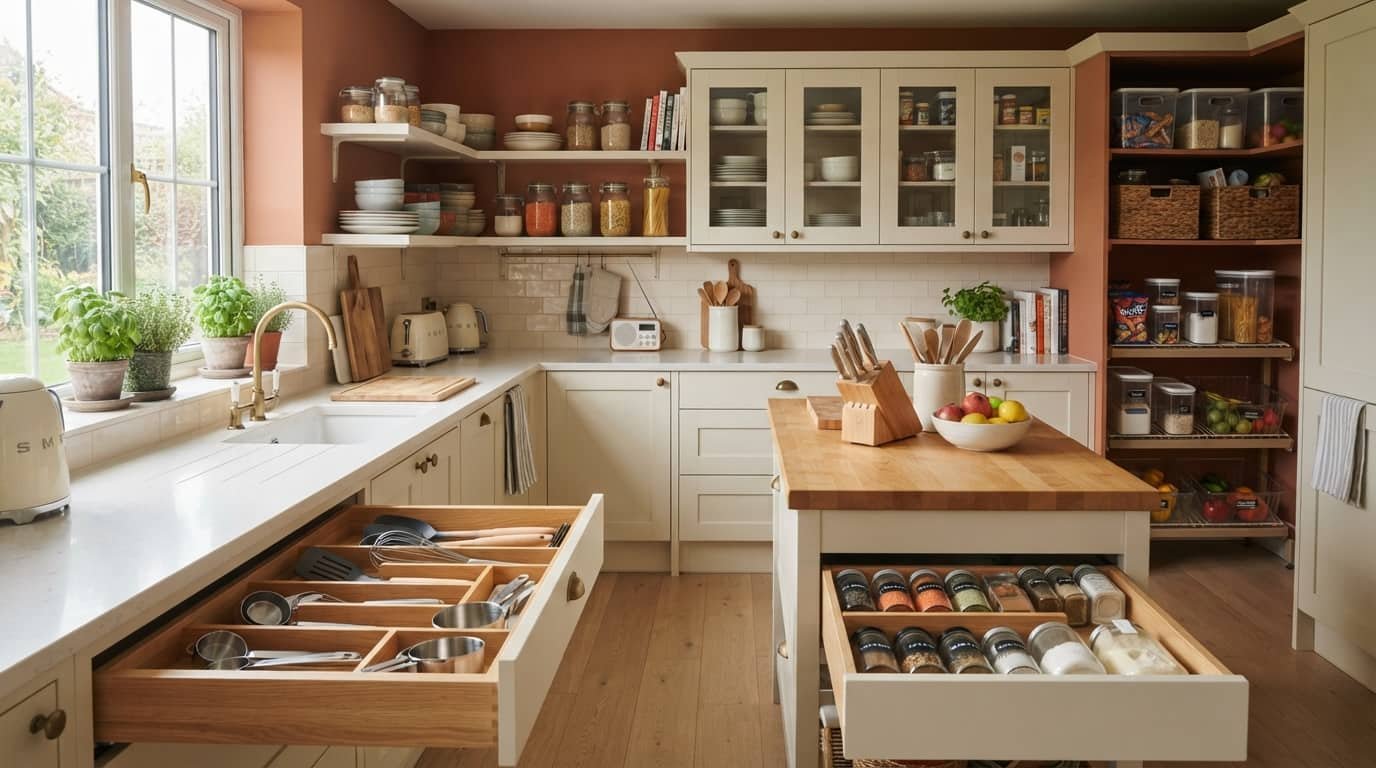
Terracotta paired with a soft cream offers a warmer, less common alternative to the pairings above. It tends to work well in kitchens with natural stone counters or a Mediterranean-inspired layout. This combination is less established than navy-and-white or black-and-white, but it’s a reasonable option for homeowners who want something outside the more common kitchen color scheme choices.
Tonal Two-Tone Cabinets
Tonal pairing means using two shades within the same color family, such as light gray with charcoal, or blush pink with a deeper mauve. This approach can feel more approachable if you’re wary of colors clashing, since staying within one family tends to guarantee some level of cohesion. Blue and gray cabinets, gray and white cabinets, and pink and beige cabinets all fall into this softer, tonal category.
Deep Green and Natural Wood
A deeper, more saturated green paired with natural wood offers a richer alternative to sage green, and it tends to suit traditional to transitional kitchens rather than strictly modern ones. This combination works particularly well with warm-toned countertops, such as butcher block or warm stone, and with brass or aged-bronze hardware. In kitchens with limited natural light, a deep green can read quite dark, so it’s worth testing the color at different times of day before finalizing it on full cabinet runs. If your kitchen includes a rustic kitchen island, this pairing is one of the more natural ways to tie a wood island into the surrounding cabinetry.
How to Choose the Right Two-Tone Combination
Choosing a cabinet color palette starts with looking at what’s already in the room. Consider your kitchen’s size, how much natural light it receives, and your existing kitchen backsplash or kitchen countertops. Smaller or dimmer kitchens generally read better with more light color overall, while larger, well-lit kitchens have more flexibility for bolder choices.
One framework some designers use as a starting point is the 60-30-10 color guideline: roughly 60 percent of the space in a dominant color, 30 percent in a secondary color, and 10 percent in an accent, such as hardware or lighting. This isn’t a strict formula for cabinets specifically, but it can be a useful way to think about cabinet color distribution when you’re deciding how much of each shade to use.
A Common Mistake to Avoid
A frequent issue when choosing two-tone colors is picking two shades with similar value or intensity, which reduces the contrast that makes a two-tone look work in the first place. Pairing one lighter, more neutral anchor color with one deeper, more saturated color tends to produce a clearer, more intentional-looking result.
How Cabinet Placement Changes the Look
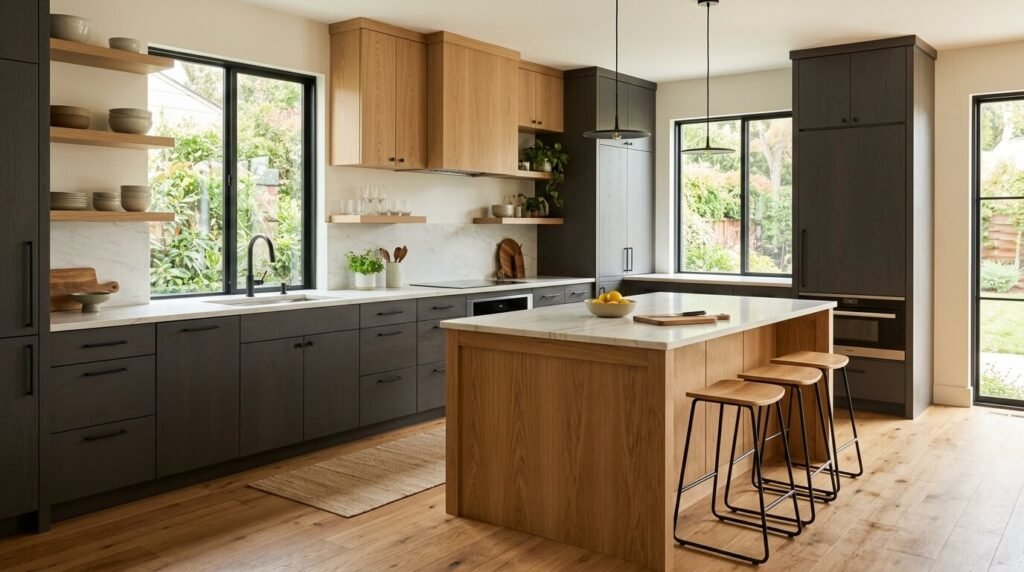
Where you place each color matters as much as the colors themselves. Most homeowners split colors between upper cabinets and lower cabinets, though separating by island versus perimeter, or by one wall versus the rest of the kitchen, are both reasonable alternatives depending on the layout.
In a smaller galley kitchen, keeping the lighter color at eye level and above tends to help the room feel more open. In a larger, open-concept kitchen, the island can often support a bolder or darker color, since it already functions as a visual focal point without weighing down the rest of the room.
How Countertops, Flooring, and Hardware Affect the Colors
The materials surrounding your cabinets change how any two-tone combination reads in person. Matte finish cabinets tend to feel soft and contemporary, while glossy finish cabinets reflect more light and read as sleeker or more modern. You’ll also want to decide between painted wood cabinets, wood grain cabinets, or a mix of the two, depending on the direction you’re going.
Cabinet style plays a role as well. Shaker style cabinets remain a popular choice because their simple lines work with most color combinations. Frameless cabinets with clean slab cabinet doors tend to suit a more minimalist, modern aesthetic. Hardware finish also shifts the overall mood: the same navy-and-white kitchen can look noticeably different with black and gold accents compared to brushed nickel, so it’s worth choosing hardware alongside your cabinet colors rather than as an afterthought.
Cost Considerations for Two-Tone Cabinets
Cost is often a deciding factor, and it varies considerably based on your location, cabinet condition, materials, and whether you hire a professional or handle the work yourself. As a general guide, painting kitchen cabinets yourself typically costs less than hiring a professional painter, while purchasing new two-tone kitchen cabinets from a manufacturer costs more but comes with more consistent cabinet door profiles and finishes across every piece.
| Option | Typical Cost Range* | Notes |
|---|---|---|
| DIY paint job | A few hundred dollars | Lower cost, more labor and prep involved |
| Professional cabinet painting | Roughly $1,500–$4,500 | Faster and generally more even finish |
| Full cabinet replacement | $8,000 and up | Cost scales with kitchen size and materials |
| Cabinet refinishing | Roughly $2,000–$6,000 | Keeps existing cabinet boxes intact |
*Costs vary widely by region, labor rates, cabinet condition, and project scope. Get local quotes for an accurate estimate.
A Budget-Friendly Approach
Repainting only the lower cabinets or the island, rather than every cabinet in the kitchen, is a lower-cost way to introduce a two-tone effect without the expense of a full repaint. It won’t deliver an identical result to a full two-tone remodel, but it’s a reasonable middle step for homeowners working with a tighter budget.
Two-Tone Kitchen Cabinet Trends to Watch
Beyond the combinations covered above, a few directions are appearing more frequently in current kitchen design coverage: terracotta tones, deeper tonal grays, and mixed-material kitchen islands. Rustic kitchen design and industrial kitchen style kitchens are also incorporating two-tone looks, often pairing raw or reclaimed wood with darker metal accents.
Sustainability is also a growing consideration. Choosing cabinet refinishing over full replacement gives homeowners a way to achieve a fresh two-tone look while keeping existing cabinet boxes out of landfills. This approach aligns with biophilic design, a design philosophy centered on incorporating natural materials and organic, earth-inspired colors into interior spaces.
Frequently Asked Questions
Is the two-tone kitchen cabinet trend still relevant in 2026?
Yes, two-tone cabinetry remains a widely used approach in kitchen design, with combinations like sage green, charcoal, and navy appearing frequently in current design coverage.
Should the upper or lower cabinets be the darker color?
Many designers place the darker shade on the base cabinets to visually ground the room, while keeping the upper cabinets lighter to preserve an open feeling. This isn’t a hard rule, and some kitchens work well the other way around.
Do two-tone cabinets affect resale value?
Two-tone cabinets don’t automatically make a kitchen less appealing to buyers, but more personal or unusual color choices can be more polarizing than neutral, widely liked combinations. If resale value is a primary concern, sticking to more universally appealing pairings is generally the safer choice.
Final Thoughts
The right two-tone combination comes down to real contrast between your two colors, thoughtful placement, and testing samples in your own kitchen’s lighting before committing to a full repaint or new cabinet order. Getting those three things right tends to matter more than chasing whichever combination is currently trending.
Before finalizing your colors, order a few physical cabinet door samples and view them in your kitchen at different times of day. It’s one of the more reliable ways to avoid a costly redo. For more kitchen design guidance tailored to your space, visit Home Focuse to explore additional resources.