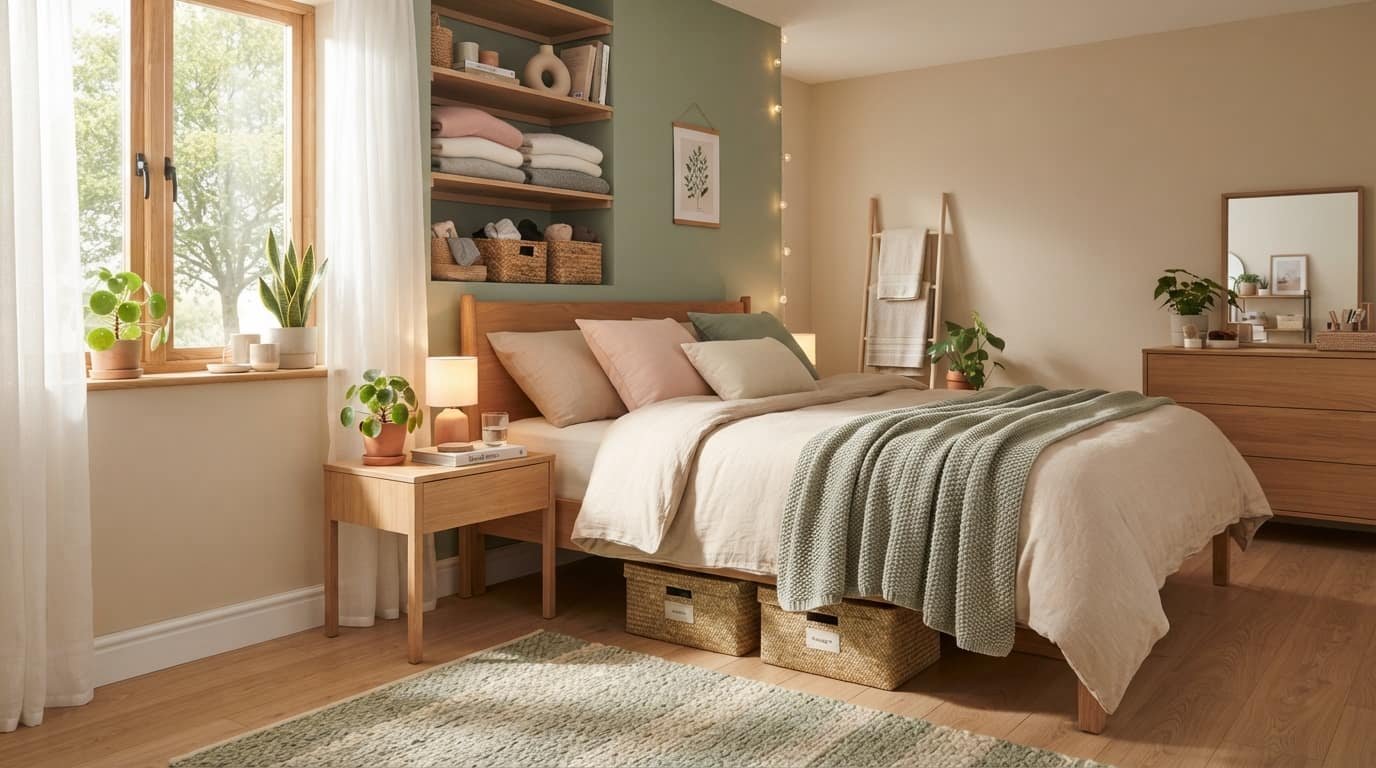
A messy bedroom can make even a comfortable space feel smaller and harder to relax in. Clothes pile up, the nightstand collects random items, shoes end up on the floor, and the closet becomes difficult to use.
The good news is that you don’t necessarily need a bigger bedroom or expensive storage furniture. The right bedroom organization ideas can help you use the space you already have more effectively.
The best place to start is simple: remove what you no longer need, give the things you keep a specific home, and make your storage easy enough to maintain every day.
Key Takeaways
- Declutter before buying additional storage.
- Keep frequently used items in easy-to-reach places.
- Use overlooked areas such as under the bed and behind the door.
- Make vertical space work harder in a small bedroom.
- Choose storage based on how often you use an item.
- Create a short daily reset so clutter doesn’t build up again.
15 Practical Bedroom Organization Ideas to Try Today
1. Declutter Before You Organize
Before moving everything into boxes and baskets, decide what actually deserves space in your bedroom.
Go through clothes, shoes, accessories, paperwork, decor, and other items that have accumulated over time. Separate them into four basic groups:
- Keep
- Donate
- Relocate
- Discard
Don’t organize things simply because you already own them. If you haven’t used something in a long time and it no longer serves a purpose, storing it won’t solve the problem.
Once you’ve reduced the clutter, you’ll know what you actually need to organize.
2. Organize the Bedroom by Zones
Instead of treating the entire room as one storage problem, divide it into simple zones.
For example:
Sleeping zone: bed, nightstand, books, chargers
Dressing zone: clothing, accessories, shoes, mirror
Laundry zone: hamper and items waiting to be washed
Work or study zone: desk, paperwork, stationery
Storage zone: seasonal clothing, spare bedding, luggage
Keeping related items together makes them easier to find and return to their proper place.
It also helps you spot problems. If clothes constantly end up on a chair, for example, your dressing or laundry system may need to change.
3. Use the Space Under Your Bed
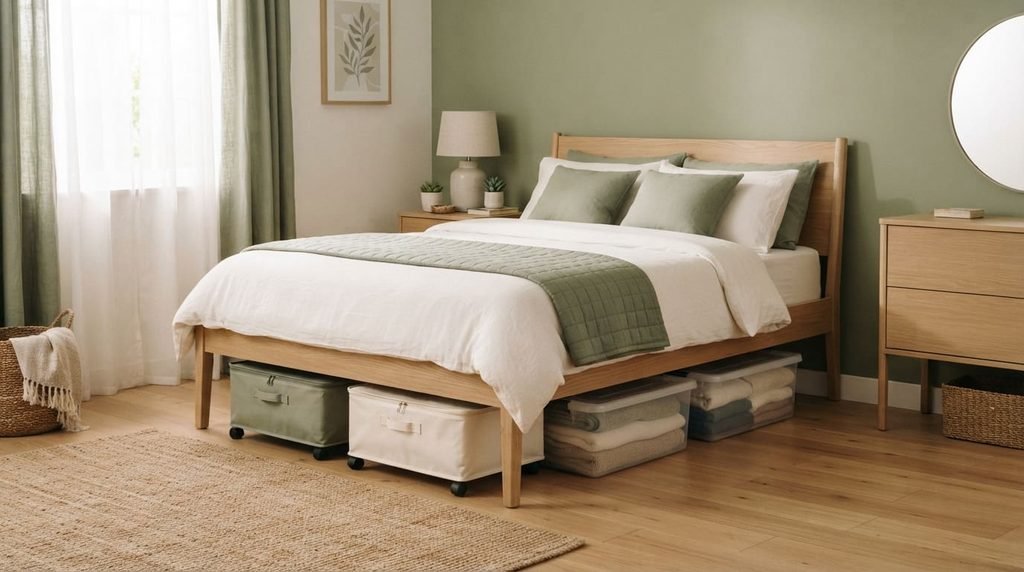
The area underneath your bed can provide valuable storage without taking up additional floor space.
It’s especially useful for things you don’t need every day, such as:
- Seasonal clothing
- Extra bedding
- Spare pillows
- Occasionally used bags
- Seasonal accessories
Measure the available height and width before purchasing storage containers. Low-profile boxes or containers with wheels can make access easier.
Label containers if you store several categories underneath the bed. That way, you won’t have to pull everything out to find one item.
4. Make Your Closet Easier to Use
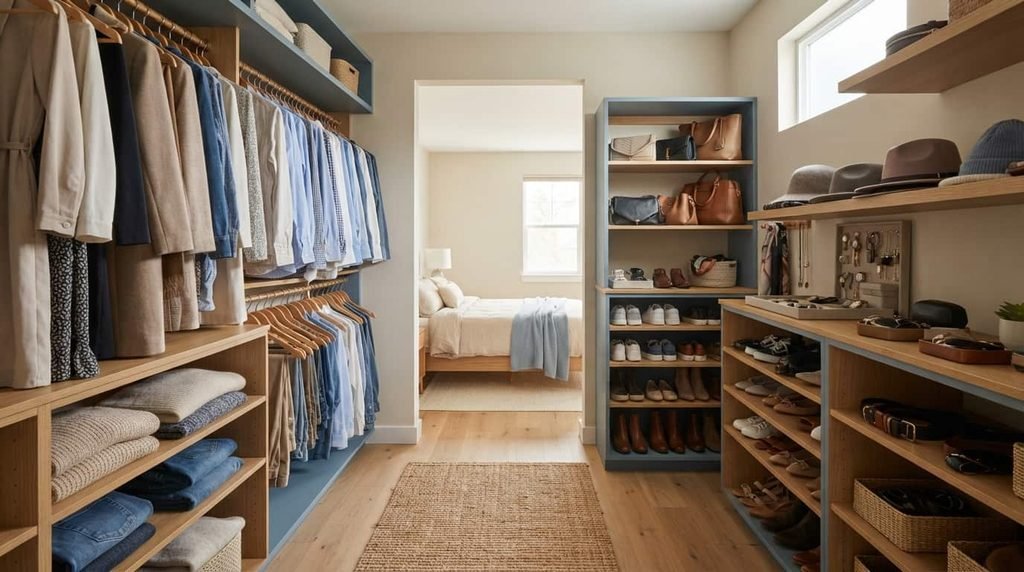
A crowded closet isn’t always a sign that you need more closet space.
Start by removing clothing that no longer fits, is damaged beyond use, or hasn’t been worn in a long time. Then arrange the remaining pieces in a way that makes sense for your routine.
You could organize clothes by:
- Type
- Season
- Frequency of use
- Occasion
Keep everyday clothing in the easiest-to-reach areas. Less frequently used or seasonal pieces can go higher up or into separate storage.
The goal isn’t to create a picture-perfect closet. It’s to make getting dressed and putting clothes away easier.
5. Take Advantage of Vertical Space
When floor space is limited, look at your walls.
Floating shelves, wall-mounted hooks, narrow shelving, and other vertical storage can help keep belongings off the floor.
Use vertical space for things such as:
- Handbags
- Hats
- Books
- Small baskets
- Accessories
- Lightweight decorative items
Don’t fill every empty wall, though. Leaving some open space can make a small bedroom feel less crowded.
6. Simplify Your Nightstand
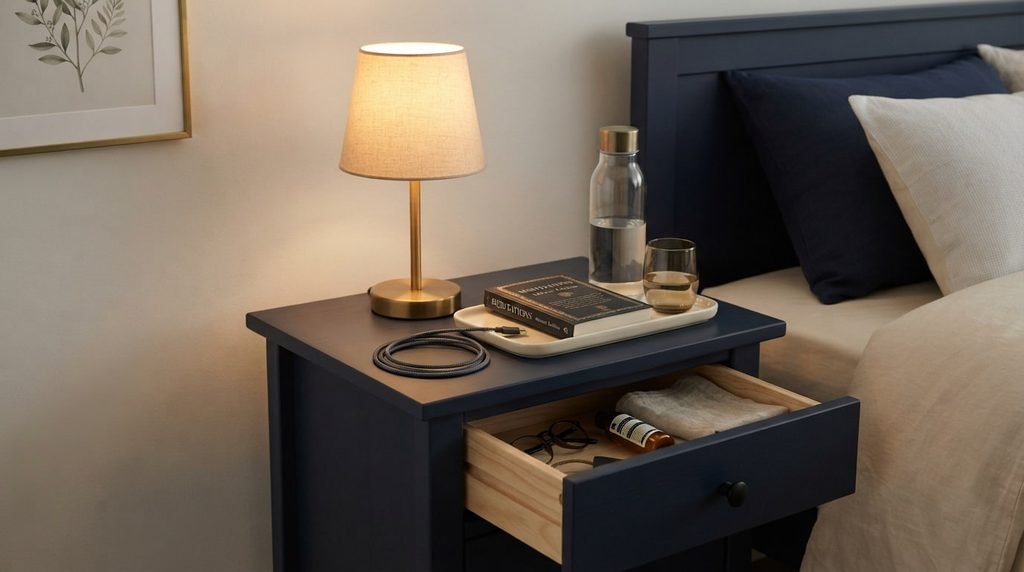
A nightstand can become a small collection point for everything you don’t know where to put.
Keep only the things you genuinely use beside the bed.
A practical setup might include:
- A lamp
- A book
- Your phone or charger
- A water bottle
- A small tray for glasses or jewelry
Use the drawer for less attractive essentials rather than filling the entire tabletop.
If your nightstand doesn’t have storage, a small basket or organizer nearby can keep frequently used items contained.
7. Use the Back of the Bedroom Door
The back of a door is easy to overlook, but it can provide useful storage in a small room.
Depending on the door and the items you want to store, hooks or an over-the-door organizer can hold:
- Scarves
- Belts
- Handbags
- Hats
- Lightweight accessories
This is particularly helpful when there isn’t enough floor space for another storage unit.
Keep the door organizer relatively light and make sure the chosen product is suitable for the door.
8. Store Clothes According to How Often You Wear Them
Not every piece of clothing needs to be equally accessible.
A useful system is:
Daily → weekly → occasional → seasonal
Keep your most frequently worn clothes in the easiest-to-reach areas of the closet or dresser.
Occasional and seasonal clothing can move to higher shelves, storage boxes, or under-bed containers.
This simple change can make a closet feel more functional without adding any new furniture.
9. Give Shoes One Home
Shoes scattered around the bedroom can make the entire floor look messy.
Choose one dedicated location for them, such as:
- A shoe rack
- Closet shelf
- Shoe organizer
- Storage bench
- A defined area near the closet
Keep frequently worn pairs accessible and move rarely worn shoes to less convenient storage.
The important part is consistency. If every pair has a predictable home, putting shoes away becomes much easier.
10. Divide Drawers for Smaller Items
Large drawers can quickly become difficult to use when small items are mixed together.
Drawer dividers or small containers can separate:
- Socks
- Underwear
- Belts
- Jewelry
- Hair accessories
- Small personal items
Don’t create an overly complicated system. You should be able to find something quickly and return it without having to reorganize the entire drawer.
11. Make Laundry Easy to Manage
If dirty clothes regularly end up on the floor, your laundry system may simply be inconvenient.
Place the hamper close to where you normally change clothes.
For a small bedroom, choose a hamper that fits the available space rather than one that becomes an obstacle.
You can also create a simple rule: clothes are either clean, ready to wash, or ready to put away. Avoid creating a permanent “maybe I’ll wear this again” pile on a chair.
12. Choose Furniture With Built-In Storage
When you genuinely need more storage, look for furniture that performs more than one job.
Useful examples include:
- Beds with drawers
- Storage ottomans
- Benches with hidden compartments
- Nightstands with drawers
- Desks with built-in storage
Before buying anything, measure the room and consider the walking space around it.
A storage unit isn’t helpful if it makes the bedroom difficult to move through.
13. Use Baskets for Categories That Need Quick Access
Baskets are useful for items that belong together but don’t need individual compartments.
You might use one for:
- Extra blankets
- Handbags
- Workout clothing
- Books
- Accessories
Choose a basket that matches the amount you actually own.
If the basket is constantly overflowing, don’t automatically buy a bigger one. It may be time to sort through the contents.
14. Keep Everyday Items Close to Where You Use Them
One of the simplest ways to make organization stick is to reduce the effort required to put something away.
Store items close to their point of use.
For example:
- Keep jewelry near your dressing area.
- Store books beside the bed.
- Keep hair accessories near your mirror.
- Place shoes near your closet.
- Keep the laundry hamper near your changing area.
If storage is convenient, you’re more likely to use it consistently.
15. Create a Five-Minute Bedroom Reset
You don’t need to spend an hour organizing your bedroom every day.
A quick reset can prevent small messes from becoming overwhelming.
Before bed or at the end of the day:
- Put clothing where it belongs.
- Return shoes to their storage area.
- Clear the nightstand.
- Put accessories away.
- Remove cups, wrappers, or items that belong elsewhere.
- Straighten the bed if needed.
Five minutes of maintenance is much easier than dealing with several days of accumulated clutter.
How to Organize a Small Bedroom
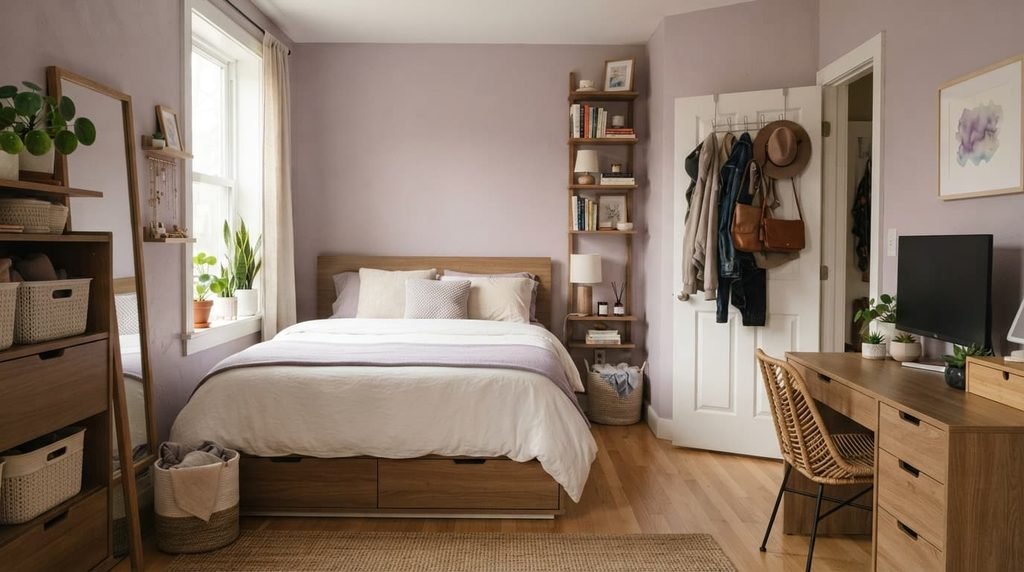
Small bedrooms need a slightly different approach because floor space is limited.
Start by looking for storage opportunities that don’t interfere with movement.
Use overlooked spaces
Consider:
- Under the bed
- Behind the door
- Above existing furniture
- Inside the closet
- On unused wall space
Keep the floor open
Try not to fill every available corner with furniture. A clear walking path can make a small bedroom feel more comfortable.
Choose multipurpose furniture
A storage bed or ottoman can provide useful capacity without requiring a separate storage unit.
Keep frequently used items accessible
Don’t place something you use every day in a difficult-to-reach container simply because it looks neat.
Good organization should make your routine easier, not create extra work.
A Simple Bedroom Decluttering Checklist
If you’re not sure where to begin, work through the room in this order:
1. Floor:
Pick up clothes, shoes, bags, trash, and anything that doesn’t belong.
2. Bed:
Remove unnecessary items and straighten the bedding.
3. Nightstand:
Clear anything you don’t use regularly.
4. Dresser:
Sort clothing and small items.
5. Closet:
Remove things you no longer wear and reorganize what remains.
6. Storage areas:
Check under the bed, shelves, drawers, and baskets.
7. Final reset:
Return everything to its designated home.
This approach prevents you from pulling the entire room apart at once.
Common Bedroom Organization Mistakes to Avoid
Buying storage before decluttering
More containers won’t help if you have too many belongings.
Making storage too complicated
A system that looks impressive but takes five steps to use probably won’t last.
Using the bedroom chair as a closet
If the same chair repeatedly becomes a pile of clothes, create a more convenient place for those clothes.
Filling every surface
Dressers, nightstands, shelves, and desks don’t need to be completely covered.
Ignoring vertical space
Walls can provide useful storage when floor space is limited.
Buying furniture without measuring
Always measure the available area, including clearance for doors, drawers, and walking paths.
How Do You Keep a Bedroom Organized?
The easiest way to maintain an organized bedroom is to make the system fit your normal habits.
Don’t create a storage arrangement that looks good but is inconvenient to use.
Instead:
- Put things away after using them.
- Keep daily essentials accessible.
- Return clothes to the closet or hamper.
- Review seasonal items periodically.
- Remove things that no longer belong.
- Do a five-minute reset regularly.
If an item repeatedly ends up in the same wrong place, don’t blame yourself first. Ask whether its assigned storage location is actually convenient.
Sometimes the best organization solution is simply moving something closer to where you naturally use it.
Frequently Asked Questions
What is the easiest way to organize a bedroom?
Start by decluttering, then assign the items you keep to specific storage areas. After that, improve the system using your closet, drawers, under-bed space, walls, and existing furniture.
How can I organize a small bedroom without buying furniture?
Declutter first, then use vertical space, under-bed storage, the back of the door, existing drawers, and closet space. Rearranging what you already own can sometimes create more usable space without adding furniture.
How do I organize a bedroom with little closet space?
Prioritize the clothing you wear most often and use other areas for seasonal or occasional pieces. Under-bed containers, narrow storage, hooks, and suitable vertical solutions can help supplement a small closet.
What should I store under my bed?
Under-bed storage works well for less frequently used belongings such as seasonal clothing, spare bedding, and occasionally used accessories. Use containers that fit the available clearance and label them if necessary.
How do I stop my bedroom from getting messy again?
Make storage convenient and establish a short reset routine. When something repeatedly gets left out, consider whether its current storage location is too inconvenient.
Final Thoughts
The most effective bedroom organization ideas aren’t necessarily the most complicated ones.
Start by removing what you don’t need. Then give everything you keep a logical home, use overlooked storage areas, and make everyday items easy to reach.
If you have a small bedroom, prioritize vertical space, under-bed storage, and furniture that serves more than one purpose. And once everything has a home, spend a few minutes maintaining the system rather than waiting until the clutter becomes overwhelming.
A well-organized bedroom doesn’t have to look perfect. It simply needs to make finding things, putting them away, and relaxing in the room easier.
nnRelated resources: Modern Home Decor: 15 Brilliant Ideas for a Fresh Look · DIY Home Decor: 15 Ideas That Look Good Without a Big Budget
Related resource: Home
Related resource: Upgrading Tips Decoradhouse: 17 Practical Ways to Improve Your Home
Related resource: Dining Rooms Design: 15 Ideas for a Beautiful, Functional Space