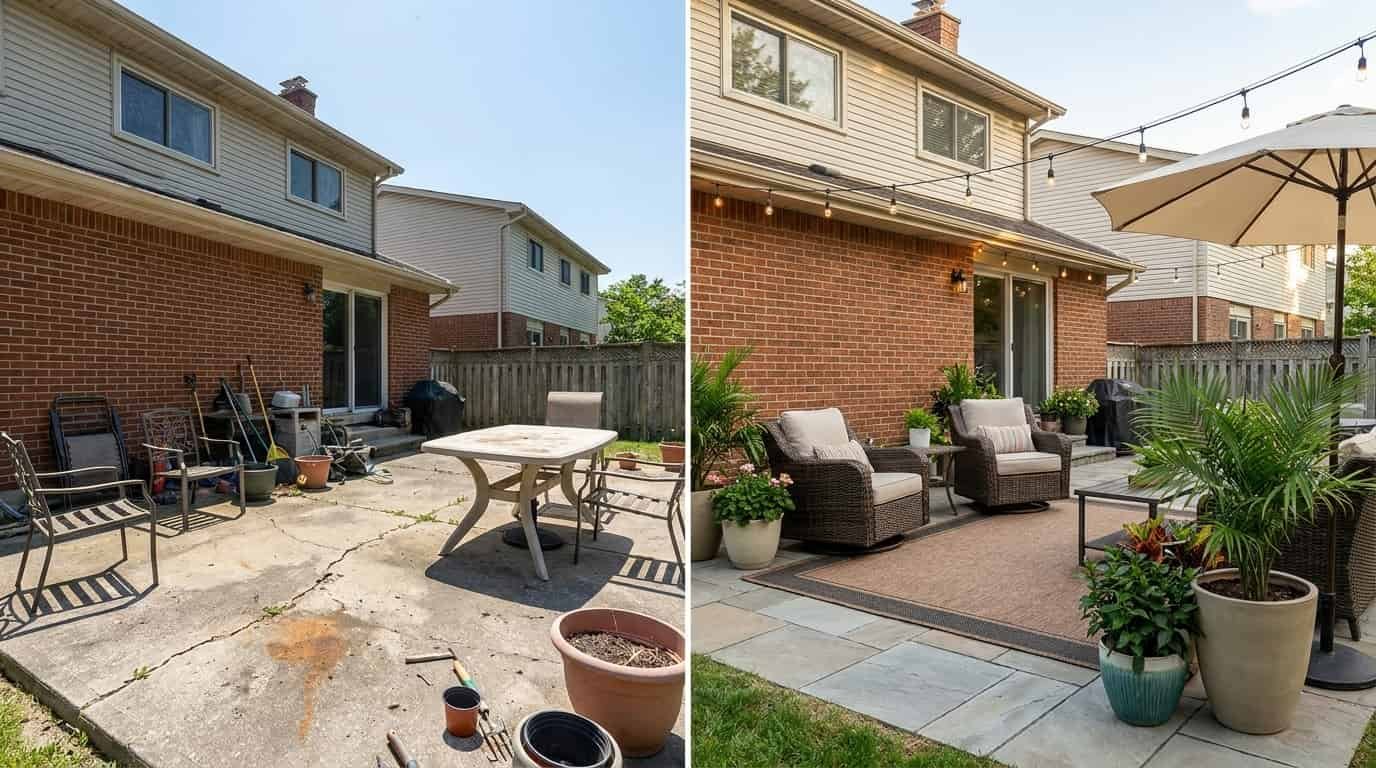
A tired patio can make your outdoor space feel dull, cramped, and rarely used. Old furniture, stained floors, harsh sunlight, and poor lighting can quickly take away its charm. If you’re wondering how to renovate my patio decoradhouse, you don’t need a complete rebuild to create a better space. This guide walks you through practical ways to assess your patio, fix weak areas, improve the layout, choose durable furniture, add shade, and create a warmer atmosphere. You’ll also learn how to control your budget and avoid costly mistakes. By the end, you’ll have a simple plan for turning an overlooked patio into a comfortable outdoor retreat you’ll genuinely enjoy using.
1. Assess Your Patio Before Spending Money
Before buying anything, take a slow look at the patio. A successful patio renovation starts with understanding what you already have. Check the surface for cracks, loose pavers, stains, slippery spots, and areas where rainwater collects. Inspect your furniture too. A worn chair may need only cleaning, paint, or new hardware rather than replacement. Also notice how sunlight changes throughout the day. A corner that feels pleasant in the morning may become uncomfortable by mid-afternoon.
Measurements matter just as much as appearance. Measure the patio’s length and width, then measure any furniture you plan to keep. Leave enough space around tables and chairs for comfortable movement. If you’re unsure about the layout, use painter’s tape to mark furniture footprints on the floor. This simple trick lets you test the arrangement before spending money. It also helps prevent a common problem: buying attractive pieces that make the patio difficult to walk through.
| What to inspect | Why it matters |
|---|---|
| Flooring | Reveals safety and repair concerns |
| Drainage | Helps prevent standing water |
| Sun exposure | Guides shade and plant choices |
| Furniture size | Protects walking space |
| Electrical outlets | Helps plan outdoor lighting |
| Storage | Keeps cushions and accessories protected |
A useful rule is to repair before decorating. New cushions may hide an ugly chair, but they won’t fix damaged flooring or poor drainage. Deal with those problems first. Your later decorating decisions will then be easier and more cost-effective.
2. Decide How You Want to Use Your Patio
A patio works best when its design matches the way you actually live. Think about your main reason for using the space. You might want somewhere quiet for morning coffee, a dining area for summer meals, or a comfortable setting for visiting friends. Families may need flexible seating that can handle several activities. Once you define the purpose, furniture and decor become much easier to choose.
For example, a 10-by-10-foot patio may not have room for a full dining set, sofa, grill, fire pit, and several loungers. Trying to squeeze everything in can make the area feel smaller. Instead, select one main function and perhaps one secondary use. On a larger patio, separate areas can work beautifully. A dining zone can sit near the kitchen while a lounge zone occupies the quieter side.
Create Patio Zones That Feel Natural
Think of each zone as a room without walls. A conversation area might use two lounge chairs and a small table. A dining zone can sit closer to the grill or back door. An outdoor rug can visually connect furniture without requiring a permanent divider.
One beginner mistake is trying to copy a large outdoor showroom in a much smaller space. Instead, use the furniture you need most. This keeps your outdoor living space open and makes everyday movement far easier.
3. Clean, Repair, and Refresh What You Already Have
Cleaning can create a surprisingly large transformation. Dirt often hides the original color and texture of concrete, pavers, wood, and furniture. Begin by removing clutter and sweeping the entire area. Then clean each surface according to its material. If you use a pressure washer, use appropriate pressure and technique. Excessive force can damage wood, paint, grout, or older masonry.
Once everything is clean, inspect the patio again. A faded wooden table might look completely different after cleaning and refinishing. A metal chair may need sanding and suitable exterior paint. Outdoor cushions can sometimes be refreshed rather than replaced. However, don’t keep an item that has serious structural damage. Saving money isn’t worth creating a safety problem.
A smart patio makeover often starts with discovering what you already own.
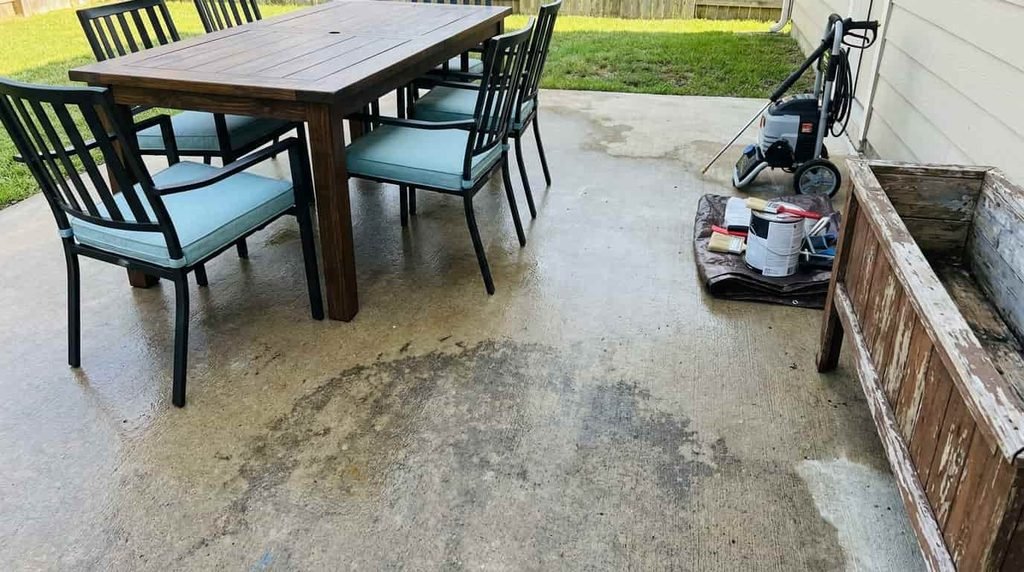
The common mistake is shopping before cleaning. Give existing pieces a fair chance first. You may find that your money is better spent on improvements you cannot create with cleaning alone, such as better shade, lighting, or seating.
4. Upgrade Patio Flooring Without Overspending
Flooring creates the visual base of the patio. Fortunately, a complete replacement isn’t always necessary. If the existing surface is structurally sound, cleaning, staining, or an appropriate outdoor coating may provide a major improvement. Pavers offer another useful option because individual damaged pieces can often be replaced. An outdoor rug can also hide a tired surface while adding comfort and color.
Your local climate should influence the decision. A rainy area needs effective drainage and suitable materials. Homes in regions with freezing winters must consider moisture and freeze-thaw conditions. Hot climates bring different concerns, including surface heat and strong UV exposure. In every case, think beyond appearance.
| Flooring option | Suitable for | Key consideration |
|---|---|---|
| Concrete | Budget updates | May benefit from stain or resurfacing |
| Pavers | Classic patio designs | Can shift if the base is poor |
| Natural stone | Higher-end spaces | Usually costs more |
| Porcelain tile | Modern outdoor areas | Needs correct outdoor installation |
| Composite decking | Deck-style layouts | Higher upfront cost |
| Outdoor rug | Quick cosmetic changes | Must handle outdoor exposure |
Don’t select flooring simply because it looks impressive in a photo. Consider maintenance, drainage, slip resistance, installation requirements, and durability. A practical surface will serve you better than a beautiful material that doesn’t suit your conditions.
5. Choose Comfortable, Weather-Ready Furniture
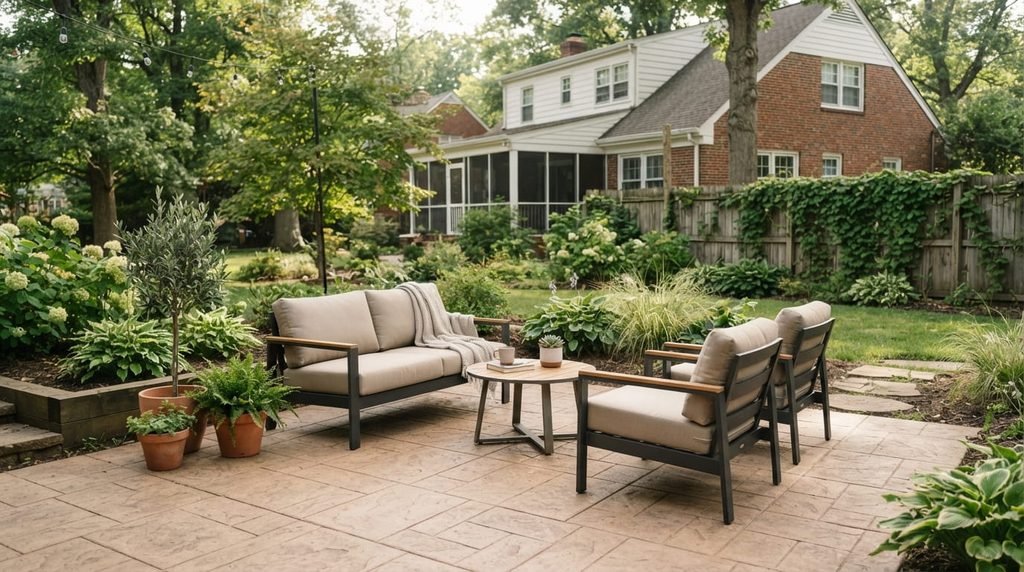
Once the patio foundation is ready, focus on seating. Good outdoor furniture should feel comfortable while handling sunlight, moisture, wind, and changing temperatures. Aluminum is useful when you want relatively lightweight furniture with good corrosion resistance. Teak offers a warm natural appearance and can age well when maintained correctly. Quality synthetic materials can suit homeowners who want less demanding care.
Comfort is just as important as durability. If possible, sit in a chair before purchasing it. Pay attention to seat depth, back support, arm height, and cushion firmness. For cushions, look for outdoor-friendly fabrics that can handle UV exposure and moisture. In windy locations, lightweight pieces may also require secure positioning.
For more home and outdoor design inspiration, you can explore Home Focuse while planning your project.
A frequent mistake is choosing furniture based only on appearance. A stylish chair that becomes uncomfortable after ten minutes won’t encourage you to use the patio. Instead, consider comfort, durability, maintenance, and style together. The best choice is the one that works well in your real daily routine.
6. Add Shade, Privacy, and Comfort
Strong afternoon sun can determine whether you actually use the patio. If the space becomes painfully hot, decorative changes won’t solve the core problem. A patio umbrella provides flexible shade and works particularly well for compact seating areas. Shade sails can cover broader areas with a clean modern appearance. Pergolas create a more permanent architectural feature, while retractable awnings offer adjustable coverage.
Privacy can make the area feel equally comfortable. Outdoor curtains can soften a covered patio and reduce views from nearby homes. Trellises can support climbing plants while creating a natural screen. Tall planters can also provide privacy without requiring a permanent wall. Think about wind, maintenance, and the amount of privacy you actually need before choosing one solution.
| Shade solution | Works well for | Main benefit |
|---|---|---|
| Umbrella | Small seating areas | Flexible and movable |
| Shade sail | Medium or large spaces | Broad coverage |
| Pergola | Permanent designs | Adds structure and character |
| Retractable awning | Flexible protection | Opens and closes when needed |
| Outdoor curtains | Covered patios | Adds softness and privacy |
Before installing a permanent structure, check local building requirements and HOA rules if they apply to your home. Wind exposure matters too. A poorly anchored shade system can become a serious hazard during strong weather.
7. Transform the Atmosphere With Lighting and Greenery
Lighting can completely change a patio after sunset. Instead of depending on one harsh fixture, combine several types of light. Ambient lighting provides general brightness. Task lighting helps with activities such as cooking and dining. Accent lighting draws attention to plants, walls, or architectural details.
String lights, lanterns, solar fixtures, and outdoor-rated LED lights can all work well. However, outdoor electrical safety should never become an afterthought. Use equipment designed for outdoor conditions and follow local electrical requirements. If the project involves wiring or new electrical connections, qualified professional help may be appropriate.
Plants add softness and life during the day. Choose them according to sunlight, water requirements, container size, and local climate. Low-maintenance varieties can be a better choice if you don’t want daily plant care. Containers also provide flexibility because you can move them when the layout changes.
Use Three Layers of Patio Lighting
Think of outdoor lighting as you would lighting inside a room. The first layer provides general illumination. The second supports specific activities. The third creates visual interest. Combining all three can make the patio feel warm without turning it into a brightly lit parking area.
A common mistake is spreading too many small decorations across every surface. Instead, repeat a few strong elements. Three coordinated planters, for example, can create more impact than a collection of unrelated pots.
8. Finish With Weather-Resistant Decor
After the practical work is complete, add personality. An outdoor rug can define a seating area while making the floor feel softer. Cushions and pillows can introduce color without requiring new furniture. Planters, lanterns, outdoor artwork, and small decorative pieces can then complete the look.
Choose outdoor-rated products whenever possible. Indoor fabrics can fade quickly under direct sunlight. Some materials may warp, crack, rust, or develop mildew when exposed to moisture. Always check the product’s intended use before leaving it outside.
A simple design method is to choose one main accent color and repeat it in several locations. For example, a muted blue could appear in cushions, planters, and one decorative piece. This creates visual connection without making every item identical.
9. Make a Small Patio Feel Bigger
Small patios reward careful planning. Oversized furniture can consume the floor quickly, so select pieces that match the available space. Round tables can sometimes improve movement because they remove sharp corners. Foldable chairs and compact tables are useful when you need the patio to serve different purposes.
Vertical space can also make a major difference. Wall-mounted planters, hanging baskets, trellises, and vertical gardens move decoration upward rather than across the floor. Narrow planters can add greenery while keeping pathways open.
Imagine an 8-by-10-foot patio with two compact lounge chairs, a small round table, one outdoor rug, and a narrow planter. That setup may feel much larger than a patio filled with bulky furniture. The secret isn’t adding more. It’s giving each item a clear purpose.
10. Renovate Your Patio on a Realistic Budget
A clear budget keeps an exciting project under control. Start with structural and safety needs before spending money on accessories. After that, divide your remaining budget between comfort, shade, lighting, and decorative improvements. You don’t need to complete everything in one weekend.
| Approximate budget | Good priorities |
|---|---|
| Under $250 | Cleaning, paint, plants, solar lighting, small decor |
| $250–$750 | Seating, cushions, rug, umbrella, larger planters |
| $750–$2,000+ | Flooring, premium furniture, pergola, major improvements |
When funds are limited, save money on accessories and decorative items. Spend more carefully on structural repairs, durable furniture, shade systems, and flooring. A cheap product that needs replacement every season may cost more over time than a reliable option.
Phased renovation can also reduce financial pressure. Complete cleaning and repairs first. Arrange the furniture next. Add shade and lighting after you understand how the space behaves. Decorative details can come last. This prevents impulse purchases and gives you time to discover what the patio really needs.
11. Avoid Common Patio Renovation Mistakes
Most disappointing patio projects don’t fail because of one huge decision. They usually suffer from several small mistakes. Homeowners may buy furniture without measuring, ignore drainage, block walkways, use indoor fabrics outside, or select plants without checking their light requirements. Others spend most of their budget on furniture and then discover they cannot afford proper shade or lighting.
The solution is to test your choices before making them permanent. Sit in every chair. Walk around the table. Open the umbrella completely. Turn the lights on after dark. Check where cushions will be stored. These simple tests can expose problems while they’re still easy to fix.
| Common mistake | Better approach |
|---|---|
| Oversized furniture | Measure before buying |
| Poor drainage | Watch where rainwater collects |
| Indoor textiles | Choose outdoor-rated fabrics |
| Too much furniture | Keep clear walking paths |
| No storage plan | Create a dry storage area |
| Random plant choices | Match plants to sunlight and climate |
For permanent structures, electrical work, major surface changes, or other substantial modifications, check local rules before beginning. A beautiful renovation should also be safe and appropriate for your property.
12. Create a Weekend Patio Renovation Plan
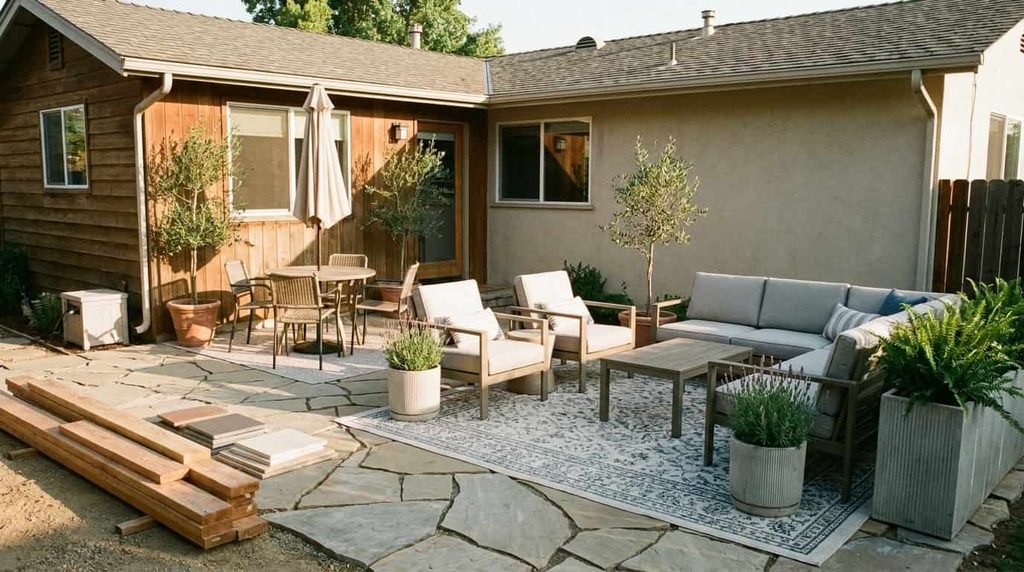
A large project becomes easier when you break it into stages. On the first morning, measure the space, remove clutter, and identify repairs. Later, clean the floor and furniture. On the second day, arrange the furniture and test the walking paths. Then add the rug, plants, lighting, and decorative details.
This method also reduces unnecessary spending. Once everything is clean and arranged, you can see what’s actually missing. Perhaps you thought you needed another chair when the real issue was afternoon sun. Maybe the patio needs better lighting rather than more decoration. Testing first helps you spend with purpose.
The 80/20 approach is useful here. Concentrate on the changes that create the largest practical improvement: a clean surface, a smart layout, comfortable seating, shade, lighting, and greenery. Small accessories can wait until the foundation feels right.
Frequently Asked Questions About How to Renovate My Patio Decoradhouse
How can I renovate my patio cheaply?
Start with cleaning, rearranging, repairing, and repainting what you already own. Then add affordable plants, lighting, cushions, or an outdoor rug.
What should I renovate first on a patio?
Fix drainage, safety, structural, and flooring problems before focusing on decoration. Next, improve the layout, seating, shade, and lighting.
How do I make an old patio look new?
Deep-clean the area, refresh usable furniture, improve the floor, and add coordinated textiles. Greenery and layered lighting can complete the transformation.
What is the cheapest way to upgrade a patio?
Cleaning and rearranging can create a major change at little cost. Plants, solar lights, cushions, and outdoor rugs can add further impact.
How do I make a small patio look expensive?
Choose correctly sized furniture, limit clutter, repeat a cohesive color, and use layered lighting. A few well-chosen pieces often look better than many cheap accessories.
Final Thoughts: Create a Patio You’ll Actually Use
Knowing how to renovate my patio decoradhouse is less about buying the newest outdoor accessories and more about making thoughtful choices. Start by assessing the space. Fix problems before covering them with decor. Then create a useful layout, choose comfortable furniture, manage sun and privacy, and add lighting and greenery.
If you’re planning a budget patio renovation, don’t feel pressured to complete everything immediately. Pick the improvement that will make the biggest difference and start there. A clean floor, better seating, useful shade, and warm lighting can transform the experience before you add a single decorative extra.
Your next step is simple: measure your patio and write down the three changes that would improve it most. Start with those priorities. A successful outdoor patio makeover doesn’t have to happen overnight. It simply needs a smart plan and a little patience.