The right accent wall can give a bedroom a completely different feel without requiring a full makeover. A carefully chosen paint color, wallpaper pattern, wood treatment, or decorative finish can turn an ordinary wall into the room’s main focal point.
The wall behind the bed is often the obvious choice, but it isn’t your only option. A recessed nook, dressing area, or another visually prominent wall can work just as well.
The key is choosing a treatment that fits your bedroom’s size, natural light, furniture, and existing color palette. These bedroom accent wall ideas cover everything from simple painted walls to textured finishes and renter-friendly updates.
10 Bedroom Accent Wall Ideas for a Stylish Update
1. Paint the Wall Behind the Bed
A painted feature wall is one of the easiest ways to introduce color and create a focal point.
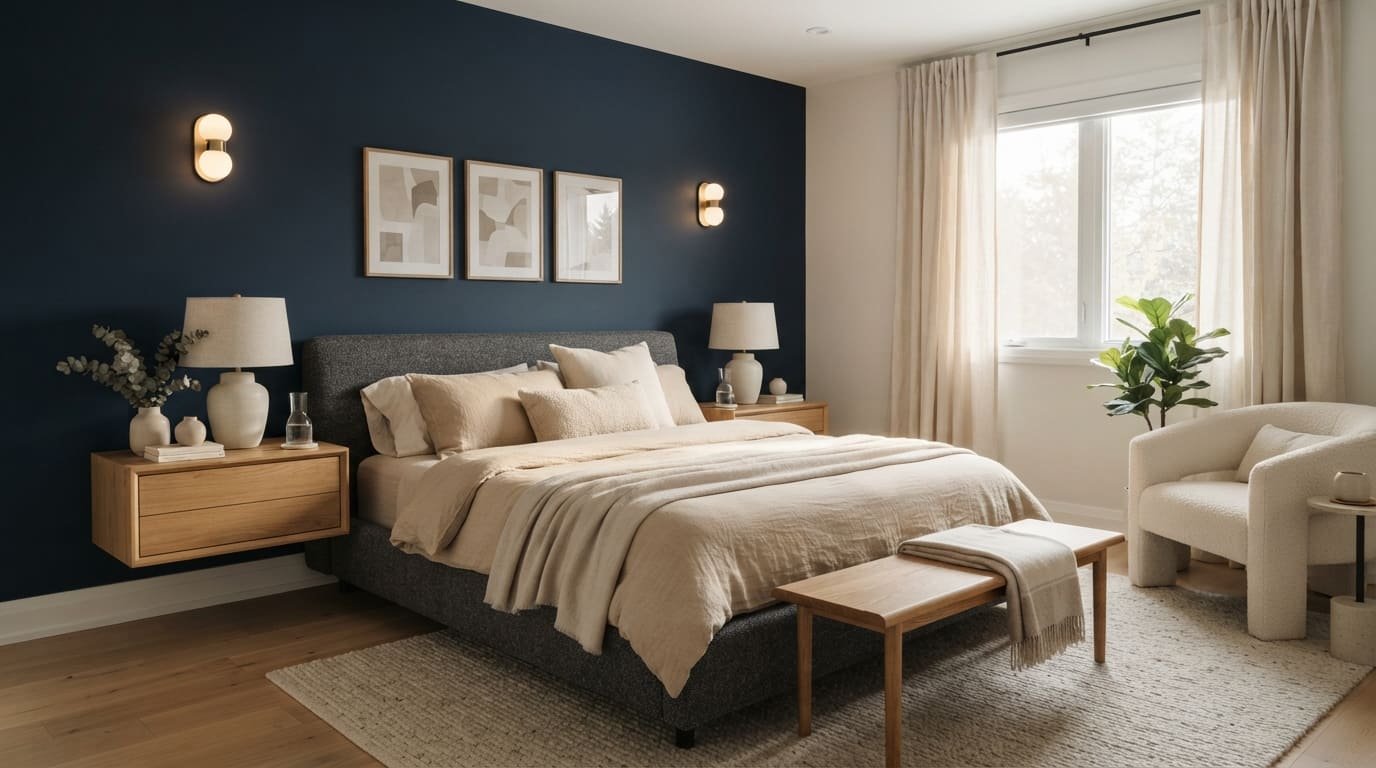
For a calm bedroom, consider muted green, warm beige, dusty blue, soft taupe, or a similar understated shade. If you want more contrast, deep navy, charcoal, or a rich earthy tone can create a dramatic backdrop.
The wall behind the bed works particularly well because the headboard naturally anchors the design. Keep the surrounding walls and larger furniture pieces relatively simple so the color has room to stand out.
Best for: Budget-friendly bedroom updates and simple makeovers.
2. Create a Warm Wood Accent Wall
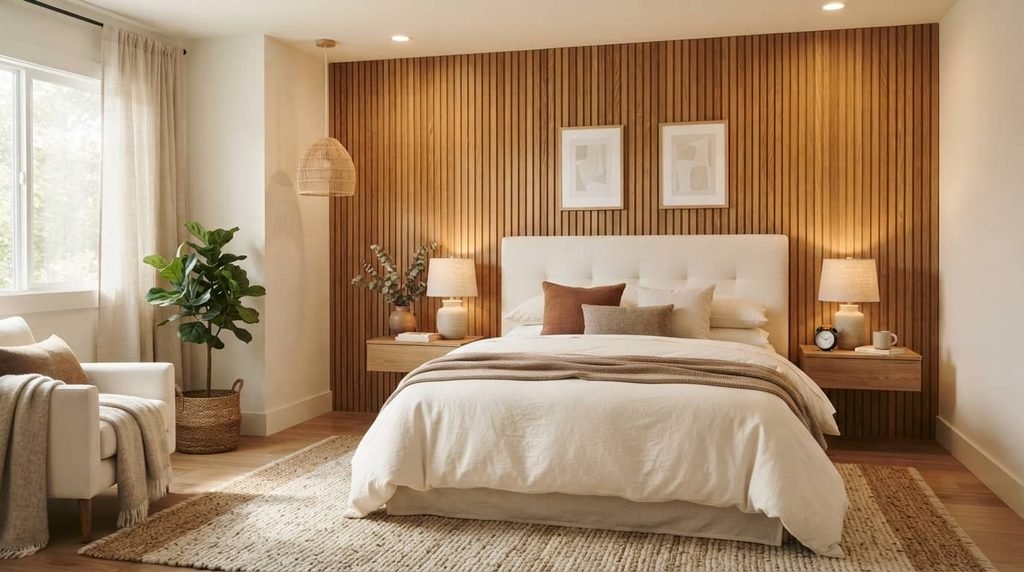
Wood can add warmth and texture that paint alone cannot provide.
Vertical slats can emphasize ceiling height, while rectangular or grid-style panels can give the wall a more structured appearance. Natural wood tones pair especially well with cream bedding, neutral walls, woven accessories, and simple furniture.
If you prefer a painted finish, paneling can also be painted in a single color so the design comes from the shadows and texture rather than a strong color contrast.
Before installing panels, check the wall condition and the manufacturer’s installation instructions.
Best for: Warm, modern, Scandinavian, rustic, and transitional bedrooms.
3. Add Pattern With Wallpaper
Wallpaper is a practical choice when you want your accent wall to have more visual detail.
Botanical prints, subtle geometric designs, textured patterns, and larger-scale motifs can all work in bedrooms. A wallpapered wall behind the bed can also function like an oversized piece of artwork.
If you choose a bold pattern, keep the bedding and other decorative elements relatively quiet. If your bedroom already has several patterns, a textured or small-scale wallpaper may be easier to coordinate.
Order a sample first and view it in your actual bedroom before covering the entire wall.
Best for: Bedrooms that need pattern, personality, or a stronger focal point.
4. Go Moody With a Dark Accent Wall
Dark colors can create a cozy and intimate atmosphere when used thoughtfully.
Deep blue, charcoal, forest green, and other muted dark shades can look especially effective behind a light-colored bed or headboard.
To prevent the room from feeling too heavy, balance the darker wall with lighter bedding, natural textures, mirrors, or warm lighting.
A dark accent wall can work in a small bedroom too, but test the color first. The amount of natural light can dramatically change how dark the finished wall appears.
Best for: Cozy, sophisticated, modern, and dramatic bedrooms.
5. Use Decorative Wall Molding
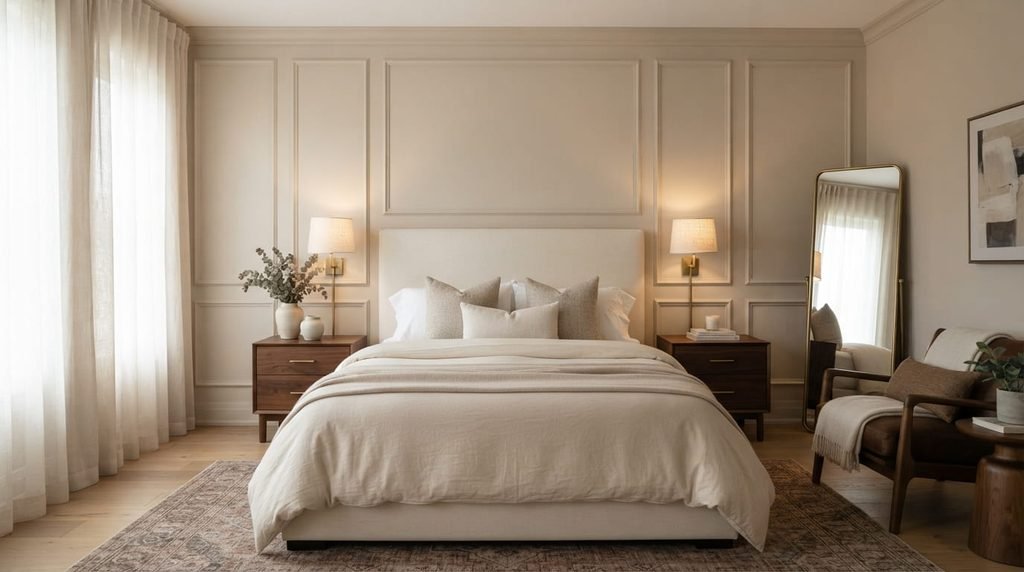
Wall molding can give a plain bedroom wall architectural interest without introducing a strong pattern or color.
Simple rectangular or square panels can frame the bed and create a more finished appearance. Painting the molding and wall the same color creates a subtle, sophisticated effect, while contrasting colors make the pattern more noticeable.
Measure carefully before installing the molding. Consider the position of the headboard, bedside tables, electrical outlets, switches, and wall lights so the design looks balanced.
Best for: Traditional, transitional, contemporary, and elegant bedrooms.
6. Paint a Large Arch or Geometric Shape
You don’t have to paint the entire wall to create an accent.
A large arch, circle, rectangle, or other simple painted shape can visually frame the bed while using less paint than a full feature wall.
Choose a shade that connects with an existing element in the room, such as the bedding, rug, curtains, or artwork.
This approach can be especially useful in a rental or small bedroom where you want a noticeable design feature without making the whole room feel busy.
Best for: Small bedrooms, renters, and minimalist spaces.
7. Try a Subtle Textured Finish
Texture can add depth even when you prefer neutral colors.
A plaster-inspired finish, limewash-style appearance, or other decorative wall treatment can give the bedroom a softer, more layered look.
This works particularly well when you want the wall to feel interesting without relying on a strong pattern.
Keep the rest of the room relatively restrained so the texture remains noticeable rather than competing with multiple decorative elements.
Best for: Minimalist, earthy, organic, and contemporary bedrooms.
8. Turn the Wall Into a Gallery
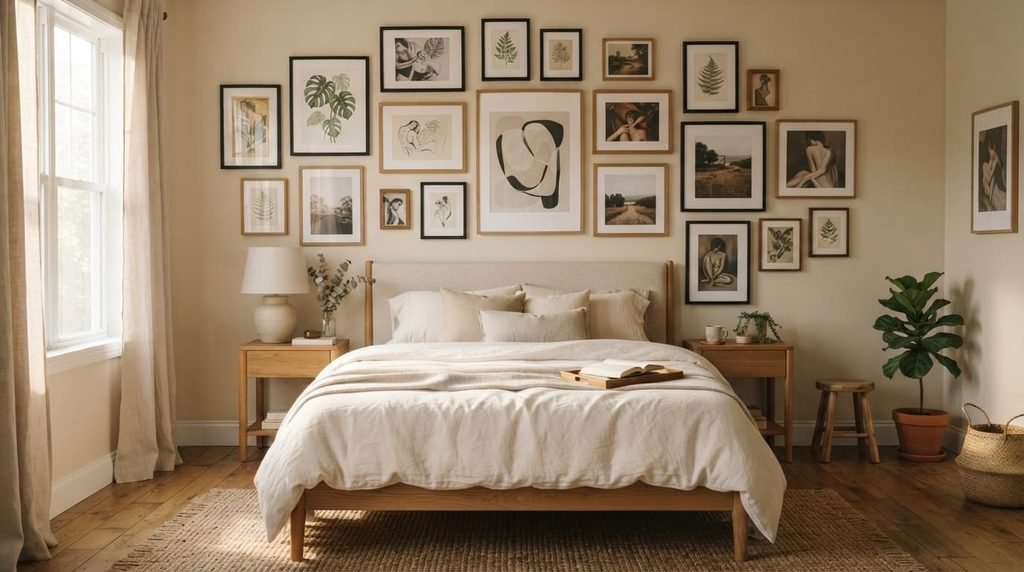
Artwork can become an accent wall without any permanent paint or construction work.
Create a gallery arrangement above the bed or on another prominent wall using framed artwork, photographs, illustrations, or prints.
For a cohesive arrangement, connect the pieces through a common color palette, frame finish, subject, or visual style. You can use identical frames for a cleaner look or mix frame styles for a more collected appearance.
Before hanging everything, arrange the pieces on the floor to test the spacing and overall composition.
Best for: Renters and bedrooms where artwork is the main decorative feature.
9. Combine Two Colors
A two-tone accent wall can create visual structure without wallpaper or complicated installation.
You could divide the wall horizontally, create a large color block, or use a deeper shade around the bed with a lighter tone above it.
Think about the proportions of the room before choosing the direction of the color division. A horizontal treatment can emphasize width, while vertical sections can draw the eye upward.
Use painter’s tape and measure carefully where the colors meet for a clean result.
Best for: Modern, playful, contemporary, and creative bedrooms.
10. Highlight a Bedroom Nook
Sometimes the best accent wall isn’t behind the bed.
If your bedroom has a recessed nook, reading corner, dressing area, or built-in shelving, use paint, wallpaper, paneling, or artwork to distinguish that section from the rest of the room.
This can give an underused space a clearer purpose while adding another layer of visual interest.
Choose a color or material that relates to the main bedroom palette so the nook feels like part of the overall design.
Best for: Bedrooms with architectural features or unused corners.
How to Choose the Right Bedroom Accent Wall
Before choosing paint or wallpaper, decide which wall deserves the most attention.
Start With the Room’s Natural Focal Point
The wall behind the bed is usually a natural focal point because the bed is the largest piece of furniture in most bedrooms.
However, it may not be the best choice if that wall already contains several doors, windows, built-ins, or architectural features.
Look at the room from the doorway and identify the wall that naturally catches your eye.
Consider Natural Light
Natural light affects how both color and texture appear.
A warm beige may look much cooler in one room than another, while a dark navy can appear almost black in a poorly lit space.
Test paint samples on the actual wall and view them at different times of day before making your final choice.
Work Around the Headboard
The accent wall and headboard should complement one another.
A simple upholstered headboard can work with a stronger wall pattern, while an elaborate wooden headboard may look better against a quieter painted or textured backdrop.
Avoid placing a highly detailed treatment behind furniture that already has a complicated silhouette.
Match the Existing Color Palette
Your accent wall doesn’t need to match everything in the room. It simply needs to relate to the existing colors.
Look at:
- Bedding
- Curtains
- Rugs
- Headboard
- Flooring
- Furniture
- Artwork
- Decorative accessories
Choose one existing color as inspiration or introduce a complementary shade that balances the current palette.
Bedroom Accent Wall Ideas for Small Rooms
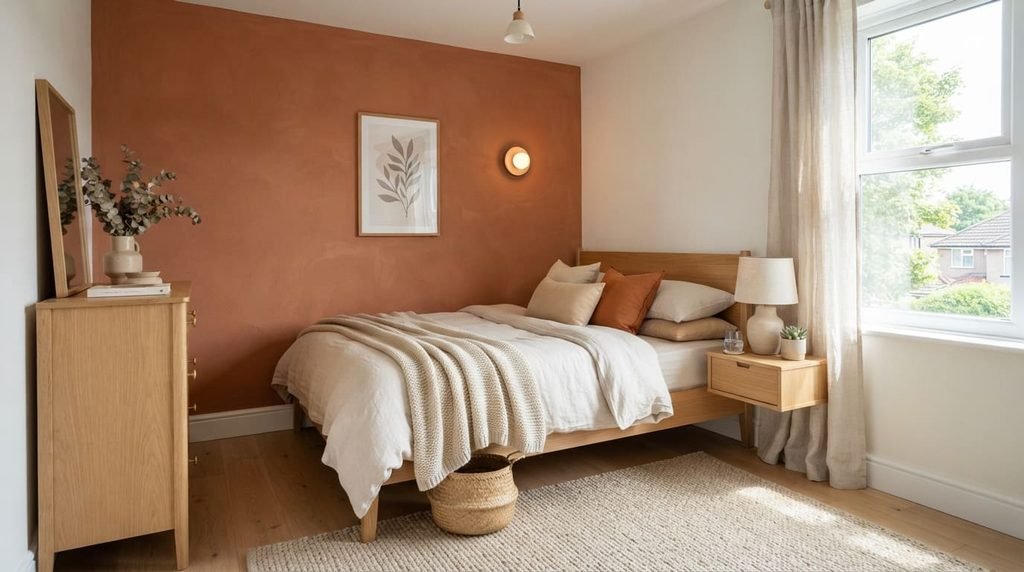
Small bedrooms can absolutely have feature walls. The key is controlling visual scale.
A simple painted wall is often easier to manage than an oversized, highly detailed pattern. If you prefer wallpaper, look for a design whose scale suits the size of the wall.
You can also use a painted arch or other partial treatment to create a focal point without visually covering the entire room.
Light-reflective finishes, pale colors, and simple patterns can help maintain an open feeling, while a carefully chosen dark accent can add depth and contrast when balanced with lighter elements.
Best Accent Wall Colors for Bedrooms
There is no universal best color. The right shade depends on the atmosphere you want and how much light the room receives.
Soft Green
Muted green works well with natural wood, cream, beige, and other earthy tones. It can add color while maintaining a relaxed appearance.
Deep Blue
Navy and similar blue shades create contrast and can provide a strong backdrop for white or neutral bedding.
Warm Neutrals
Taupe, beige, warm gray, and earthy brown are useful when you want depth without introducing a bold color.
Dusty Pink
A muted pink can bring warmth and personality while remaining softer than a highly saturated shade.
Charcoal
Charcoal creates a dramatic backdrop and can make lighter furniture and bedding stand out. Warm lighting can help balance the darker color.
Paint, Wallpaper, or Paneling: Which Should You Choose?
| Wall treatment | Best for | Main advantage |
|---|---|---|
| Paint | Simple updates | Affordable and easy to change |
| Wallpaper | Pattern lovers | Adds strong visual detail |
| Wood paneling | Warm interiors | Adds texture and dimension |
| Wall molding | Classic designs | Creates architectural detail |
| Artwork | Renters | Can be changed without repainting |
| Painted shapes | Small updates | Creates a focal point with less coverage |
| Textured finish | Neutral interiors | Adds depth without a busy pattern |
Think about more than appearance. Installation effort, budget, maintenance, and how permanent you want the change to be should all influence your decision.
Common Bedroom Accent Wall Mistakes to Avoid
Choosing a Color Without Testing It
A color can look completely different under natural and artificial lighting. Always test it in the room before committing.
Making Everything a Focal Point
If the accent wall, bedding, rug, artwork, lighting, and furniture are all competing for attention, the room can feel cluttered.
Choose one primary focal point and let the other elements support it.
Ignoring the Furniture Layout
A beautiful wall treatment can lose its impact if a large wardrobe, window, or other feature hides most of it.
Consider the room’s layout before choosing the wall.
Using a Pattern That Is Too Large
A large-scale pattern can dominate a small bedroom. Check the pattern against the actual wall rather than judging it from a small sample alone.
Forgetting Practical Features
Outlets, switches, wall lights, doors, windows, and built-in storage can affect the final design.
Measure the wall and consider these features before installation.
Choosing a Trend Instead of a Style
A popular design isn’t automatically the right design for your bedroom. Choose a treatment that works with the room and that you are comfortable living with.
How to Make an Accent Wall Feel Connected to the Room
An accent wall looks most intentional when at least a few elements elsewhere in the bedroom relate to it.
For example, if you choose a muted green wall, you might repeat that shade in a cushion, artwork, throw, or small decorative accessory.
If you install wood paneling, natural wood furniture or woven textures can create a similar connection.
The goal isn’t to repeat the exact color or material everywhere. A few subtle references are usually enough.
Lighting can also change the effect dramatically. Bedside lamps, wall sconces, and warm ambient lighting can emphasize texture and make the feature wall feel more inviting in the evening.
Frequently Asked Questions
What is the best wall for a bedroom accent wall?
The wall behind the bed is often the easiest choice because it naturally becomes the room’s focal point. However, a recessed nook, reading area, or another prominent wall can work depending on the bedroom layout.
What is the easiest bedroom accent wall idea?
Painting one wall is generally the simplest option. It requires fewer materials and less installation work than wallpaper, paneling, or decorative molding.
Should a bedroom accent wall be darker than the other walls?
No. An accent wall can be darker, lighter, or simply different in color, texture, or pattern. A darker shade creates stronger contrast, while a subtle color difference creates a quieter effect.
Can I have an accent wall in a small bedroom?
Yes. Choose the design according to the room’s scale. A simple color, subtle texture, painted shape, or appropriately sized wallpaper pattern can create a focal point without overwhelming the space.
Should the accent wall match the headboard?
It doesn’t need to match exactly. The wall and headboard should complement each other in color, texture, and visual weight. A simple headboard gives you more freedom to use a stronger wall treatment.
Are accent walls suitable for rental bedrooms?
Yes. Paint may require permission from the landlord, but removable wallpaper, framed artwork, textiles, and other temporary treatments can provide alternatives depending on the rental agreement.
Final Thoughts
The best bedroom accent wall ideas are the ones that make the room feel more intentional without making the accent wall compete with everything else.
Start by identifying the room’s natural focal point, then consider the available light, furniture layout, headboard, and existing colors. From there, choose the treatment that suits your style and the amount of work you want to take on.
A simple painted wall may be all you need, while wood paneling, wallpaper, molding, artwork, or a textured finish can create a more distinctive feature. Whatever you choose, keep the rest of the bedroom connected through color, texture, and scale.
A successful accent wall doesn’t have to dominate the room. It simply needs to give the bedroom a clear focal point and make the overall design feel more complete.
Related resources: 9 Smart Tips for the Best Interior Design in Home · Home Focus Curtains: 9 Smart Tips for Choosing the Right Style