
How to Close Blinds
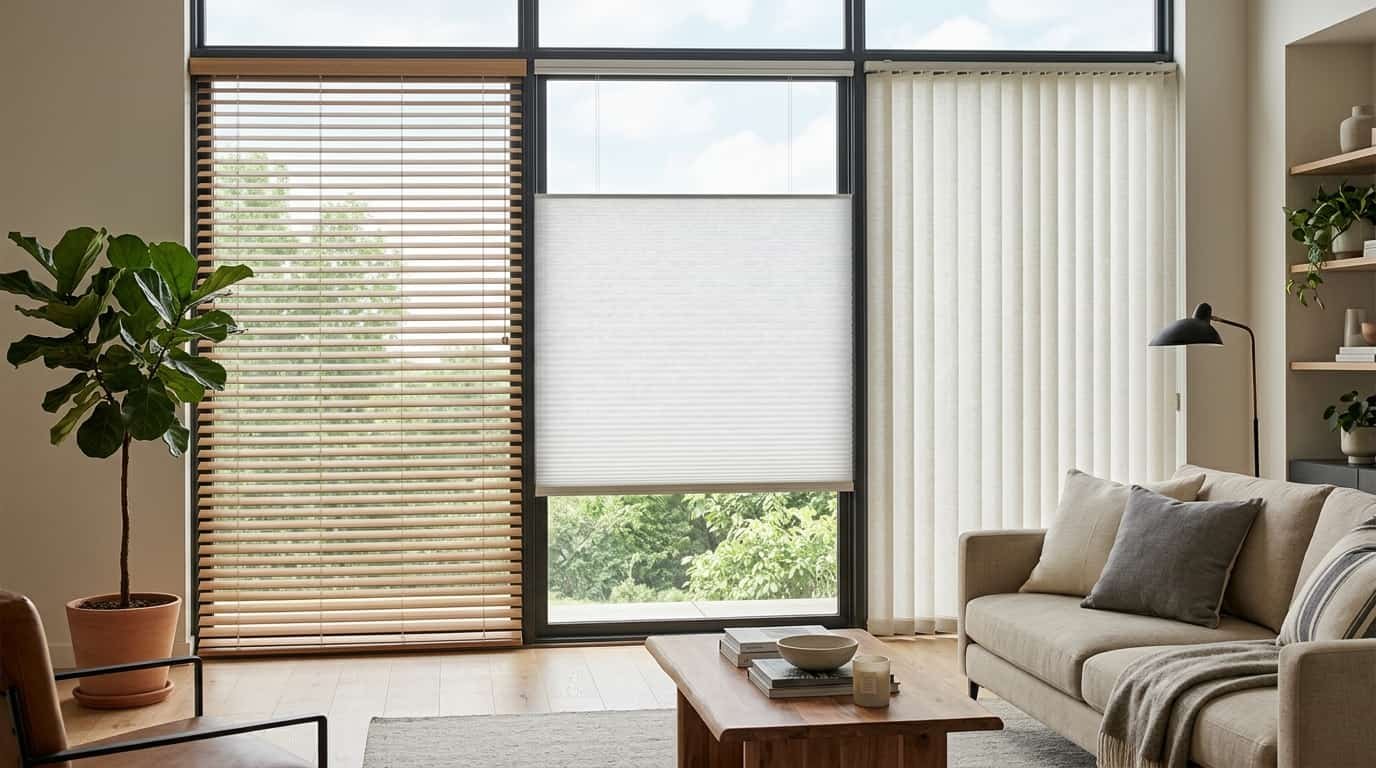
The short version: If you’re wondering how to close blinds, with most horizontal blinds, lower them all the way first, then tilt the slats shut. With cordless blinds, pull the bottom rail down. With vertical blinds, rotate the slats open, slide them across, then rotate them closed. The order matters, because doing the steps backward is one of the easiest ways to strain a blind.
Below you’ll find how to tell which type you have, step-by-step instructions for each, what to do when a blind won’t cooperate, and a few safety notes for homes with kids.
Quick Reference: How to Close Each Type
| Blind type | How to close it |
|---|---|
| Corded horizontal (Venetian, mini) | Release the lock, lower with the lift cord, re-lock, then twist the wand to tilt the slats shut |
| Cordless horizontal or cellular | Pull the bottom rail down evenly, then tilt with the wand if it has one |
| Vertical | Rotate slats open, slide them across, rotate them closed |
| Continuous loop | Pull the correct side of the loop to lower |
| Roller shade | Pull the bottom rail or handle down and release |
| Motorized | Use the remote, app, or wall switch |
What “Closing” Blinds Actually Means
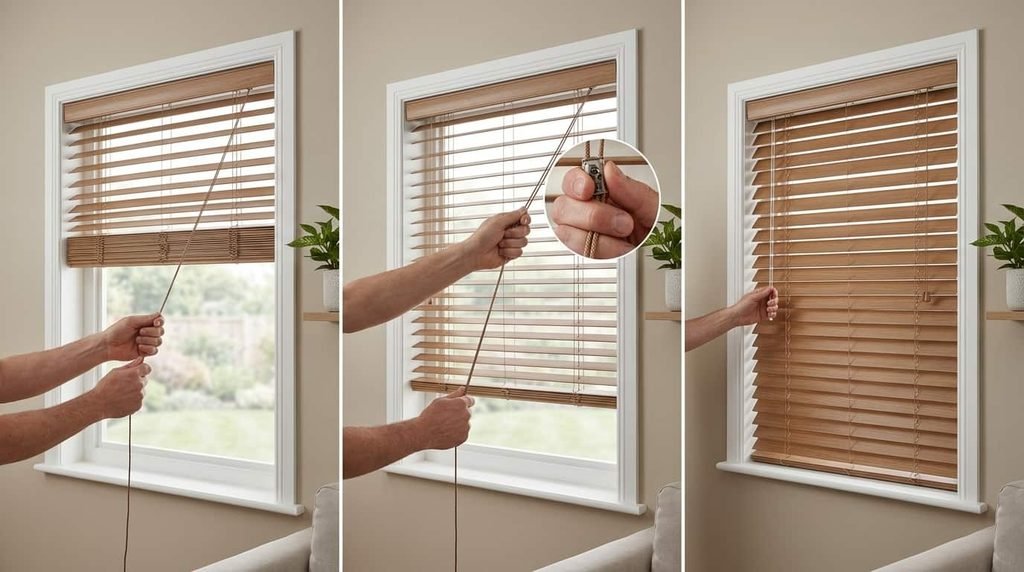
Two different actions get called “closing”:
- Lowering brings the blind down over the window, using a lift cord or the bottom rail.
- Tilting rotates the slats from open to shut, using a wand or tilt cord.
Horizontal blinds usually need both. Lower first, then tilt. Tilting a blind that’s only partway down can make the slats close unevenly and put extra strain on the mechanism.
Step One: Figure Out What Kind of Blinds You Have
Look at how yours are controlled:
- A cord on one or both sides, plus a plastic wand: corded horizontal blinds.
- No cords, just a handle or bottom rail: cordless blinds or shades.
- Slats hanging vertically that slide sideways (common on patio doors): vertical blinds.
- A single loop of cord or chain: a loop-controlled blind or shade.
- One piece of fabric that rolls up: a roller shade.
How to Close Corded Horizontal Blinds
- Stand directly in front of the blind. Pulling from an angle can make it hang crooked.
- Release the lock. On most single-cord blinds, pulling the cord slightly toward one side locks it, and pulling it toward the other side unlocks it. Which side is which varies, so test gently.
- Lower the blind slowly. Don’t let the cord fly. With two cords, ease both out together so the bottom rail stays level.
- Re-engage the lock. Pull the cord toward the center at roughly a 45-degree angle until the clutch clicks.
- Tilt the slats shut. Twist the wand, or pull the tilt cord, until the slats overlap.
How to Close Cordless Blinds and Shades
Cordless blinds use an internal tension system that holds them wherever you stop. Grip the bottom rail in the middle and pull it down. To raise them, nudge the rail upward. If the blind has slats, a separate wand usually handles the tilt.
Cellular (honeycomb) shades work the same way. Because there’s no cord to catch, they’re also the simplest to operate.
How to Close Vertical Blinds
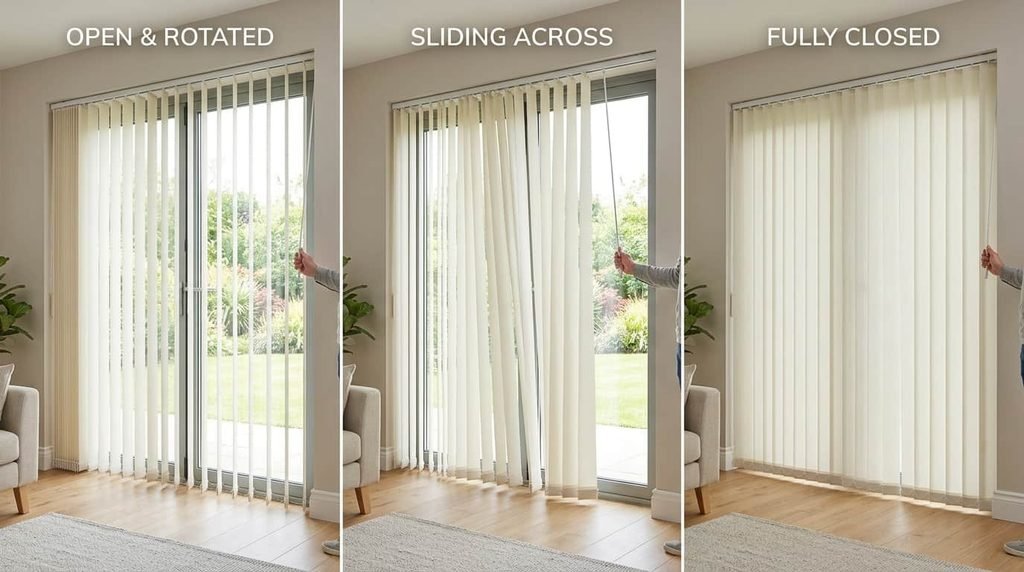
Vertical blinds have their own order:
- Rotate the slats fully open with the wand or chain.
- Slide the blinds across the window or door.
- Rotate the slats closed once they’re in position.
Drawing vertical blinds across while the slats are closed drags them against one another. That’s a fast way to wear out the hangers, so getting into the habit of rotating first pays off.
Loop-Controlled, Roller, and Roman Shades
Continuous loops: pull one side to lower the blind and the other to raise it. Pulling both sides at once will just stall it.
Roller shades: pull down on the handle or bottom rail and release it. Most lock in place once released at the length you want.
Roman shades: these fold into pleats as they rise, so raise and lower them slowly and evenly. Yanking can distort the folds.
Motorized and Smart Blinds
If your blinds are motorized, closing them is as simple as pressing a button on the remote, wall switch, or app. Many systems also let you schedule when they open and close, which is useful for windows that are hard to reach or for keeping heat out while you’re at work.
Which Way Should You Tilt the Slats?
There’s no single correct direction, but as a rule of thumb, angling the slats so they slope downward toward the outside keeps most of the view from the street blocked during the day while still letting some light in from above. Twist the wand each way until you see which position gives the overlap you want. For full privacy at night, tilt them until the slats close flush.
Why Your Blinds Won’t Close (and What to Do)
When a blind won’t lower or shut, the culprit is most often the cord lock inside the headrail. Dust buildup, worn parts, or a cord that has slipped out of place can jam it. Try these fixes in order:
- Lift first. Raise the blind a little to release the internal lock, then lower it slowly with the cord held straight.
- Pull straight down. Pulling at an angle can engage the lock before you’re done lowering.
- Support a heavy blind. For large or heavy blinds, push up on the middle of the bottom rail while you release the cord.
- Clean the lock. A quick dusting can free a lock that’s clogged with debris.
- Check the cord. Tangles, fraying, or a cord that has come off a pulley can all stop the blind. If the cord is uneven, taking it off and re-seating it evenly can fix it.
If the blind lowers but the slats won’t tilt shut, the problem is probably in the tilt mechanism. Check that the tilt cord or rod is connected. If the wand spins freely without moving the slats, an internal gear may be stripped and the part will likely need replacing.
Know when to stop. Grinding noises, repeated sharp clicking, or a mechanism that keeps slipping means more force will likely do more damage. At that point, replacing the lock, the cord, or the blind is usually the better move.
Common Mistakes That Damage Blinds
- Tilting the slats before the blind is fully lowered
- Forcing a stuck lock instead of finding out why it’s stuck
- Drawing vertical blinds across without rotating the slats open first
- Pulling two-cord blinds unevenly, which leaves them crooked and binding in the headrail
- Letting dust build up in the headrail
A Note on Cord Safety
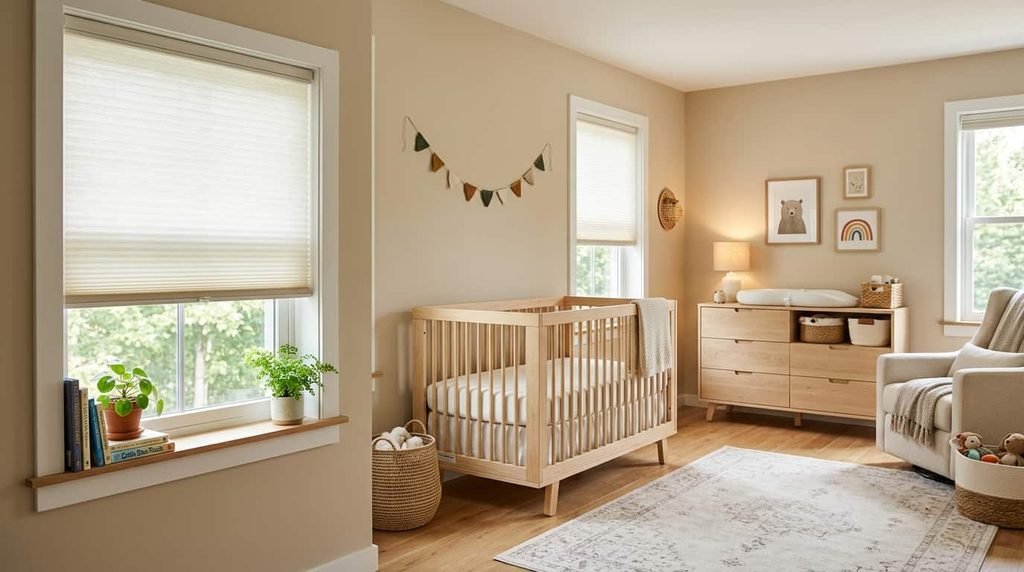
Loose cords are a strangulation hazard for young children. The U.S. Consumer Product Safety Commission recommends cordless window coverings as the safest choice for homes with kids. Federal rules now address cords on new products: stock window coverings made after the rule took effect must meet cord requirements, and custom window coverings have their own operating-cord safety standard. Older blinds already in your home may not meet those requirements.
If you keep corded blinds:
- Keep cords out of reach by wrapping or tying them up, or use a cord shroud or other retrofit device designed to enclose them.
- Keep cribs, beds, and furniture away from windows.
- Consider replacing older corded blinds with cordless ones, especially in nurseries and kids’ rooms.
Rules can change, so check the CPSC’s Window Covering Safety Education Center for current guidance.
When to Close Your Blinds
- At night: for privacy and to cut streetlight and headlight glare.
- During the sunniest part of the day: closed blinds help block solar heat and reduce glare on screens and furniture.
- When you’re away: closed blinds make it harder for passersby to see inside, and they protect furniture from sun fading.
- On cold nights: closing them can help hold some warmth near the window.
Frequently Asked Questions
Which way do you twist the wand to close blinds? Either direction can work, depending on how the slats are hung. Turn it gently until the slats overlap and the wand stops, then check that they slope the way you want.
Can I close blinds that are stuck halfway? Often, yes. Lift the blind slightly to release the lock, then lower it slowly with the cord pulled straight. If it still won’t move, look for dust in the lock or a cord that has slipped.
Do closed blinds save energy? They can reduce heat gain in summer and help hold in some warmth in winter. How much depends on the blind’s material and color and on your windows, so results vary.
Is it bad to leave blinds closed all the time? Not for the blinds themselves, but you’ll lose natural light, and sun-facing windows may still warm the room through gaps. Opening them for part of the day is a good balance.
Related resources:
1: Garage Door Installation: 9 Crucial Pointers for Success ·
2: Beachcrest Home: Furniture, Lighting & Outdoor Decor Guide
Related resources: Home Improvement Mintpaldecor Ideas That Transform Your Home · Renovation Tips Decorad house: The Realistic Guide to Planning and Sequencing Your Home Update
Related resource: How to Remove Window Blinds Without Damaging Them

One thought on “How to Close Blinds: Every Type, Plus Fixes for Stuck Ones”