Decorating your home doesn’t have to mean buying expensive furniture or filling every empty corner with accessories. A beautiful home usually comes from making smart choices about layout, color, lighting, texture, and the way each room is actually used.
These decoration tips decoradhouse from DecoratorAdvice offer a practical way to approach home decorating. Instead of copying a room from a photograph, you can use these ideas to decide what your space needs, what you can keep, what you should remove, and where your decorating budget will make the biggest difference.
What Do Decoration Tips Decoradhouse From DecoratorAdvice Focus On?
The main idea behind practical home decoration is simple: make a room attractive without sacrificing comfort or function.
A living room, for example, should provide comfortable seating and enough space to move around. A bedroom should feel relaxing, not crowded. A kitchen needs attractive details, but those details shouldn’t take over valuable workspace.
The easiest way to approach a decorating project is to work in an order:
Assess the room → plan the layout → choose colors → improve lighting → add texture → personalize the space → edit what you don’t need.
This process helps prevent a common mistake: buying decorations before knowing what the room actually needs.
1. Start With a Room Audit
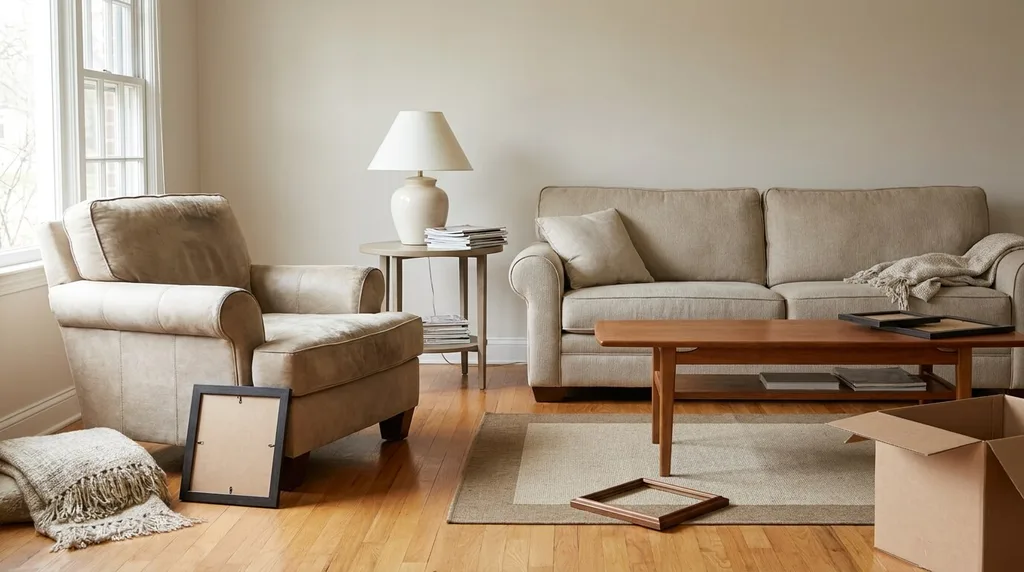
Before shopping, take a close look at your existing space.
Use the Keep, Move, Remove, Buy method:
- Keep: Items that work well and still serve a purpose.
- Move: Pieces that might look better somewhere else.
- Remove: Broken, unused, or distracting items.
- Buy: Only things that solve a genuine problem.
For example, if your living room feels cramped, don’t immediately buy a smaller coffee table. Check whether an oversized chair, unused side table, or unnecessary storage piece is taking up valuable floor space.
Removing one item can sometimes improve a room more than adding several new decorations.
2. Decide How You Want the Room to Feel
Choose the mood before choosing individual accessories.
A room might be:
- Warm and cozy
- Bright and airy
- Calm and minimal
- Modern and polished
- Rustic and relaxed
Once you know the feeling you want, your decorating choices become easier.
For a cozy bedroom, you might combine warm neutral colors, soft bedding, wood finishes, and gentle lighting. For an airy living room, lighter colors, natural daylight, and furniture with a lighter visual profile may work better.
This approach also prevents you from buying attractive pieces that look good individually but don’t work together.
3. Measure the Room Before Buying Furniture
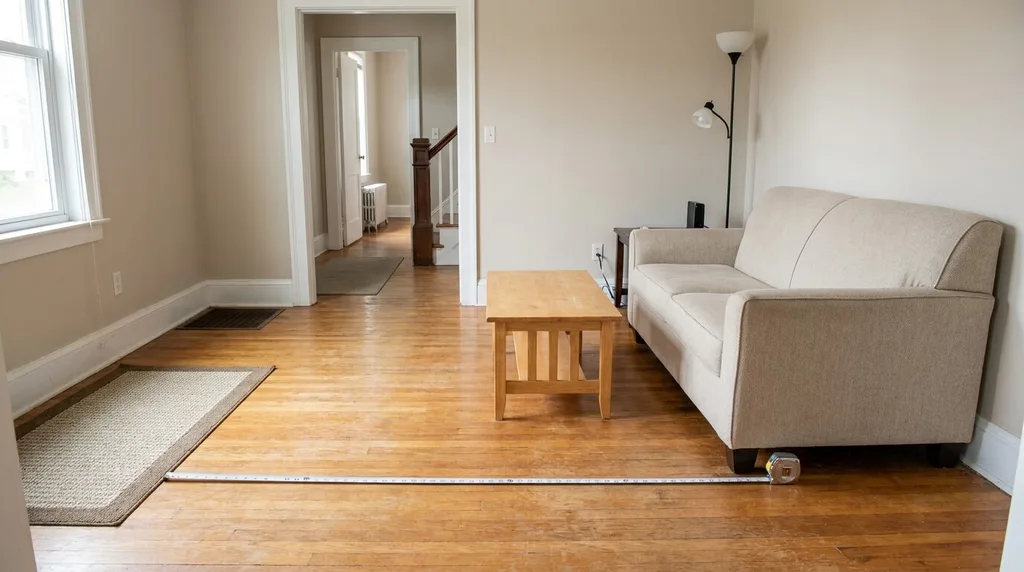
One of the most practical home decorating tips is to measure before you buy.
Measure the room, doorways, hallways, windows, and the areas where furniture will be placed. A sofa can fit the dimensions of a room and still be impossible to get through the front door.
Also consider walking space. Furniture shouldn’t simply fit; it should allow people to move comfortably.
For example, before buying a coffee table, measure the distance between the sofa, table, and nearby walkways. A slightly smaller table may create a much better layout.
Take photos and measurements with you when shopping. It is much easier to make a good decision when you have actual dimensions instead of relying on memory.
4. Build a Simple Color Palette
You don’t need a large collection of colors to create an interesting interior.
A useful starting point is:
- One dominant color
- One supporting color
- One accent color
For example, a living room could combine warm white walls, natural wood furniture, and muted green accents.
Repeat the accent color in two or three places, such as a cushion, artwork, and small decorative object. Repetition creates visual consistency without making every item match.
Don’t forget permanent features such as flooring, countertops, cabinets, and large furniture. Your new color choices should complement these elements rather than compete with them.
5. Create a Clear Focal Point
A room usually feels more organized when there is a feature that naturally attracts attention.
A focal point might be:
- A fireplace
- A large window
- Artwork
- A television
- An architectural feature
- A statement light fixture
Once you identify it, arrange your furniture so it supports the focal point.
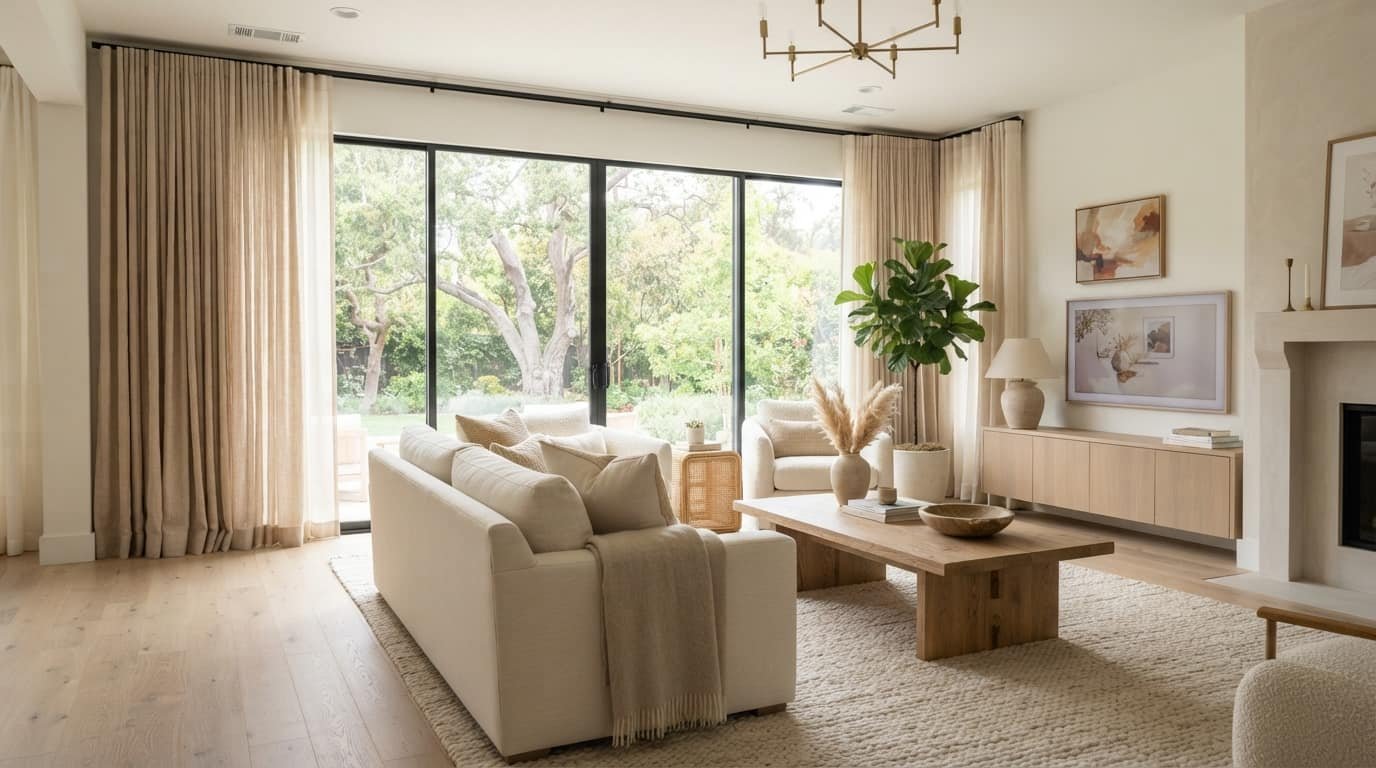
For example, if your living room has a fireplace, arrange seating so people can comfortably talk while the fireplace remains an important visual feature.
Don’t automatically push every piece of furniture against the walls. In some rooms, bringing furniture slightly inward can create a more balanced and inviting arrangement.
6. Layer Your Lighting
Lighting has a major effect on how a decorated room looks and feels.
Instead of depending on one ceiling fixture, combine three basic layers.
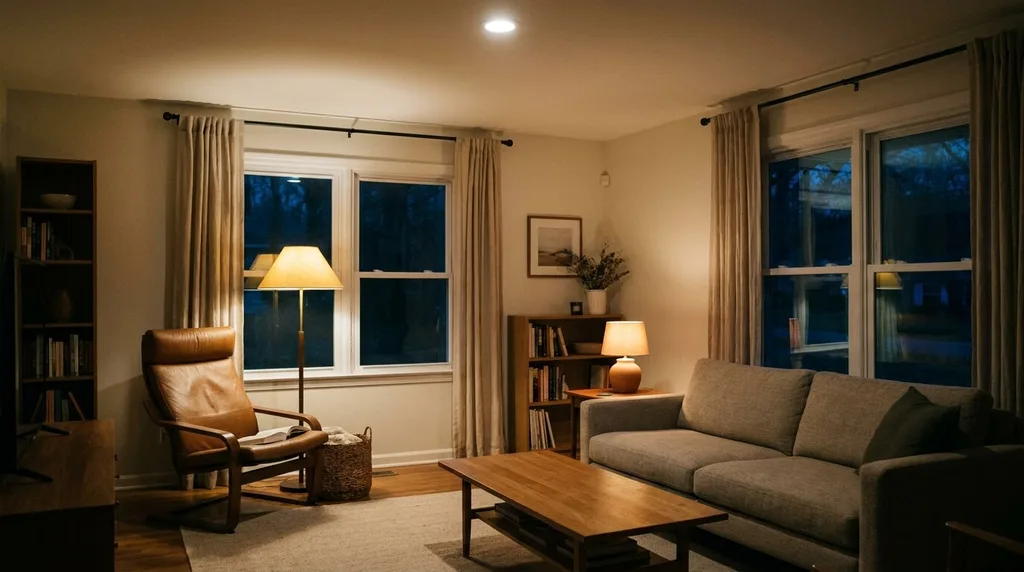
Ambient Lighting
Ambient lighting provides general illumination. Ceiling fixtures, chandeliers, and floor lamps can contribute to this layer.
Task Lighting
Task lighting is designed for specific activities, such as reading, cooking, working, or getting ready.
Examples include bedside lamps, desk lamps, and lighting over kitchen work areas.
Accent Lighting
Accent lighting draws attention to artwork, shelves, architectural details, or other features.
For example, a living room with one bright ceiling light may feel harsh at night. Adding a floor lamp beside a reading chair and a table lamp near the sofa creates more flexible and comfortable lighting.
Decorative fixtures can also become part of the room’s design, so consider both appearance and function when choosing them.
7. Add Texture for More Depth
A room can have a beautiful color scheme and good furniture but still feel flat when every surface has a similar finish.
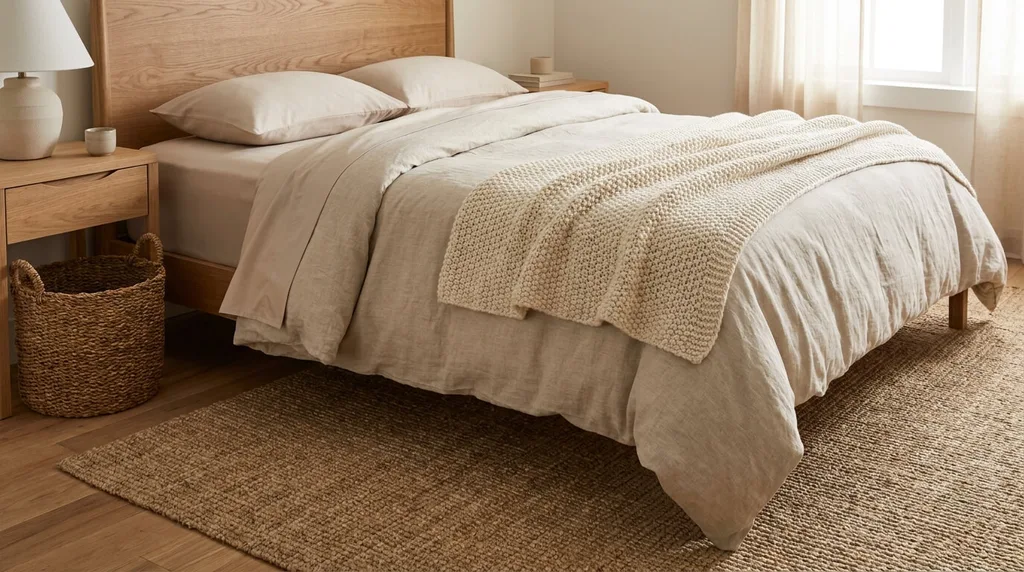
Introduce different textures through:
- Area rugs
- Curtains
- Cushions
- Throws
- Wood
- Woven baskets
- Ceramic pieces
- Natural fabrics
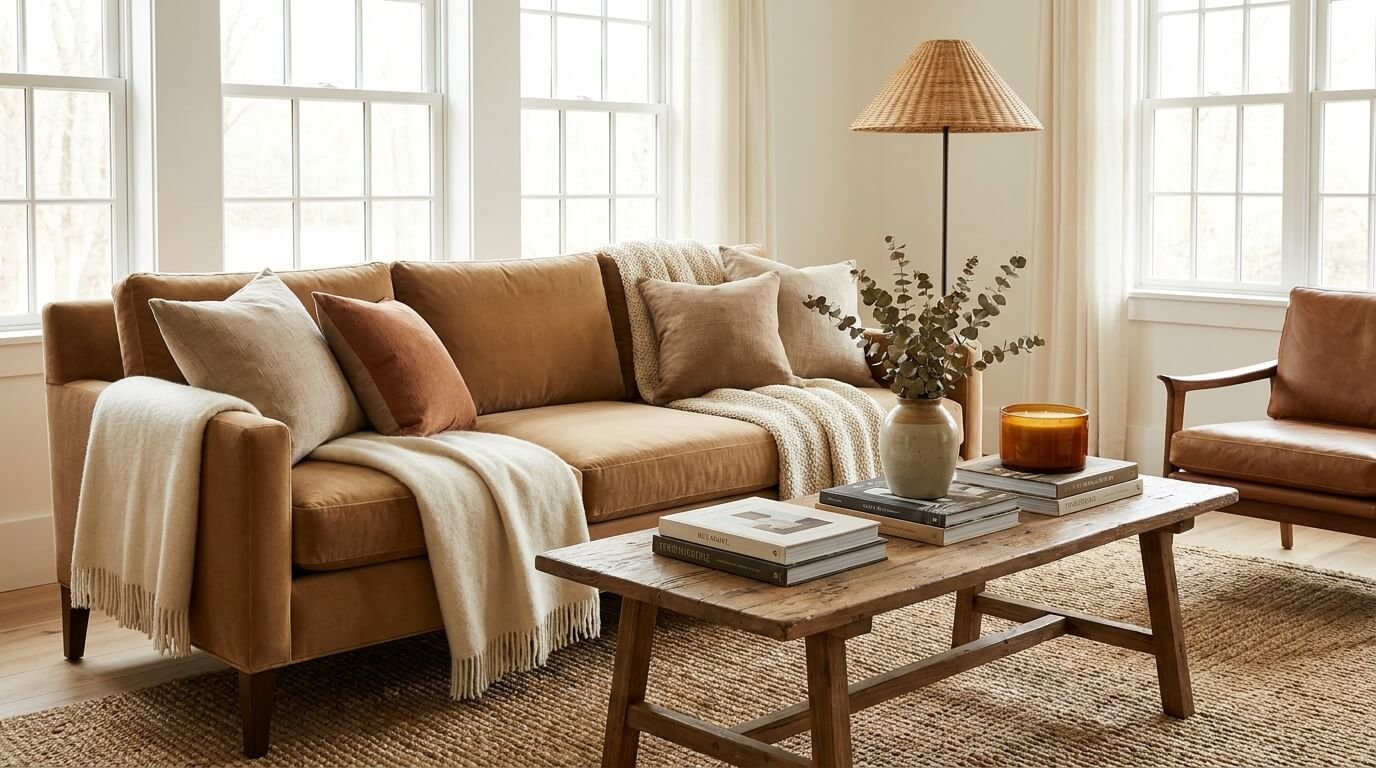
Imagine a bedroom with a smooth bed frame, plain bedding, glossy furniture, and bare flooring. Adding linen bedding, a textured rug, and a woven basket can make the room feel warmer without changing its main colors.
Texture is particularly useful when decorating with neutral tones because it creates visual interest without requiring strong colors.
8. Mix Old and New Decor
Your home doesn’t need to look as if everything came from the same furniture collection.
Combining older and newer pieces can make a room feel more personal and collected.
Try pairing a modern sofa with a vintage wooden side table, or place contemporary artwork above an older cabinet. Secondhand furniture can also work well alongside newer pieces.
The trick is to create some visual connection. Repeating a color, material, or finish can make different styles feel intentional.
This approach can also reduce your decorating costs because you don’t have to replace everything at the same time.
9. Make Small Rooms Feel More Open
Small spaces usually benefit from less clutter and better proportions, not more decoration.
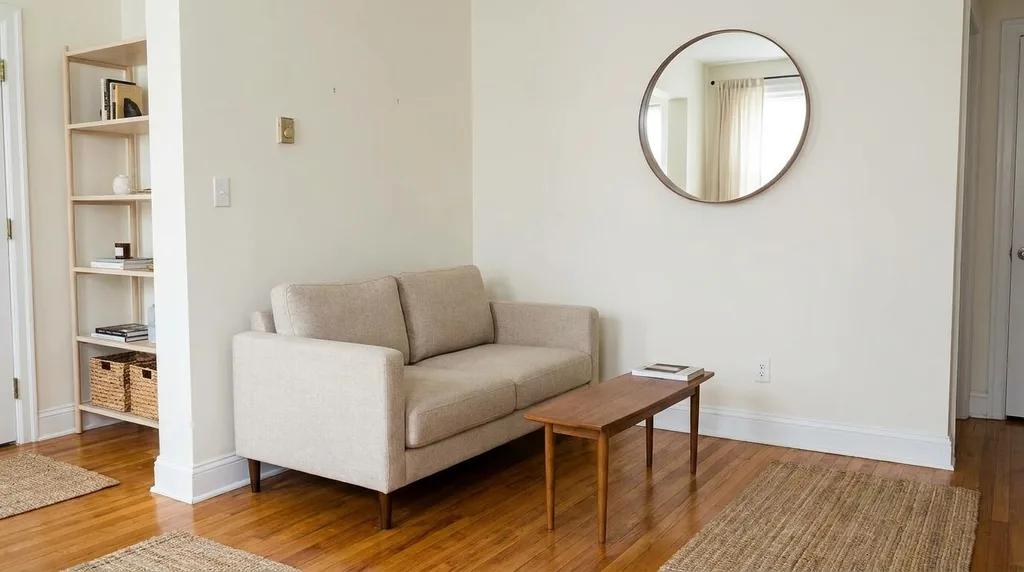
Start with furniture scale. An oversized sofa may be comfortable, but if it consumes most of the available floor space, the room can feel even smaller.
Other useful ideas include:
- Keep major walking paths clear.
- Use vertical storage where appropriate.
- Choose furniture with a lighter visual profile.
- Limit unnecessary accessories.
- Use mirrors strategically to reflect light.
- Leave some areas visually empty.
Don’t feel obligated to decorate every corner. Space can make a small room feel calmer and more spacious.
10. Add Personal Details Without Creating Clutter
A beautiful home shouldn’t look like a furniture showroom.
Add objects that tell your story, such as:
- Books you enjoy
- Family photographs
- Artwork
- Travel souvenirs
- Handmade pieces
- Meaningful collections
The important part is editing.
Instead of displaying twenty souvenirs on one shelf, choose a few favorites and give them enough space to stand out. The result feels personal without becoming visually overwhelming.
Your home should reflect the people who live there, not simply the latest decorating trend.
11. Adapt Your Decorating Approach to Each Room
A home can have a consistent overall style while still allowing each room to serve its own purpose.
Living Room
Prioritize comfortable seating, a practical furniture arrangement, layered lighting, and a clear focal point. An area rug can help visually connect the seating area.
Bedroom
Focus on comfort and calm. Soft bedding, warm lighting, restrained colors, and layered textiles can make the room more relaxing.
Kitchen
Keep decoration functional. Attractive cutting boards, ceramics, plants, artwork, and well-chosen lighting can add character without taking over your workspace.
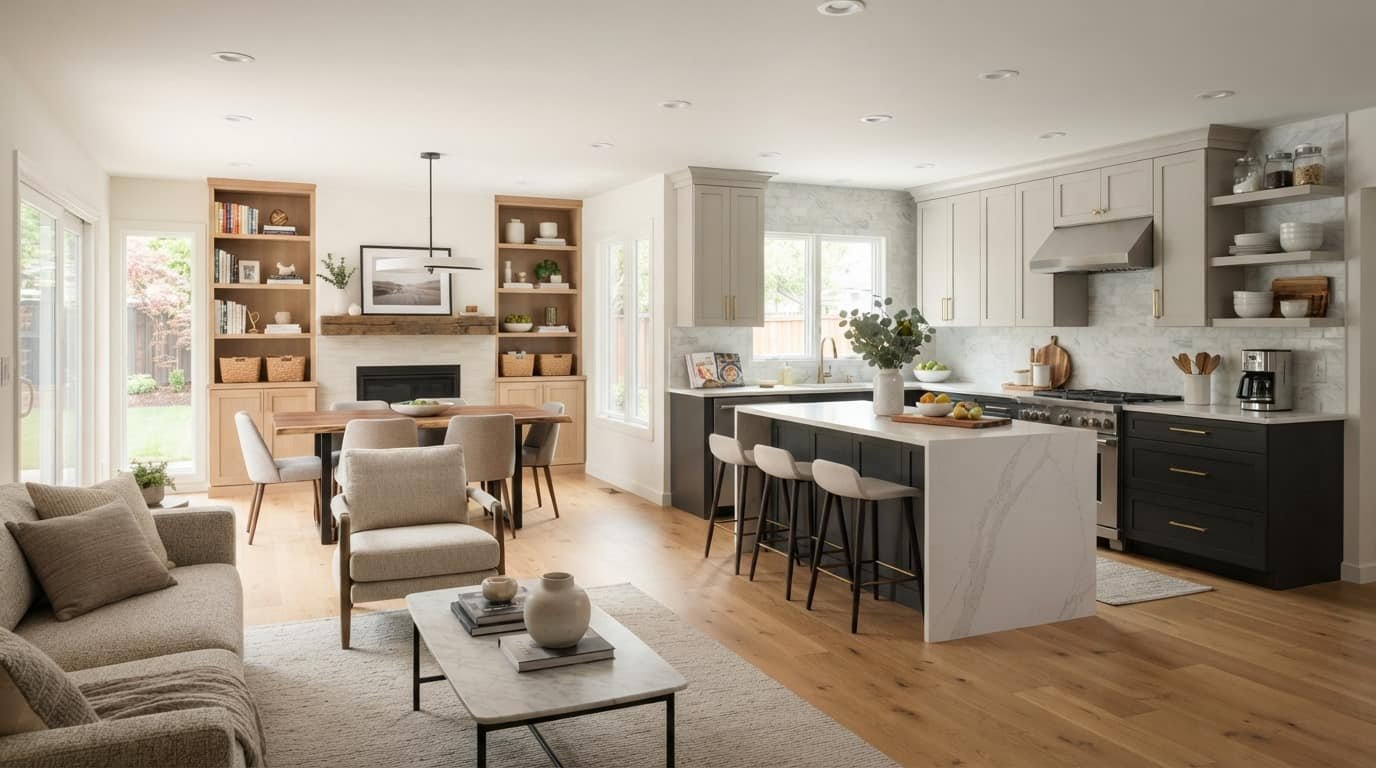
For a larger kitchen update, elements such as cabinet colors, hardware, and a well-designed island can have a greater visual impact than small countertop accessories.
Bathroom
Mirrors, lighting, towels, and a few carefully selected accessories can add personality. Because bathrooms are often compact, avoid filling every available surface.
12. Decorate on a Budget by Prioritizing
You don’t need to redesign an entire room at once.
Focus your budget on the changes that solve the biggest problems.
Around $100
Consider smaller improvements such as:
- Cushion covers
- Throws
- Small lamps
- Artwork
- Plants
- Decorative storage
Around $500
You could invest in:
- A quality area rug
- Better lighting
- Curtains
- Artwork
- Storage furniture
- Several coordinated accessories
Around $1,000
You may be able to introduce a larger furniture piece, upgrade several lighting sources, or complete a more substantial room refresh.
The exact amount matters less than how you spend it. If the room has poor lighting, buying decorative objects won’t solve the problem. If the furniture arrangement is awkward, adding accessories won’t fix the layout.
Solve the biggest problem first.
13. Know What Not to Buy
Good decorating also means knowing when not to spend money.
Avoid buying:
Furniture without measuring it first.
A beautiful chair isn’t useful if it blocks a doorway or makes the room difficult to navigate.
Decor simply to fill empty space.
An empty corner isn’t automatically a decorating problem.
Too many matching accessories.
When every object comes from the same collection, the room can feel staged rather than personal.
Trend-driven pieces you don’t actually like.
A popular design isn’t necessarily right for your home.
Furniture that doesn’t suit your lifestyle.
A delicate coffee table may look beautiful but be impractical in a busy family room.
Before purchasing anything, ask:
Does this solve a problem, improve the room, or have genuine personal value?
If the answer is no, you probably don’t need it.
14. Fix Decorating Problems Instead of Starting Over
A room that feels wrong doesn’t necessarily need a complete makeover. Identify the specific problem first.
The Room Feels Cluttered
Possible cause: Too many small objects or unnecessary furniture.
Try this: Remove a few items and reassess the room before buying anything new.
The Room Feels Cold
Possible cause: Cool lighting and too many hard surfaces.
Try this: Add warmer lighting, rugs, curtains, wood, and soft textiles.
The Room Feels Empty
Possible cause: Poor furniture scale or a missing focal point.
Try this: Establish a visual anchor before adding accessories.
Everything Looks Mismatched
Possible cause: Too many unrelated colors or finishes.
Try this: Repeat two or three colors or materials throughout the room.
The Room Feels Too Small
Possible cause: Oversized furniture and blocked walking paths.
Try this: Remove unnecessary pieces, improve circulation, and choose furniture that fits the room’s scale.
This problem-solving approach is often more useful than copying an entire room from a decorating photograph.
15. Use a Final Decorating Checklist
Before considering your room finished, take a step back and evaluate it as a whole.
Ask yourself:
- Does the furniture fit the room?
- Can people move around comfortably?
- Is there a clear focal point?
- Do the colors work together?
- Is the lighting flexible enough for different activities?
- Does the room have enough texture?
- Are the accessories useful or meaningful?
- Does the space reflect your personality?
- Is there enough visual breathing room?
- Did you avoid buying things simply because a corner was empty?
If the room works well and feels comfortable, you may already be finished.
Sometimes the final decorating decision isn’t adding something. It’s removing something that doesn’t belong.
Final Thoughts
The most useful decoration tips decoradhouse from DecoratorAdvice are the ones you can adapt to your own home rather than copy exactly.
Start with the space you already have. Remove what isn’t working, measure before buying, establish a simple color palette, improve the furniture arrangement, and layer your lighting. Then introduce texture and personal details gradually.
Whether you’re refreshing one bedroom, updating your living room, or improving your entire home, you don’t need to buy everything at once. Solve the biggest problem first and let the rest of the room develop around that decision.
A successful decorating project isn’t about making a room look perfect. It’s about creating a space that looks intentional, feels comfortable, and works for the people who live there.
nn
Related resources: Hanging Fixtures: How to Choose the Right Style for Your Home · Bathroom hanging pendant lighting: The Chic Way to Upgrade Your Bathroom