Picking a kitchen table sounds simple until you’re forty browser tabs deep, comparing tables that all start to blur together round, rectangular, “farmhouse,” $400, $1,400 with no clear signal for which one actually fits your kitchen. This guide skips the trend talk and focuses on what actually determines whether a kitchen table works long-term: the right size for your room, a height that pairs properly with your chairs, a material built for your lifestyle, and a realistic sense of what you should expect to pay.
Quick answer, if you’re short on time: measure for 36–42 inches of clearance around the table, match table height (28–30″) to standard chair height (17–19″), pick solid wood if you want something repairable and laminate if budget matters more than longevity, and budget $500–$1,200 for a solid wood table that’ll actually last. Read on for the reasoning behind each of those numbers.
How Much Space You Actually Need for a Kitchen Table
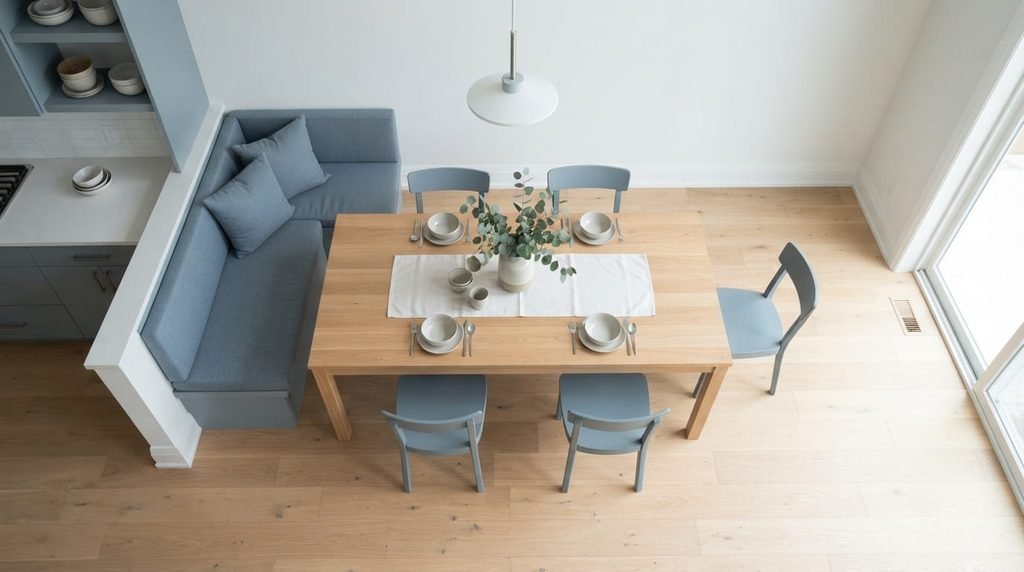
Before you fall for a table online, grab a tape measure this is the step most people skip, and it’s the reason so many kitchen tables get returned or end up crammed against a wall in a way nobody planned.
Leave 36 to 42 inches between the edge of the table and the nearest wall, counter, or appliance. That’s the space a person needs to pull out a chair, stand up, and let someone else walk past while they’re still seated. Go tighter than 30 inches and you’ll be doing the sideways shuffle every time someone needs the fridge.
For the table itself, plan on roughly 24 to 28 inches of edge per seated person. A 60-inch rectangular table seats four comfortably, six if elbows can get friendly. Round tables measure differently a 42-inch round seats four, and pushing to 48 inches gets you six if you’re using armless chairs.
The mistake that trips people up most: they measure the open floor space and buy a table sized to fill it, only to find there’s no room left to actually pull a chair out. Measure the walking space you need to preserve first, then size the table to what’s left.
Test it before you buy: mark the table’s footprint on the floor with painter’s tape, then walk around it and pull out chairs like you’re setting a real meal. Fifteen minutes of tape saves you from a table that looks perfect in a showroom photo and cramped in your actual kitchen.
Kitchen Table Height and Chair Pairing (The Detail Most Buyers Miss)
Size and shape get all the attention, but height is where a lot of otherwise-good kitchen tables go wrong usually because the table was bought first and the chairs were an afterthought.
Standard kitchen table height is 28 to 30 inches, designed to pair with standard dining chairs at 17 to 19 inches seat height. That gap about 11 to 13 inches between the seat and the tabletop is what actually determines whether sitting down feels comfortable or awkward, and it’s the number to check before mixing a table from one retailer with chairs from another.
If you’re working with a counter-height table (34–36 inches, common in open-concept kitchens or as an island substitute), you need counter-height stools around 24–26 inches. Go bar-height (40–42 inches) and you’ll need stools closer to 28–30 inches. Mixing these up a standard table with counter stools, for instance is a surprisingly common furniture-return reason, so double-check height specs on both pieces before you order either one separately.
Kitchen Table Shapes and Which Layouts They Fit Best
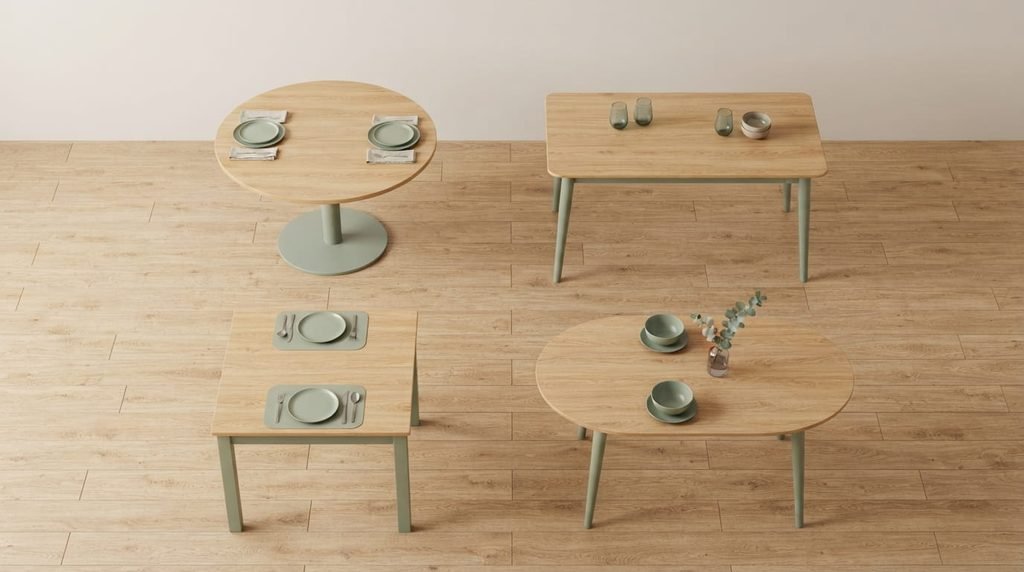
Shape isn’t just aesthetic it’s a functional choice tied to your room’s proportions and traffic flow.
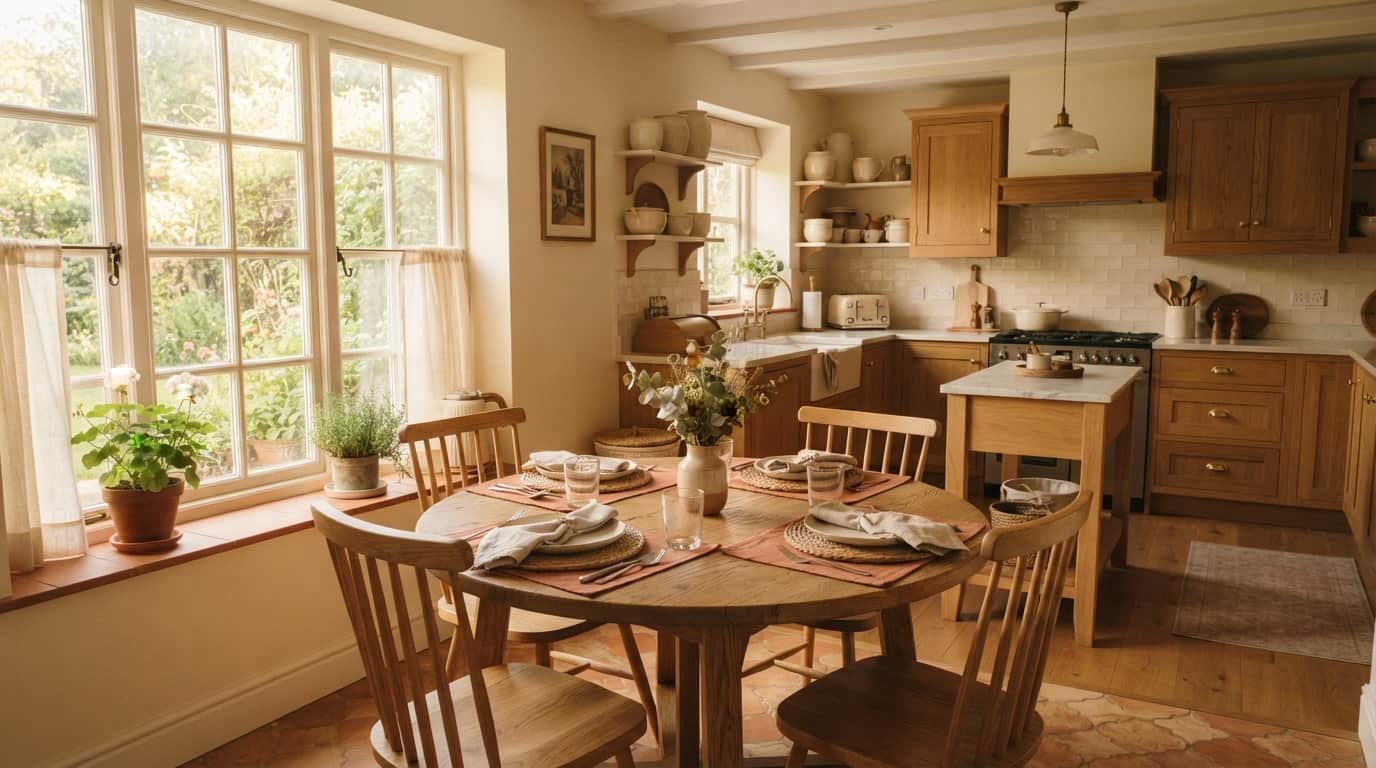
Round tables work best in small or square kitchens. No corners to bump into, and everyone can see and talk to each other easily. They also soften an otherwise boxy breakfast nook. The trade-off: round tables need clearance on all sides, since they can’t be pushed flush against a wall the way a rectangle can.
Rectangular tables are the default for a reason they suit galley kitchens and longer rooms, and one side can sit against a wall to save floor space. They’re also the easiest shape to extend, since you’re just adding length in one direction.
Square tables suit small households (two to four people) in tight kitchens, where a rectangle feels too long and a round table doesn’t tuck into a corner as cleanly.
Oval and extendable tables split the difference for people who eat alone or as a couple most nights but host a bigger group a few times a year softer edges day-to-day, more capacity when needed.
Go back to your measurements from the space section: a room that’s roughly as wide as it is long usually favors round or square; a narrow, elongated kitchen almost always favors rectangular.
Popular Kitchen Table Styles (and What Each One Actually Signals)
Function should come first, but style still narrows the field fast. Farmhouse tables thick tops, turned or trestle legs, usually solid wood read casual and durable, and pair well with shaker cabinets. Mid-century modern tables favor tapered legs, warm wood tones, and cleaner lines, and tend to suit smaller kitchens since the silhouette feels lighter. Industrial styles mix metal frames with wood or reclaimed-look tops and hold up well in high-traffic households. Scandinavian/minimalist tables lean light wood tones and simple joinery a good match if your kitchen already has a lot of visual texture and you want the table to stay quiet.
None of these are load-bearing decisions the way size and height are but matching style to your existing cabinets and flooring heads off a lot of the “why doesn’t this look right” feeling people get after unboxing a table that seemed perfect in photos.
Choosing a Material That Fits Your Lifestyle (and Climate)
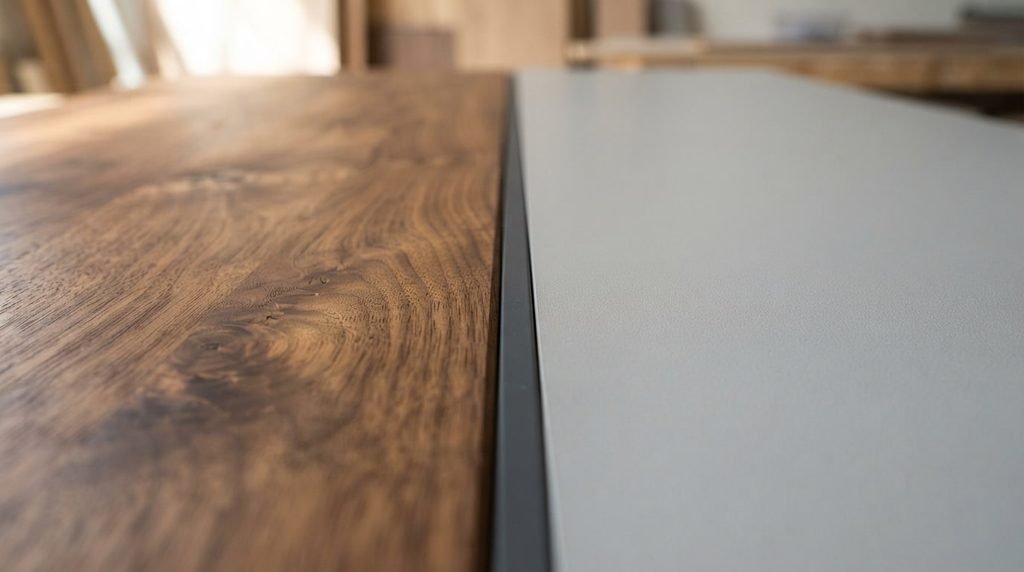
This is where buyers get burned most often, because product photos don’t show you how a material behaves after six months of actual use.
Solid wood (oak, maple, walnut, acacia, mango) is the most durable option and ages well scratches and dents can usually be sanded out and refinished. The catch: solid wood expands and contracts with humidity. If you live somewhere with real seasonal swings humid summers, dry winter heating it needs a proper finish (polyurethane or a hard wax oil) to avoid warping or hairline cracks at the joints.
Engineered wood and laminate (particleboard or MDF with a veneer) is the budget-friendly choice, and it’s genuinely fine for a starter apartment or a table you won’t keep for a decade. The honest downside: it handles moisture poorly, and once the veneer chips, you’re replacing the table, not refinishing it.
Metal-framed tables with wood or glass tops look modern and are structurally sturdy metal legs don’t wobble the way a poorly built wood frame can. Check the finish, though; untreated metal can rust in a humid kitchen, especially near a sink.
Glass tables wipe clean easily and look sharp in a modern space, but they show fingerprints and water spots constantly and scratch more easily than people expect. With young kids or an enthusiastic dog, a glass table will test your patience.
Bottom line: if you have kids or pets, skip glass and be cautious with unsealed solid wood or delicate veneers. A well-finished solid wood table or a sturdy laminate handles spilled juice and dropped forks far better than either extreme.
Fixed, Extendable, or Drop-Leaf: Picking the Right Kitchen Table Format
A fixed kitchen table is simplest no mechanisms to wear out, generally the sturdiest option at a given price. Right call if your household size is stable and you rarely host more people than you have chairs for.
An extendable table (removable or fold-out leaf) earns its extra cost if you host a handful of times a year but don’t want a big table taking up space the other 350 days. The trade-off is mechanical extension slides are a moving part, and cheap ones can develop wobble or stiffen up after a few years. Read reviews specifically for complaints about the slide mechanism, not just the finish.
A drop-leaf table is the space-saver’s pick one or both sides fold down when not needed, genuinely useful in a small apartment kitchen where floor space is precious daily. The limitation is capacity: drop-leaf tables rarely seat more than four comfortably, even with leaves up.
Buying a Kitchen Table Alone vs. a Table-and-Chair Set
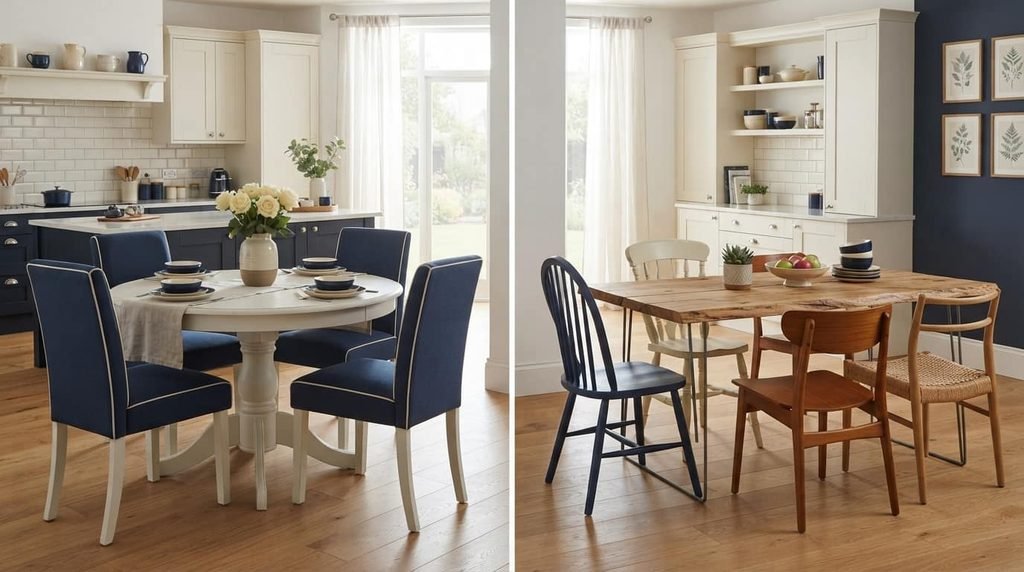
Sets are convenient matched finish, one delivery, usually a lower combined price than buying pieces separately. They make the most sense for a first apartment or a straightforward replacement where you’re not picky about mixing styles.
Buying the table and chairs separately costs more but gives you real flexibility: you can pick a durable, neutral table and swap chairs later without replacing the whole set, or choose chairs that are easier to clean (vinyl, treated fabric) than what typically ships with budget sets. If your household includes kids, pets, or you just replace chairs more often than tables, buying separately is usually worth the extra cost and effort.
What Kitchen Tables Typically Cost (Budget, Mid-Range, Premium)
Prices shift over time, so treat these as general bands rather than fixed numbers but they’ll give you a realistic sense of what you’re paying for at each level.
- Under $300: MDF or particleboard with a thin veneer. Looks fine on day one, but handles moisture poorly, and once the veneer is damaged, you’re replacing the table, not repairing it.
- $500–$1,200: the sweet spot for solid wood construction using more affordable hardwood species like rubberwood, acacia, or mango. This is where most homeowners shopping for something that’ll actually last should be looking — real joinery and a refinishable material, without paying for premium species or brand markup.
- Over $2,000: higher-end North American hardwoods (oak, maple, walnut), hand-finishing, and often better joinery (mortise-and-tenon instead of screws and brackets). A legitimate step up in longevity, but not the only way to get a table that lasts a well-built $800 table will often outlive a poorly made $1,800 one.
Regardless of budget, check underneath the table before buying (or look closely at product photos). Corner blocks, real joinery, and a solid apron under the tabletop are better indicators of durability than the price tag alone.
Kitchen Table vs. Dining Table Do You Need Both?
For a lot of homes especially apartments and smaller houses this is a false choice. If your kitchen has an eat-in area or breakfast nook and there’s no separate formal dining room, that one table is your kitchen table, dining table, homework table, and Sunday-coffee spot. Choose something sturdy enough for that range of daily use rather than a piece meant for occasional, formal dining.
Two separate tables make sense if you have a genuinely separate dining room and want a more casual, everyday spot in the kitchen for quick meals or homework, keeping the “nice” table reserved for guests and holidays. It’s really a question of how you actually eat most nights, not a hard design rule.
Common Mistakes to Avoid When Buying a Kitchen Table
Mixing table and chair heights from different retailers without checking specs. As covered above, an 11–13 inch gap between seat and tabletop is what makes sitting comfortable buying pieces separately without confirming both heights is one of the most common furniture-return reasons.
Ignoring how the material matches your existing cabinets and flooring. A cool-toned gray wood table can clash next to warm oak cabinets. Bring a cabinet sample or a phone photo taken in your kitchen’s actual light before you buy, especially online.
Underestimating delivery and assembly logistics. This trips up apartment dwellers constantly a table that ships fully assembled may not fit through a doorway, up a narrow stairwell, or into a freight elevator. Check assembled dimensions and whether it ships flat-packed before ordering, especially for larger tables.
Skipping the return policy on heavy furniture. Return shipping on a 60-inch table isn’t like returning a shirt some retailers charge steep restocking or freight-return fees. Check the policy before buying anything you haven’t seen in person.
How to Maintain Your Kitchen Table So It Lasts
Solid wood needs occasional reconditioning a coat of wood conditioner or oil every year or two, depending on the finish, keeps it from drying out and cracking. Keep it out of constant direct sunlight, since UV exposure fades and dries out finishes over time.
Laminate and engineered wood are low-maintenance day to day, but skip abrasive cleaners or scouring pads they’ll dull or scratch the veneer permanently. A soft cloth with a mild cleaner is enough.
Glass needs a streak-free glass cleaner and a microfiber cloth to avoid fine scratches from paper towels. Use coasters and placemats consistently glass shows every hot mug ring and dragged plate.
Metal frames should be checked periodically for rust, especially near a sink, with any nicks in the finish touched up before moisture gets underneath the coating.
Frequently Asked Questions
What size kitchen table do I need for 4 people? A round table around 42 inches in diameter, or a rectangular table roughly 48 to 60 inches long, comfortably seats four. Add length or diameter if you’re using bulkier upholstered chairs.
What is the standard height of a kitchen table? 28 to 30 inches, paired with standard dining chairs at 17 to 19 inches seat height. Counter-height tables run 34–36 inches; bar-height tables run 40–42 inches, each requiring correspondingly taller stools.
What’s the best material for a kitchen table with kids? A well-sealed solid wood table or a durable laminate handles daily wear best. Glass and delicate, unfinished wood tend to show damage from dropped utensils and spills much faster.
How much clearance do I need around a kitchen table? Aim for 36 to 42 inches between the table’s edge and the nearest wall or counter, so chairs can be pulled out fully and people can walk behind seated guests.
Can a kitchen table double as a dining table? Yes, and for most households with an eat-in kitchen, it already does. Choose a table built for daily use rather than one designed only for occasional, formal dining if it’s going to serve both roles.
nnRelated resources: Kitchen Organization Products That Actually Work · Outdoor Kitchen: 11 Amazing Ideas for Your Backyard