
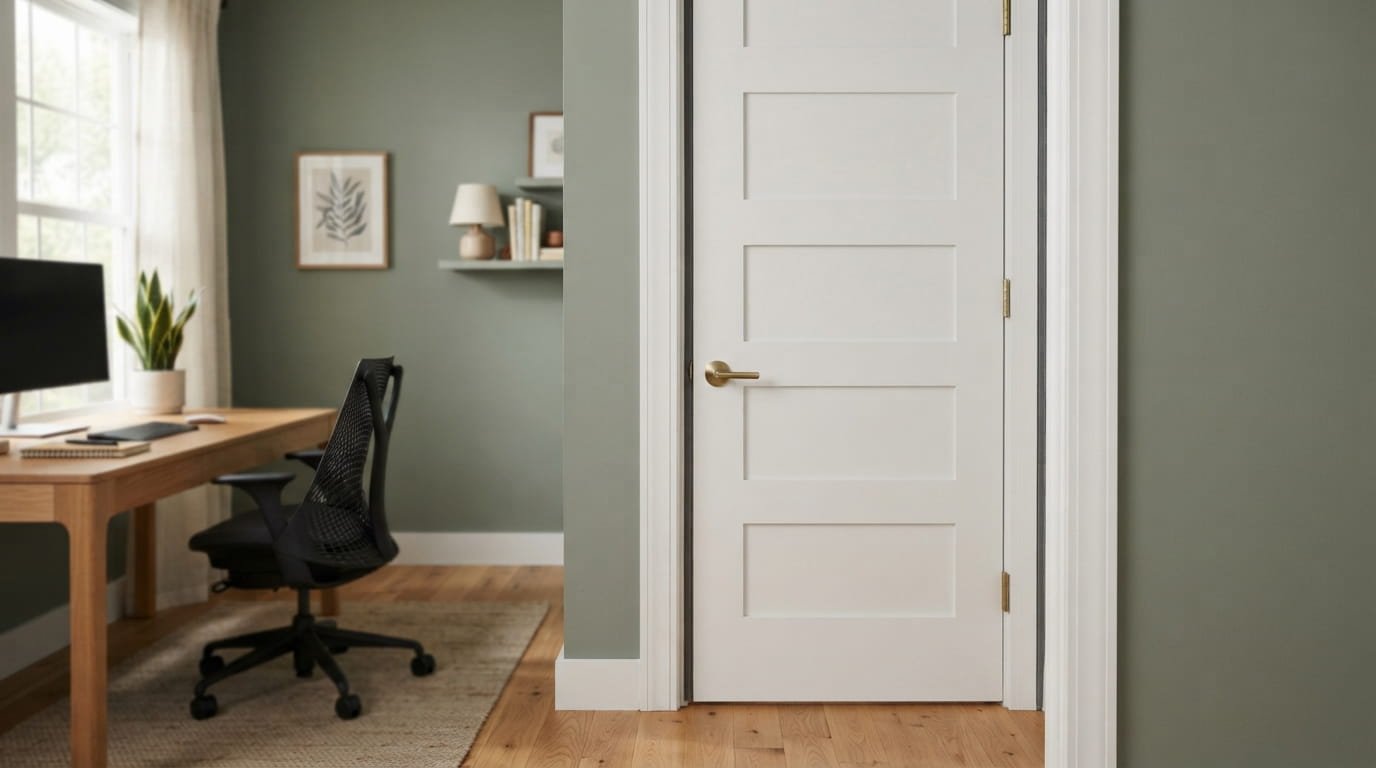
Noise passing through an interior door can make a bedroom harder to relax in, a home office less private, or a living space more distracting. The door itself may not be the only problem. Small gaps around the frame and underneath the door can also create easy paths for sound.
If you’re wondering how to soundproof interior door areas without starting a major renovation, begin with the simplest weak points. Seal the gaps first, then improve the door’s ability to block sound if necessary.
These five practical hacks cover inexpensive fixes as well as more substantial upgrades, so you can choose the approach that fits your door, budget, and noise problem.
Key Takeaways
- Check the gaps around and underneath the door before buying soundproofing materials.
- Weatherstripping can close gaps around the sides and top of the door.
- A door sweep or bottom seal can reduce the open space underneath.
- Adding mass or switching from hollow-core to solid-core construction can improve sound blocking.
- Acoustic panels and heavy curtains can provide additional treatment, but they should not be treated as a replacement for sealing major gaps.
Why Interior Doors Let So Much Sound Through
An interior door is designed to open and close easily, so it cannot form the same continuous barrier as a solid wall. The problem becomes more noticeable when the door is lightweight, hollow inside, or surrounded by visible gaps.
There are two basic issues to look for.
First, sound can travel through openings. A gap beneath the door or a loose seal around the jamb provides a direct path between rooms.
Second, sound can travel through the door itself. A lightweight hollow-core slab generally provides less resistance to sound transmission than a heavier, denser door.
This is why adding an attractive acoustic panel to the center of a door may not solve the whole problem if a large opening remains underneath it.
Hollow-Core vs. Solid-Core Doors
Many interior doors use hollow-core construction because it is lightweight and economical. A solid-core door has a denser interior and generally provides a stronger barrier to airborne sound.
This Old House specifically recommends upgrading from hollow-core to solid-core construction when greater sound insulation is needed, while older EPA guidance also identifies thin hollow-core doors and open spaces beneath doors as important sound-insulation weaknesses.
That doesn’t mean you should immediately replace your door. Start by identifying where the sound is actually getting through.
How to Soundproof Interior Door: Start With the Gaps
Before adding heavy materials to the door, inspect its perimeter.
Close the door and look at the top, hinge side, latch side, and bottom. Check whether you can see daylight or obvious gaps. You can also listen from the other side while someone makes normal conversation or plays a TV at a low volume.
If most of the noise seems to come around the edges rather than through the center of the door, sealing is the logical first step.
1. Add Weatherstripping Around the Frame
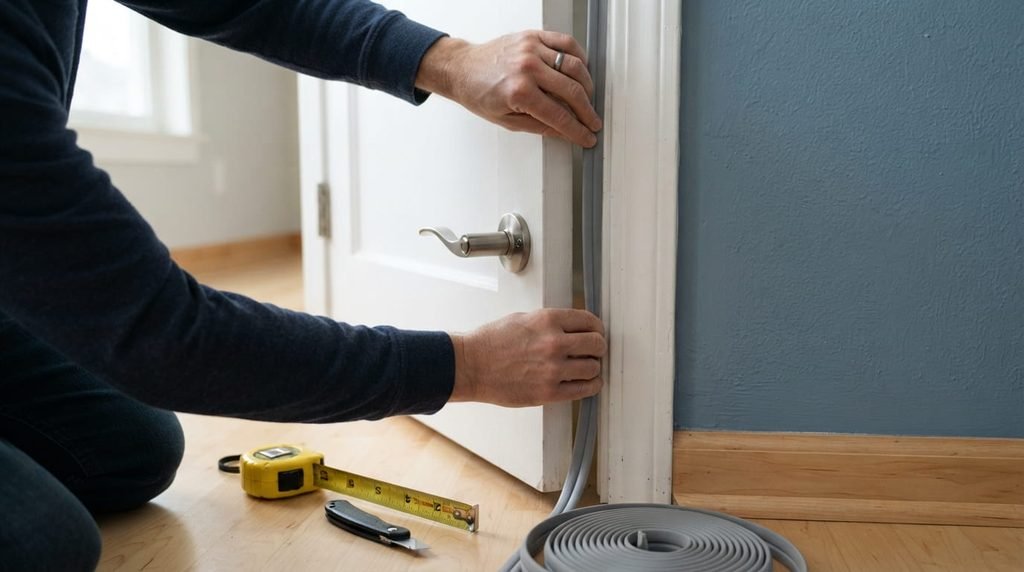
Weatherstripping creates a compressible seal between the closed door and its frame.
For an interior door, choose a material that compresses gently when the door closes. Foam, rubber, or silicone-style seals may be suitable depending on the gap and door design.
Measure the areas you need to cover before purchasing the material. The U.S. Department of Energy recommends measuring the relevant door edges, installing weatherstripping snugly, and checking that the door still operates properly after installation.
The seal should close the gap without requiring excessive force.
Important: Don’t install a seal so thick that the door struggles to latch. A poorly fitted seal can interfere with normal operation.
2. Seal the Gap Under the Door
The space underneath an interior door is easy to overlook, but it can be a significant sound path.
A door sweep can reduce this opening by creating a seal along the bottom edge. Depending on the floor surface and door design, you may use a rubber, silicone, or brush-style sweep.
For a more controlled seal, an automatic door bottom can drop a gasket when the door closes and retract it when the door opens. This type of solution is more involved, so it may make more sense when noise control is particularly important.
The goal is simple: close the open pathway while still allowing the door to swing freely.
3.Add Mass to the Door Panel
If you’ve sealed the perimeter and noise is still traveling directly through the door, the panel itself may be the weak point.
Adding mass can make a barrier harder for airborne sound to pass through. One option used in soundproofing applications is mass-loaded vinyl (MLV), a dense, flexible material designed to add mass without requiring an extremely thick layer.
However, this is not always the easiest DIY upgrade for a lightweight interior door. Adding substantial weight can affect hinges, alignment, and door operation.
Before adding a heavy layer:
- Check the door’s construction.
- Consider the additional weight.
- Make sure the hinges can handle the modified door.
- Think about how the added material will affect the appearance.
- Avoid blocking the latch or hardware.
For many homeowners, replacing a particularly lightweight door with a solid-core model can be a cleaner long-term solution.
4.Upgrade to a Solid-Core Door
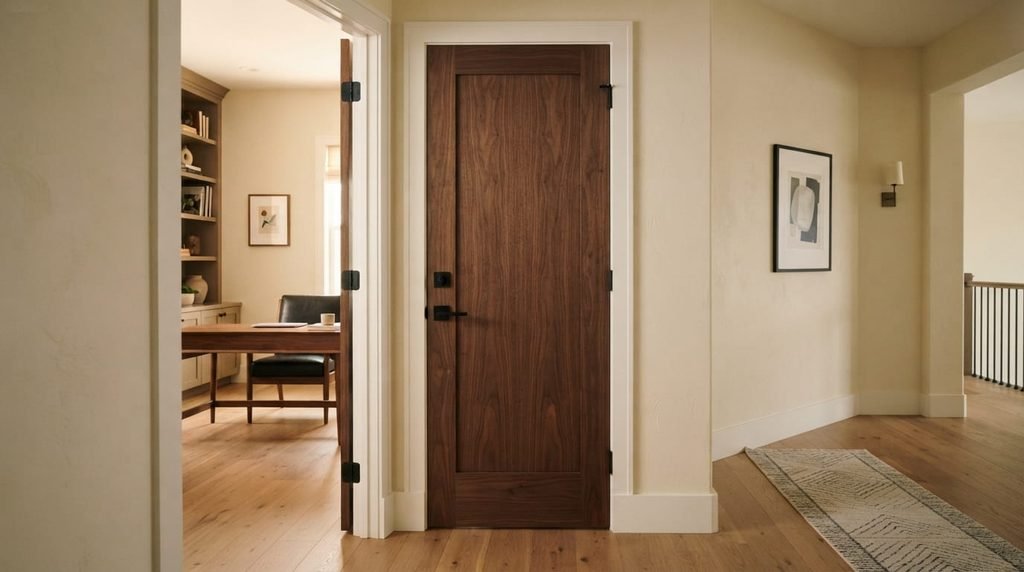
If your existing hollow-core door remains a major source of noise after sealing the gaps, consider replacing it with a solid-core interior door.
This approach increases the mass of the door itself rather than simply covering the existing slab.
A solid-core door can be particularly useful for:
- Home offices
- Bedrooms
- Media rooms
- Nurseries
- Music practice rooms
- Rooms where privacy matters
The important point is that the door should still be installed and sealed properly. A heavier door with large gaps around its perimeter can still allow significant sound leakage.
EPA guidance has long identified solid or core-filled doors combined with appropriate gaskets or weatherstripping as better for noise control than lightweight door construction.
5.Add a Removable Sound-Reducing Layer
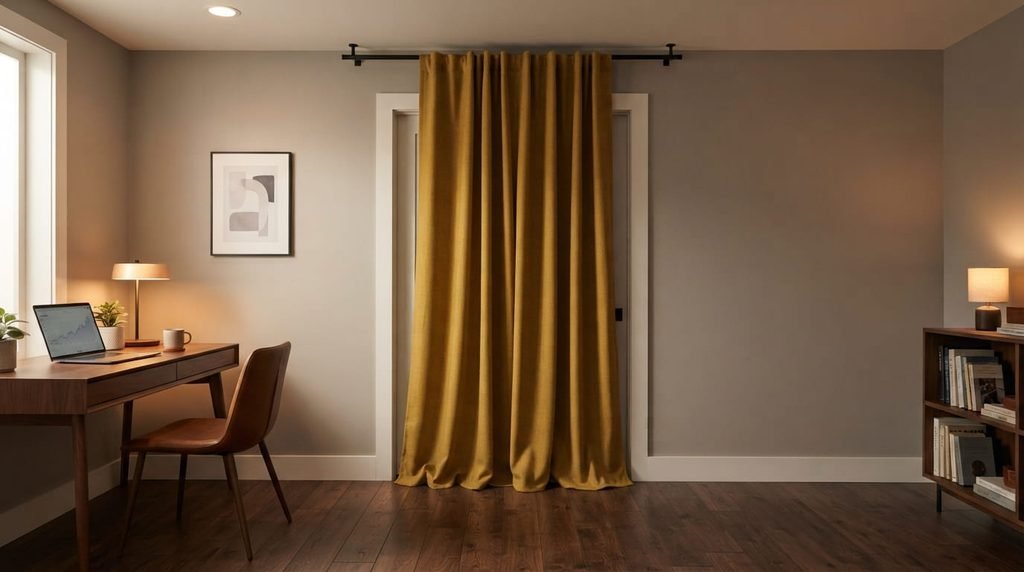
If you cannot replace or permanently modify the door, you can add a removable layer over it.
Acoustic Panels and Heavy Curtains
Acoustic panels are primarily useful for absorbing sound within a space, although adding suitable layers to a door can also contribute to reducing reflections and some sound transmission.
A heavy curtain mounted over the doorway can create another layer between rooms. This can be useful for renters or anyone who wants a reversible solution.
However, don’t expect a curtain or foam panel alone to turn a lightweight interior door into a fully sound-isolated barrier.
If a large gap remains underneath the door, fixing that gap should come first.
What Not to Rely on for Door Soundproofing
Some popular “soundproofing” ideas are better at reducing echoes than actually stopping sound from moving between rooms.
Thin Foam Alone
Decorative acoustic foam can help control reflections inside a room, but covering a door with thin foam does not address a large air gap around the door.
A Towel at the Bottom
A rolled towel can temporarily block some of the space underneath a door, but it is not a durable or neat long-term solution.
A Heavy Curtain Without Sealing the Door
A curtain may provide an additional layer, but it doesn’t eliminate gaps around the door itself.
Adding Weight Without Checking the Hinges
A heavier door or added panel can change how the door operates. Don’t assume the existing hardware will automatically handle a substantial increase in weight.
The key lesson is simple: fix the actual weak point rather than adding a product simply because it is marketed for soundproofing.
Choose the Right Fix for Your Situation
| Your main problem | Practical first step |
|---|---|
| Visible gaps around the door | Weatherstripping |
| Large gap underneath | Door sweep or bottom seal |
| Lightweight hollow-core door | Consider a solid-core replacement |
| Noise still passes through the panel | Add appropriate mass or replace the door |
| Renting | Removable seals and curtain solutions |
| High privacy requirements | Combine perimeter seals with a heavier door |
| Noise comes through walls too | Treating the door alone may not solve the problem |
This approach also helps control your budget. There is little reason to spend heavily on a new door if replacing inexpensive worn seals solves most of the problem.
Common Mistakes to Avoid
Ignoring the Bottom Gap
People often concentrate on the door frame and forget the space beneath the door. Check all four sides.
Sealing the Door Too Tightly
A seal should close the gap without making the door difficult to close or latch.
Adding Heavy Materials Without Planning
Extra mass can affect hinges and door alignment. Consider the construction before modifying the slab.
Confusing Soundproofing With Sound Absorption
Soundproofing aims to reduce sound transmission between spaces. Sound absorption mainly reduces reflections within a room.
A room with lots of echo may need acoustic treatment, while a bedroom hearing conversations from the hallway needs better separation at the doorway.
Expecting Complete Silence
A door is only one part of a room’s sound path. Noise may also travel through walls, ceilings, floors, vents, windows, or other openings.
If the noise remains strong after improving the door, investigate the surrounding construction instead of continuously adding materials to the door.
FAQs About Interior Door Soundproofing
Can you soundproof a hollow-core door?
Yes, you can improve a hollow-core door by sealing gaps and, where appropriate, adding mass. However, if the door itself remains the weak point, replacing it with a solid-core door may be a more practical long-term improvement.
Does weatherstripping help with noise?
Weatherstripping can help reduce sound leakage through gaps around a closed door because it creates a tighter seal. Its primary purpose is air sealing, but closing air pathways can also help reduce noise transmission. The U.S. Department of Energy recommends weatherstripping as a method for sealing movable joints around doors.
Does a door sweep reduce sound?
A properly fitted door sweep can reduce the open pathway underneath a door. Its effectiveness depends on the size of the gap, the sweep design, the floor surface, and the rest of the doorway.
Is a solid-core door better for soundproofing?
A solid-core door generally provides more mass than a lightweight hollow-core door and can therefore provide better sound blocking. For the best result, the perimeter and bottom should also be properly sealed.
Can you soundproof a door without replacing it?
Yes. Start with weatherstripping around the frame and a suitable bottom seal. If more reduction is needed, consider adding mass or a removable treatment, provided the door and hardware can support it.
Conclusion
Learning how to soundproof interior door areas does not necessarily mean replacing the entire doorway.
Start by finding the weak point. Seal gaps around the frame, address the space underneath the door, and then consider whether the door itself needs more mass. If a hollow-core slab remains the main source of noise, a solid-core replacement may be the most straightforward upgrade.
For renters or people seeking reversible changes, weatherstripping, a suitable door sweep, and a removable curtain can provide a practical starting point.
Most importantly, don’t judge a soundproofing solution by the product label alone. Match the fix to the way sound is actually entering or leaving the room.
Related resources: How to Seal Drafty Windows: 11 Simple Proven Fixes · How to Remove Window Blinds Without Damaging Them
Related resource: 15 Small Bathroom Renovation Ideas for Smart Luxury
2 thoughts on “How to Soundproof Interior Door: 5 Proven Best Hacks”