
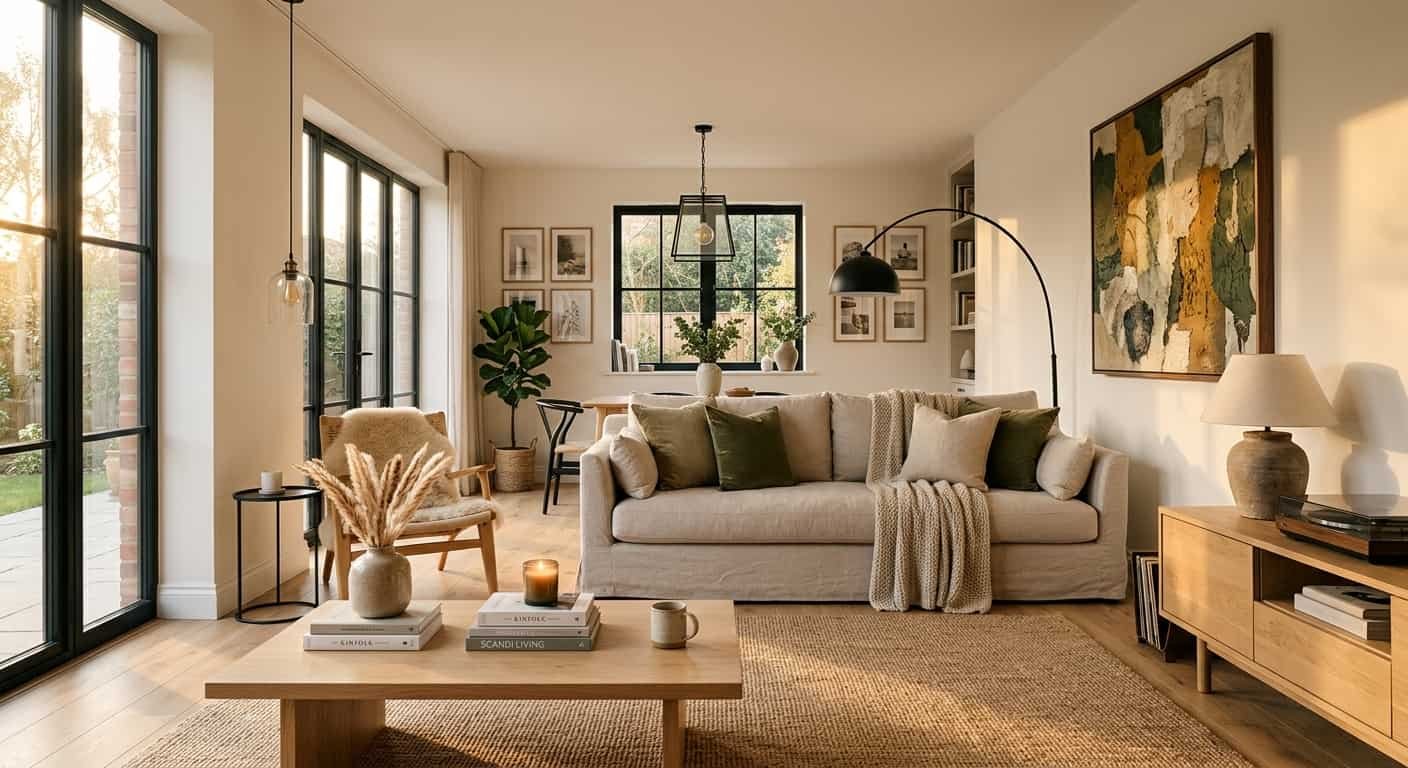
How to Be Better at Interior Design MintPalDecor
You don't need a professional design degree to become better at interior design. What you need is the ability to look at a room, understand what’s working and what isn’t, and make better decisions about layout, furniture, color, lighting, and space.
Maybe you’ve saved dozens of beautiful rooms on Pinterest or Instagram but struggle to recreate that same feeling at home. Often, the problem isn’t your budget or your taste. It may be the size of the furniture, the placement of a rug, poor lighting, too many competing colors, or simply a lack of balance.
The good news is that these are learnable skills.
If you’re wondering how to Be Better at Interior Design MintPalDecor, start by learning to observe rooms differently, understand basic design principles, and practice making intentional choices. You don’t have to redesign your entire home at once.
1. Train Your Eye Before You Buy Anything
One of the best ways to improve your interior design skills is to learn how to analyze a room before trying to change it.
Instead of immediately thinking, “I need a new sofa,” step back and study the entire space.
Ask yourself:
- What do I notice first?
- What is the focal point?
- Does the furniture fit the size of the room?
- Which colors are repeated?
- Is there enough space?
- Are the walking paths clear?
- Does the lighting create different levels of brightness?
- Do the materials and textures work together?
For example, imagine a living room with a large sectional, a very small coffee table, several decorative objects, and one ceiling fixture.
At first, you might think the room needs new furniture. But closer inspection may reveal that the real problems are the undersized coffee table, limited lighting, and excessive small accessories.
Learning to identify the actual problem before buying something new is an important part of developing your design eye.
2. Start With How You Use the Room
A beautiful room isn’t necessarily a successful room.
Interior design should support the way people actually live.
Before choosing furniture or colors, consider:
- Who uses the room?
- What activities happen there?
- How many people normally use it?
- What storage is needed?
- Where do people walk?
- What needs to remain easily accessible?
- What mood should the space create?
Consider two living rooms.
One is primarily used by a couple to watch movies in the evening. The other is used for family gatherings and entertaining guests.
The first may need comfortable seating oriented toward a TV, while the second may benefit from a conversation-focused arrangement with multiple seats facing one another.
Start with:
Purpose → Priorities → Layout → Furniture → Decoration
This simple process can prevent you from buying attractive items that don’t actually work in your space.
3. Understand Scale and Proportion
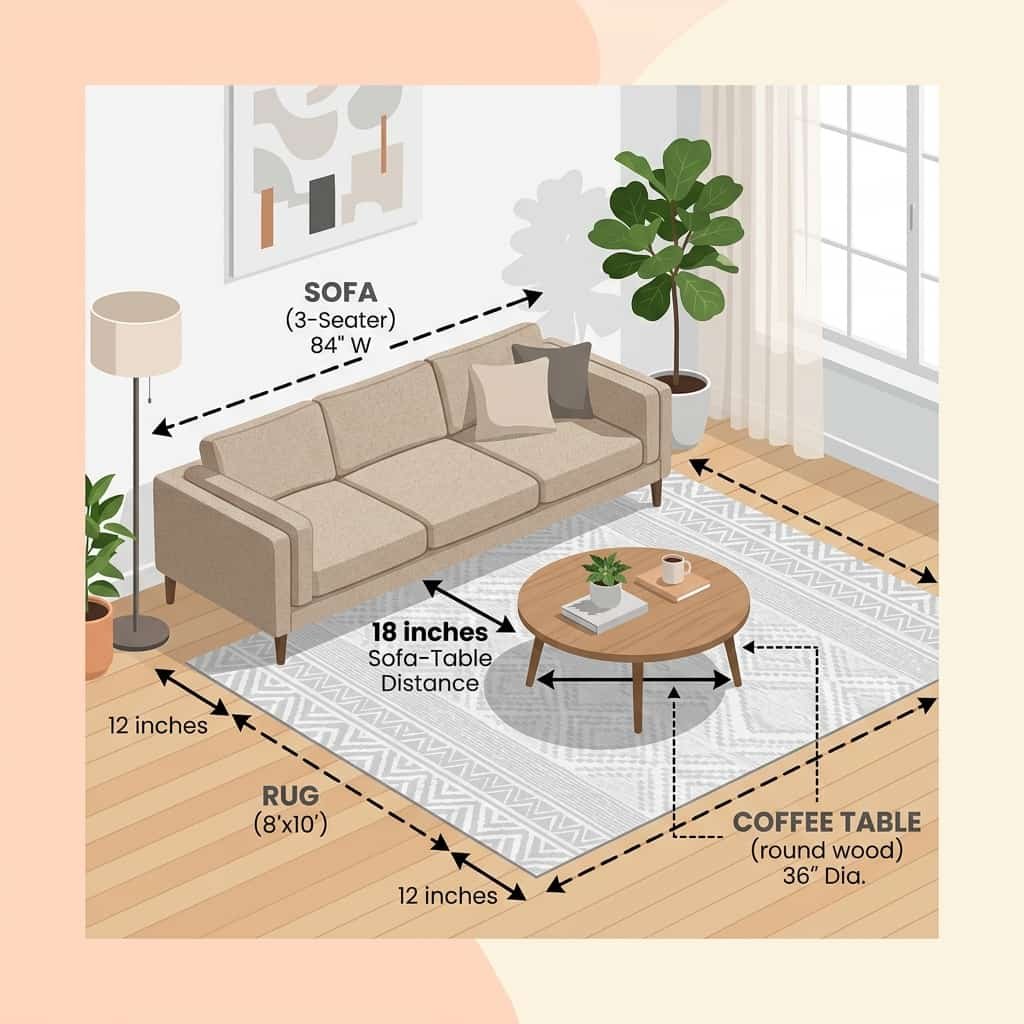
Scale and proportion are two of the most important interior design principles and two of the easiest to overlook.
Scale is about how large an object feels in relation to the room.
Proportion is about how objects relate to one another.
Imagine placing a tiny coffee table in front of a large sectional. Both pieces might look good separately, but the table can feel visually lost because it doesn’t relate well to the sofa.
The same problem can happen with artwork. A small picture above a large sofa may leave too much empty wall around it, while an oversized piece can overwhelm a narrow room.
Before buying furniture, measure both the product and the available space.
For larger purchases, you can even use painter’s tape to mark the item’s approximate dimensions on the floor. This gives you a quick visual reference before committing your money.
4. Create a Clear Focal Point
A focal point gives a room visual direction.
It might be:
- A fireplace
- A large window
- A statement light fixture
- A piece of artwork
- An architectural feature
- A media wall
- A distinctive piece of furniture
For example, if your living room already has a fireplace, you may not need an oversized piece of artwork, a dramatic accent wall, and a large statement chandelier competing for attention.
Ask:
“Where should my eyes naturally go when I enter this room?”
Once you’ve identified the focal point, arrange the surrounding furniture and accessories so they support it.
Good interior design isn’t always about adding something impressive. Sometimes it’s about removing competing elements so the best feature can stand out.
5. Build a Color Palette Before Shopping
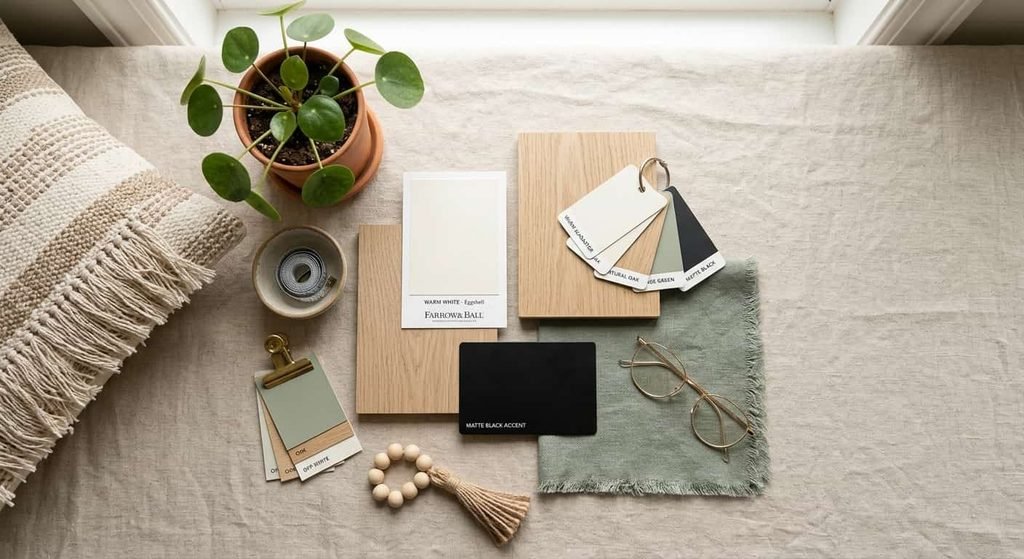
Choosing colors one item at a time can quickly make a room feel disconnected.
You might start with a beige sofa, add a blue rug, purchase green cushions, and then introduce several unrelated colors through artwork and accessories.
A better approach is to establish a simple color palette first.
You can think in terms of:
- Dominant color: the main background or largest visual area
- Secondary color: supporting furniture or larger features
- Accent color: smaller elements that add contrast
- Neutral shades: colors that help everything connect
For example:
Warm white + natural wood + muted green + black accents
You don’t need to use every color equally. Repeating a small accent color in several places can create visual connection.
A muted green might appear in a cushion, plant, artwork, and small decorative object without making the room feel overwhelmingly green.
The goal isn’t to follow a rigid color formula. It’s to make your choices feel related.
6. Learn the Three Layers of Lighting
Lighting can change the appearance of colors, materials, and even the perceived size of a room.
A single ceiling fixture may provide enough illumination to see the room, but it often doesn’t create much depth or atmosphere.
Think about three basic lighting layers.
Ambient lighting
This provides general illumination.
Examples include ceiling fixtures, recessed lights, and other sources that illuminate most of the room.
Task lighting
This provides focused light for specific activities.
Examples include:
- Reading lamps
- Desk lamps
- Under-cabinet lighting
- Bathroom vanity lighting
Accent lighting
This highlights particular features.
Examples include:
- Picture lights
- Shelf lighting
- Wall sconces
- Lighting around architectural details
For example, a living room might use an overhead fixture for general light, a floor lamp beside a reading chair, and a table lamp near the sofa.
You don’t need expensive fixtures to apply this principle. The important thing is to avoid depending on a single light source for everything.
7. Plan Furniture Around Traffic Flow
Furniture placement should make movement easier, not harder.
Before arranging a room, consider:
- Door swings
- Entry points
- Walkways
- Windows
- Storage access
- Seating
- TV viewing
- Conversation areas
One common mistake is pushing every piece of furniture against the walls simply because the room feels more open that way.
In a larger living room, moving a sofa slightly away from the wall can sometimes create a stronger seating zone and improve the overall layout.
If you’re unsure, sketch the room from above.
You don’t need professional design software. A basic floor plan on paper with approximate furniture dimensions can help you test several arrangements before moving heavy furniture around.
8. Use Texture and Material to Add Depth
A room can have a good color palette and still feel flat.
Texture adds variation and makes a space feel more layered.
Consider combining materials such as:
- Wood
- Metal
- Glass
- Linen
- Cotton
- Leather
- Stone
- Woven fibers
- Ceramic
For example, a neutral bedroom could combine a wooden nightstand, linen bedding, a woven basket, a soft rug, and a ceramic lamp.
The colors may remain simple, but the different materials keep the room visually interesting.
You can also vary shapes.
If most of your furniture has sharp, straight lines, a round mirror, curved chair, or circular table can introduce contrast.
The key is balance. You don’t need to add a new texture or shape everywhere.
9. Analyze Inspiration Instead of Copying It
Inspiration photos are useful, but copying an entire room isn’t the best way to develop your own design skills.
When you find a room you love, ask why you like it.
Look for:
- Dominant colors
- Furniture arrangement
- Focal point
- Lighting
- Repeated materials
- Texture
- Contrast
- Negative space
- Furniture proportions
Suppose you save a living room because it feels warm and comfortable.
After analyzing it, you might discover that the feeling comes from warm wood, soft textiles, muted colors, layered lighting, and simple furniture.
You can then use those same principles in your own home without trying to duplicate every product.
Copy the design logic, not the shopping list.
This is one of the most effective ways to develop your own interior design style.
10. Measure Before You Spend Your Money
Many decorating mistakes happen before a product even arrives at the house.
A piece of furniture can look perfect online and still be completely wrong for your room.
Before purchasing, measure:
- Wall width
- Ceiling height when relevant
- Doorways
- Hallways
- Available floor space
- Existing furniture
- Clearance around doors and walkways
Also check the dimensions of the product itself.
For example, a sofa might technically fit against a wall but leave so little space around a doorway that the room becomes difficult to use.
Measurements aren’t the most exciting part of decorating, but they can save you from expensive returns and frustrating rearrangements.
11. Know Where to Spend and Where to Save
Becoming better at interior design doesn’t mean spending more money.
It means understanding which purchases have the greatest impact on your home and lifestyle.
You may want to prioritize quality for items you use frequently, such as:
- Sofas
- Mattresses
- Everyday seating
- Durable rugs
- Long-term furniture
- Important lighting
You may have more flexibility with:
- Throw pillows
- Small accessories
- Seasonal decorations
- Trend-based pieces
- Temporary artwork
For example, renters may prefer spending on portable improvements such as rugs, curtains, lamps, artwork, and furniture rather than permanent changes.
Think about durability, frequency of use, and how long you expect to keep the item, rather than simply choosing the most expensive option.
12. Learn to Diagnose Why a Room Feels “Off”
This is where your design knowledge starts becoming practical.
Sometimes a room doesn’t look right, but the problem isn’t immediately obvious.
Before buying anything else, ask:
Is the furniture correctly scaled?
An oversized sofa can make a small room feel crowded.
Is the rug large enough?
A rug that’s too small can make furniture look disconnected.
Is there a focal point?
Without one, the room may lack visual direction.
Are too many colors competing?
A room doesn’t have to be monochromatic, but unrelated colors can make it feel chaotic.
Is the lighting layered?
One overhead fixture may leave corners dark and make the room feel flat.
Is there enough texture?
If every surface has a similar finish, the room can lack depth.
Is there enough negative space?
Space helps important pieces stand out.
Can people move comfortably?
A room can look beautiful in a photograph while being frustrating to use.
Is there too much small decor?
A collection of small objects can create visual noise without adding much impact.
For example, if your living room feels crowded, adding another storage basket may not solve the problem. The real issue could be an oversized coffee table, an unnecessary chair, or too many decorative pieces.
Sometimes better design means removing something rather than adding something.
13. Practice Your Design Skills With One Room
You don’t become better at interior design by only looking at beautiful rooms.
You improve by making decisions and learning from them.
Choose one room in your home and try these exercises:
Exercise 1: Rearrange
Create two or three furniture layouts using what you already own.
Exercise 2: Photograph
Take a photo of each arrangement from the main entrance.
Exercise 3: Compare
Look at the photographs rather than relying only on how the room feels while you’re standing in it.
Exercise 4: Identify one problem
Choose the biggest issue instead of trying to fix everything.
Exercise 5: Make one change
Adjust the furniture, lighting, color, texture, or accessories and photograph the room again.
This process teaches you to evaluate your decisions instead of decorating entirely by instinct.
Try This 7-Day Interior Design Challenge
If you want a simple way to start improving your design eye, use this one-week challenge.
Day 1: Analyze five rooms
Choose five rooms you genuinely like. Write down what attracts you to each one.
Day 2: Identify focal points
Look at different room photos and identify the first feature your eye notices.
Day 3: Study scale
Compare sofas, rugs, tables, beds, artwork, and lighting fixtures with the rooms they’re placed in.
Day 4: Create color palettes
Choose three rooms and identify their dominant, secondary, accent, and neutral colors.
Day 5: Plan a layout
Draw a simple floor plan of one room in your home and try two different furniture arrangements.
Day 6: Critique your room
Take a photograph and identify one thing that works and three things that could be improved.
Day 7: Make one intentional change
Fix the most important issue you identified.
The goal isn’t to create a perfect room in seven days. The goal is to start making design decisions deliberately.
Apply Interior Design Principles Room by Room
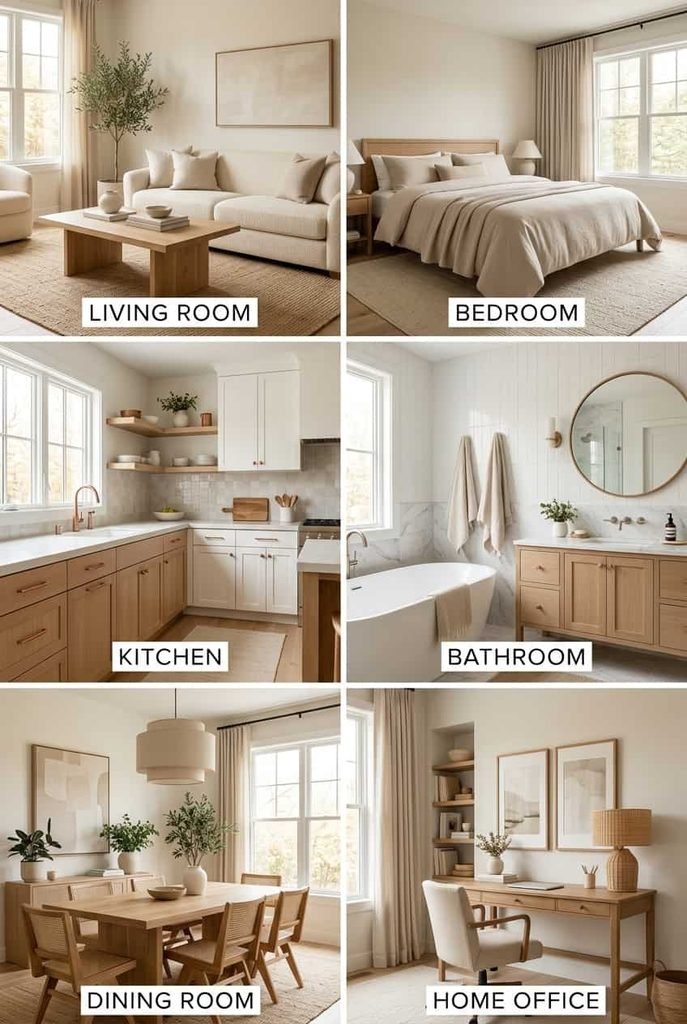
The same basic principles apply throughout a home, but each room has different priorities.
| Room | Design Skills to Focus On |
|---|---|
| Living room | Layout, scale, focal point, lighting |
| Bedroom | Balance, comfort, color, layering |
| Kitchen | Function, work zones, storage, lighting |
| Bathroom | Proportion, storage, materials, lighting |
| Dining room | Table and chair proportions, lighting, circulation |
| Home office | Ergonomics, organization, task lighting |
For example, furniture scale may be the biggest challenge in a living room, while task lighting and ergonomics may matter more in a home office.
The best design decisions depend on how the space is actually used.
Common Interior Design Mistakes to Avoid
Knowing what to avoid can save you time and money.
Buying furniture before measuring
A product can look perfect online and still be too large for your room.
Choosing a rug that’s too small
The wrong rug size can make an otherwise good furniture arrangement feel disconnected.
Relying on one light source
A single ceiling fixture may not provide enough variety or atmosphere.
Following every trend
A trend can look great in someone else’s home without being right for your space or lifestyle.
Buying a complete matching set
Matching furniture isn’t automatically wrong, but using too many identical pieces can make a room feel overly uniform.
Filling every empty surface
Negative space is part of good composition. Not every shelf, wall, or tabletop needs decoration.
Choosing appearance over function
A room should look good while still being comfortable and practical to use.
Develop Your Own Interior Design Style
You don’t have to fit your home into one strict style category.
Instead, pay attention to what you repeatedly like.
Save 10 to 20 rooms that genuinely appeal to you and look for patterns.
Do you tend to choose:
- Warm or cool colors?
- Natural wood or painted finishes?
- Minimal or layered rooms?
- Curved or straight furniture?
- Neutral or colorful spaces?
- Traditional or modern details?
- Natural or polished materials?
You may discover that your preferences are better described as:
Warm, relaxed, modern, natural, and uncluttered.
That description can be more useful when shopping than simply saying, “I like modern interiors.”
Your personal style becomes clearer as you make more design decisions.
A Quick Interior Design Self-Check
Before considering a room finished, ask yourself:
- What is the focal point?
- Is the furniture appropriately scaled?
- Does the layout allow comfortable movement?
- Is the rug the right size?
- Does the color palette feel connected?
- Are colors repeated intentionally?
- Does the room have multiple lighting layers?
- Are different textures present?
- Is there enough negative space?
- Does the room actually work for its purpose?
If you can’t answer all of these yet, that’s fine. These are skills you develop through practice.
Final Thoughts
Becoming better at interior design isn’t about memorizing hundreds of decorating rules or buying expensive furniture.
It’s about learning to observe, measure, analyze, experiment, and improve.
Start with one room. Look at its purpose, layout, furniture scale, focal point, lighting, color, and texture. Then identify the one change that would make the biggest difference.
Over time, you’ll start noticing things you previously overlooked—a rug that’s too small, furniture that’s out of proportion, a missing layer of lighting, or a room that’s simply too crowded.
That’s what developing your design eye is really about: learning why a space works and using that knowledge to make better choices in your own home.
One thought on “How to Be Better at Interior Design MintPalDecor. 13 Practical Tips”